A duplex apartment in an 18th-century fortified farmhouse with a pool in Sicily
This Sicilian duplex apartment, located in a fortified farmhouse of the 18th-century combines old stone with contemporary design
Sicily still bears the imprint of twenty successive civilizations. The Greeks, Arabs, Normans, and Spaniards have all left their mark in stone. Between Palermo and Trapani, the countryside is dotted with centuries-old olive groves, white roads glistening under the sun, and farmhouses standing alone like fortresses. And it is here, on this Italian island, that we discover this duplex apartment in a baglio, an old 18th-century fortified farmhouse.
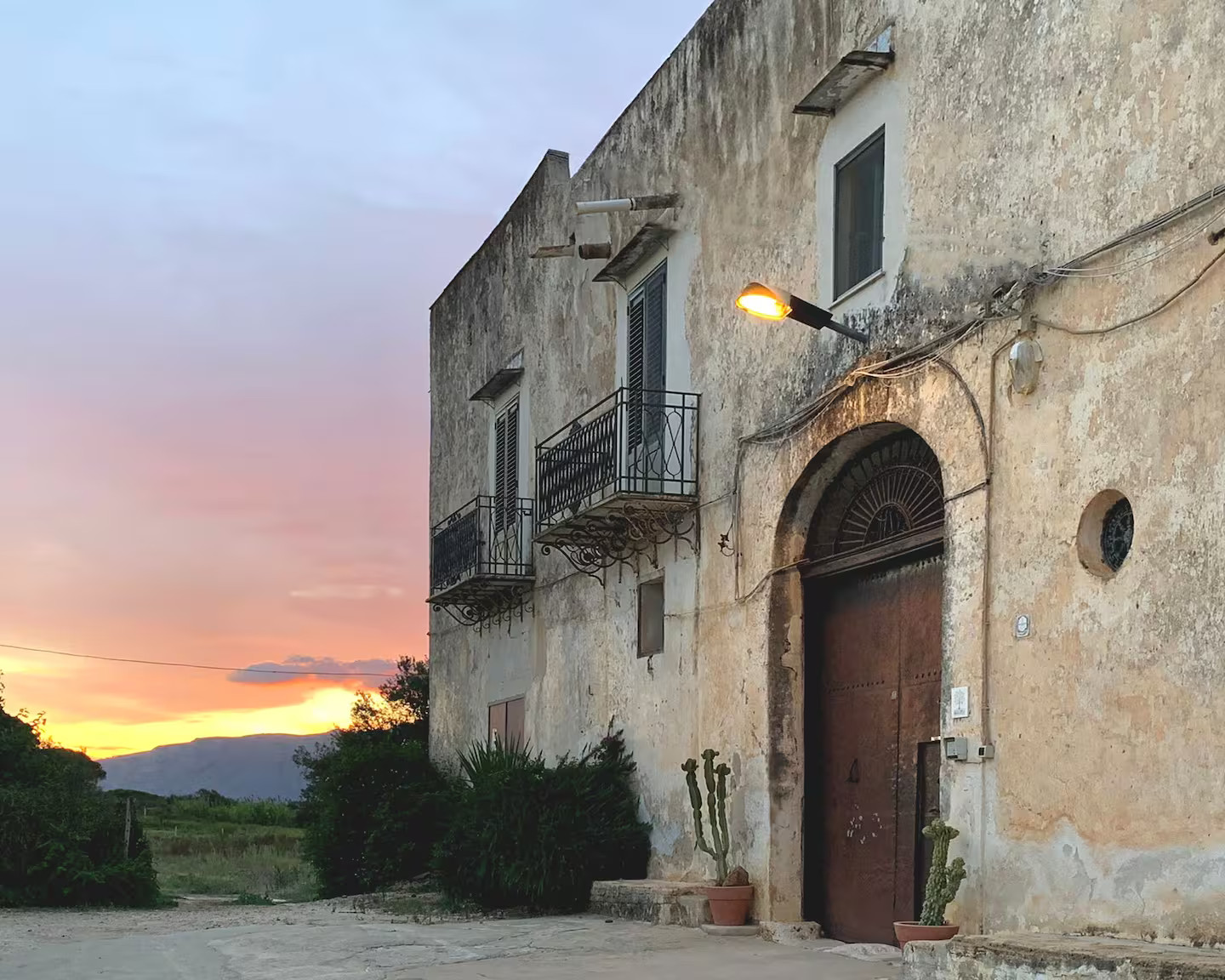
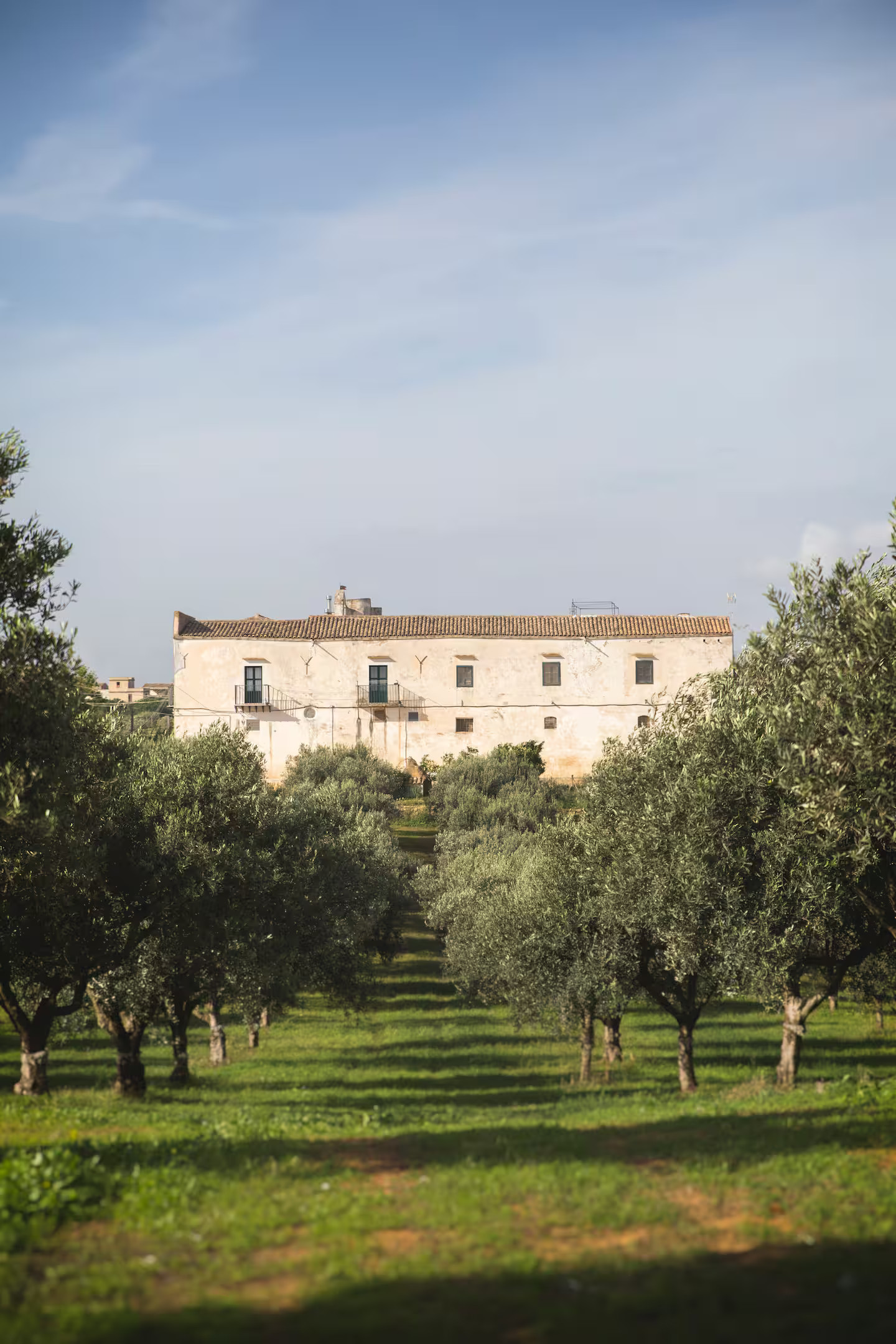
It stands amid olive trees, set back from the roads, with its massive silhouette and limestone-colored walls. From the outside, nothing reveals what lies within. Inside, it’s a whole new world waiting to be discovered.
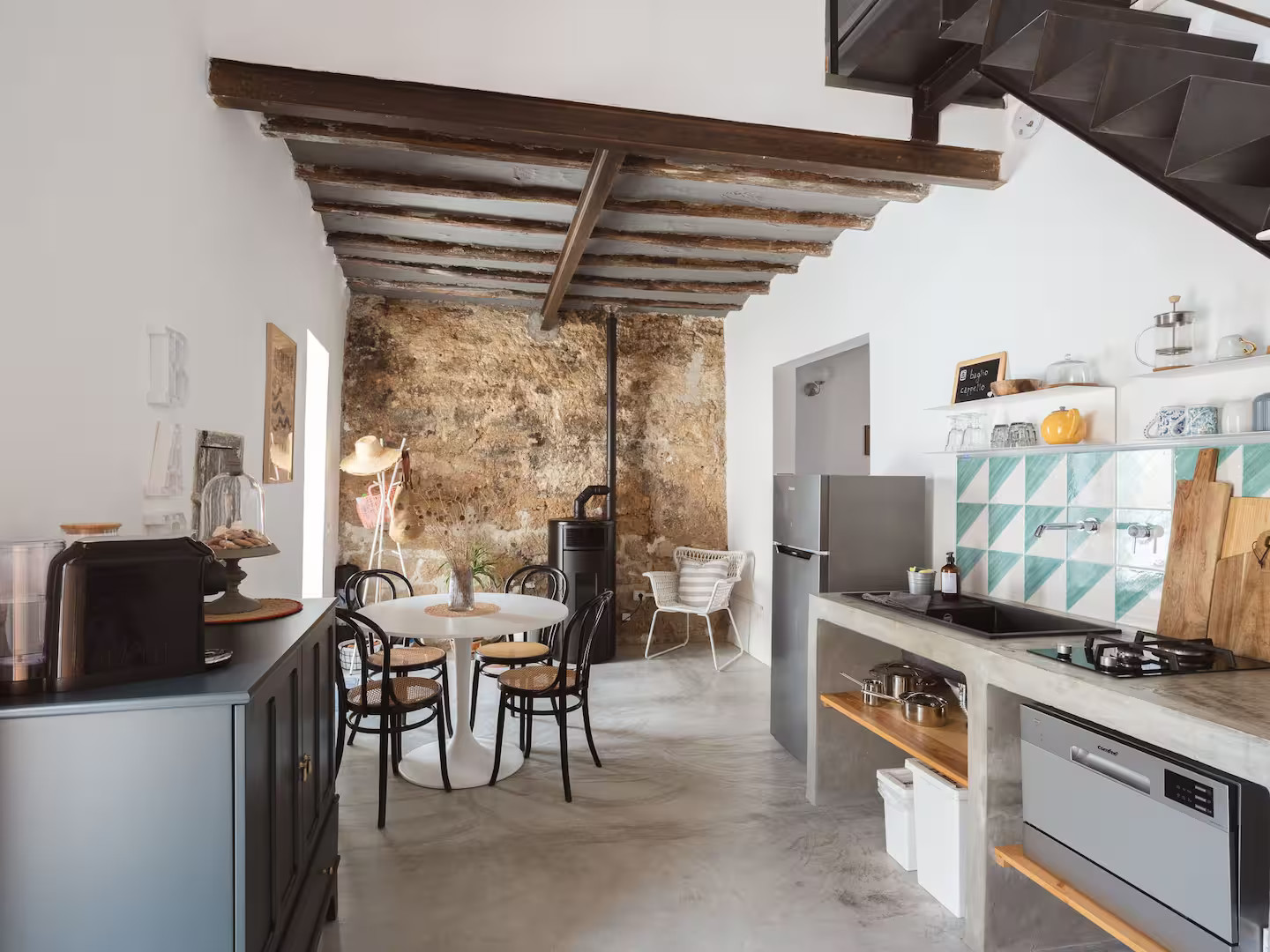
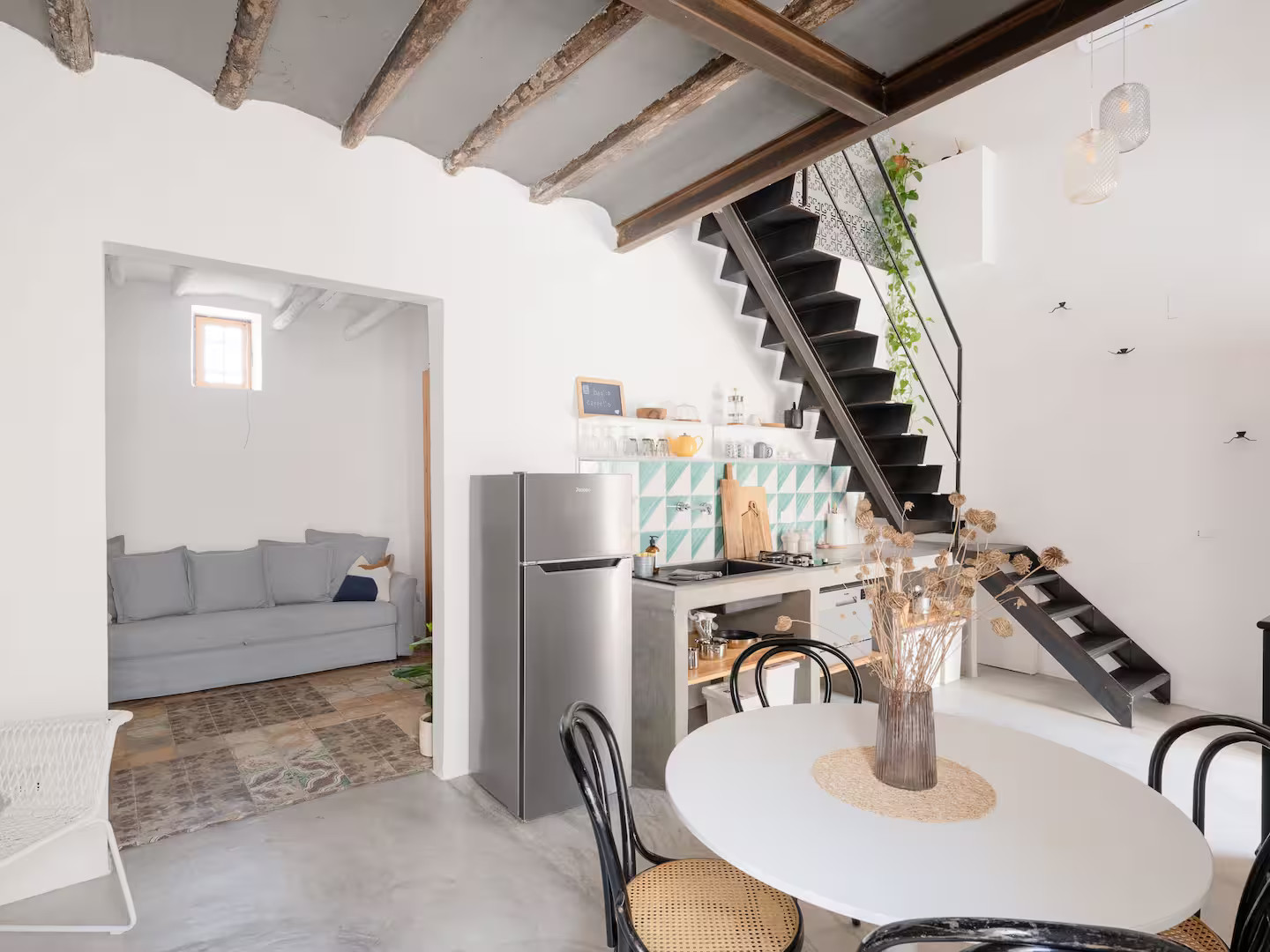
The owner of Baglio Cappello took a clear approach: she preserved what was worth keeping and introduced modern elements where necessary. She opted for a simple architectural principle by removing doors. Cut-out wrought-iron partitions replace the traditional dividers in the duplex. They divide the space without closing it off, allowing light to flow freely and creating an atmosphere halfway between a studio and an old residence. The ground floor is a completely open space housing the kitchen, dining room, and living room. Its old beams retain their raw appearance, just as they were originally.
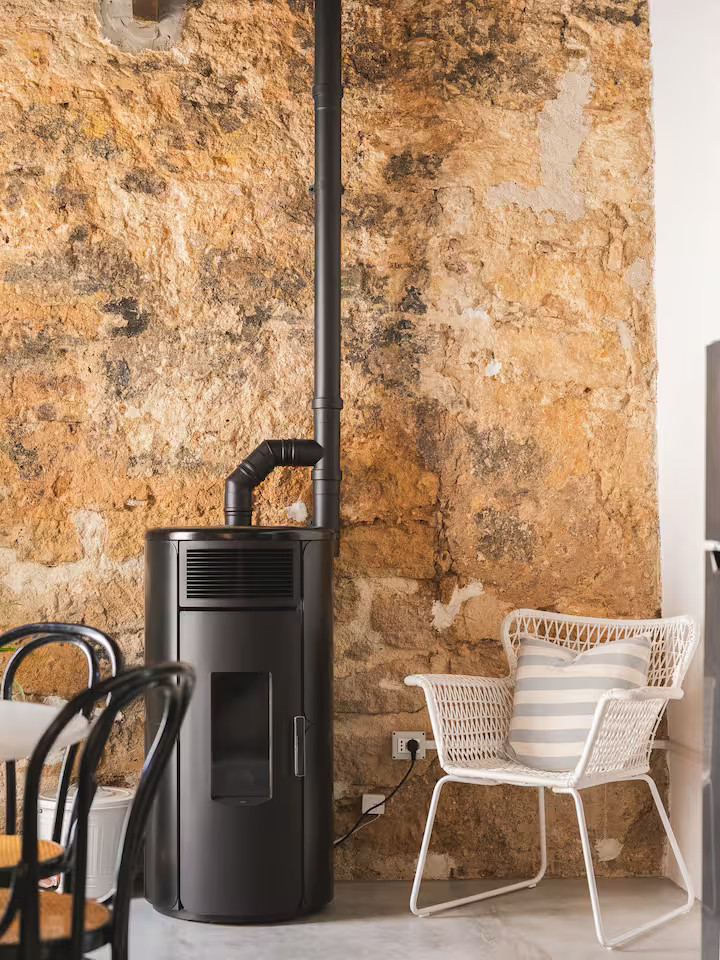
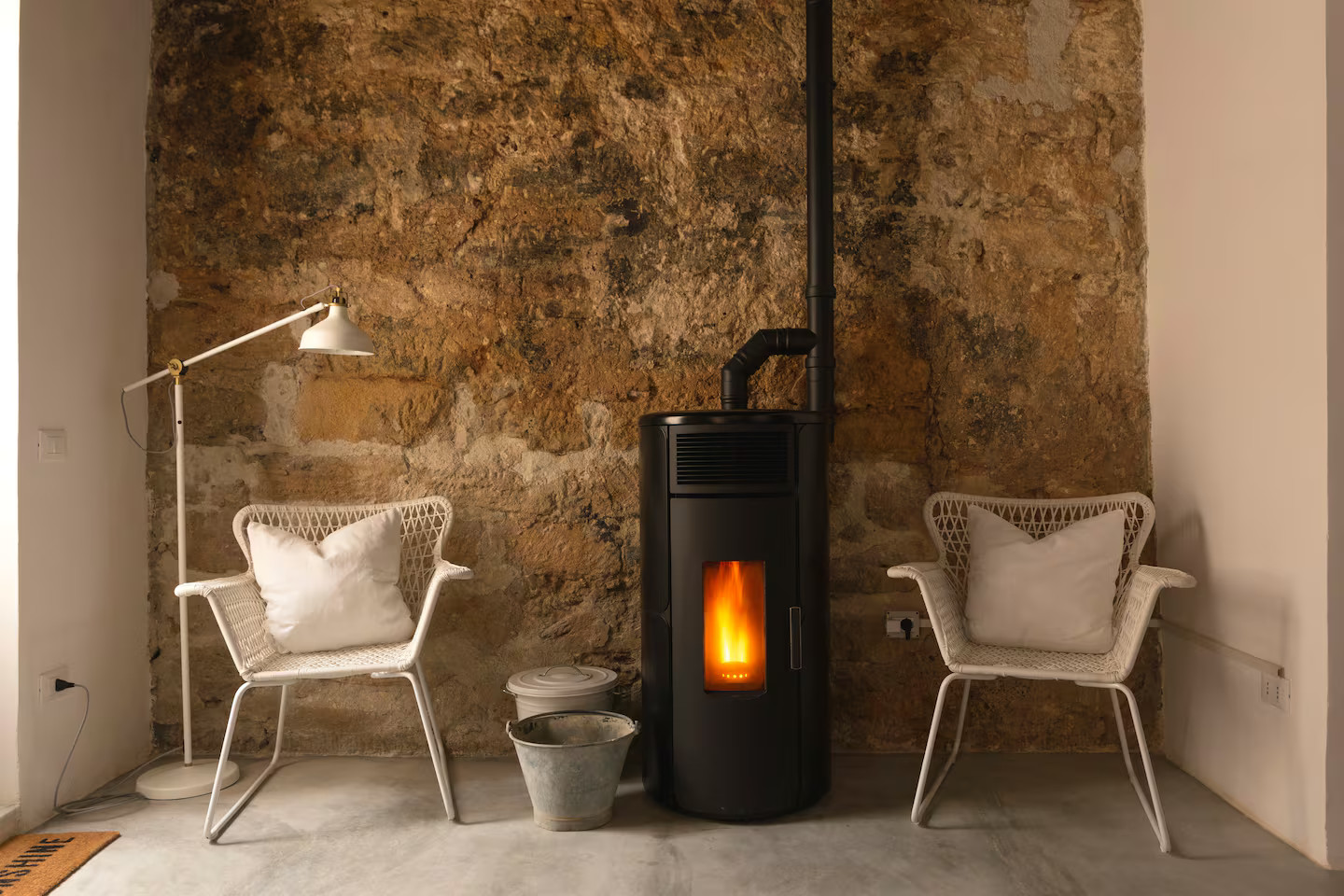
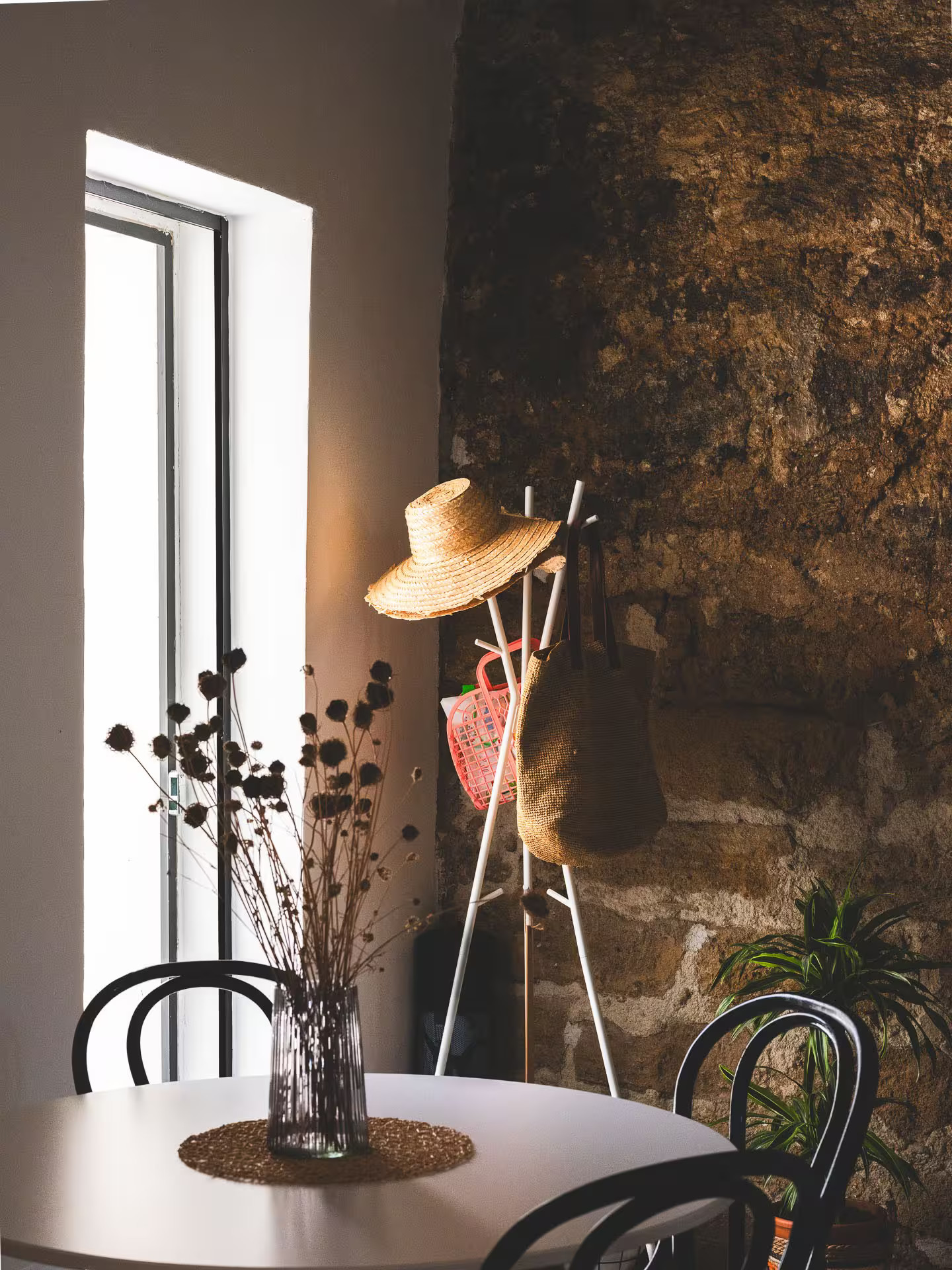
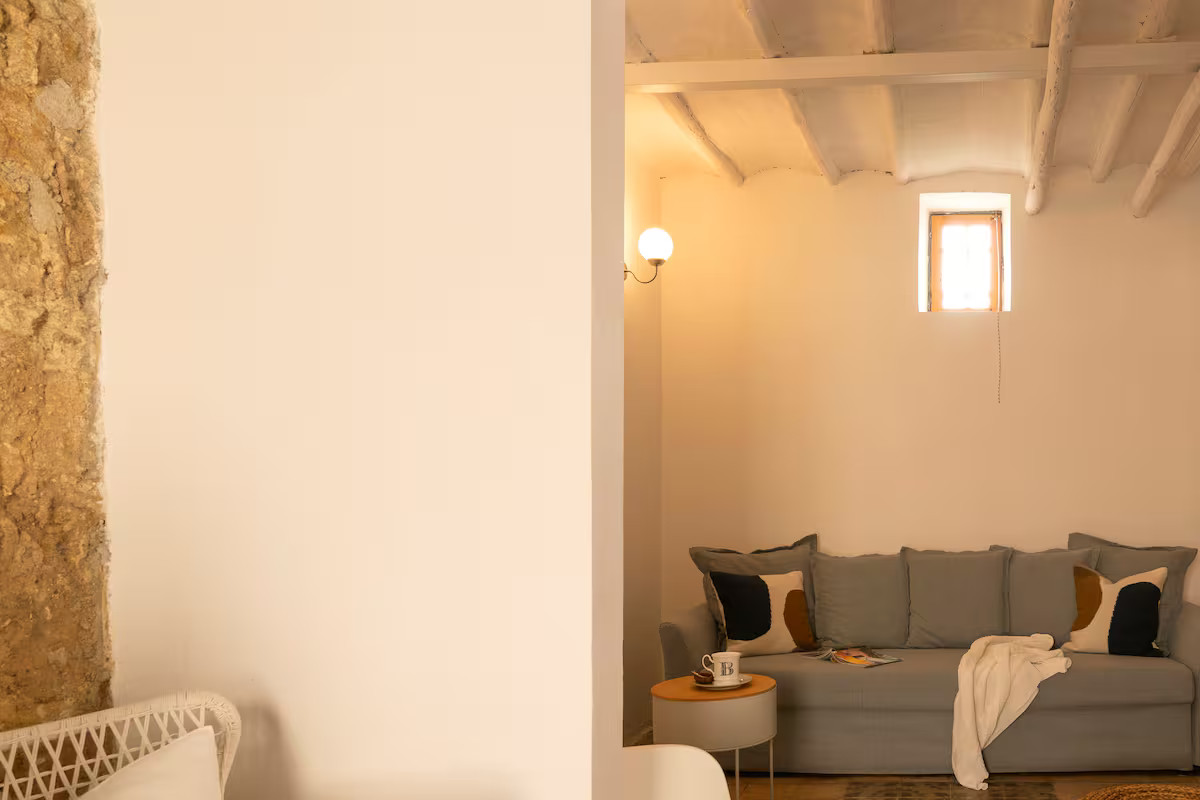
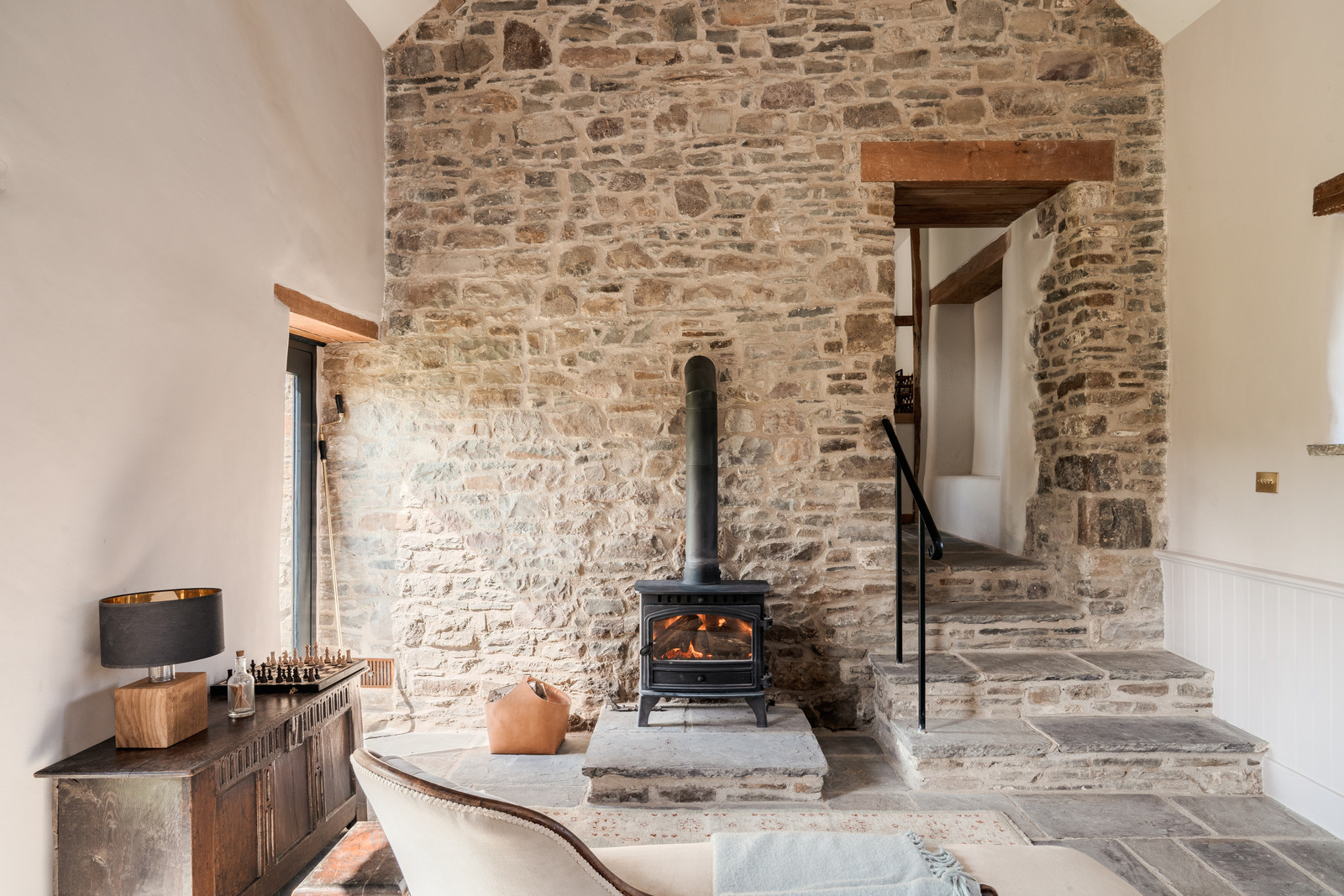
The whitewashed walls stand alongside an exposed stone wall, with its beautiful ochre color and traces of centuries past. A stove rests against it. This sleek black cylinder is where one settles in when winter evenings grow cooler. A reading lamp and two white armchairs complete the decor of this very welcoming sitting area. This old stone wall has an almost theatrical look, in the best sense of the word.
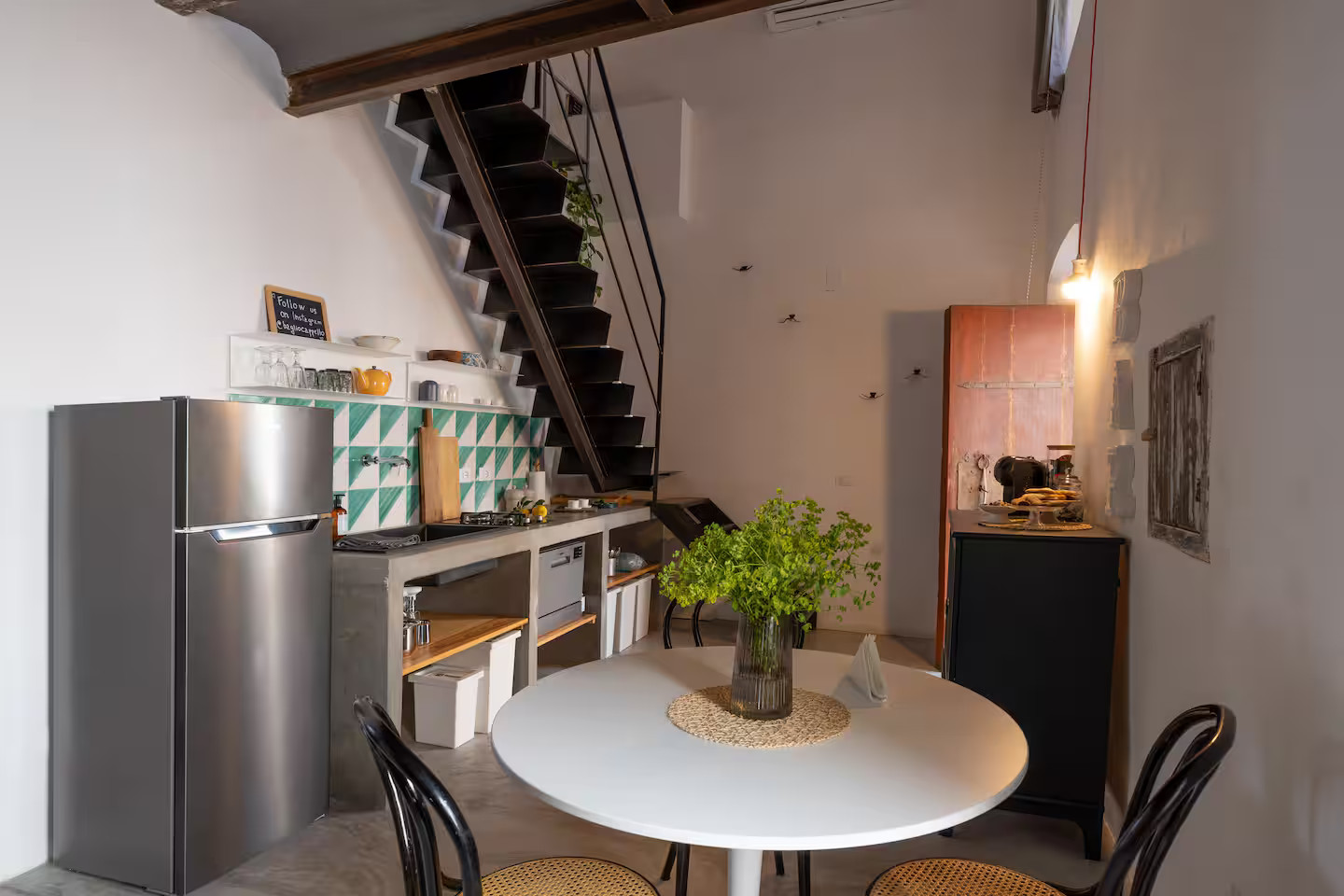
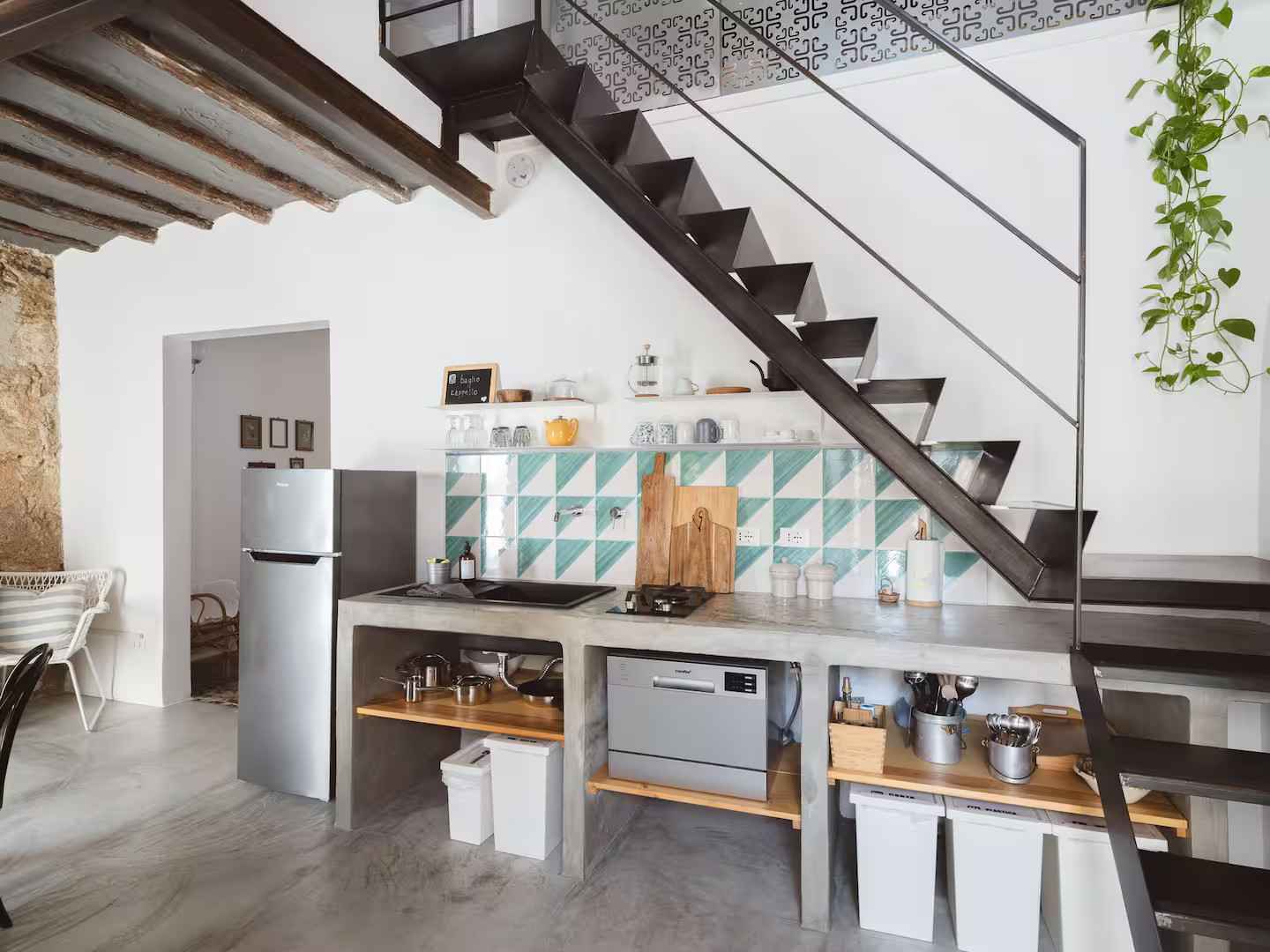
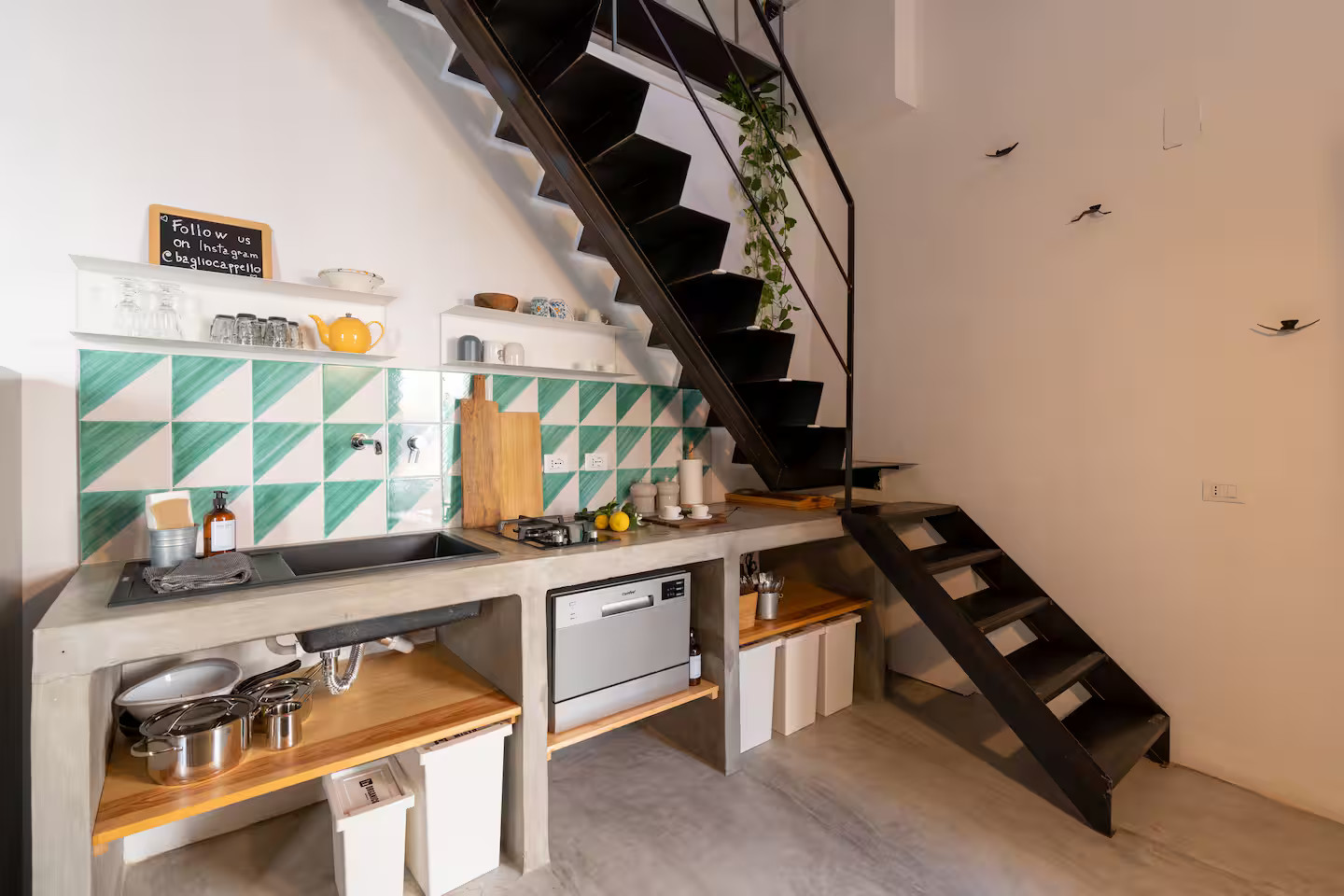
The kitchen stands in stark contrast to the duplex apartment ’s antique elements. Its countertop is made of poured concrete, and the open shelves are light wood. The backsplash features turquoise and white tiles with a geometric pattern to add a pop of color. The freshness of the color breaks up the monotony of the natural tones found throughout the duplex. Everything is out in the open, which makes life easier while on vacation. Kitchen utensils, stainless steel pots, recycling bins, everything is visible. The open shelves showcase a collection of glasses, mugs, and a yellow teapot... It’s both rustic and authentic.
The dining room features a Tulip-style table by Eero Saarinen, surrounded by Thonet bentwood chairs. Though they’re from different eras, this designer table pairs beautifully with the traditional bistro chairs. The polished concrete floor unifies the spaces and brings together the disparate elements.
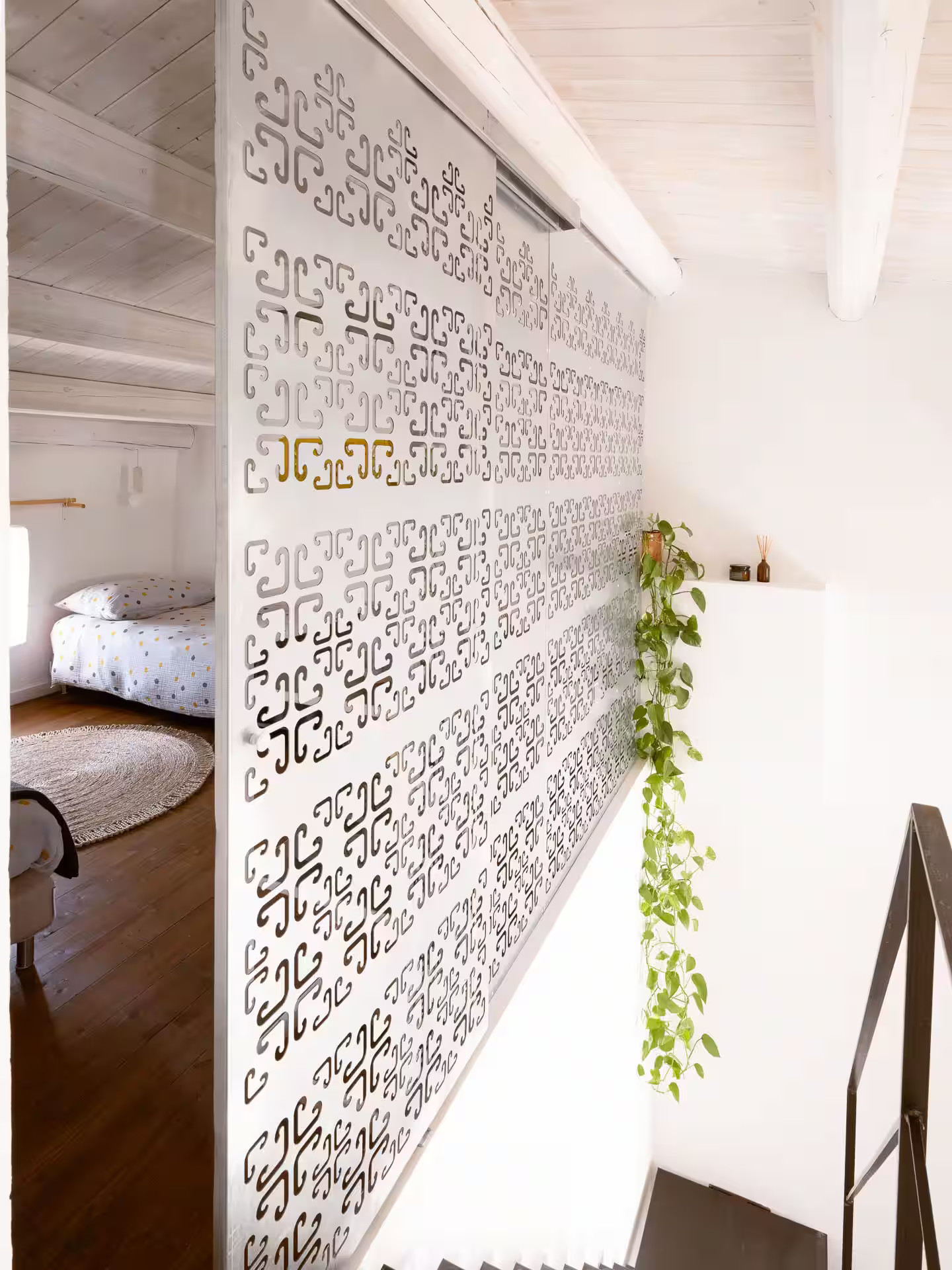
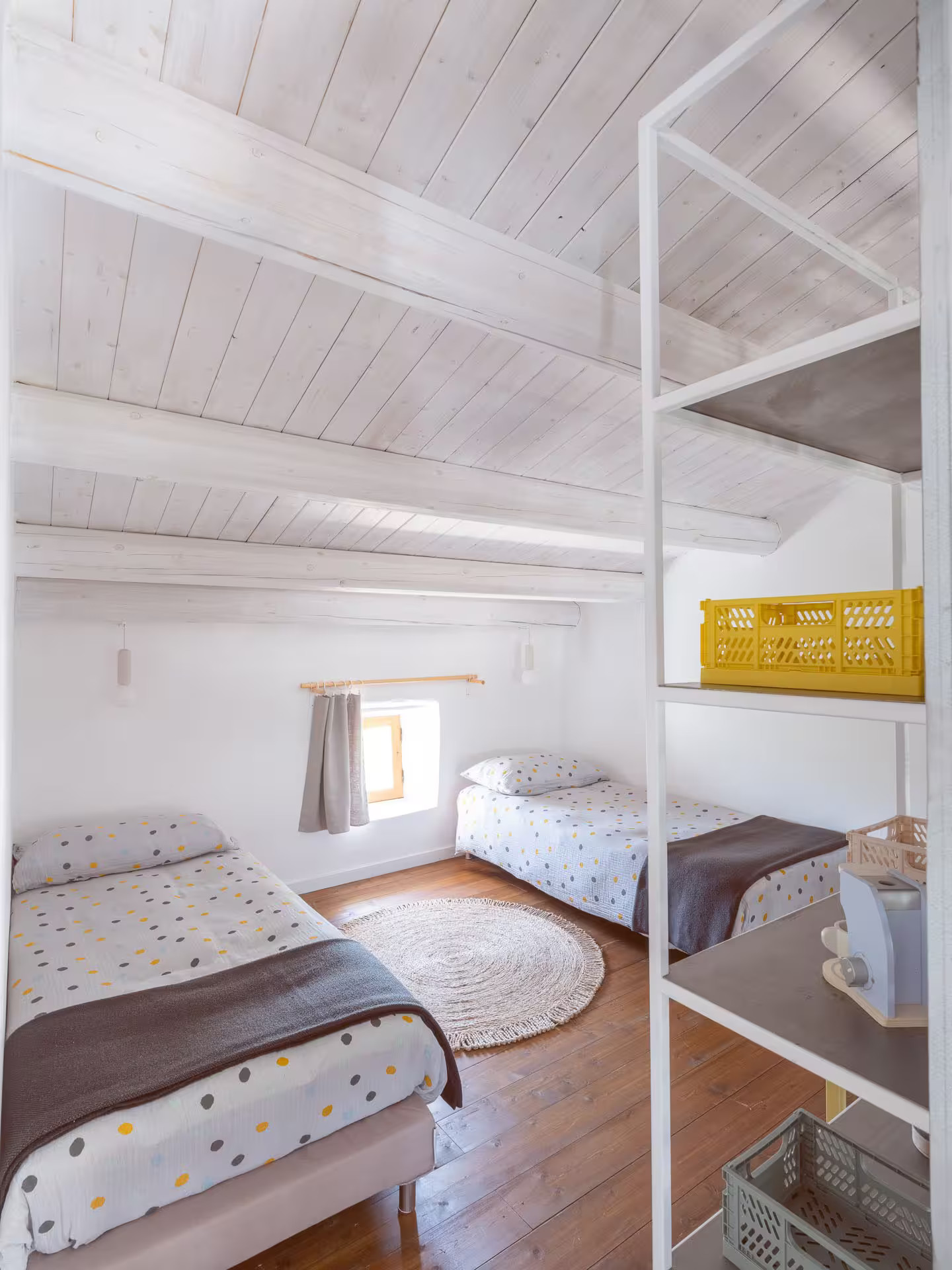
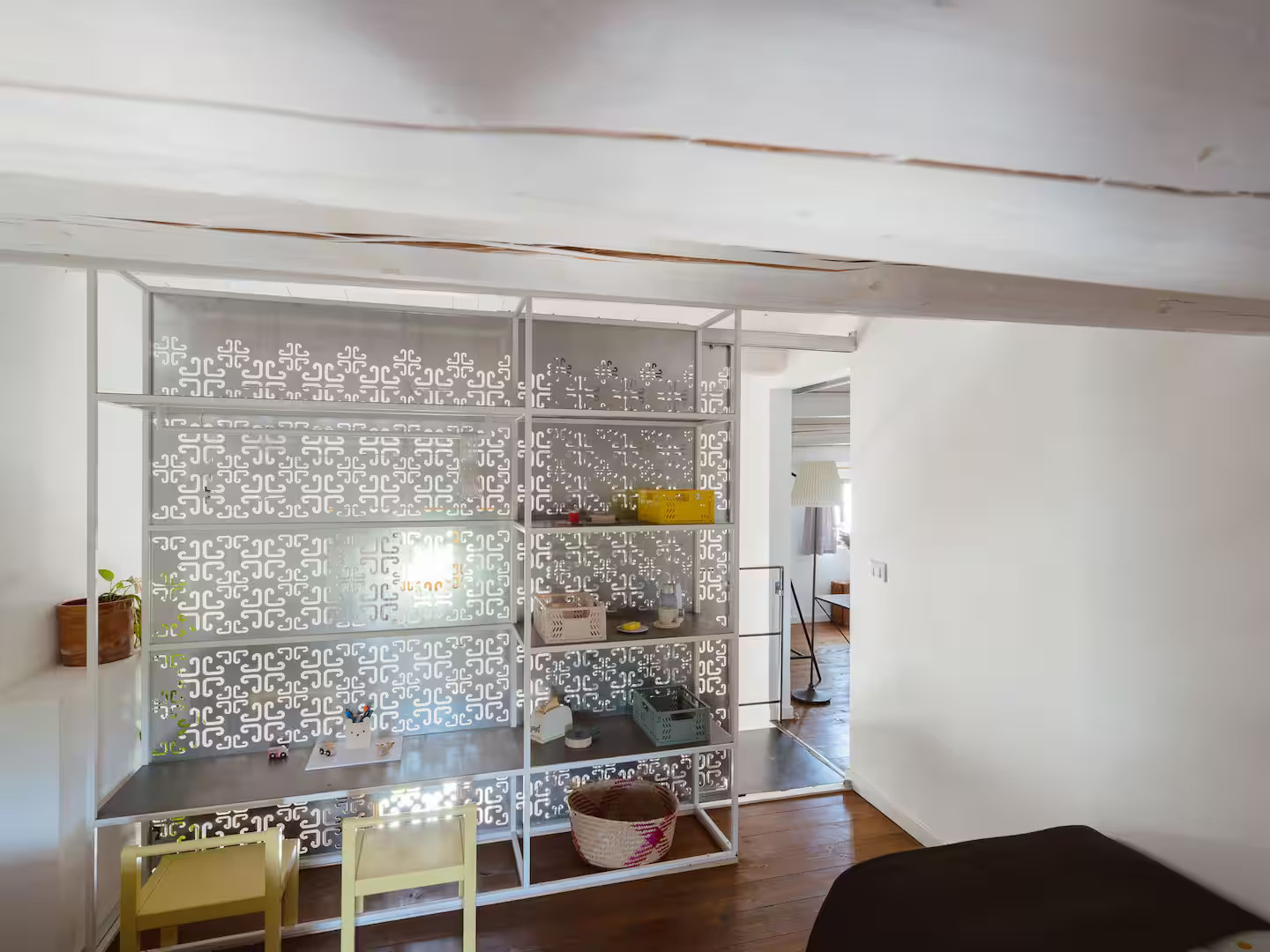
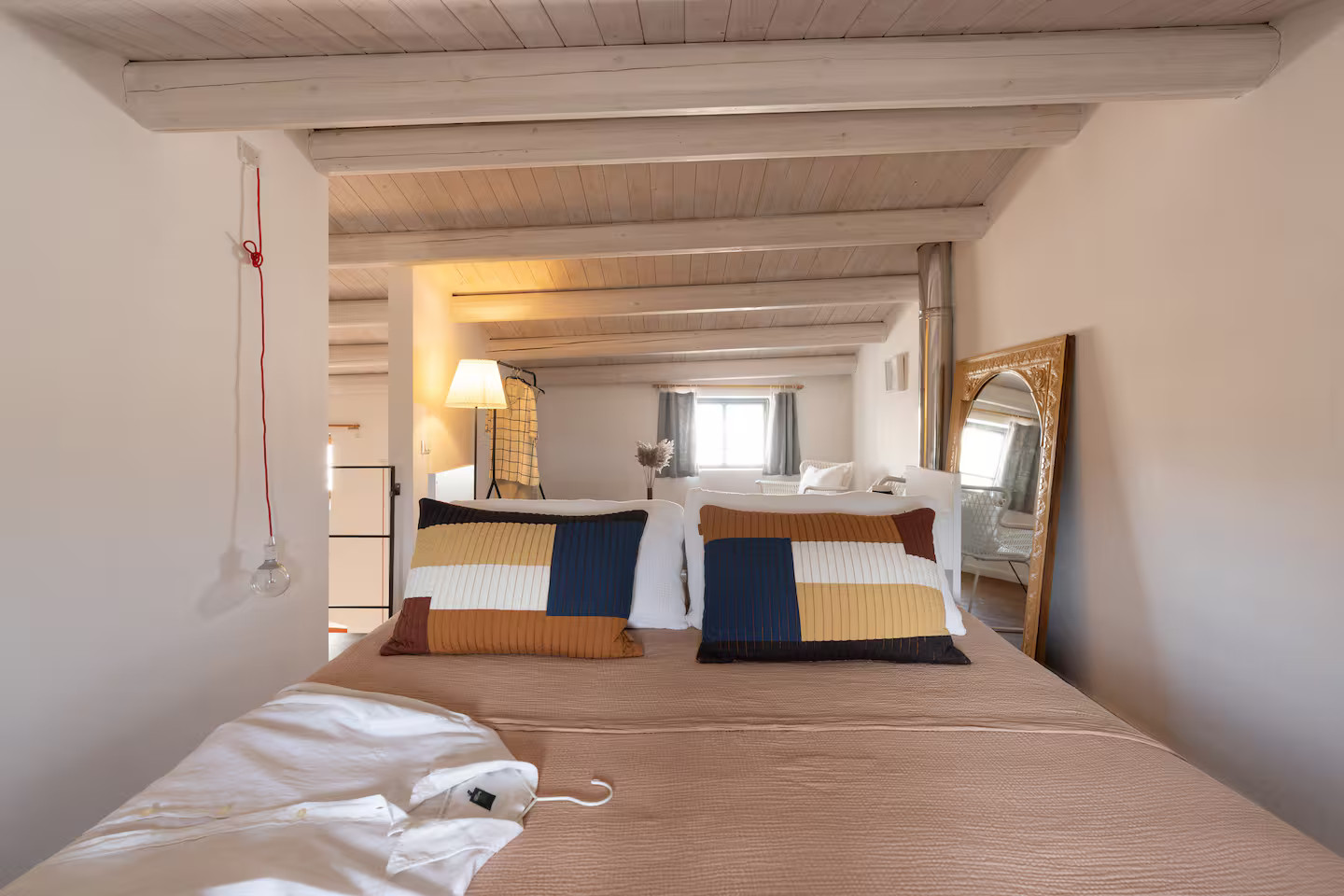
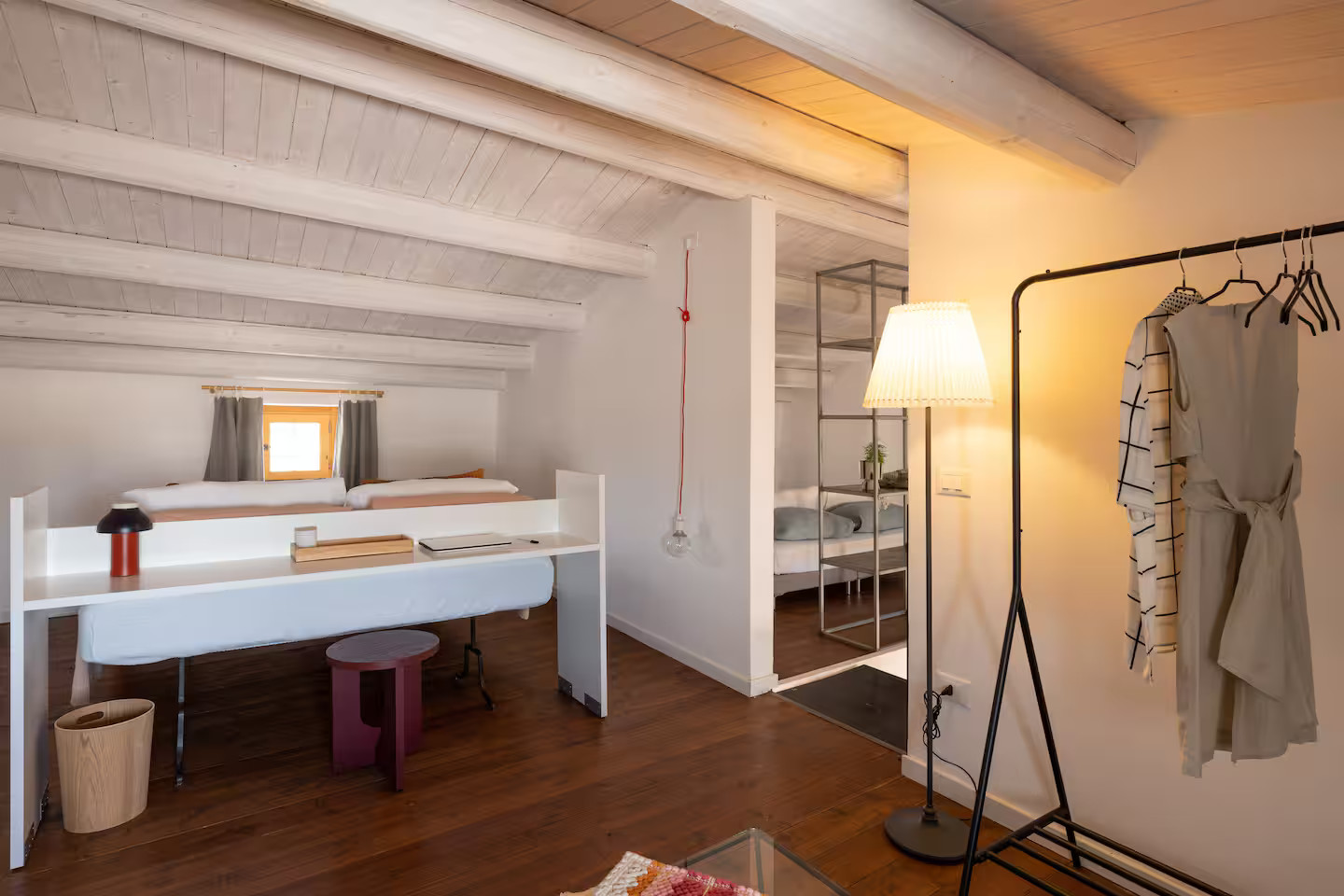
The metal staircase leading upstairs features an industrial design. Its bent black steel stringers contrast with the softness of the white walls. On the mezzanine, the partition wall, perforated with patterns, divides the space without closing it off. It lets light through and separates the bedrooms from the living area on the first level. The two double bedrooms have windows overlooking the Sicilian countryside. The whitewashed beams create a softer atmosphere and blend seamlessly into the background.
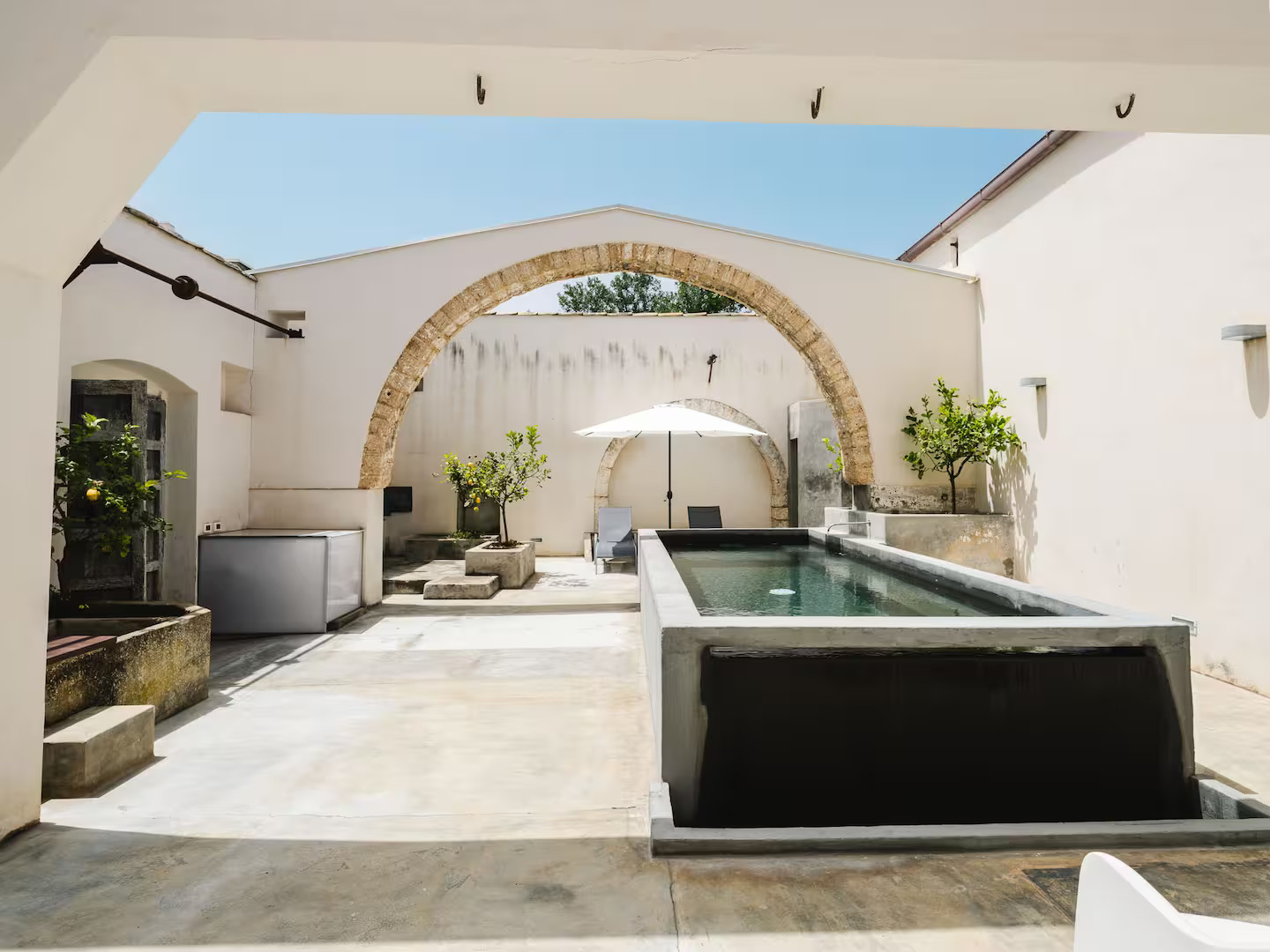
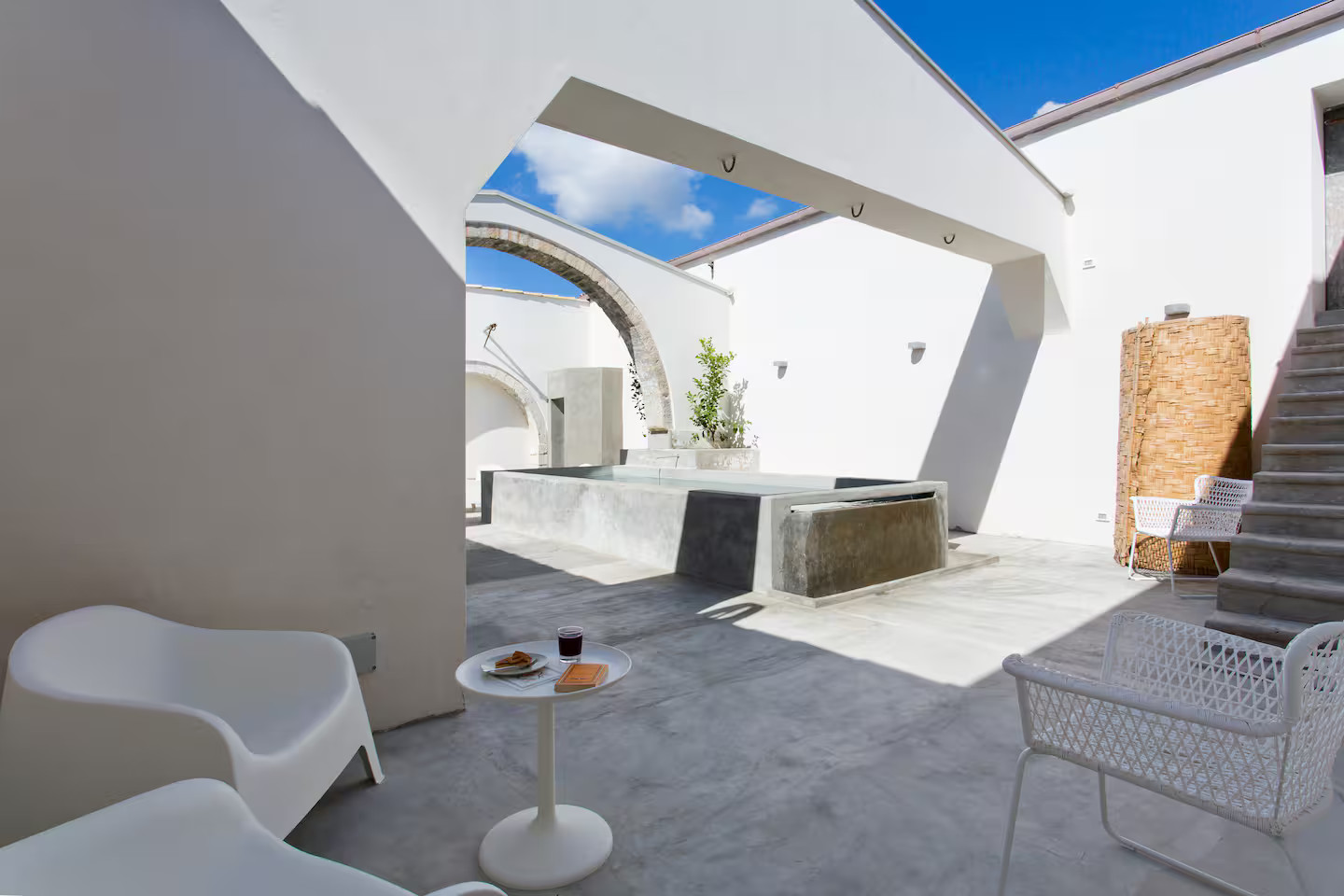
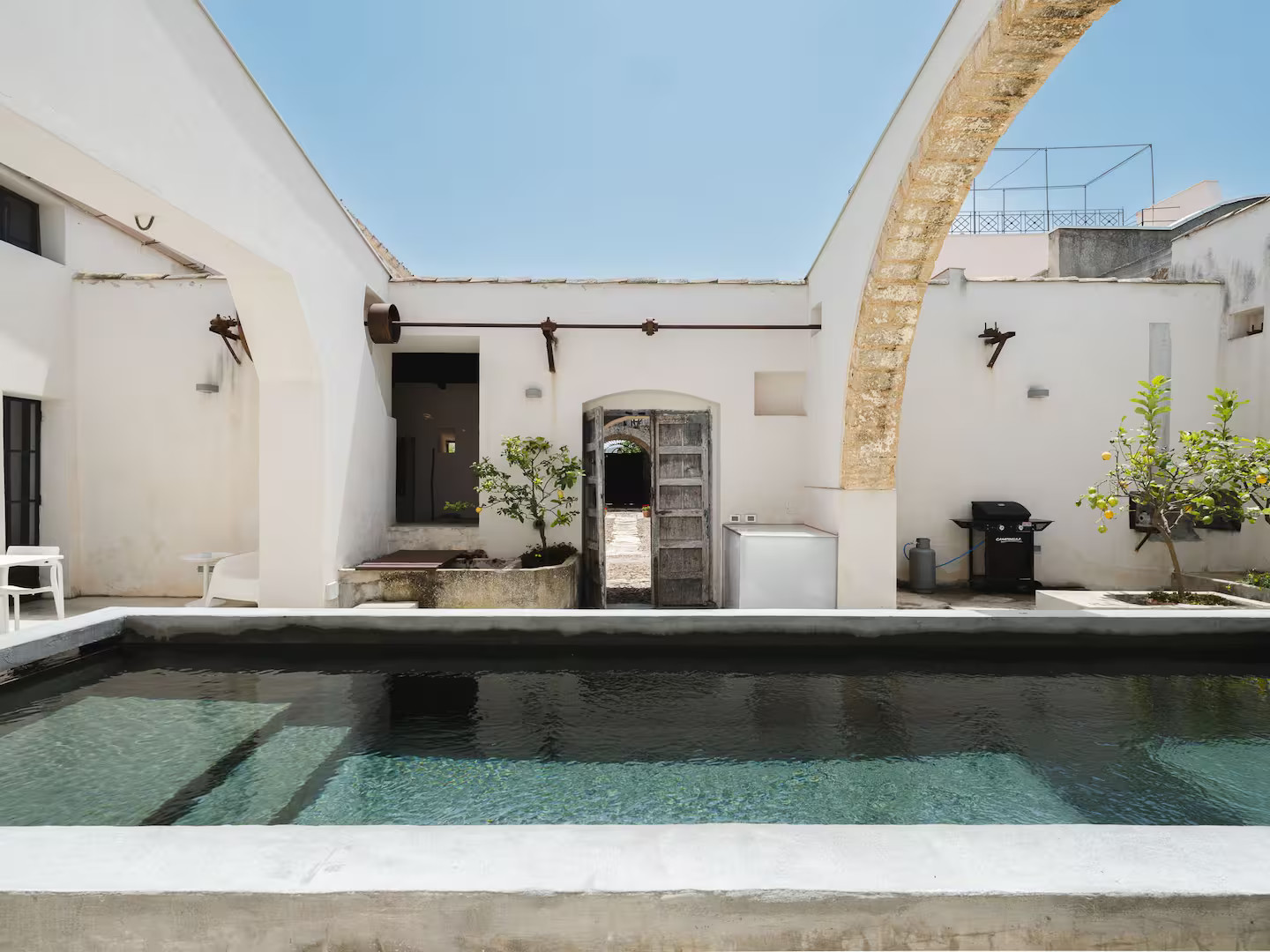
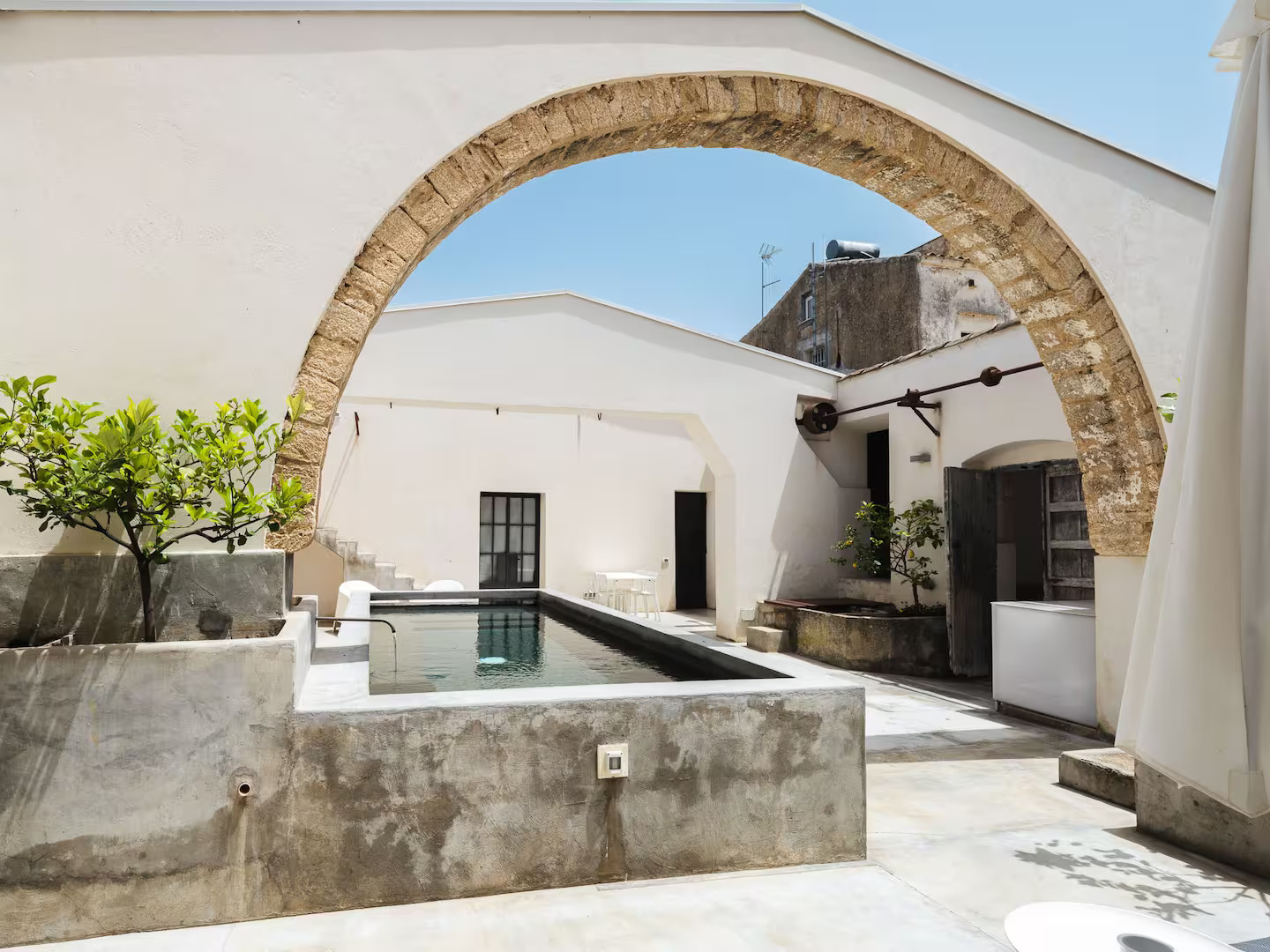
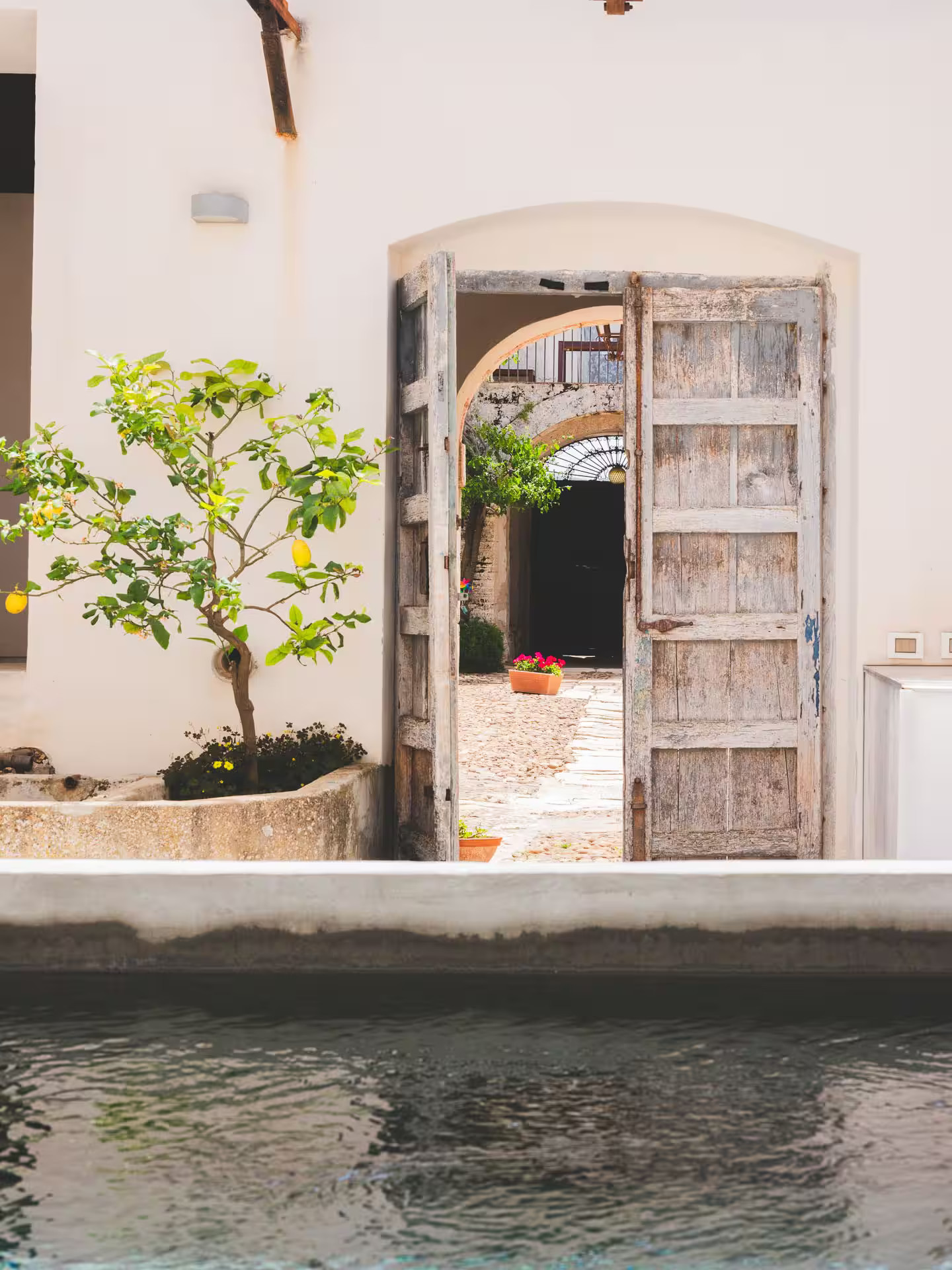
The true masterpiece of this baglio is found outdoors. The inner courtyard is arranged around a rectangular pool with a dark bottom, carved from rough stone and concrete. Its saltwater reflects the blue Sicilian sky. A monumental limestone arch frames the view. It almost feels like a movie set. Lemon trees add a touch of green and fragrance. The outdoor space makes you want to stay outside rather than go back inside.
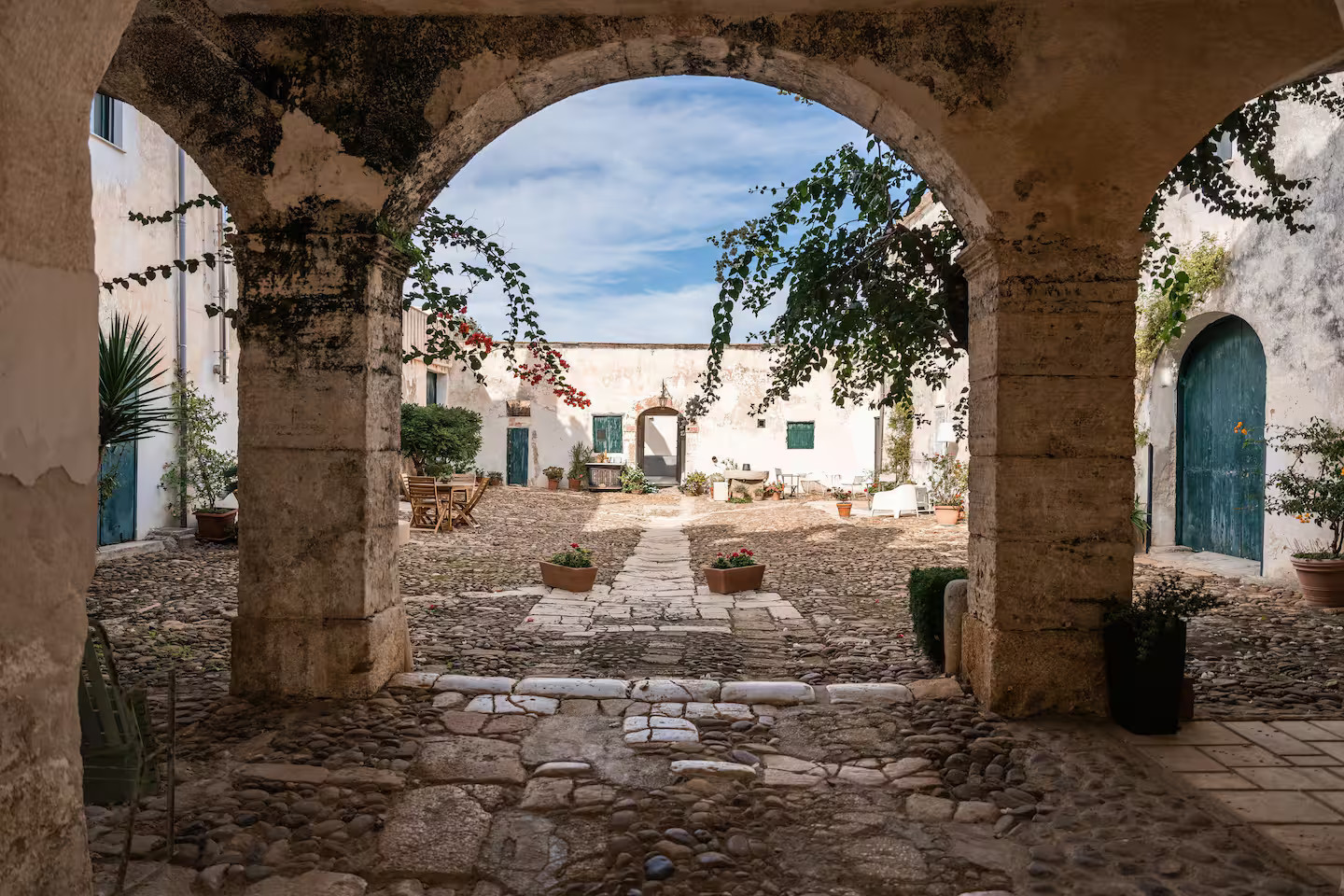
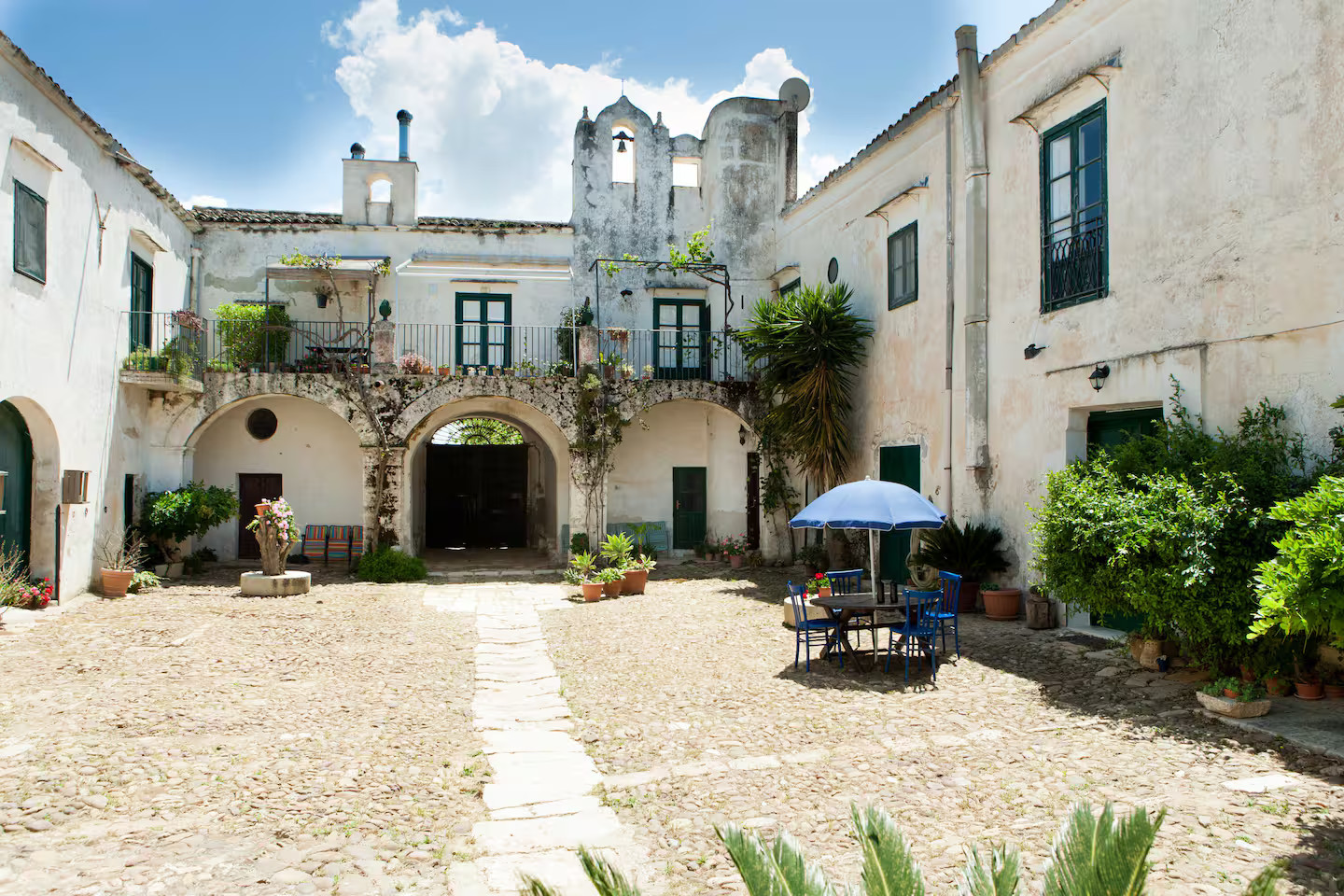
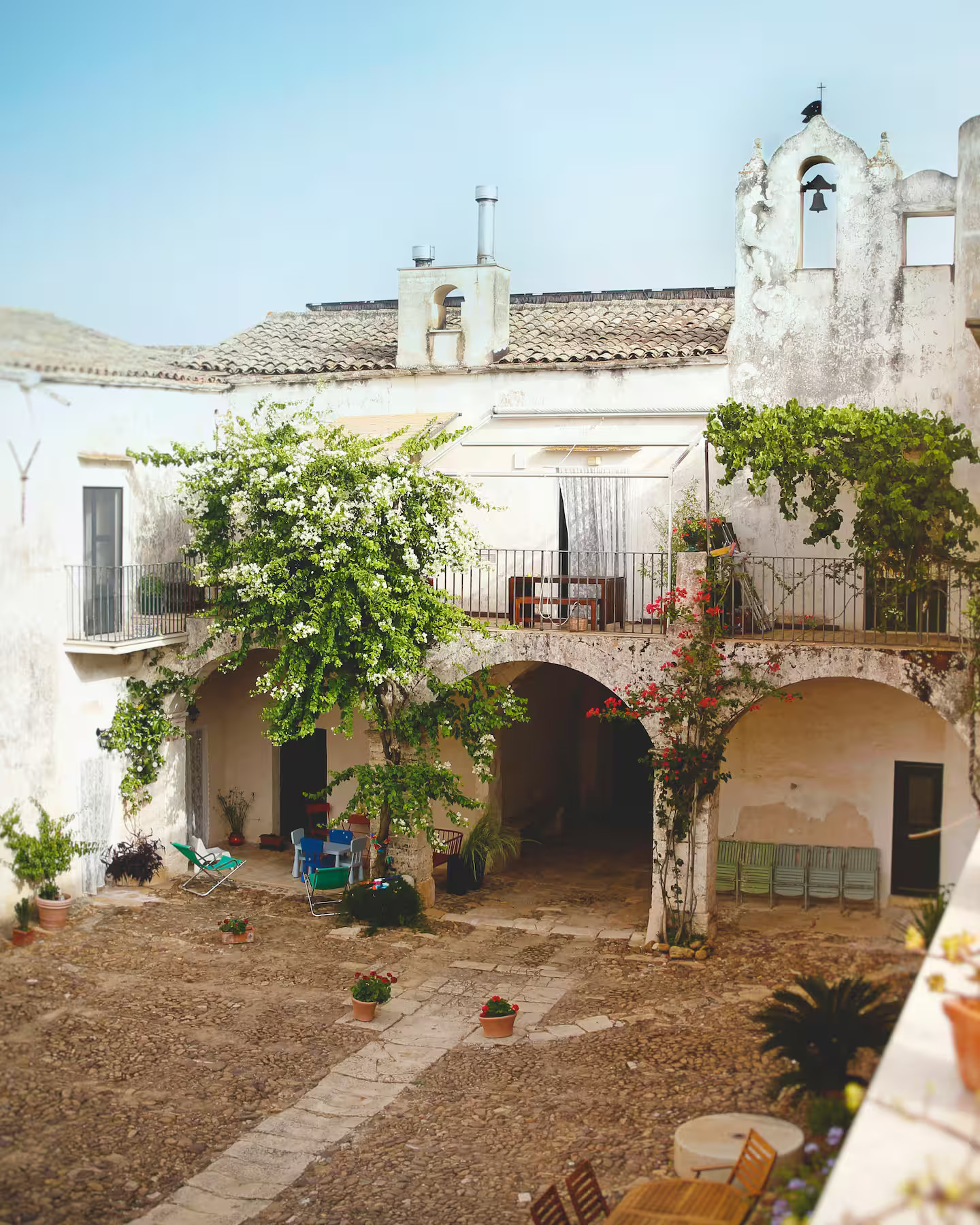
On the side, the other courtyard, more untamed, reveals the baglio’s original state. The weathered stone arches and the bougainvilleas climbing the columns, this is where the true soul of the place lies. This courtyard has not been extensively renovated, in order to preserve the site’s original beauty.
The bagli were built primarily between the 16th and 19th centuries, during a time when large landowners from western Sicily, who lived elsewhere, dominated the region. These "latifundists" entrusted the management of their estates to stewards. The baglio served as both the economic and social unit of this feudal organization.They are found primarily in the provinces of Trapani and Palermo.
With the rural exodus of the 20th century, most were abandoned. Since the 2000s, some have been purchased and converted into agritourism properties, boutique hotels, or vacation rentals. This is the fate of Baglio Cappello.
There is in Europe, a lot of beautiful old stone houses in need of renovation. And love for them. Here, too, we see the desire to preserve the stone, to respect it while incorporating modern elements. When you have a love for heritage, you can successfully blend the old with the contemporary.
Sicily shares this same desire when it comes to heritage renovation, aiming to preserve the island’s history and its authentic character. And this rural Sicily still remains untouched by the hordes of tourists. This duplex at Baglio Cappello exemplifies this commitment to reinventing old homes without distorting their essence.

You can rent this duplex in Sicily through Airbnb
It stands amid olive trees, set back from the roads, with its massive silhouette and limestone-colored walls. From the outside, nothing reveals what lies within. Inside, it’s a whole new world waiting to be discovered.
A duplex that makes the most of its historic structure
The owner of Baglio Cappello took a clear approach: she preserved what was worth keeping and introduced modern elements where necessary. She opted for a simple architectural principle by removing doors. Cut-out wrought-iron partitions replace the traditional dividers in the duplex. They divide the space without closing it off, allowing light to flow freely and creating an atmosphere halfway between a studio and an old residence. The ground floor is a completely open space housing the kitchen, dining room, and living room. Its old beams retain their raw appearance, just as they were originally.
The whitewashed walls stand alongside an exposed stone wall, with its beautiful ochre color and traces of centuries past. A stove rests against it. This sleek black cylinder is where one settles in when winter evenings grow cooler. A reading lamp and two white armchairs complete the decor of this very welcoming sitting area. This old stone wall has an almost theatrical look, in the best sense of the word.
Decor choices from a new era
The kitchen stands in stark contrast to the duplex apartment ’s antique elements. Its countertop is made of poured concrete, and the open shelves are light wood. The backsplash features turquoise and white tiles with a geometric pattern to add a pop of color. The freshness of the color breaks up the monotony of the natural tones found throughout the duplex. Everything is out in the open, which makes life easier while on vacation. Kitchen utensils, stainless steel pots, recycling bins, everything is visible. The open shelves showcase a collection of glasses, mugs, and a yellow teapot... It’s both rustic and authentic.
The dining room features a Tulip-style table by Eero Saarinen, surrounded by Thonet bentwood chairs. Though they’re from different eras, this designer table pairs beautifully with the traditional bistro chairs. The polished concrete floor unifies the spaces and brings together the disparate elements.
Upper floor and bedrooms
The metal staircase leading upstairs features an industrial design. Its bent black steel stringers contrast with the softness of the white walls. On the mezzanine, the partition wall, perforated with patterns, divides the space without closing it off. It lets light through and separates the bedrooms from the living area on the first level. The two double bedrooms have windows overlooking the Sicilian countryside. The whitewashed beams create a softer atmosphere and blend seamlessly into the background.
Courtyard and pool
The true masterpiece of this baglio is found outdoors. The inner courtyard is arranged around a rectangular pool with a dark bottom, carved from rough stone and concrete. Its saltwater reflects the blue Sicilian sky. A monumental limestone arch frames the view. It almost feels like a movie set. Lemon trees add a touch of green and fragrance. The outdoor space makes you want to stay outside rather than go back inside.
On the side, the other courtyard, more untamed, reveals the baglio’s original state. The weathered stone arches and the bougainvilleas climbing the columns, this is where the true soul of the place lies. This courtyard has not been extensively renovated, in order to preserve the site’s original beauty.
The history of the bagli
The bagli were built primarily between the 16th and 19th centuries, during a time when large landowners from western Sicily, who lived elsewhere, dominated the region. These "latifundists" entrusted the management of their estates to stewards. The baglio served as both the economic and social unit of this feudal organization.They are found primarily in the provinces of Trapani and Palermo.
With the rural exodus of the 20th century, most were abandoned. Since the 2000s, some have been purchased and converted into agritourism properties, boutique hotels, or vacation rentals. This is the fate of Baglio Cappello.
What this place inspires in us
There is in Europe, a lot of beautiful old stone houses in need of renovation. And love for them. Here, too, we see the desire to preserve the stone, to respect it while incorporating modern elements. When you have a love for heritage, you can successfully blend the old with the contemporary.
Sicily shares this same desire when it comes to heritage renovation, aiming to preserve the island’s history and its authentic character. And this rural Sicily still remains untouched by the hordes of tourists. This duplex at Baglio Cappello exemplifies this commitment to reinventing old homes without distorting their essence.


You can rent this duplex in Sicily through Airbnb


Comments