A renovated 1960s cabin on the water’s edge in Tasmania
Follow Planète Déco on Google — add us to your favourites to keep our decor articles in your news feedOn Bruny Island in Tasmania, The Songbird is a restored 1960s cabin facing the ocean decorated in a rustic French style in natural tons
Bruny Island, in Tasmania, is accessible by ferry from Kettering, south of Hobart, crossing the D’Entrecasteaux Channel, a waterway named by 18th-century French explorers. It runs along these wild coasts and arrives at this protected and sparsely populated island, which has remained completely authentic. It is there, on the edge of the channel, that The Songbird is located. This 1960s cabin, perched on wooden stilts, with its taupe-gray siding and white shutters, looks every bit the part of a modest home. But its interior is far more elegant than you might expect.
Many “lovingly restored” vacation properties settle for a beige linen sofa and a few vases of dried flowers. The owner of this 1960s cabin, Alice, chose a different path. She rebuilt the interior the way you compose a painting. Each room is curated with the same strict chromatic coherence. You’ll find off-white, weathered wood, burnt ochre, and ivory. Everything is in these soft, natural tones that soothe the eye.
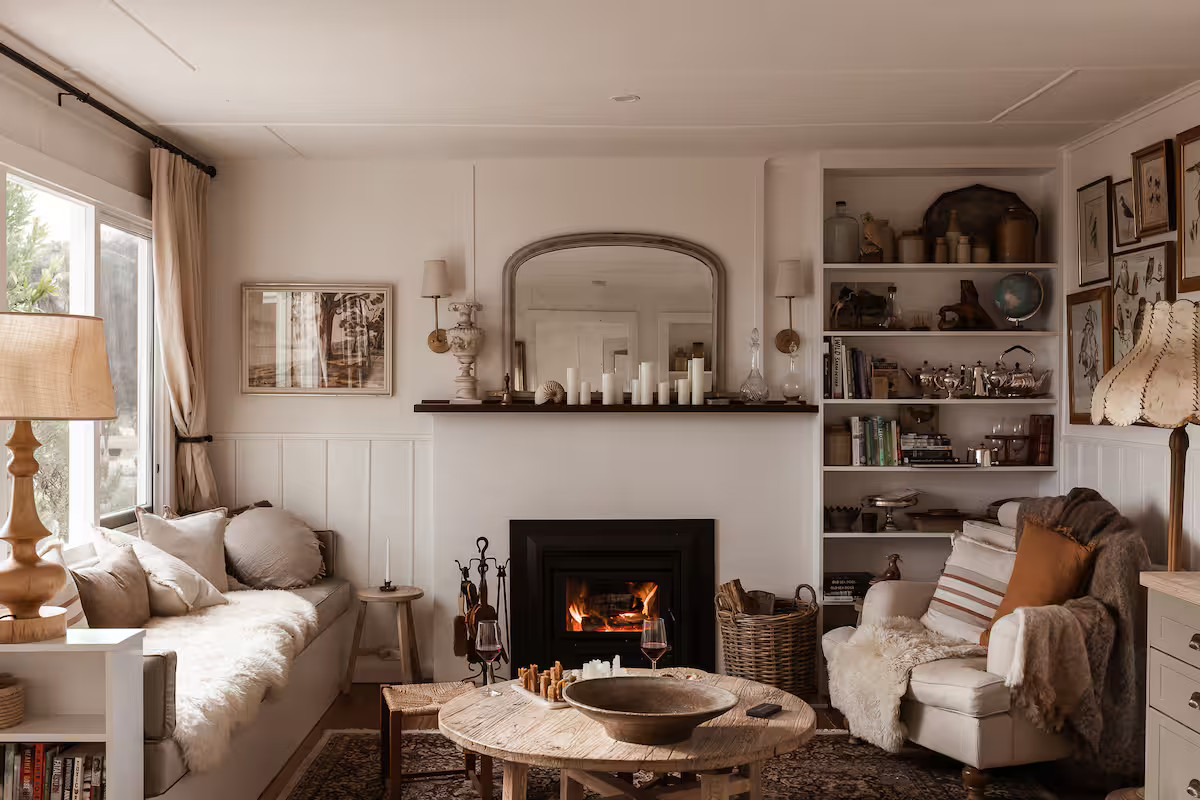
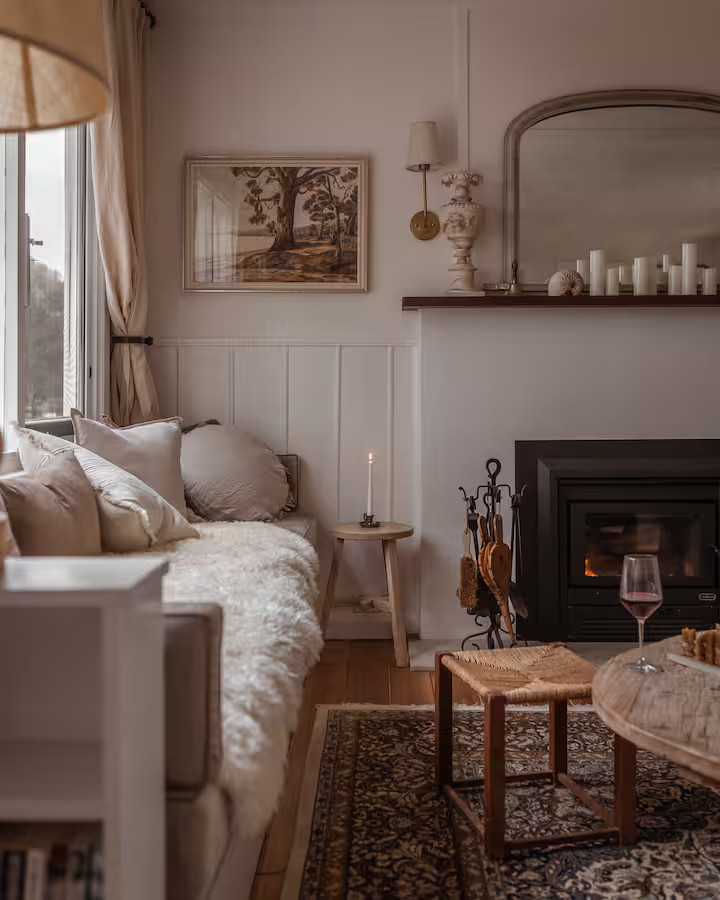
You enter directly into the living room, where there is a fireplace. It is furnished with a linen sofa and a raw wood coffee table, set on a Persian rug with a time-worn pattern. It is a warm and welcoming room, perfect for unwinding after the crossing to the island.
The walls are paneled halfway up with vertical moldings painted white. Above the fireplace, an antique mirror with a silver patina reflects the room back at you. The sofa looks deeply comfortable, with a sheepskin thrown across it. Opposite, a club chair in light fabric, equally draped in blankets. The overall effect is comfortable without being ostentatious, the kind of room that invites you to stay.
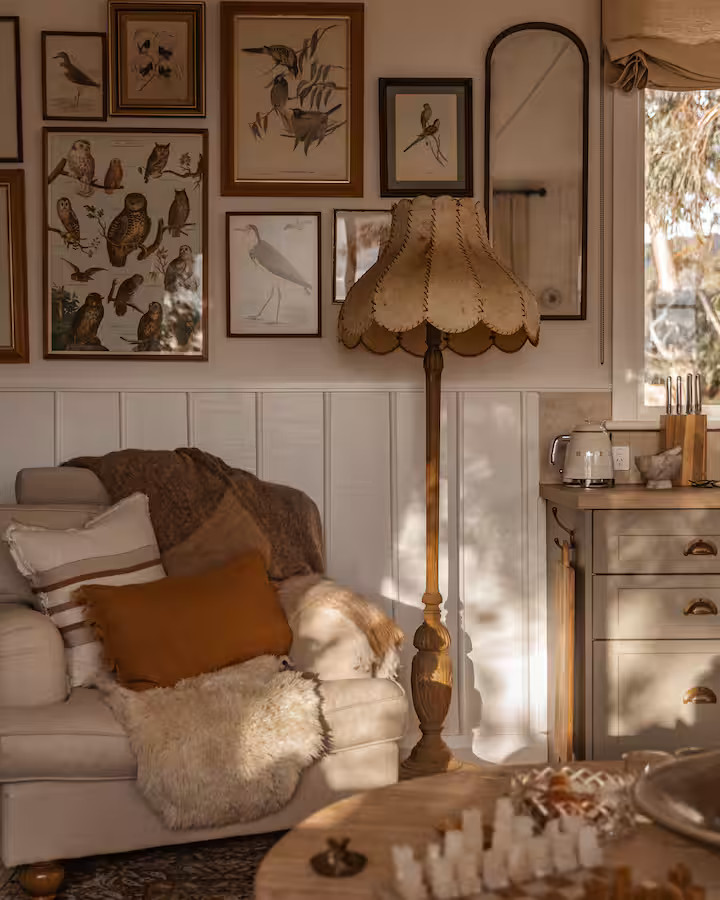
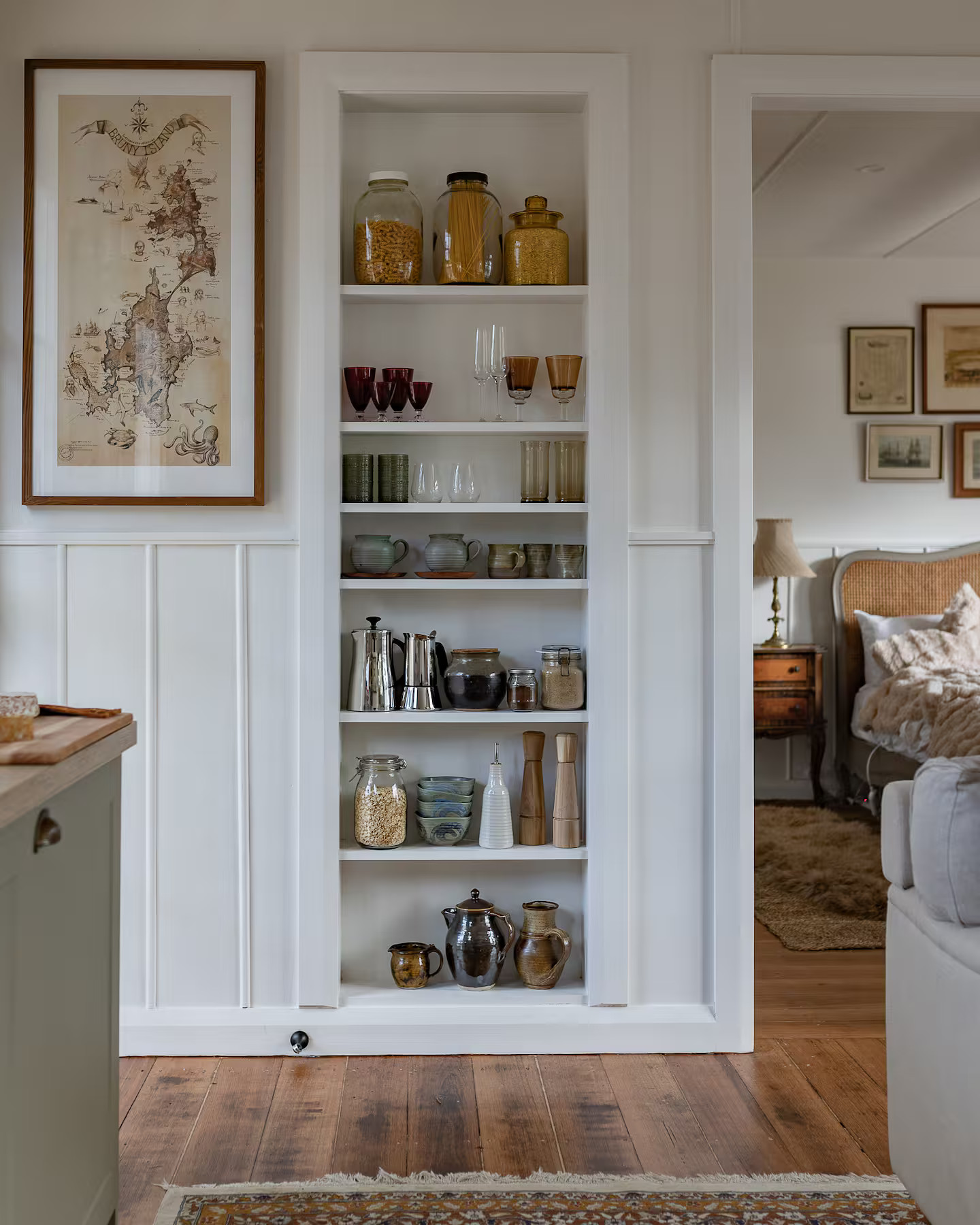
A built-in shelf to the right of the hearth is dressed with an assortment of objects: stoneware pots, silver candlesticks, books with colorful spines, even a wooden globe. The right-hand wall is treated as a gallery, holding around twenty frames with birds, the kind of collection you imagine has passed through several generations of hands.
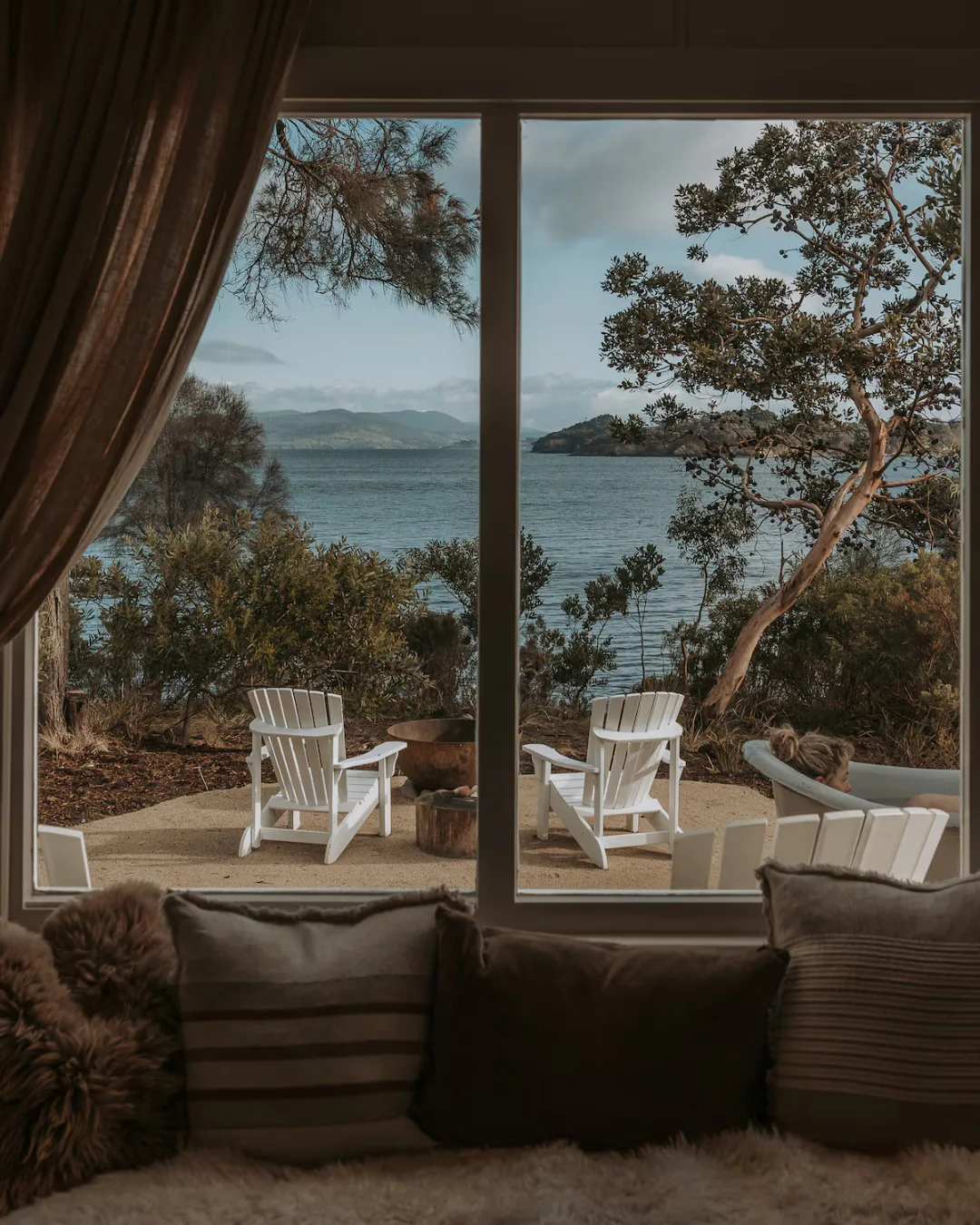
View from the living room of this 1960s cabin is stunning: eucalyptus trees, the blue-gray water, and the hills of Satellite Island.
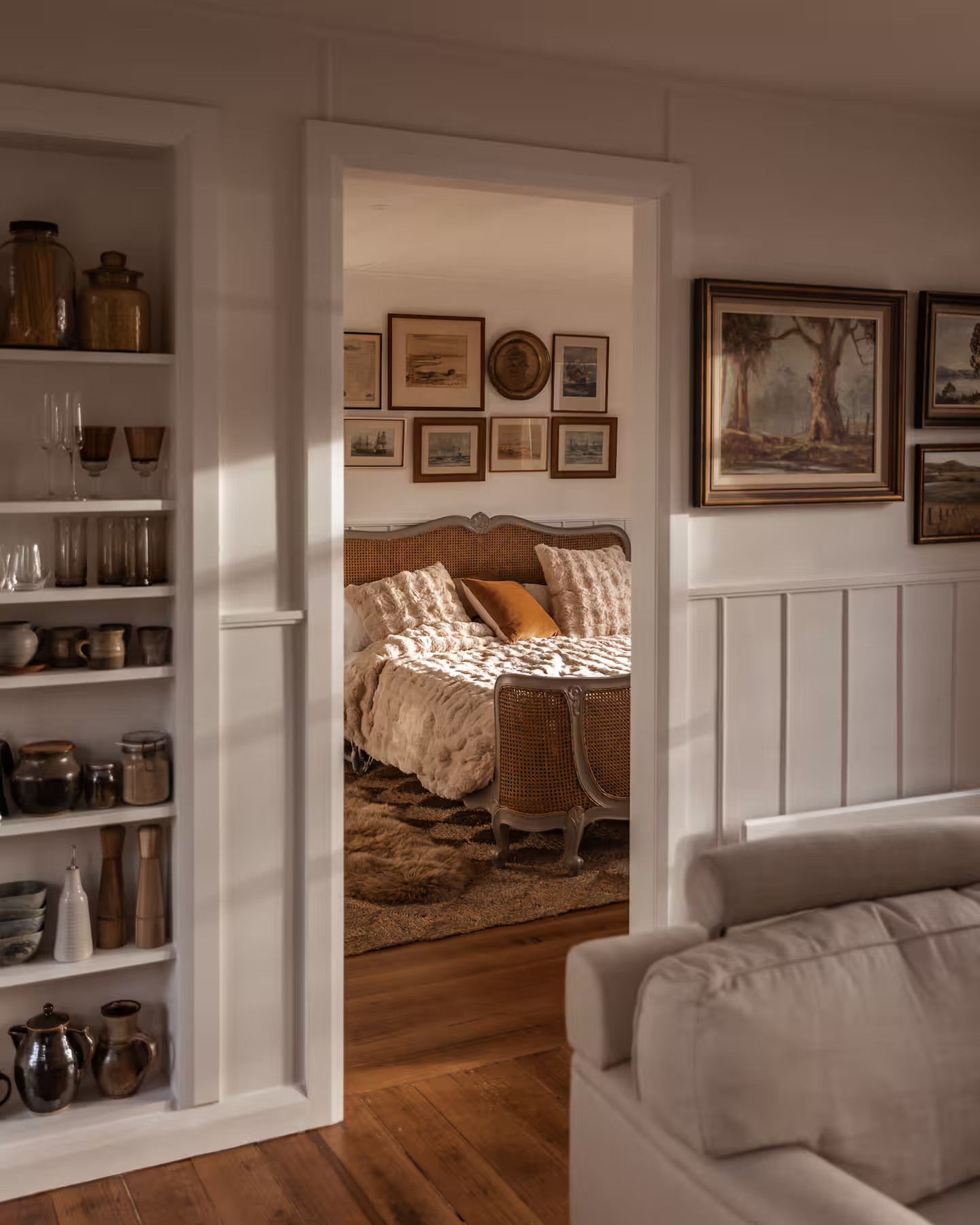
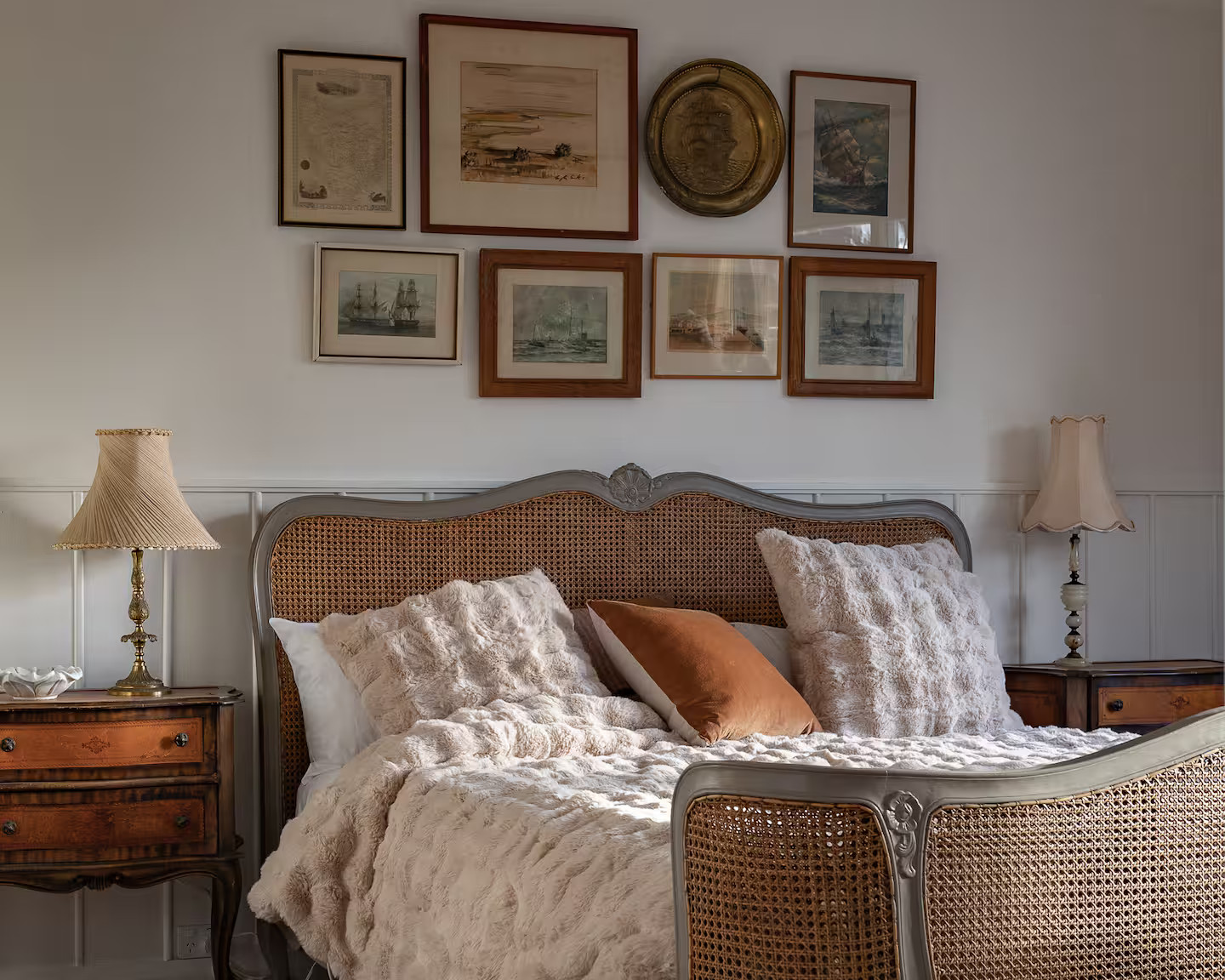
You enter the bedroom, where you discover the aged oak floor and paneling. And in the center, an unexpected element in this remote corner of Australia: a French bed made of rattan and light gray lacquered wood. It is clearly in the Louis XV style, with its curved posts and a headboard carved with a floral medallion.
Above the bed, a gallery of marine engravings depicting sailboats against a gray background, along with antique maps, evokes the region’s maritime history. French explorers Bruni d’Entrecasteaux and Huon de Kermadec charted these waters in 1792. The choice of these prints reads as a quiet tribute to that history.
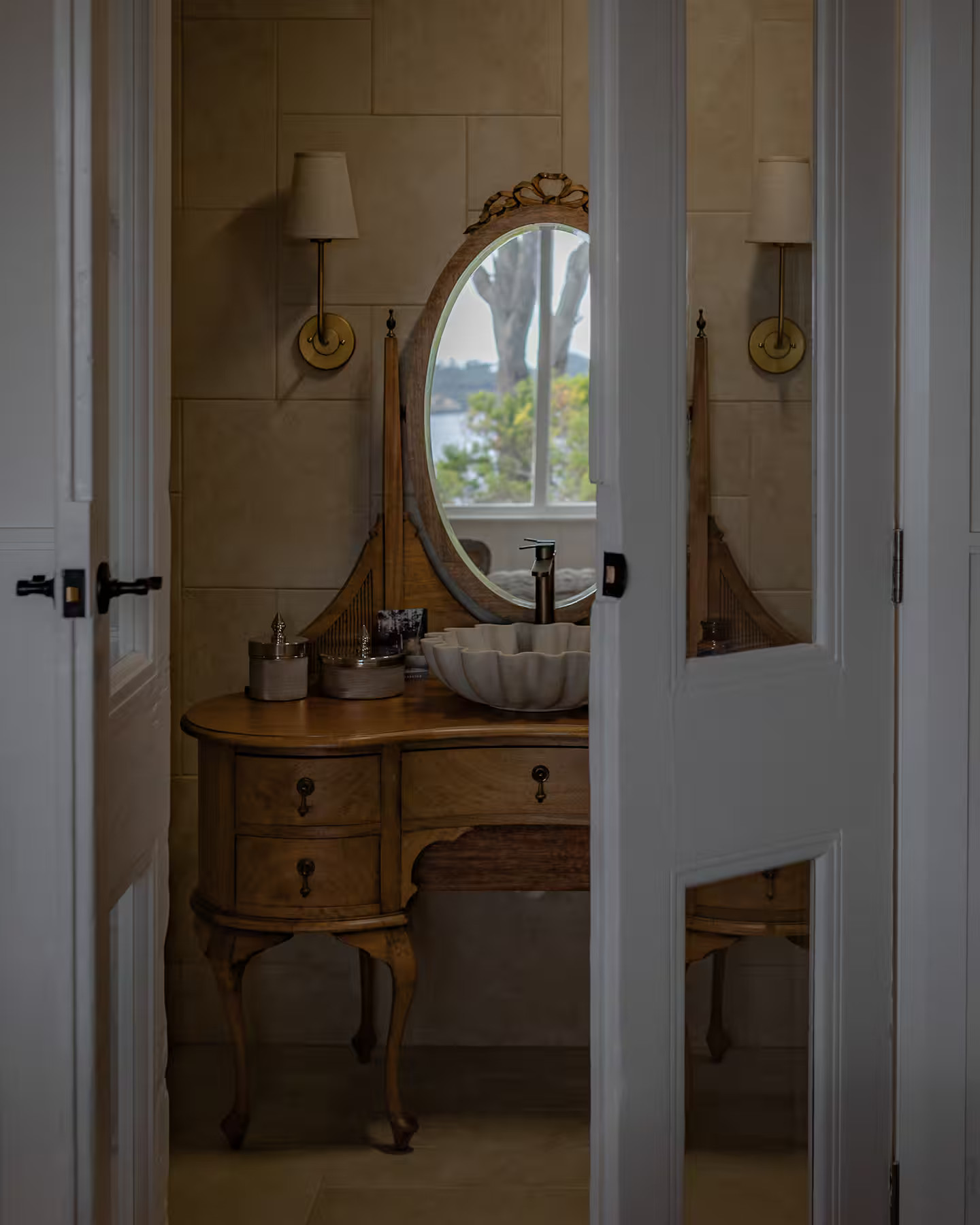
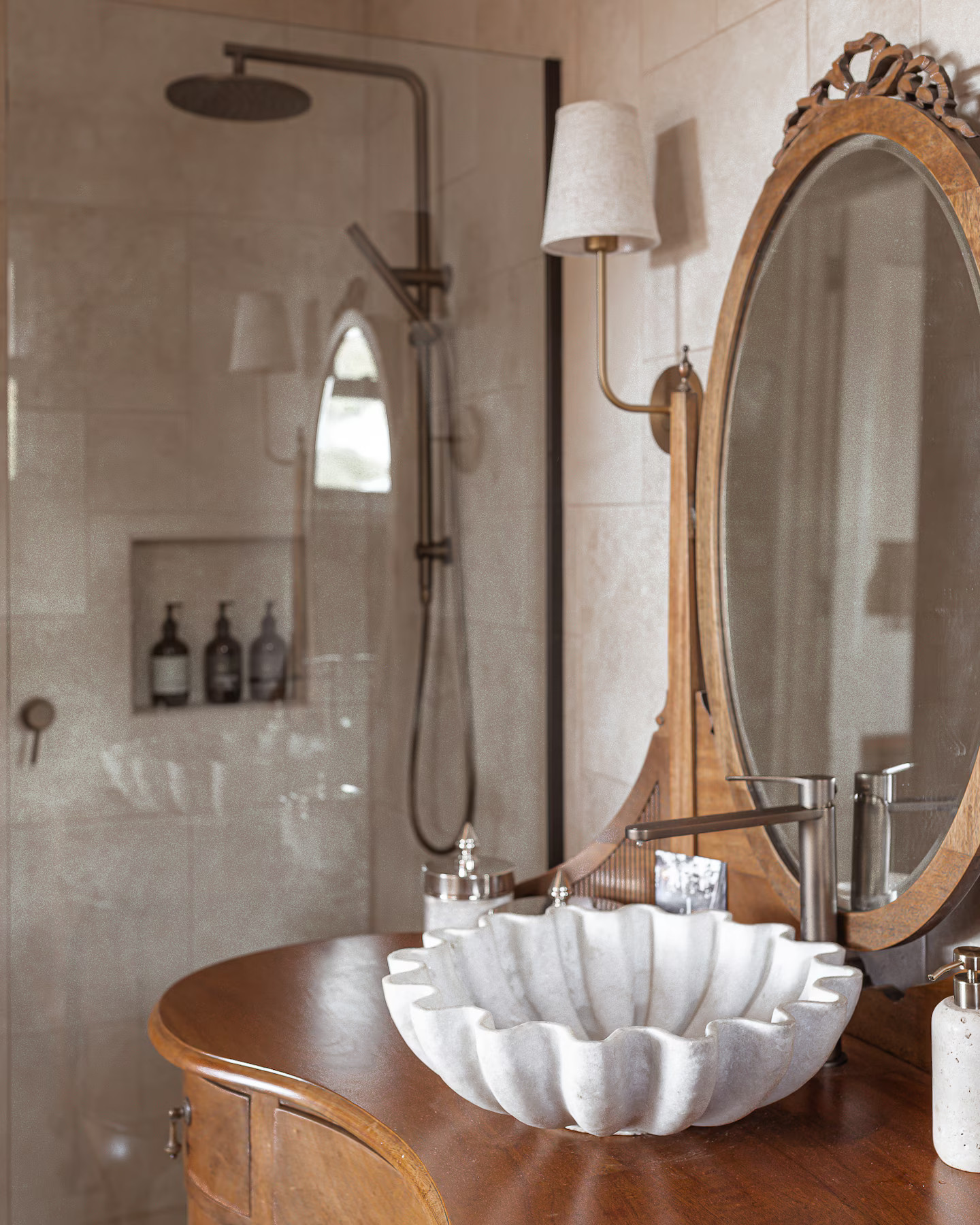
This is where the decorative approach of this 1960s cabin is most extreme. On an antique bathroom cabinet, converted from a walnut dresser, sits a white marble basin carved in the shape of a scallop shell. The faucets are brushed stainless steel. The contrast with the warm wood of the cabinet is striking.
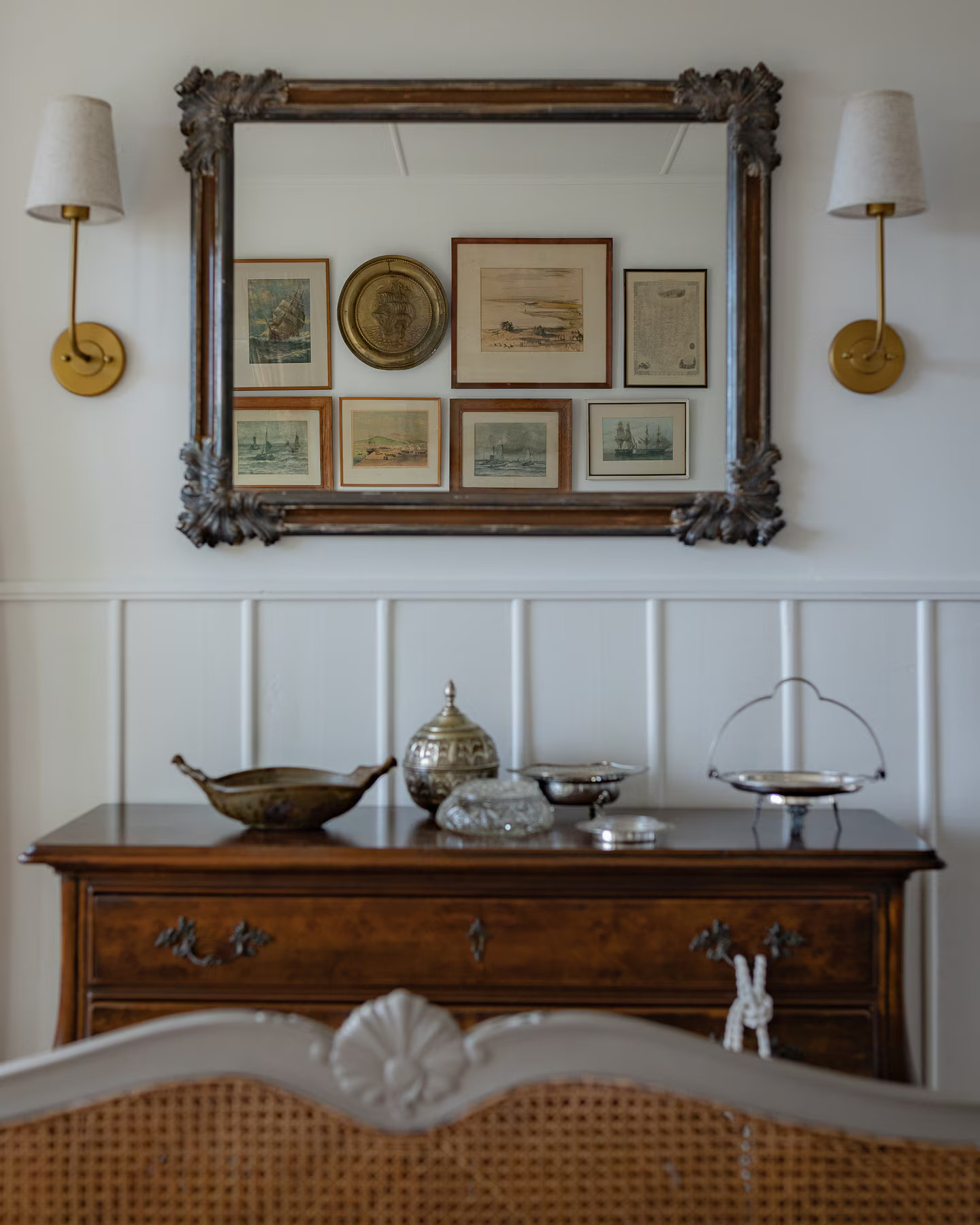
An oval mirror, set in an old-fashioned carved wooden frame with oxidized gilding and ornate details, is likely a vintage find. It gives the space the feel of a 19th-century boudoir. The walk-in shower, set back from the wall, is tiled with large matte beige stone slabs and features a round showerhead in patinated bronze.
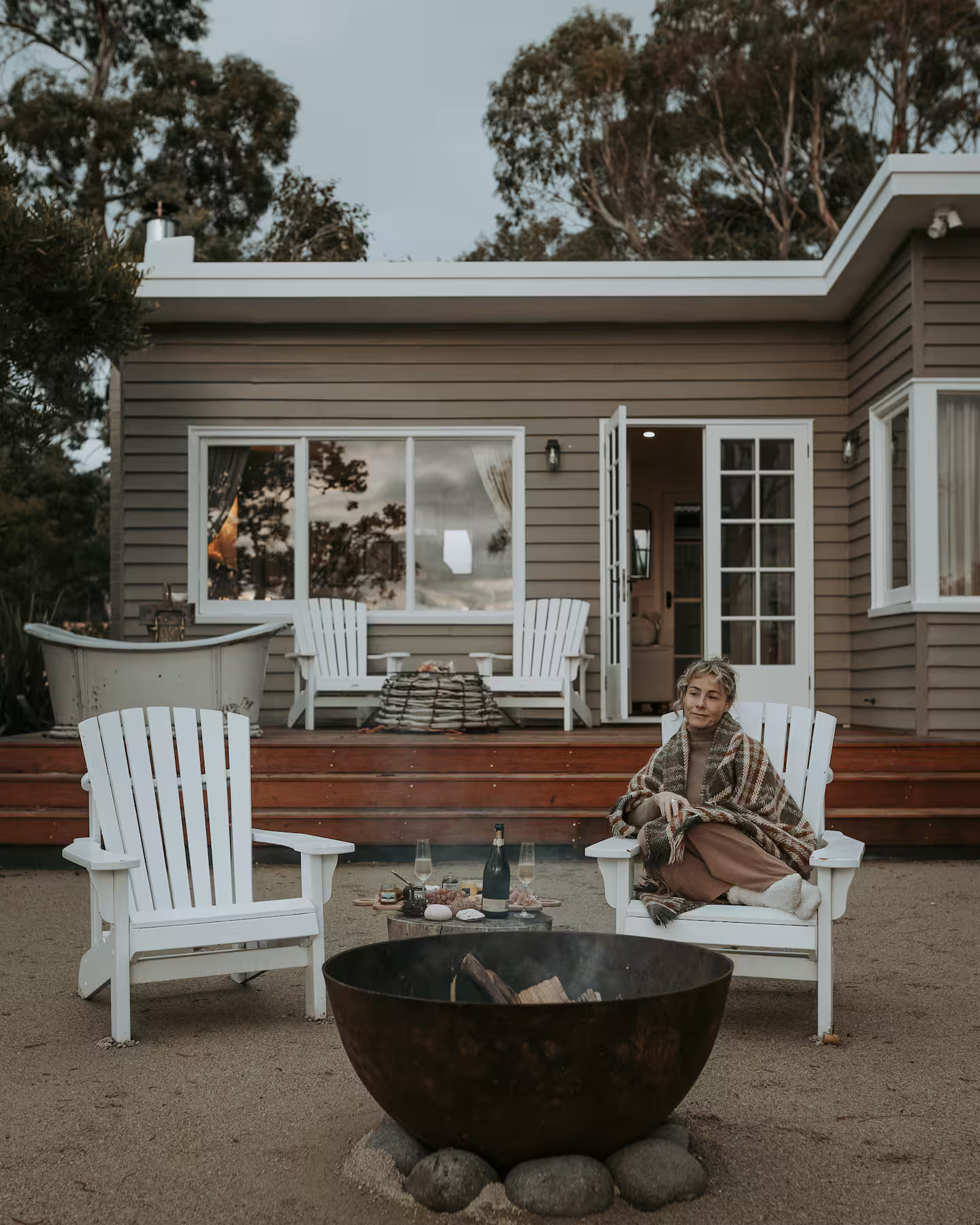
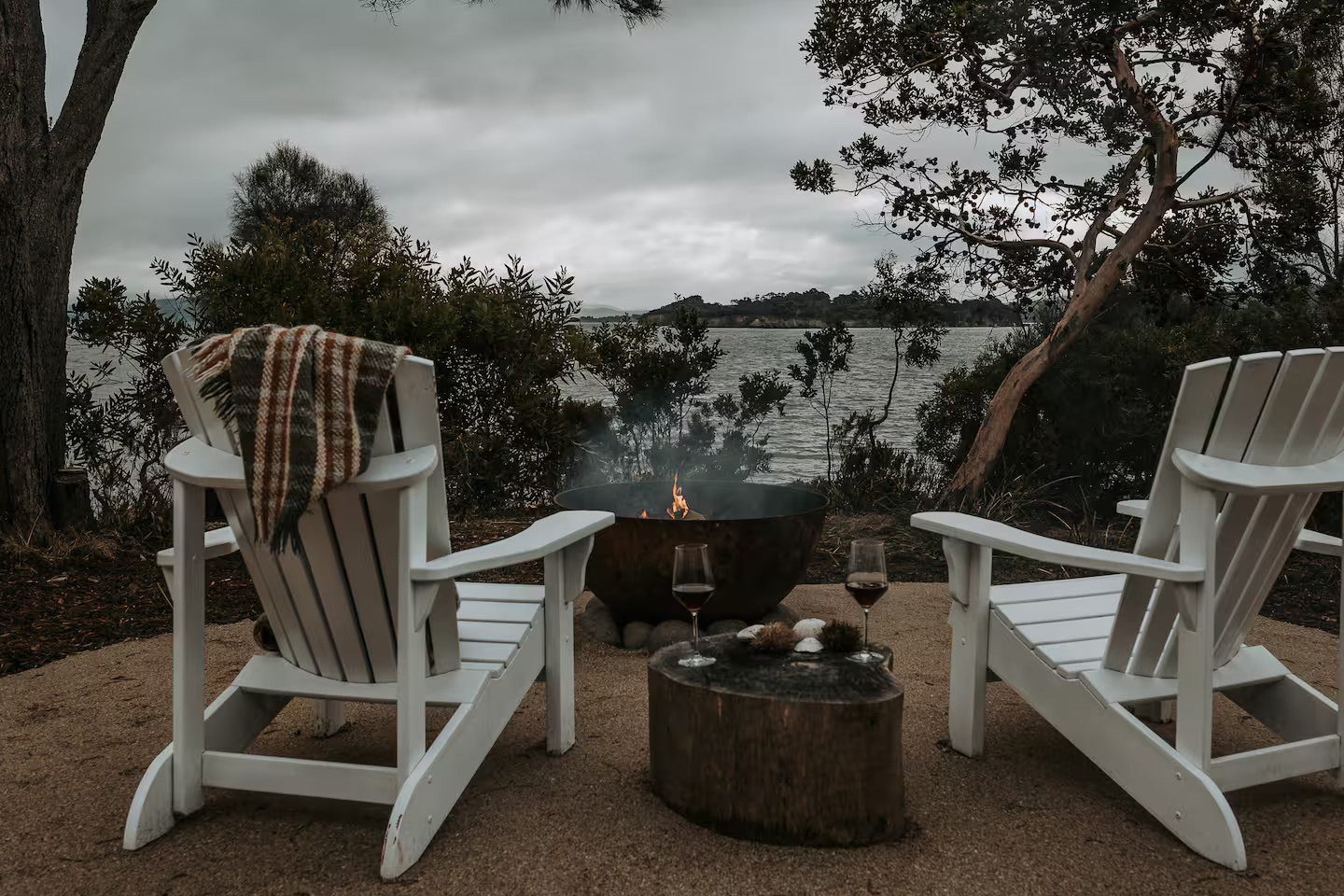
The wooden deck opens directly onto the canal. It features two white Adirondack chairs and a retro claw-foot bathtub, placed outdoors. There is also a Corten steel fire pit facing the water, surrounded by two more chairs.
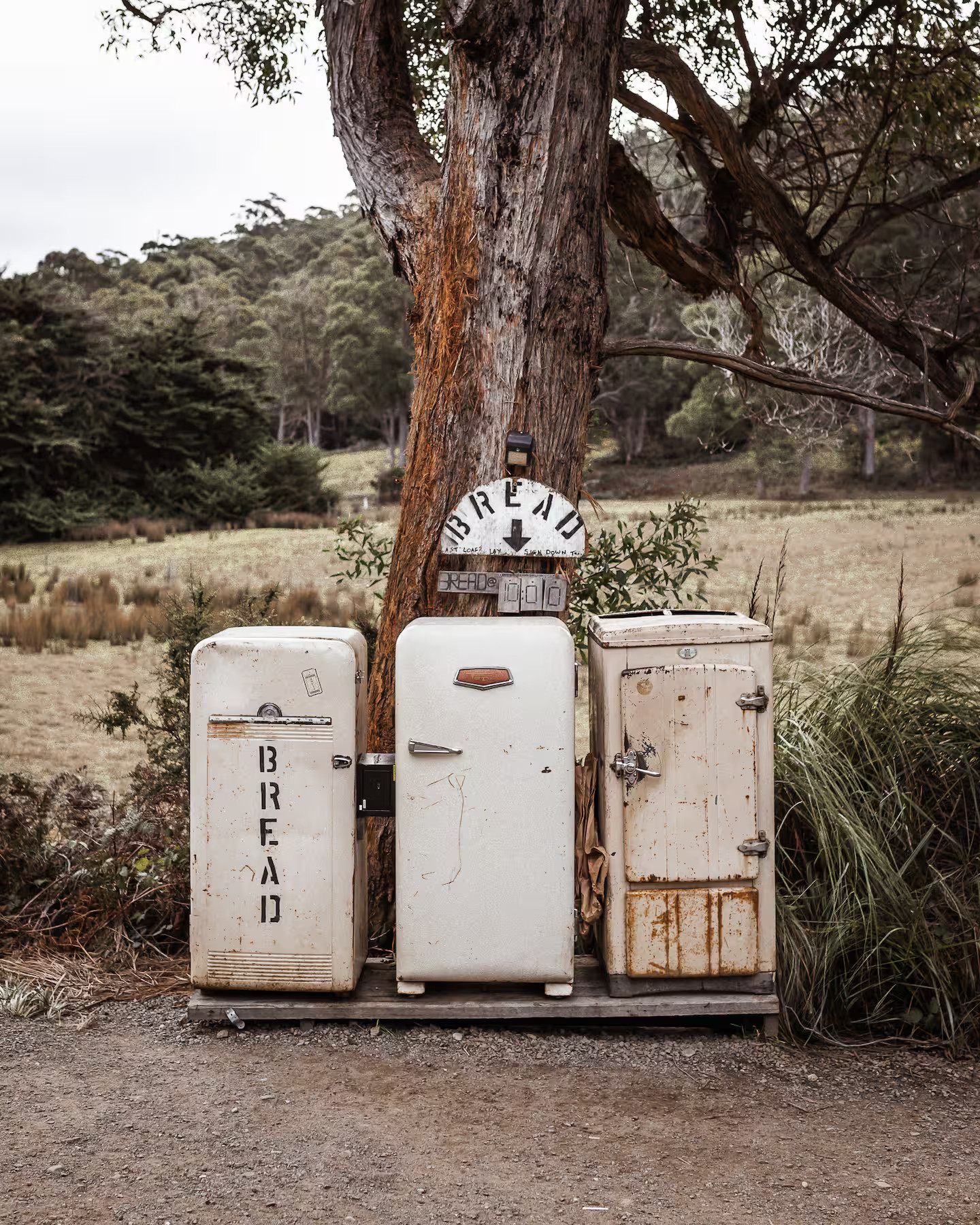
Bruny Island is divided into two parts connected by a narrow isthmus. To the north: farms and vineyards. To the south: an almost untouched nature reserve. Along the trails you may encounter little penguins, dolphins in the channel, wallabies. Local bread is still sold from old 1950s refrigerators left by the roadside with "BREAD" hand-painted on their rusted metal doors. The island has held onto something intact, an old way of doing things.
The listing makes a point of noting that Bruny Island is the traditional land of the Nuenonne people, the custodians of Lunawanna-alonnah for thousands of years. Alice states this plainly, and it is not something to take lightly. In Tasmania, the recognition of First Nations peoples is taken seriously, and on an island as preserved as Bruny, it carries real weight.
You are not staying in a stage set. You are being welcomed into a place that carries an ancient memory. The property operates strictly within the guidelines of the Kingborough Council and local short-term rental legislation. Guests are asked to respect the established rules and the peace of neighboring residents.

This 1960s cabin is available for rent through Airbnb
A restoration that refuses the folklore
Many “lovingly restored” vacation properties settle for a beige linen sofa and a few vases of dried flowers. The owner of this 1960s cabin, Alice, chose a different path. She rebuilt the interior the way you compose a painting. Each room is curated with the same strict chromatic coherence. You’ll find off-white, weathered wood, burnt ochre, and ivory. Everything is in these soft, natural tones that soothe the eye.
You enter directly into the living room, where there is a fireplace. It is furnished with a linen sofa and a raw wood coffee table, set on a Persian rug with a time-worn pattern. It is a warm and welcoming room, perfect for unwinding after the crossing to the island.
The living room: a livable cabinet of curiosities
The walls are paneled halfway up with vertical moldings painted white. Above the fireplace, an antique mirror with a silver patina reflects the room back at you. The sofa looks deeply comfortable, with a sheepskin thrown across it. Opposite, a club chair in light fabric, equally draped in blankets. The overall effect is comfortable without being ostentatious, the kind of room that invites you to stay.
A built-in shelf to the right of the hearth is dressed with an assortment of objects: stoneware pots, silver candlesticks, books with colorful spines, even a wooden globe. The right-hand wall is treated as a gallery, holding around twenty frames with birds, the kind of collection you imagine has passed through several generations of hands.
View from the living room of this 1960s cabin is stunning: eucalyptus trees, the blue-gray water, and the hills of Satellite Island.
The bedroom, with a quiet French accent
You enter the bedroom, where you discover the aged oak floor and paneling. And in the center, an unexpected element in this remote corner of Australia: a French bed made of rattan and light gray lacquered wood. It is clearly in the Louis XV style, with its curved posts and a headboard carved with a floral medallion.
Above the bed, a gallery of marine engravings depicting sailboats against a gray background, along with antique maps, evokes the region’s maritime history. French explorers Bruni d’Entrecasteaux and Huon de Kermadec charted these waters in 1792. The choice of these prints reads as a quiet tribute to that history.
The bathroom is probably the most surprising room
This is where the decorative approach of this 1960s cabin is most extreme. On an antique bathroom cabinet, converted from a walnut dresser, sits a white marble basin carved in the shape of a scallop shell. The faucets are brushed stainless steel. The contrast with the warm wood of the cabinet is striking.
An oval mirror, set in an old-fashioned carved wooden frame with oxidized gilding and ornate details, is likely a vintage find. It gives the space the feel of a 19th-century boudoir. The walk-in shower, set back from the wall, is tiled with large matte beige stone slabs and features a round showerhead in patinated bronze.
A 1960s cabin immersed in nature
The wooden deck opens directly onto the canal. It features two white Adirondack chairs and a retro claw-foot bathtub, placed outdoors. There is also a Corten steel fire pit facing the water, surrounded by two more chairs.
An island unlike any other
Bruny Island is divided into two parts connected by a narrow isthmus. To the north: farms and vineyards. To the south: an almost untouched nature reserve. Along the trails you may encounter little penguins, dolphins in the channel, wallabies. Local bread is still sold from old 1950s refrigerators left by the roadside with "BREAD" hand-painted on their rusted metal doors. The island has held onto something intact, an old way of doing things.
An address rooted in its land
The listing makes a point of noting that Bruny Island is the traditional land of the Nuenonne people, the custodians of Lunawanna-alonnah for thousands of years. Alice states this plainly, and it is not something to take lightly. In Tasmania, the recognition of First Nations peoples is taken seriously, and on an island as preserved as Bruny, it carries real weight.
You are not staying in a stage set. You are being welcomed into a place that carries an ancient memory. The property operates strictly within the guidelines of the Kingborough Council and local short-term rental legislation. Guests are asked to respect the established rules and the peace of neighboring residents.


This 1960s cabin is available for rent through Airbnb



Comments