A 1900s apartment with exceptional moldings and timeless decor
Follow Planète Déco on Google — add us to your favourites to keep our decor articles in your news feedThis 76sqm 1900s apartment has preserved its original stucco and moldings, which, combined with its current decor, make a unique interior
It’s hard not to love older apartments with their original features, which are often absolutely stunning. This 1900s apartment is one of them. Of course, we love its impeccably executed decor, which blends contemporary and vintage elements. But what stands out most are its perfectly preserved stucco work, moldings, and medallions. They are of rare delicacy and run all the way around the ceilings. Add to that the wide-plank, unfinished wood flooring that covers every room, and you have an apartment that’s simply to die for. We are in Gothenburg, and let’s face it, it feels like we’re inside a Parisian Haussmann-style apartment.
This resemblance is no coincidence. Early 20th-century Sweden looked heavily to France and Vienna for inspiration. The city’s architects of that period worked in an ornamental style closely resembling the Haussmannian style. In this generously proportioned Swedish apartment, you’ll find sculpted plaster garlands, ceiling rosettes, and white stucco door frames.
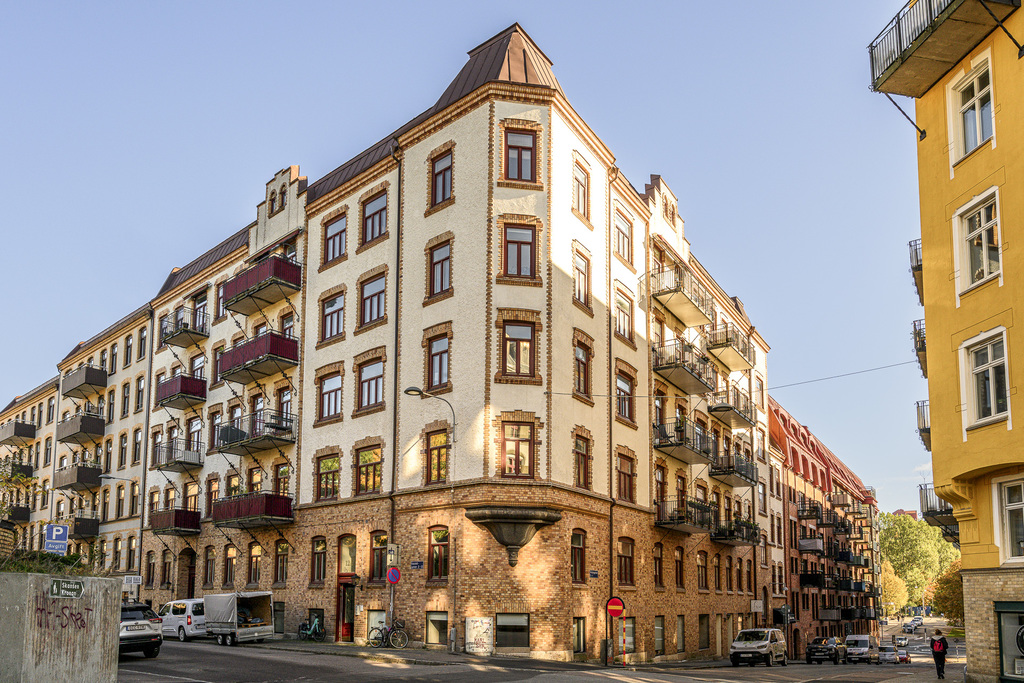
The building itself doesn’t look like a Haussmann-style structure, but inside, the details transport you to Paris. It remains a magnificent brick building. Gothenburg has many buildings of this type, a delight to discover for those who love the bourgeois architecture of this period.
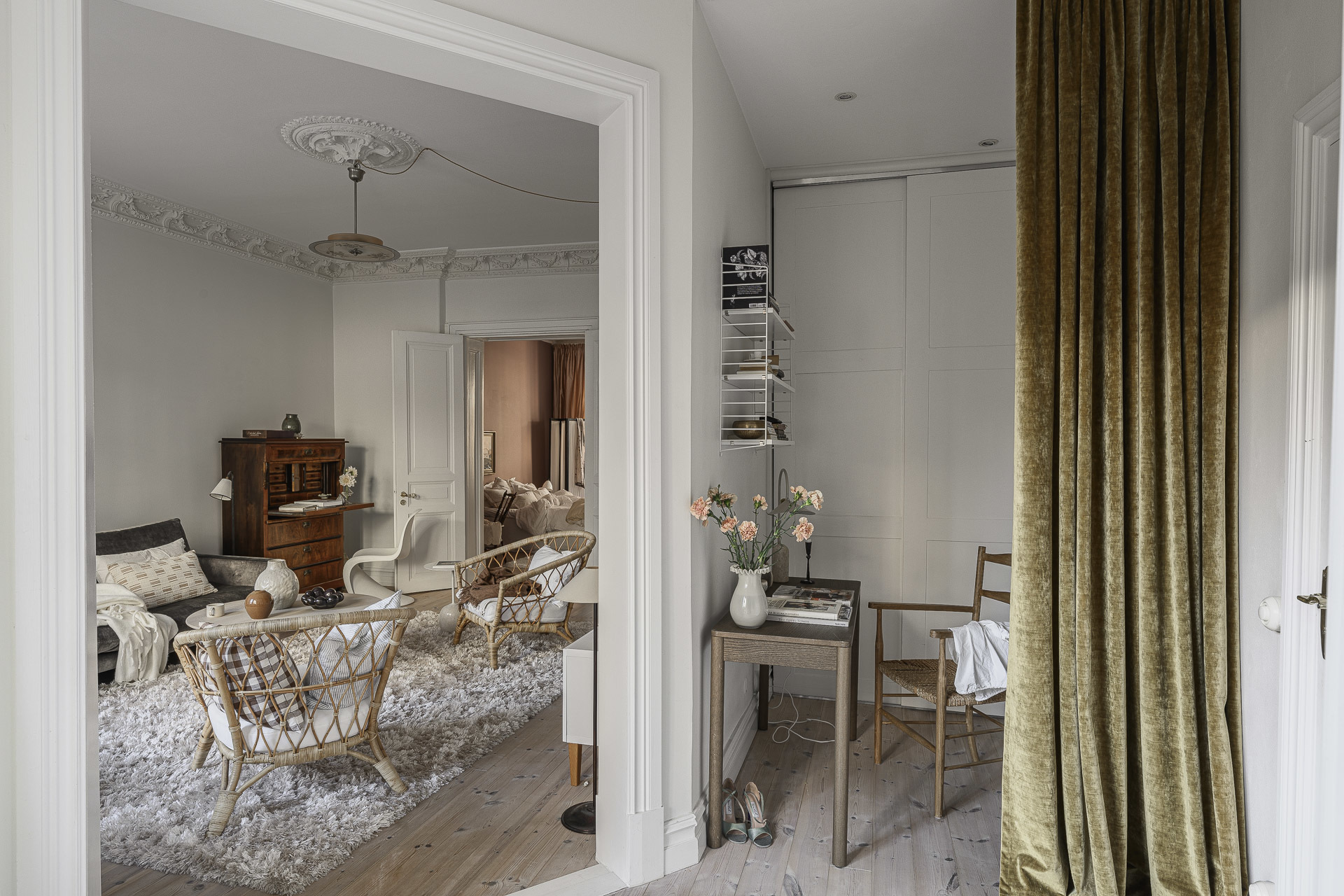
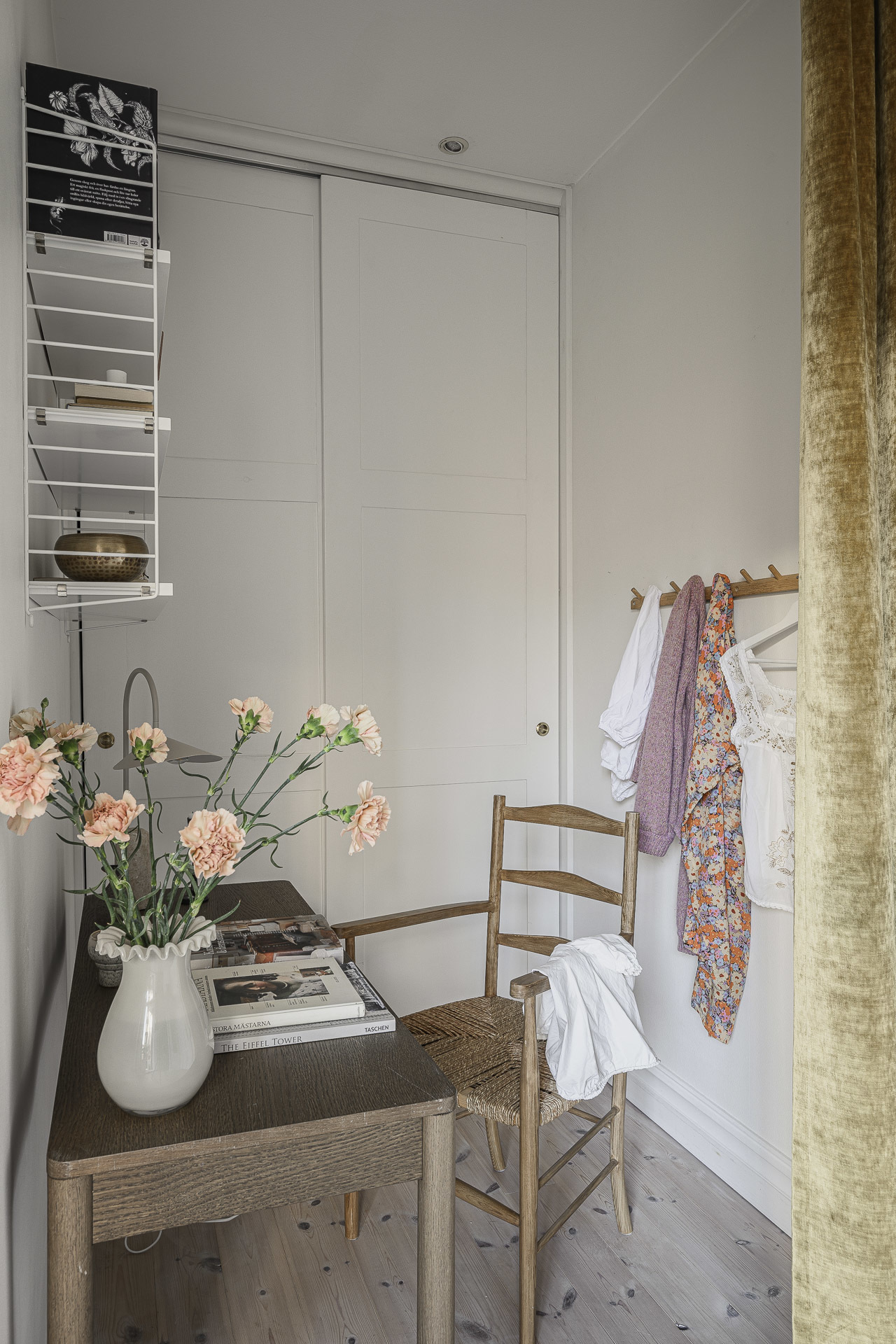
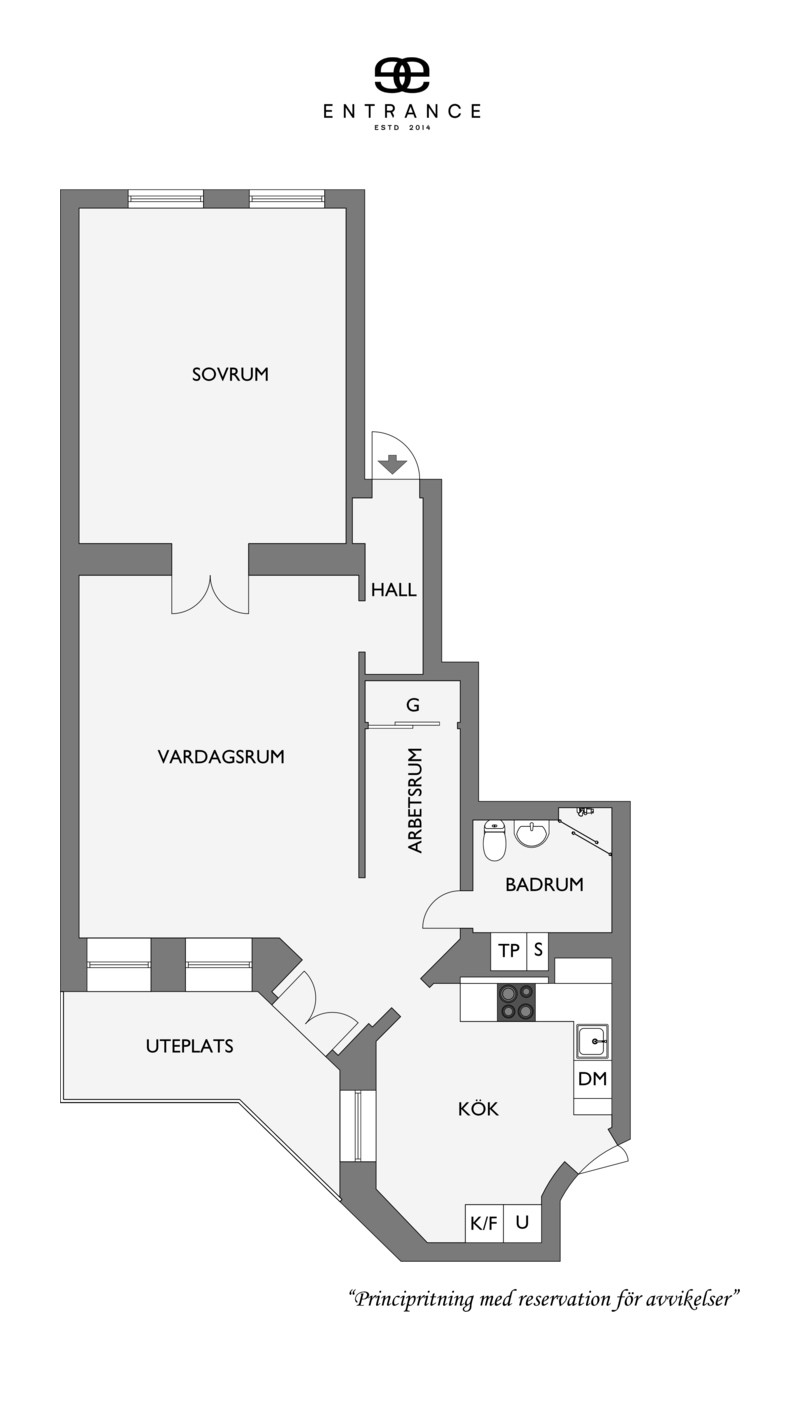
The apartment is 76sqm in total and is essentially a large two-room apartment with a single bedroom and a small office. Thanks to the high ceilings, large windows, and fairly neutral decor, the space feels more spacious.
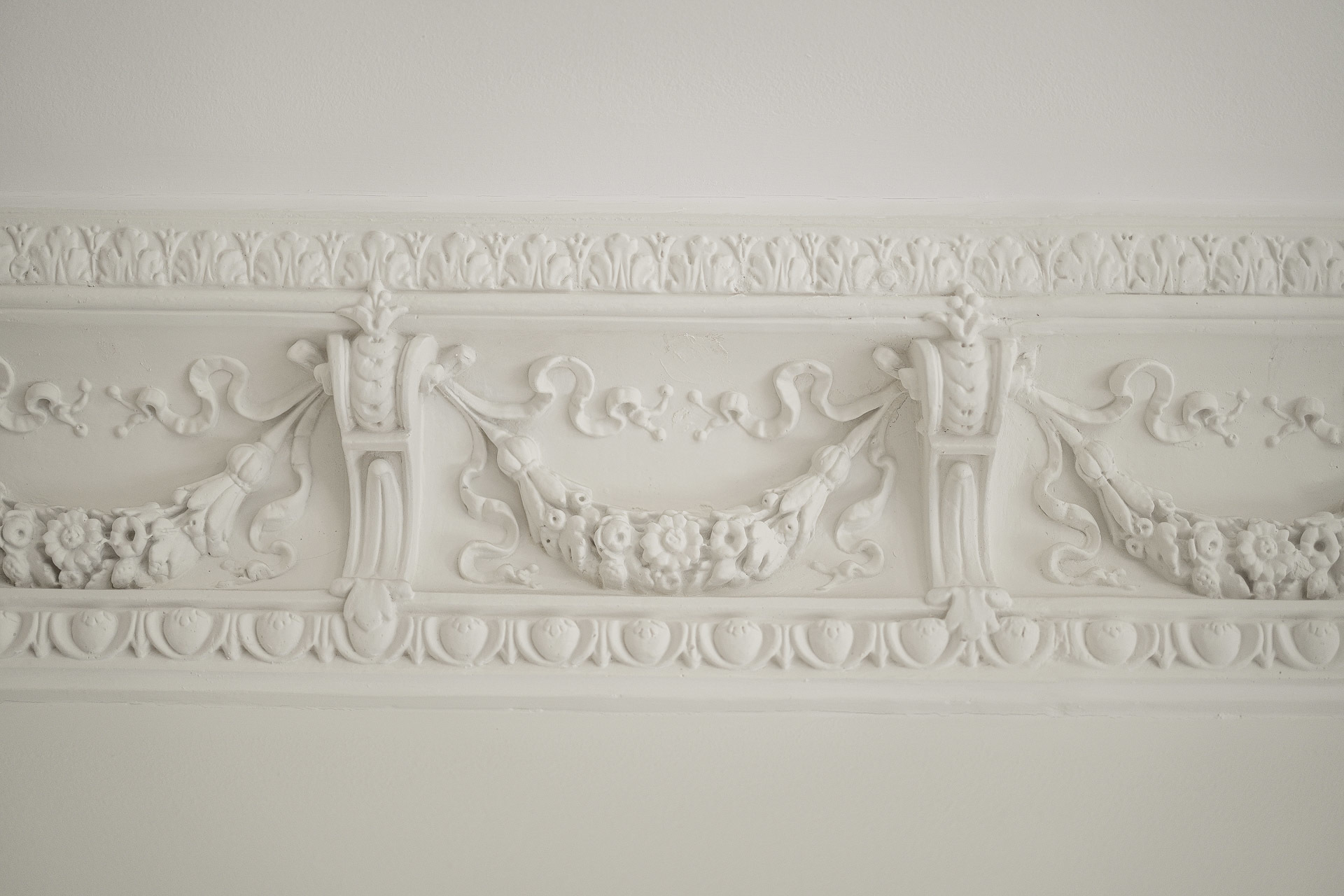
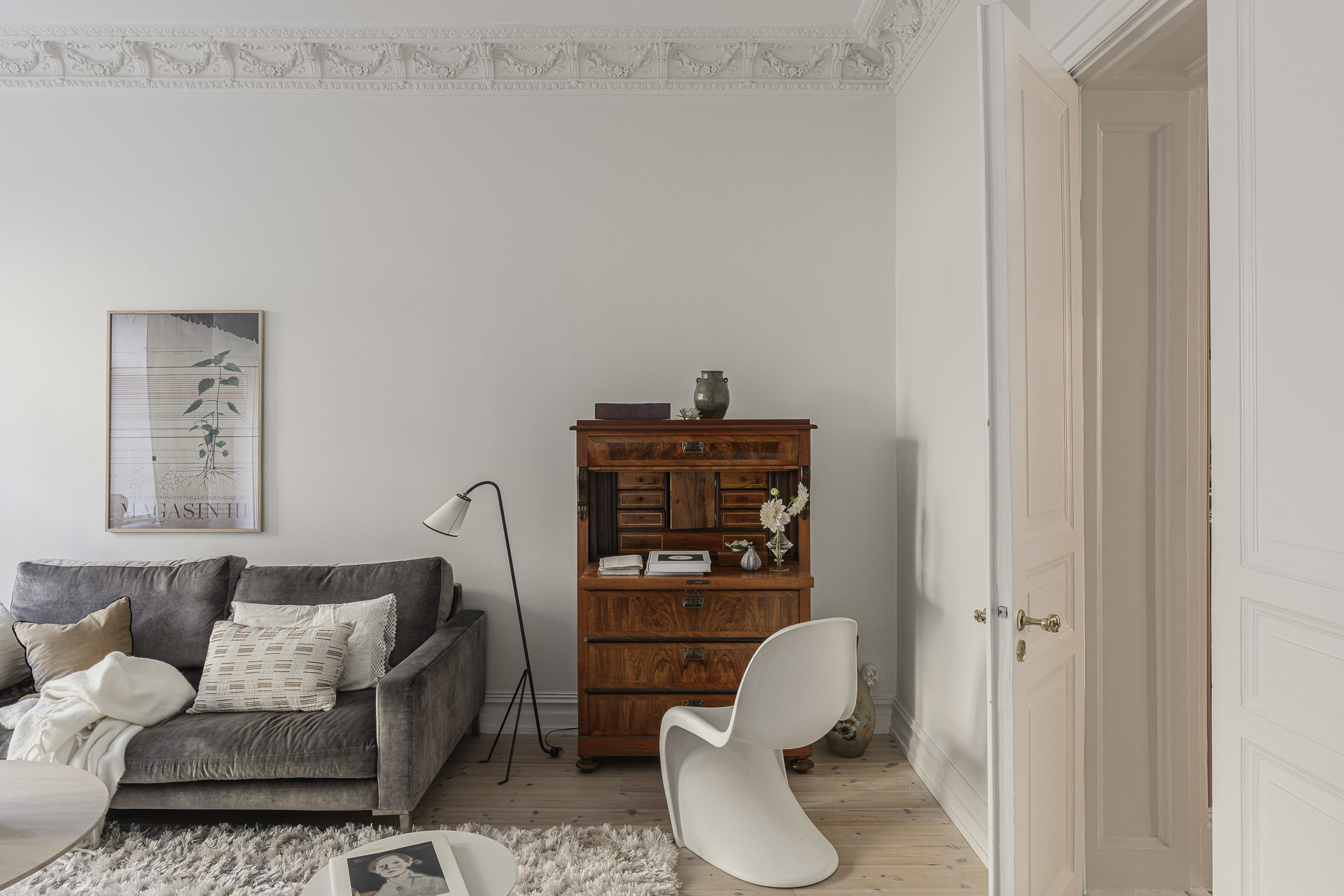
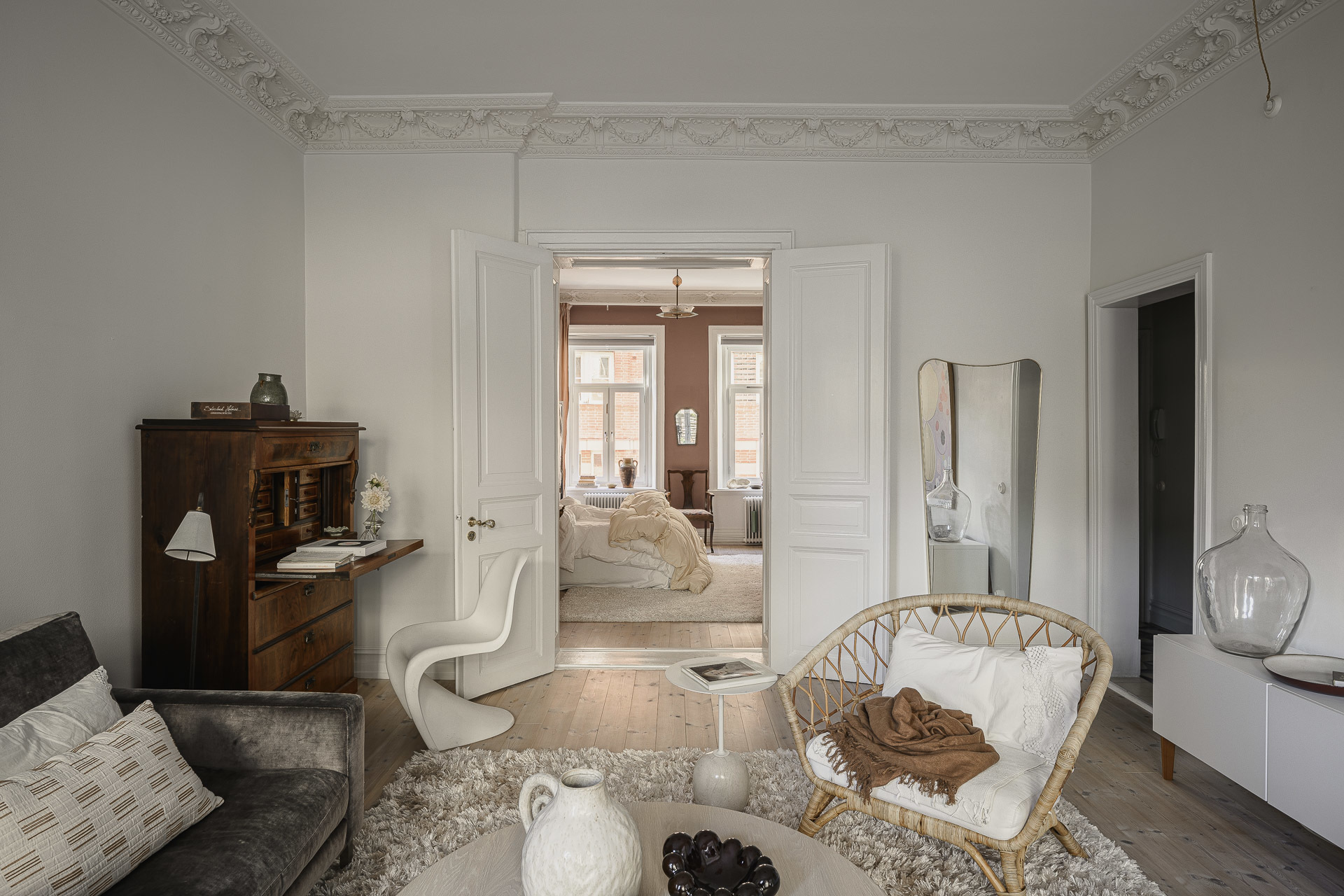
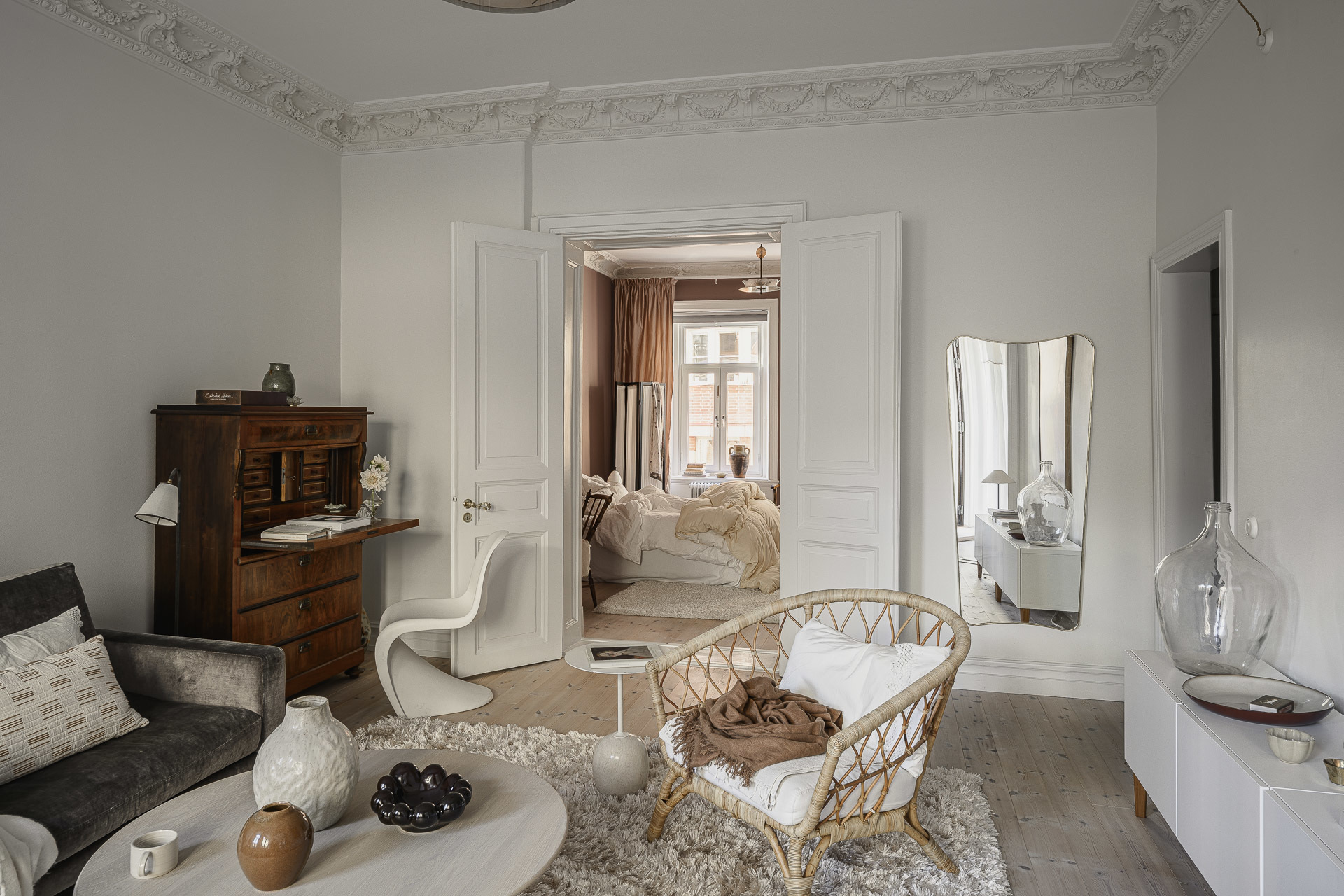
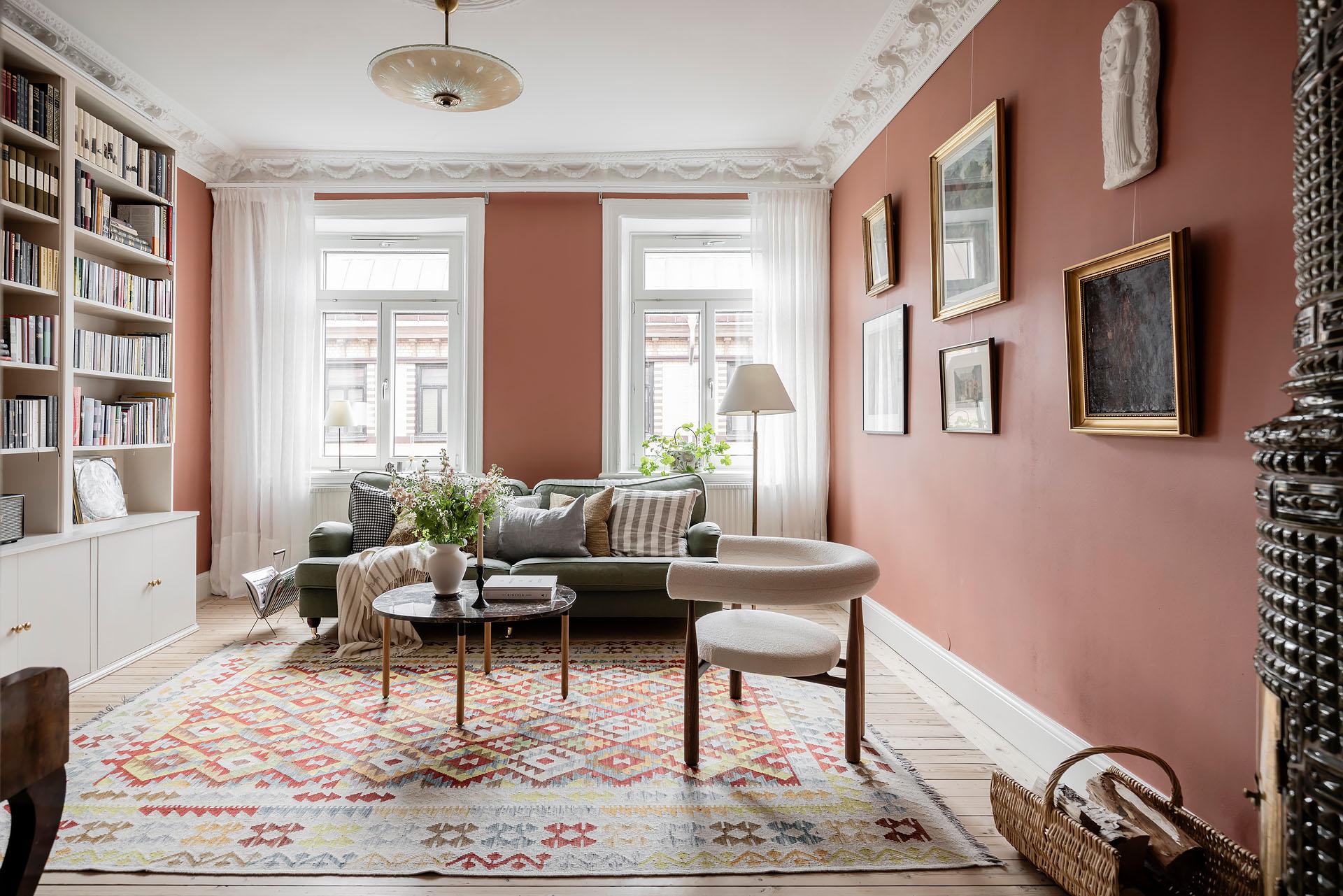
The moldings are truly remarkable. Two distinct styles can be admired. In the living room, the cornices are deep, featuring a continuous frieze of floral garlands and festoon motifs attached to miniature pilasters. Traditional architecture viewed the ceiling as a surface to be decorated just as much as any other.
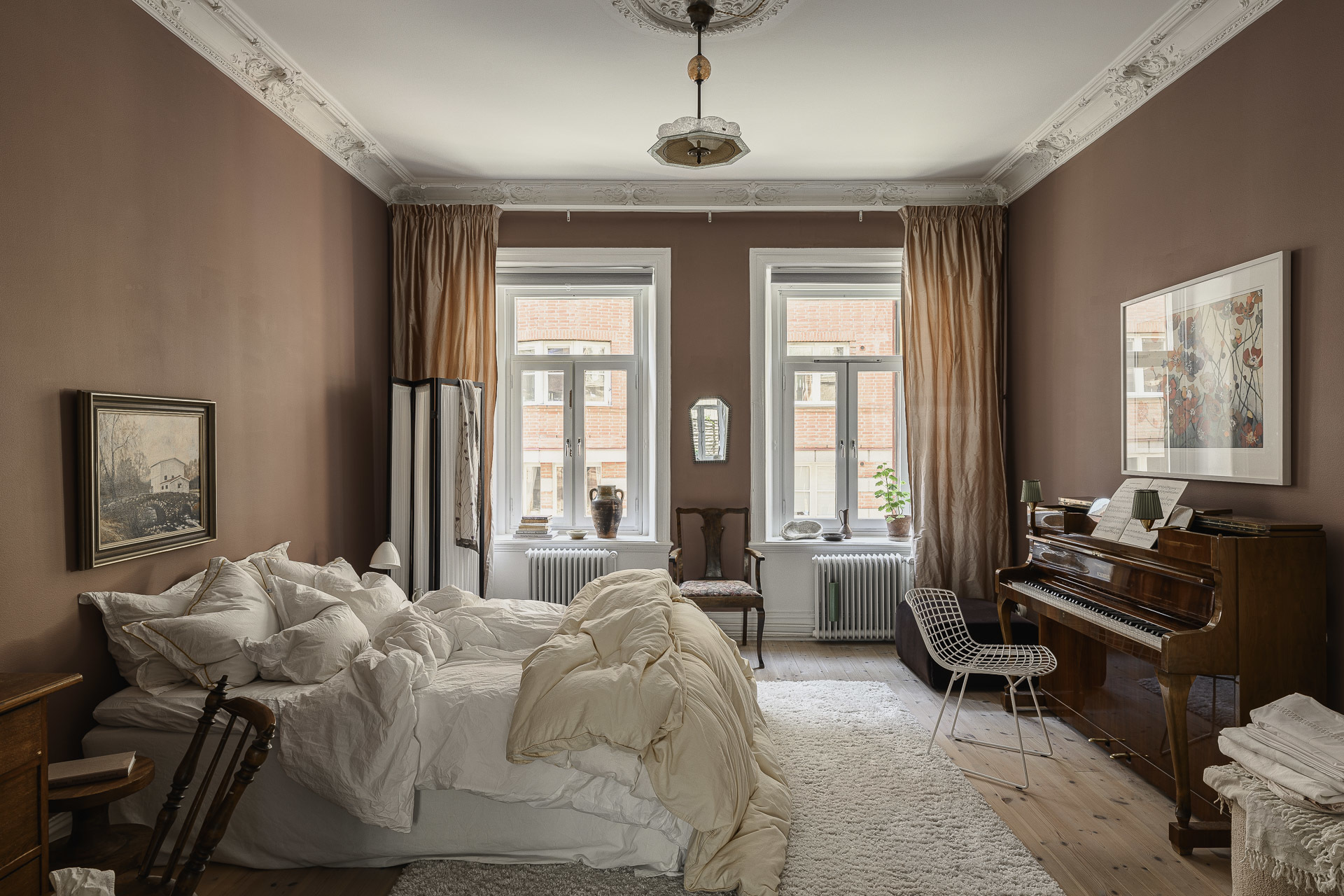
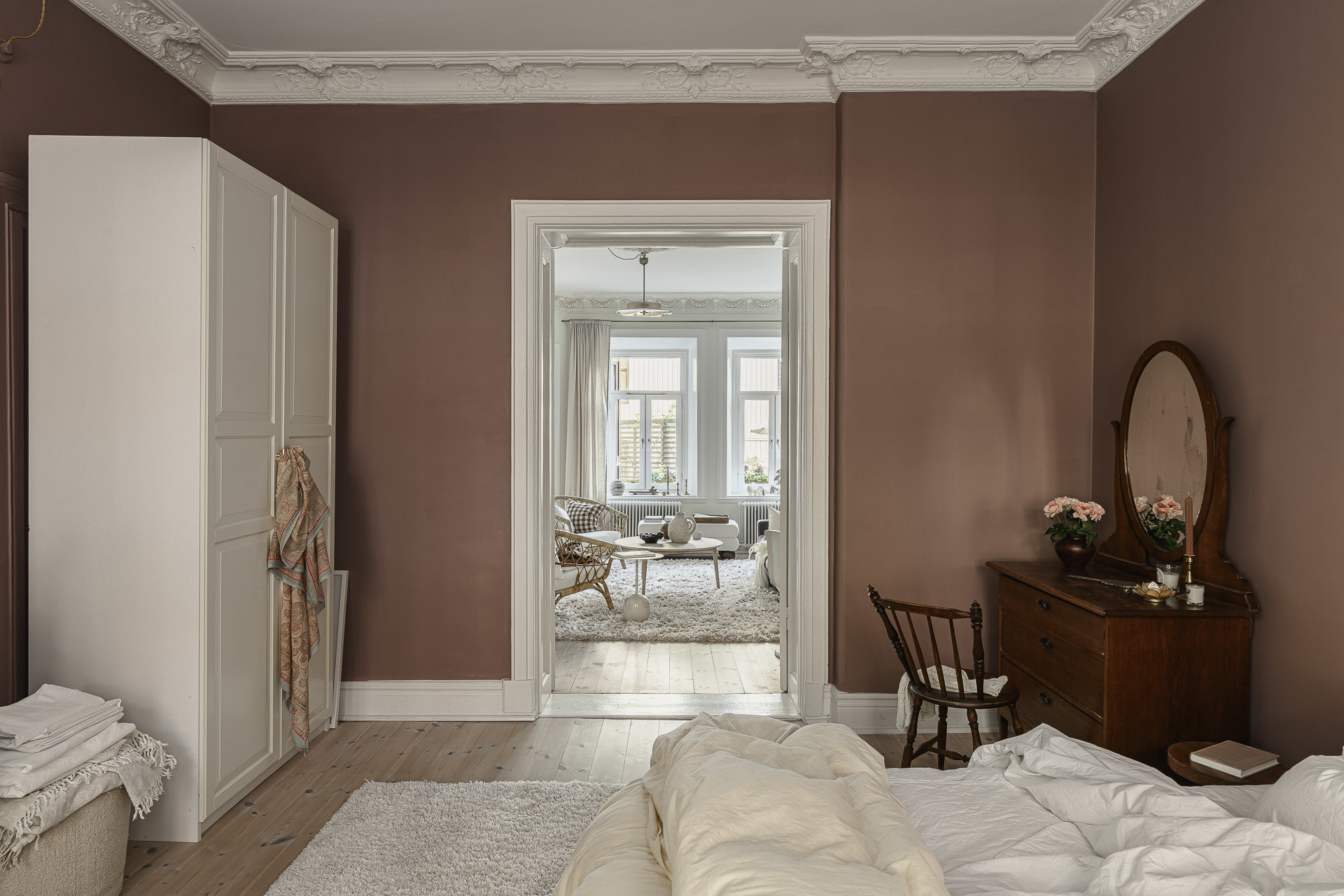
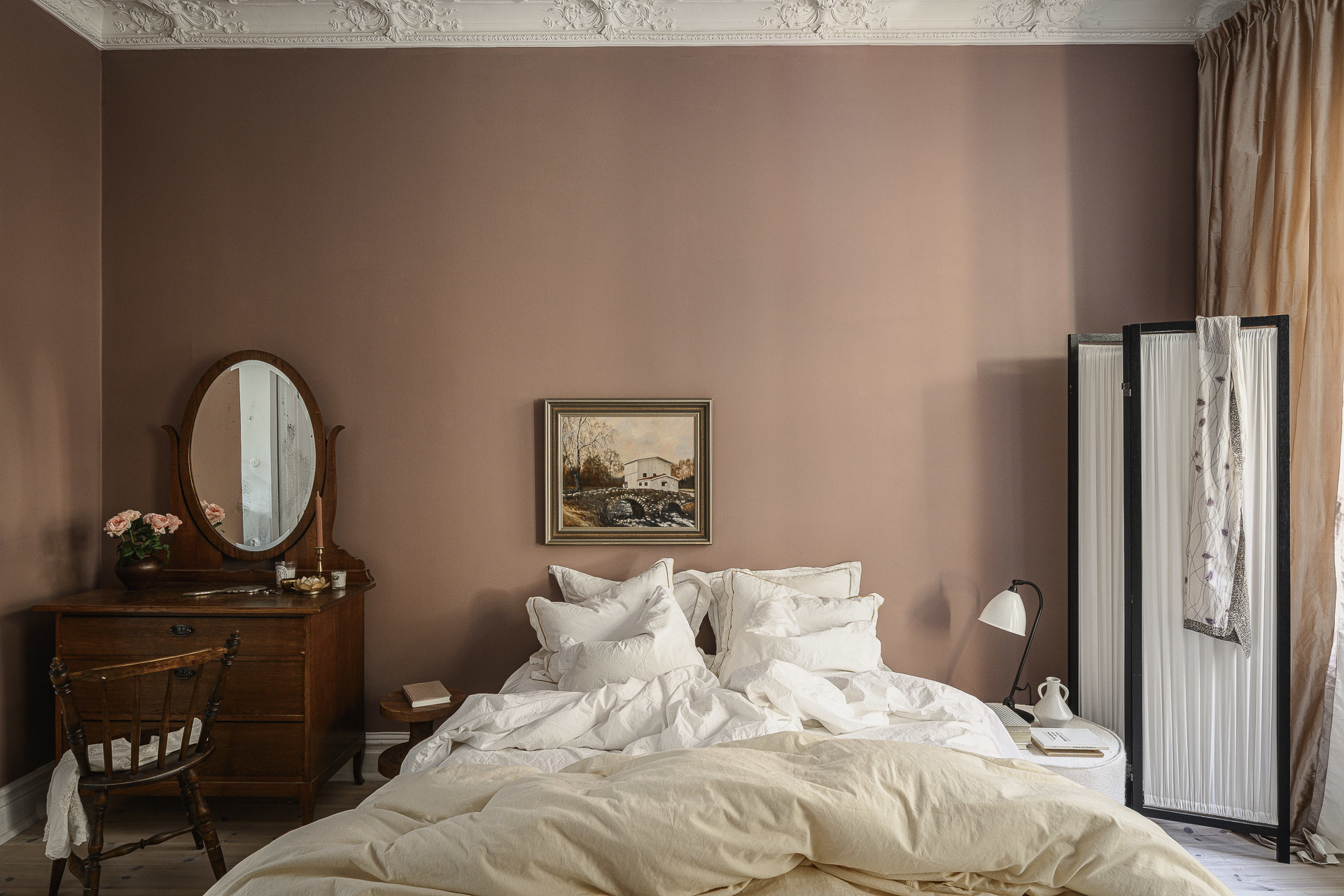
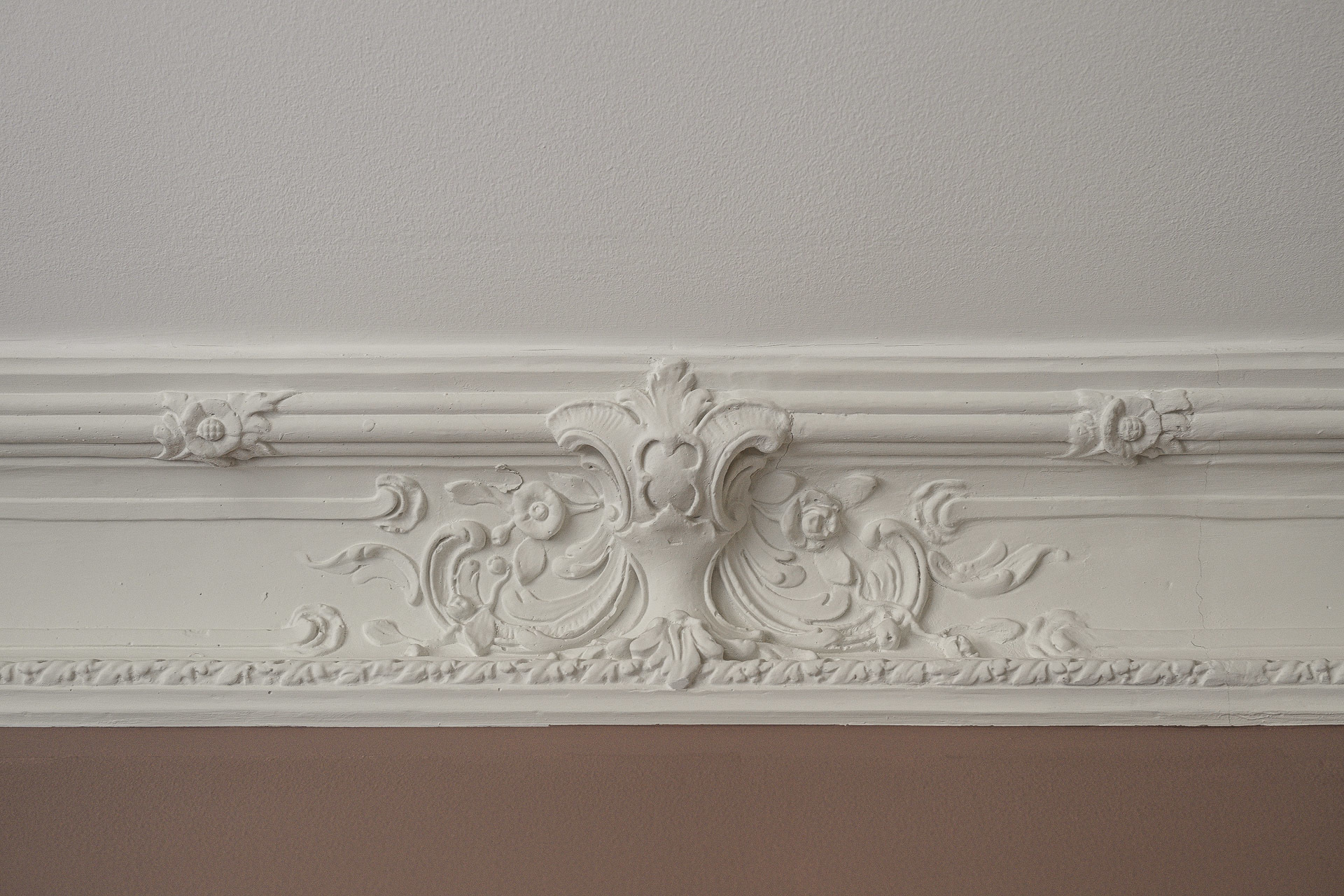
In the bedroom with terracotta walls, the style shifts slightly. The cornice is more understated, featuring stylized acanthus leaves and a central rocaille motif repeated at intervals. It is particularly highlighted by the contrast with the color.
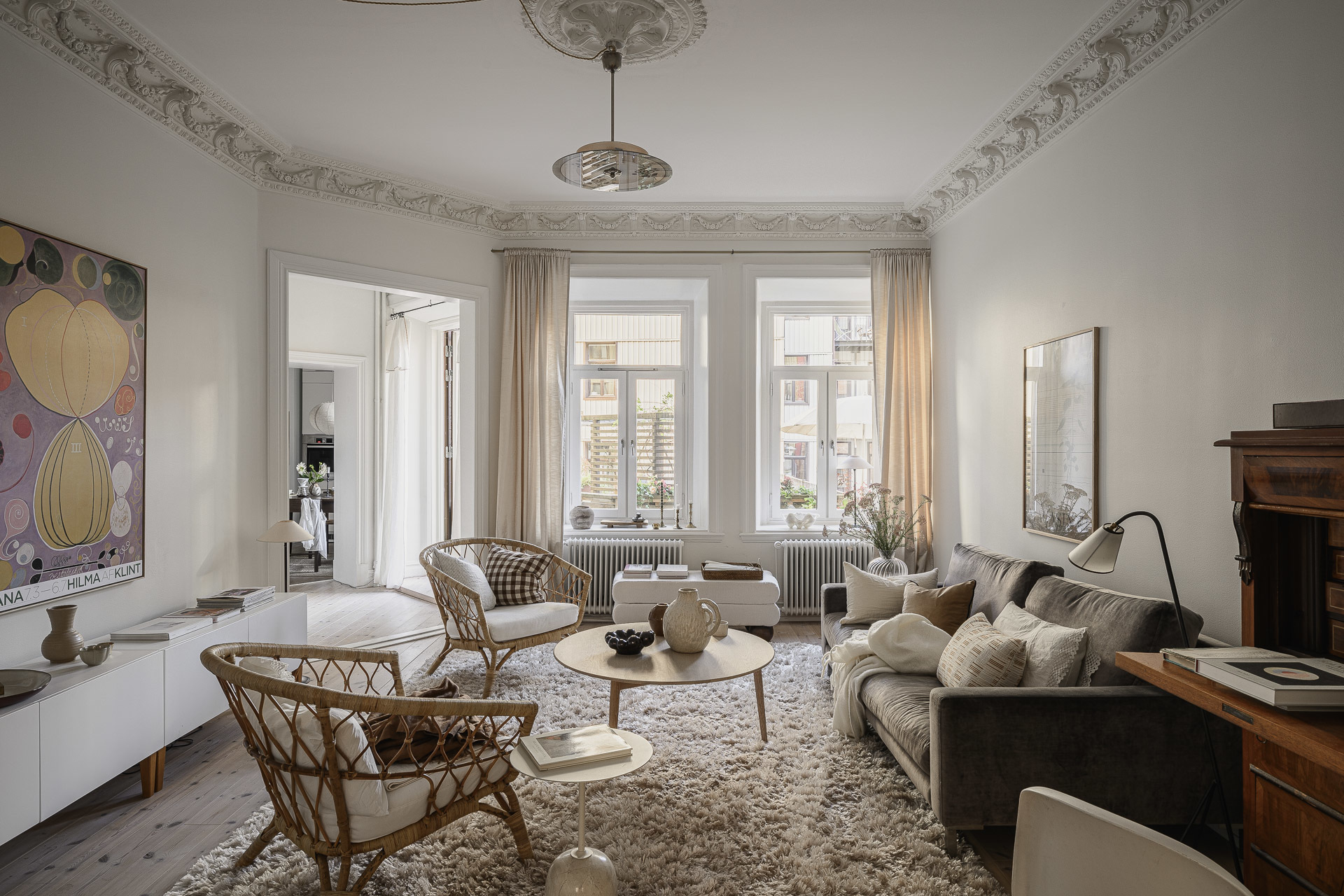
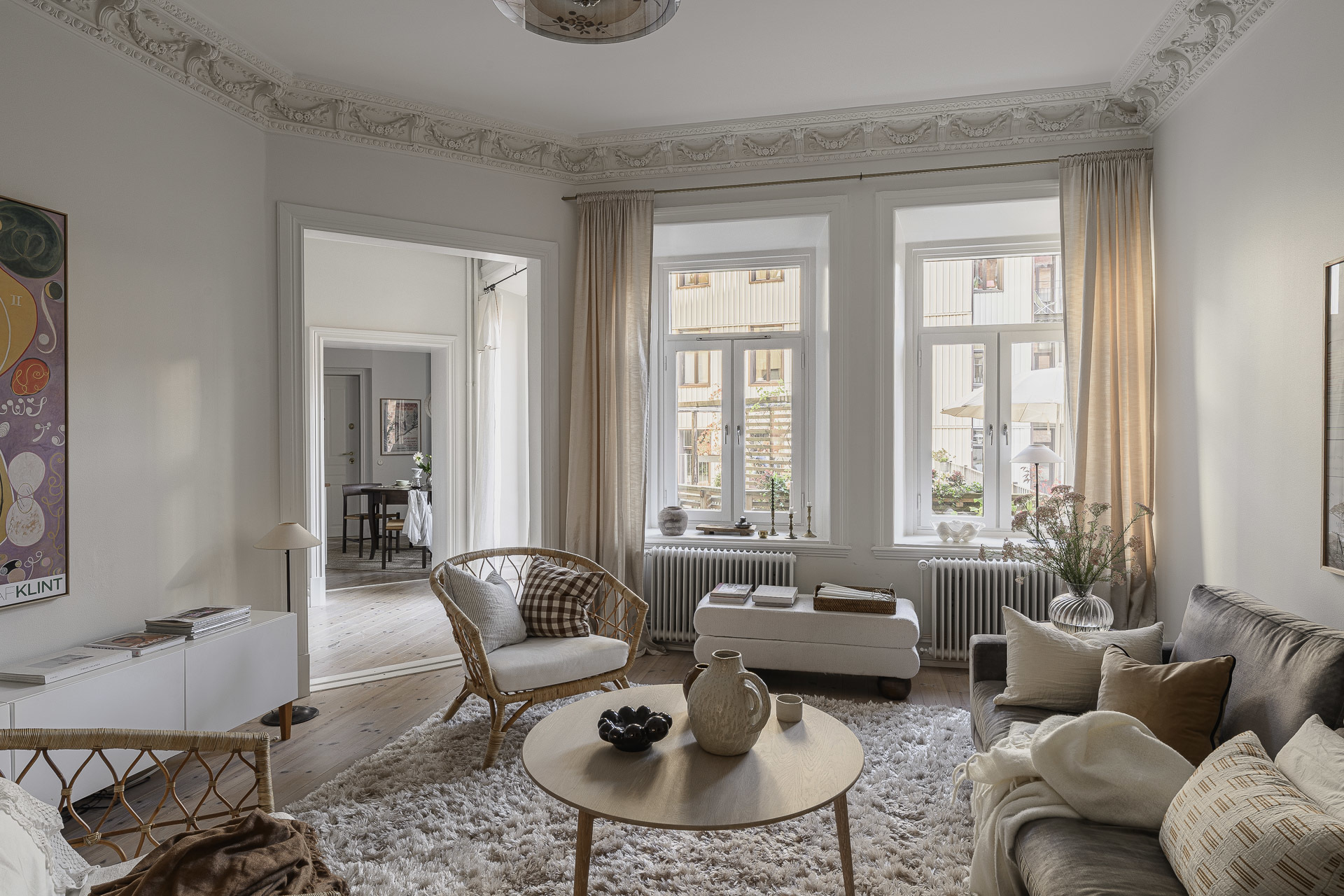
The main room opens onto the inner courtyard through two tall windows. Its decor is primarily based on white and natural tones. It is thus unobtrusive, perfect for entertaining or living with others. The furniture combines pieces from very different sources, including original elements.
We’re not talking here about the natural rattan armchairs that have been seen everywhere, nor the large dark gray velvet sofa. But rather the wooden secretary desk that seems to come from a bygone era. It’s a practical and beautiful piece of furniture, with its drawers and its front that closes, capable of hiding papers and even a computer. On the left wall, a large-format poster, with its circles and colorful organic shapes, provides the room’s only bold splash of color.
The blend of modern and older elements is successful; the room is bright and undoubtedly pleasant to live in day to day.
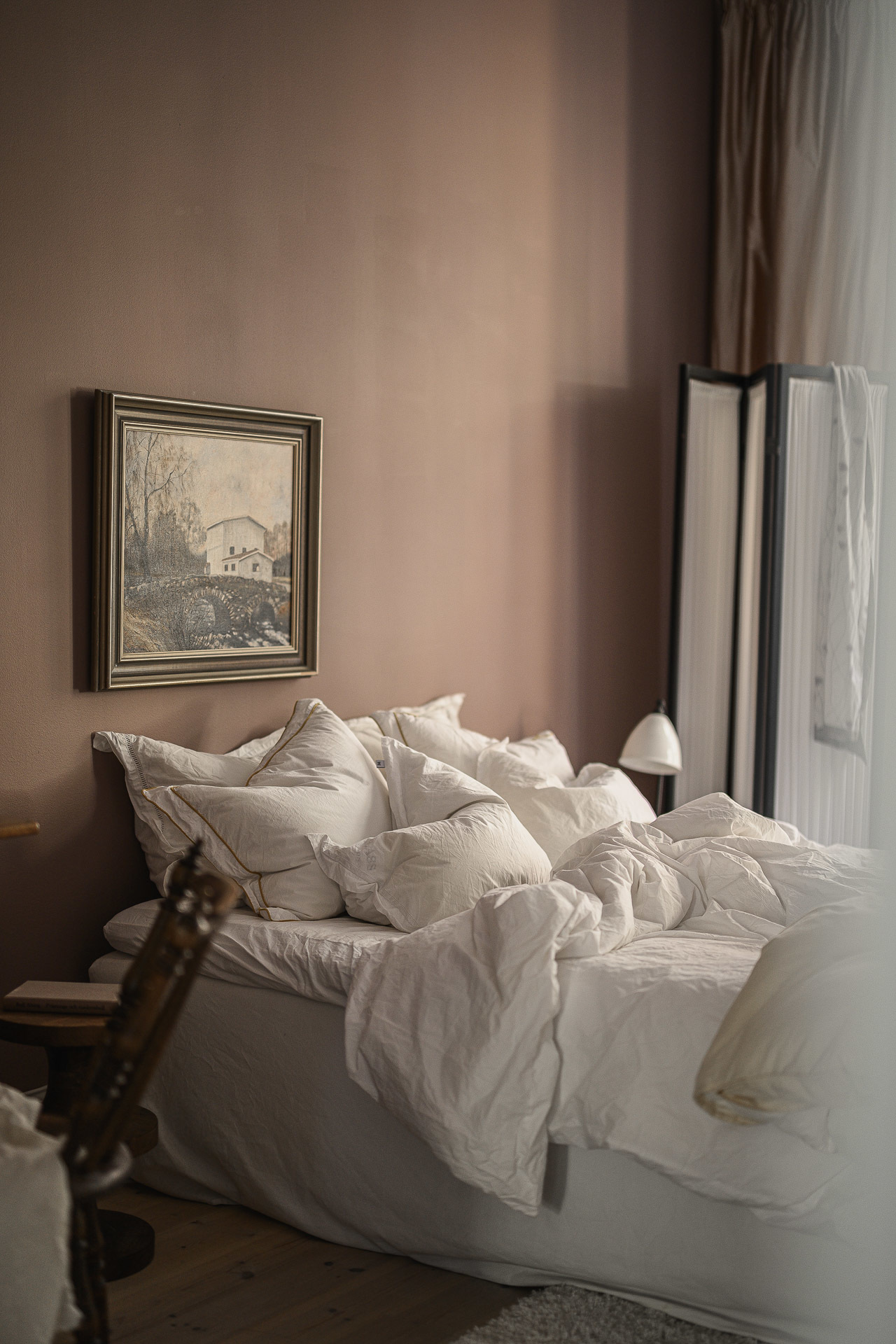
Its bedroom features a color scheme radically different from the living room. The four walls are painted in a brown-pink shade, a sort of terracotta, something between dusty rose and clay. It is a deep color that absorbs light and creates an intimate atmosphere. The stucco has been left white, and this contrast works perfectly because the white plaster stands out even more against this dark, warm background.
There is little furniture in this room, which remains very understated, aside from this deep color. Here, too, we notice the blend of the old, a dark wood dressing table with its oval mirror, and the modern, a Bertoia wire chair. A piano, also in dark wood, occupies nearly an entire wall.
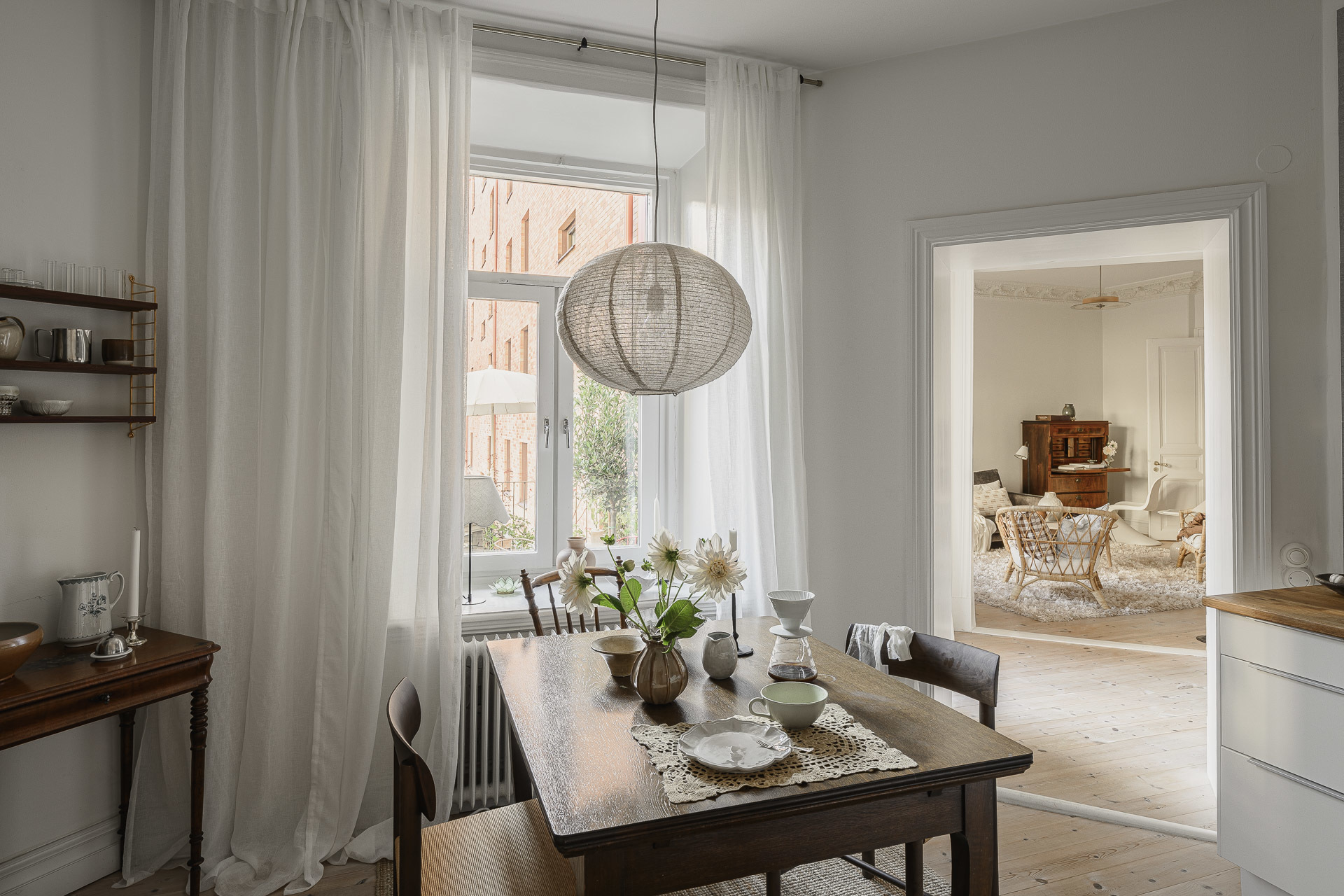
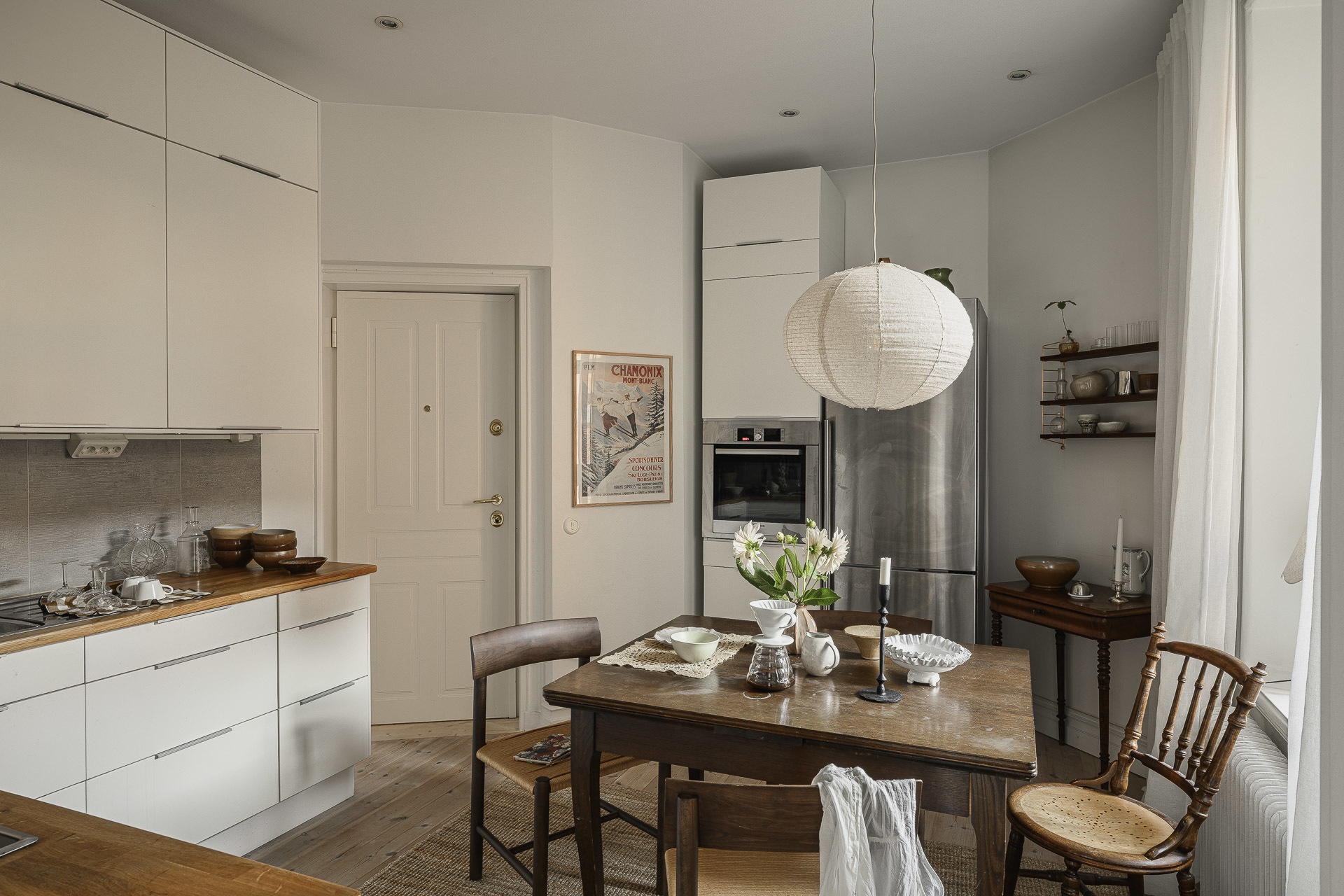
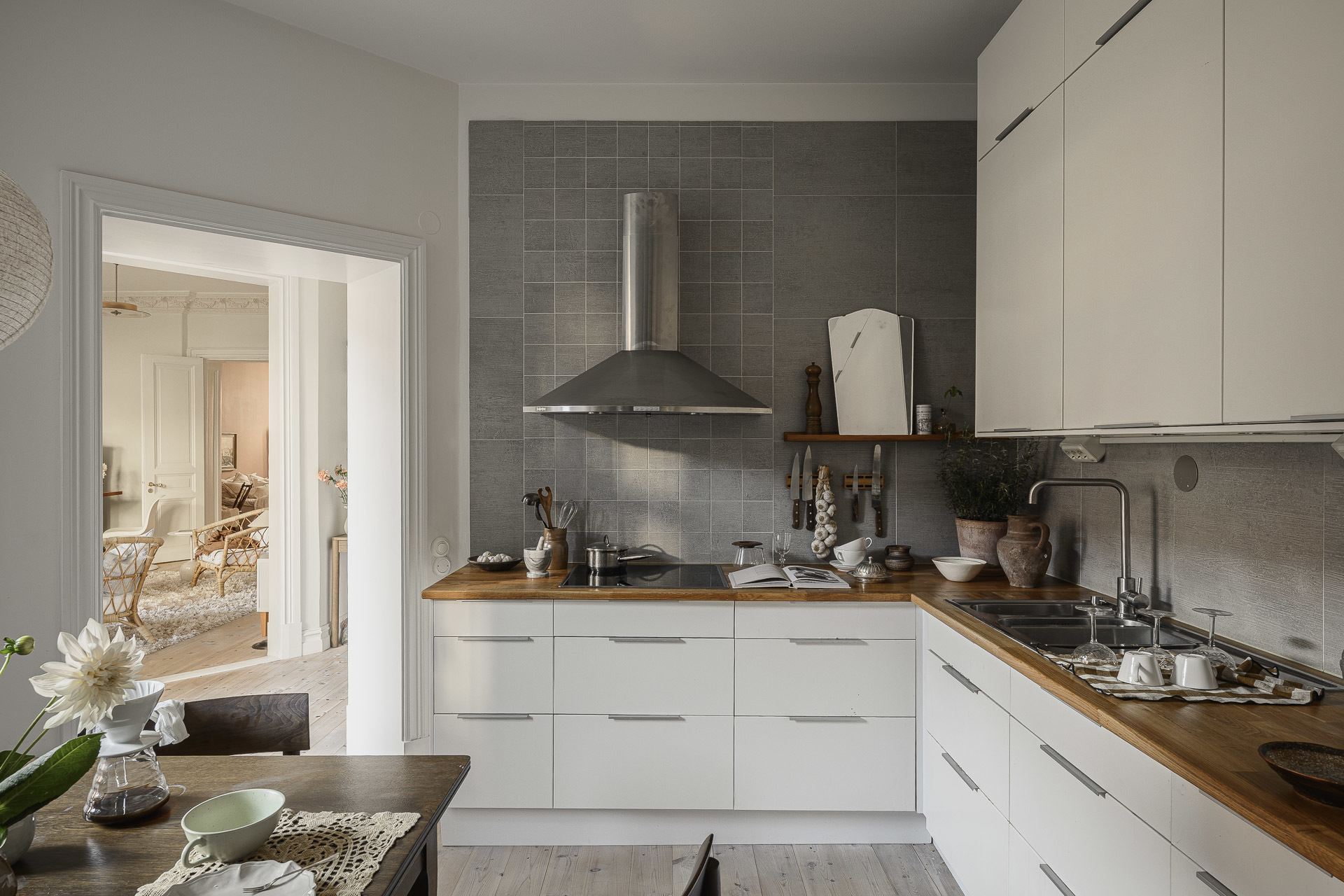
The kitchen is separated from the living room, in the traditional style. It is spacious enough to accommodate the dining area. The plan retains its original layout from a time when rooms were not open to one another. It is a room with a simple style, featuring smooth white cabinet fronts, a solid wood countertop, and stainless steel appliances. The dark wood dining table, clearly very old, sits in the center with a few mismatched chairs. This room opens onto the living room through a doorway without a door.
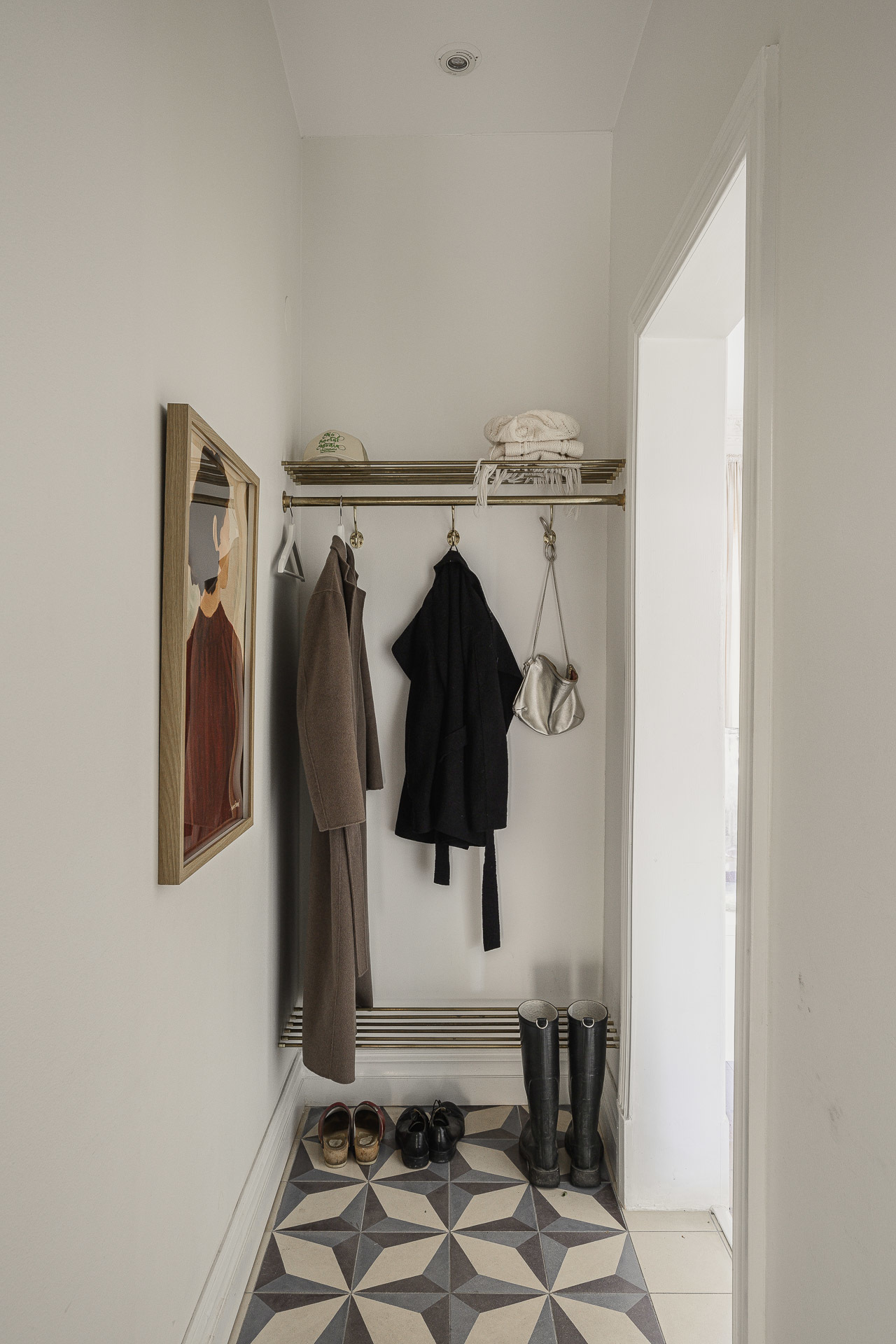
The entryway floor is covered with cement tiles featuring gray and white geometric patterns, trapezoids, and stars. It is the only tiled floor in the apartment, and it is a contemporary choice that looks vintage.
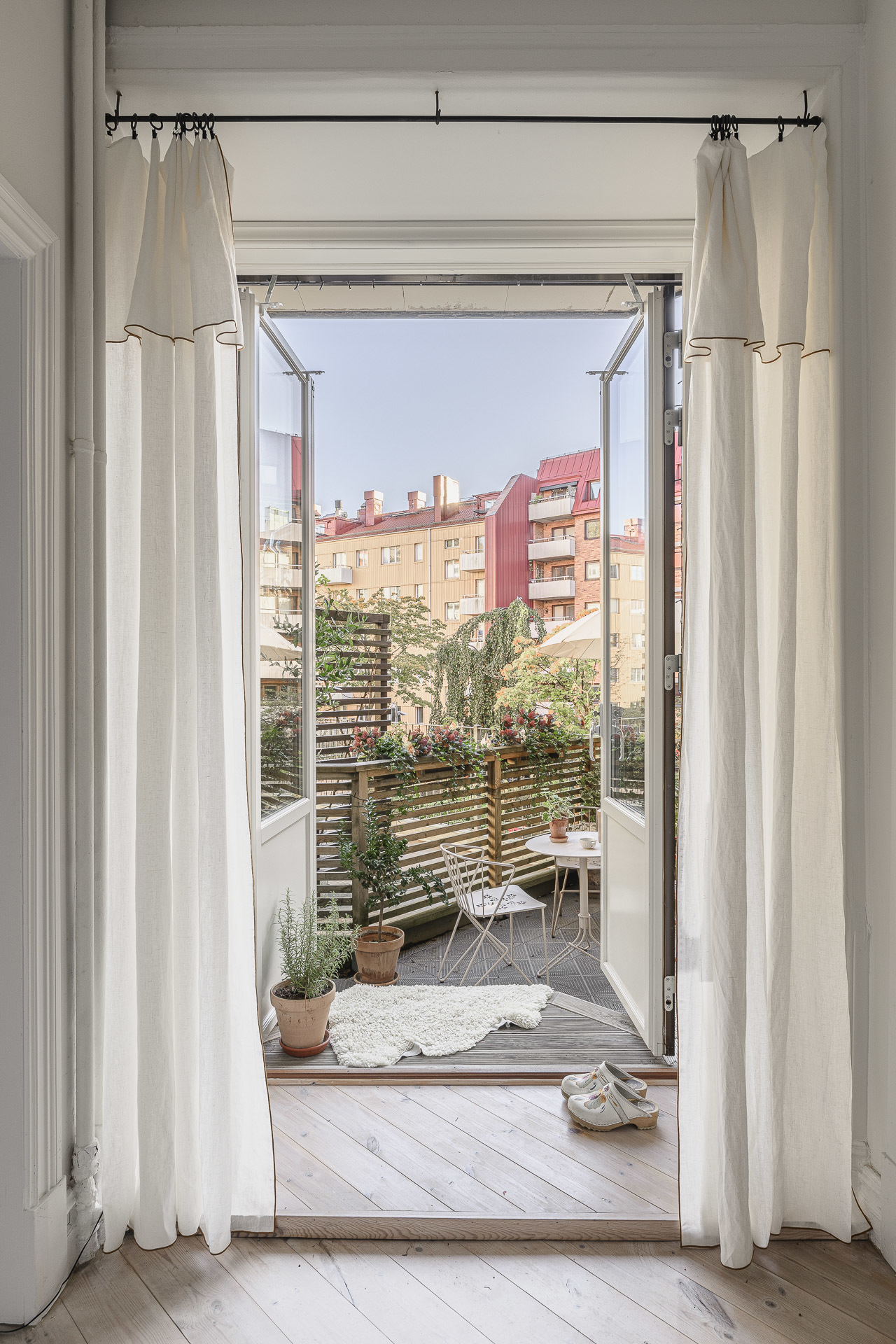
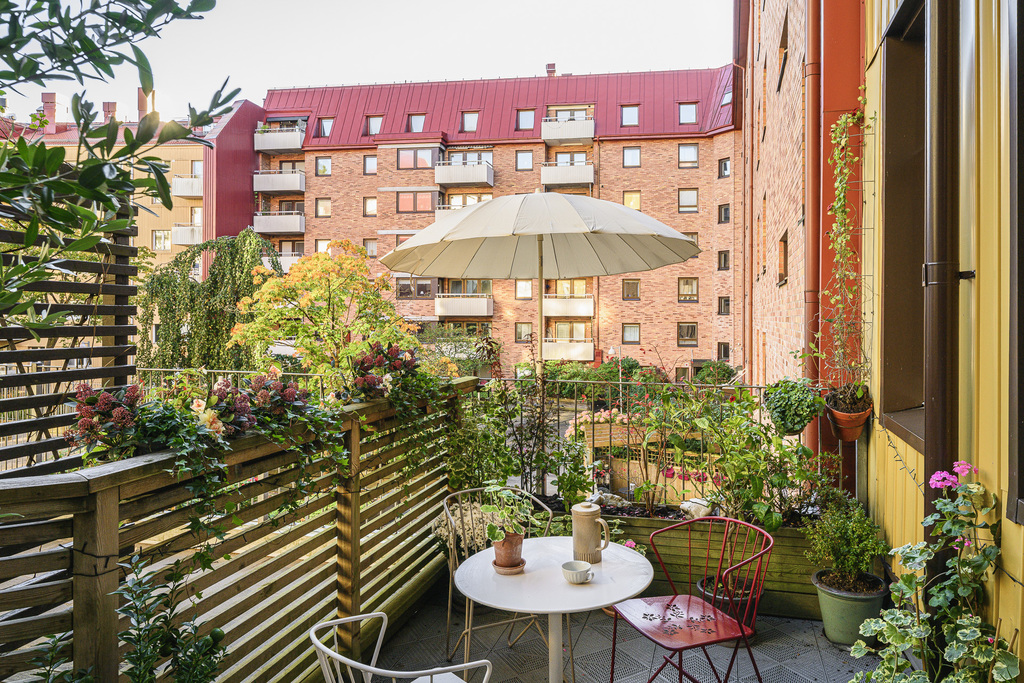
The balcony of this 1900s apartment is quite large, with an area of about 10sqm. It is entirely covered in greenery with climbing plants, geraniums, and potted shrubs. A white round table, two colorful bistro chairs, a beige umbrella, you don’t need much else to enjoy it fully. We’re right in the heart of the city, the brick facades of neighboring buildings are visible just a few meters away, but the dense foliage creates a green, tranquil oasis.
This 1900s apartment hasn’t tried to hide its historic features, quite the opposite. The moldings are still there and take center stage thanks to the understated decor. This type of interior, halfway between Scandinavian minimalism and ornate design, strikes a beautiful balance between eras.

76sqm
This 1900s apartment is for sale at Entrance
This resemblance is no coincidence. Early 20th-century Sweden looked heavily to France and Vienna for inspiration. The city’s architects of that period worked in an ornamental style closely resembling the Haussmannian style. In this generously proportioned Swedish apartment, you’ll find sculpted plaster garlands, ceiling rosettes, and white stucco door frames.
The building itself doesn’t look like a Haussmann-style structure, but inside, the details transport you to Paris. It remains a magnificent brick building. Gothenburg has many buildings of this type, a delight to discover for those who love the bourgeois architecture of this period.
Bright and spacious rooms
The apartment is 76sqm in total and is essentially a large two-room apartment with a single bedroom and a small office. Thanks to the high ceilings, large windows, and fairly neutral decor, the space feels more spacious.
The moldings are truly remarkable. Two distinct styles can be admired. In the living room, the cornices are deep, featuring a continuous frieze of floral garlands and festoon motifs attached to miniature pilasters. Traditional architecture viewed the ceiling as a surface to be decorated just as much as any other.
In the bedroom with terracotta walls, the style shifts slightly. The cornice is more understated, featuring stylized acanthus leaves and a central rocaille motif repeated at intervals. It is particularly highlighted by the contrast with the color.
The living room, a balance between heritage and personality
The main room opens onto the inner courtyard through two tall windows. Its decor is primarily based on white and natural tones. It is thus unobtrusive, perfect for entertaining or living with others. The furniture combines pieces from very different sources, including original elements.
We’re not talking here about the natural rattan armchairs that have been seen everywhere, nor the large dark gray velvet sofa. But rather the wooden secretary desk that seems to come from a bygone era. It’s a practical and beautiful piece of furniture, with its drawers and its front that closes, capable of hiding papers and even a computer. On the left wall, a large-format poster, with its circles and colorful organic shapes, provides the room’s only bold splash of color.
The blend of modern and older elements is successful; the room is bright and undoubtedly pleasant to live in day to day.
The terracotta bedroom, a break from all-white
Its bedroom features a color scheme radically different from the living room. The four walls are painted in a brown-pink shade, a sort of terracotta, something between dusty rose and clay. It is a deep color that absorbs light and creates an intimate atmosphere. The stucco has been left white, and this contrast works perfectly because the white plaster stands out even more against this dark, warm background.
There is little furniture in this room, which remains very understated, aside from this deep color. Here, too, we notice the blend of the old, a dark wood dressing table with its oval mirror, and the modern, a Bertoia wire chair. A piano, also in dark wood, occupies nearly an entire wall.
The kitchen and dining room in the same space
The kitchen is separated from the living room, in the traditional style. It is spacious enough to accommodate the dining area. The plan retains its original layout from a time when rooms were not open to one another. It is a room with a simple style, featuring smooth white cabinet fronts, a solid wood countertop, and stainless steel appliances. The dark wood dining table, clearly very old, sits in the center with a few mismatched chairs. This room opens onto the living room through a doorway without a door.
The entryway and balcony with lovely details
The entryway floor is covered with cement tiles featuring gray and white geometric patterns, trapezoids, and stars. It is the only tiled floor in the apartment, and it is a contemporary choice that looks vintage.
The balcony of this 1900s apartment is quite large, with an area of about 10sqm. It is entirely covered in greenery with climbing plants, geraniums, and potted shrubs. A white round table, two colorful bistro chairs, a beige umbrella, you don’t need much else to enjoy it fully. We’re right in the heart of the city, the brick facades of neighboring buildings are visible just a few meters away, but the dense foliage creates a green, tranquil oasis.
What stands out about this apartment
This 1900s apartment hasn’t tried to hide its historic features, quite the opposite. The moldings are still there and take center stage thanks to the understated decor. This type of interior, halfway between Scandinavian minimalism and ornate design, strikes a beautiful balance between eras.


76sqm

This 1900s apartment is for sale at Entrance


Comments