A Swedish orangery and its kitchen in oak, glass, and tadelakt
Follow Planète Déco on Google — add us to your favourites to keep our decor articles in your news feedIn this Swedish orangery crafted from oak and cedar, there is a stainless steel kitchen, a French-tiled island, and refined tadelakt accents
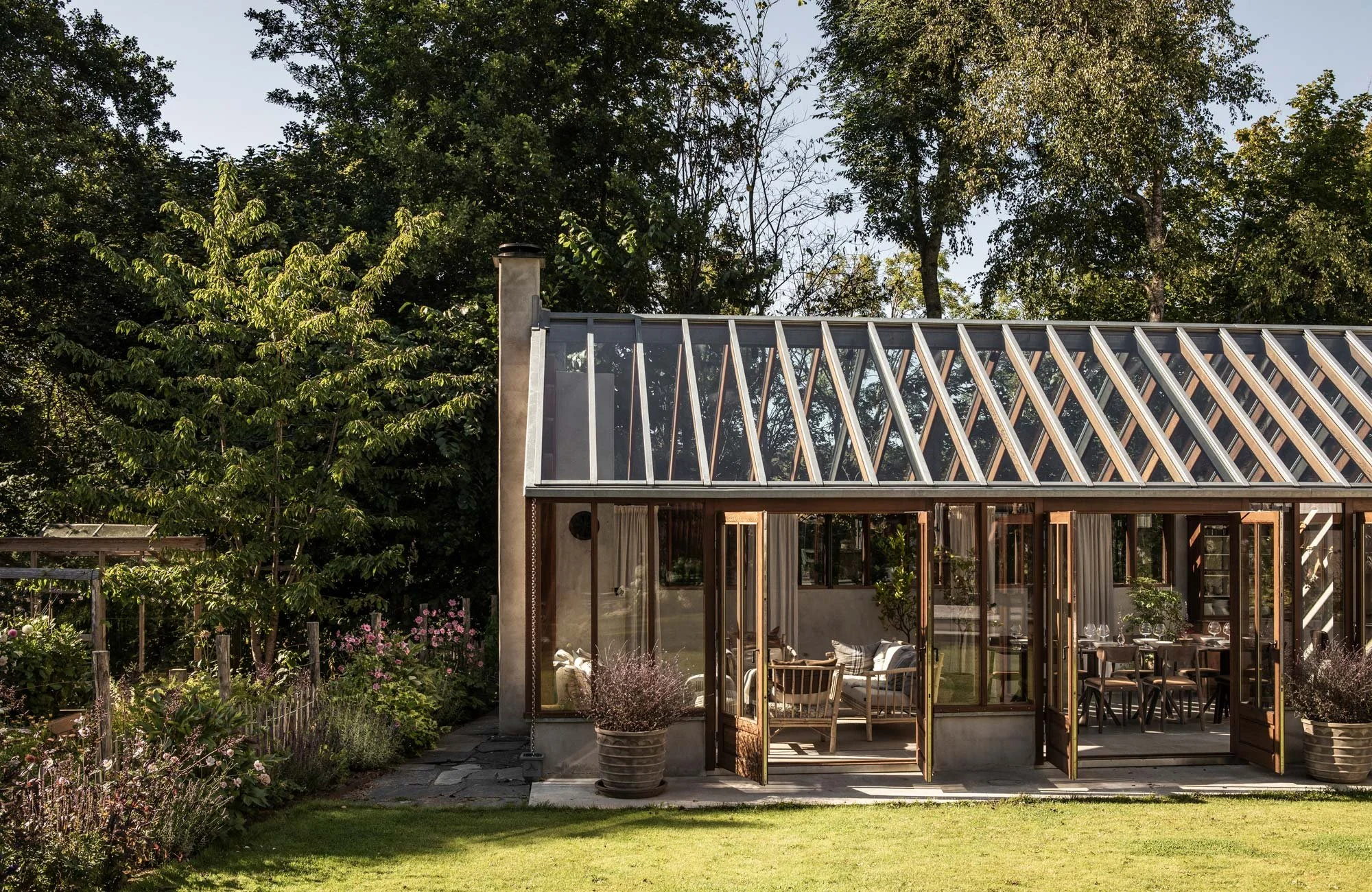
On Sweden’s west coast, not far from Gothenburg, an orangery stands amid wild meadows. Its glass roof, which rises four meters high, is shaded by the surrounding trees. Glass and cedar create a light yet sturdy structure. Here, Japanese aesthetics meet Scandinavian simplicity.
Named Ett Orangeri, this glass house belongs to Camilla and Lasse, a couple driven by creativity in all its forms. Music, cooking, and entertaining come together in this space designed as an open-air studio. Swedish nature streams in through every opening.
Camilla tends the garden surrounding the building herself. Wildflowers and vegetable beds provide ingredients for her cooking, which is influenced by Japanese cuisine. Each plate is meant to be as beautiful as it is delicious, serving as a direct extension of the surroundings. This continuity between the garden, the table, and the architecture gives the space its rare sense of cohesion.
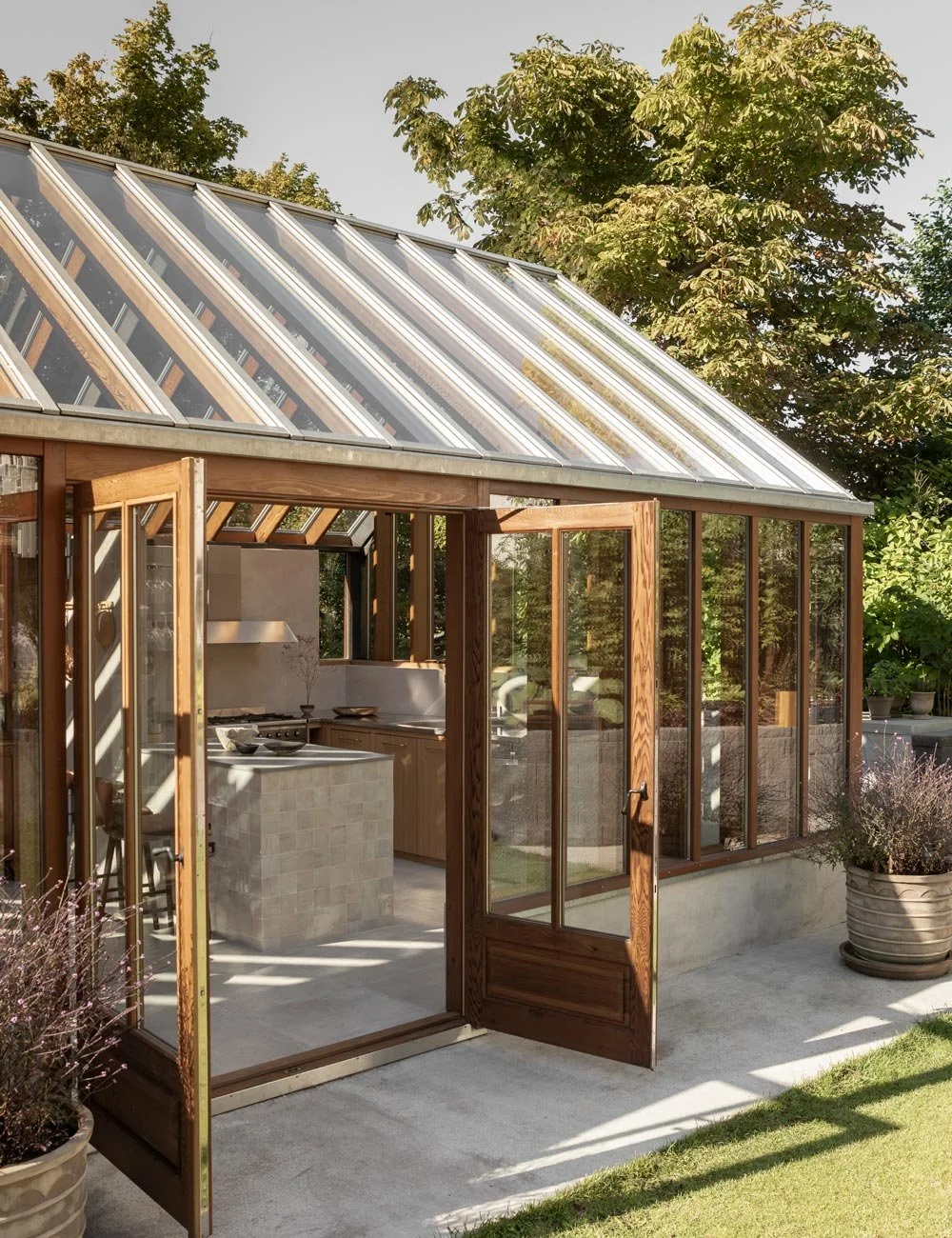
The steel framework is concealed beneath beams of golden cedar. This wood ages gracefully and withstands the damp seasons of the Swedish coast. Its walls are finished with a matte plaster similar to traditional stucco, which gently captures the light. The boundary between interior and exterior fades completely.
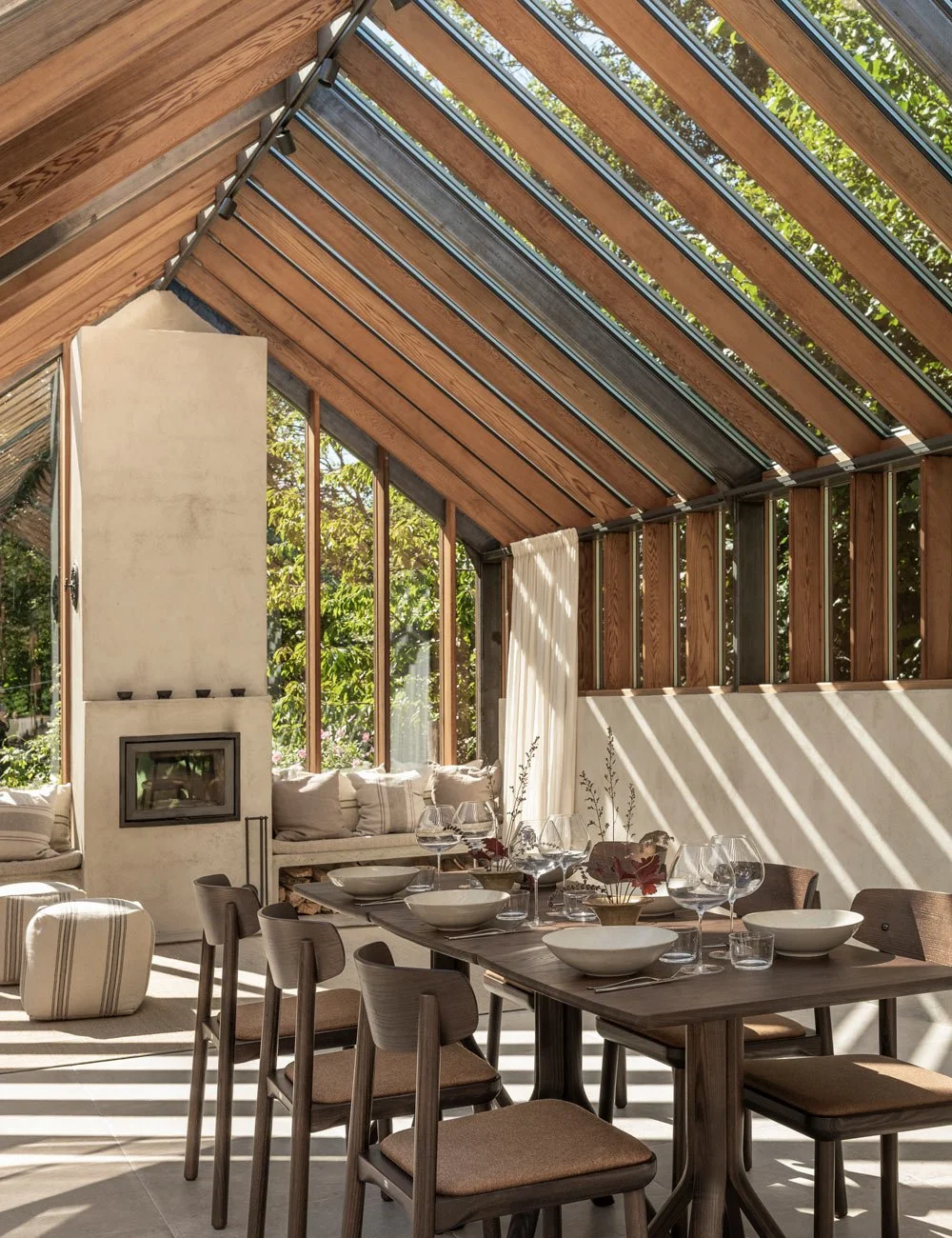
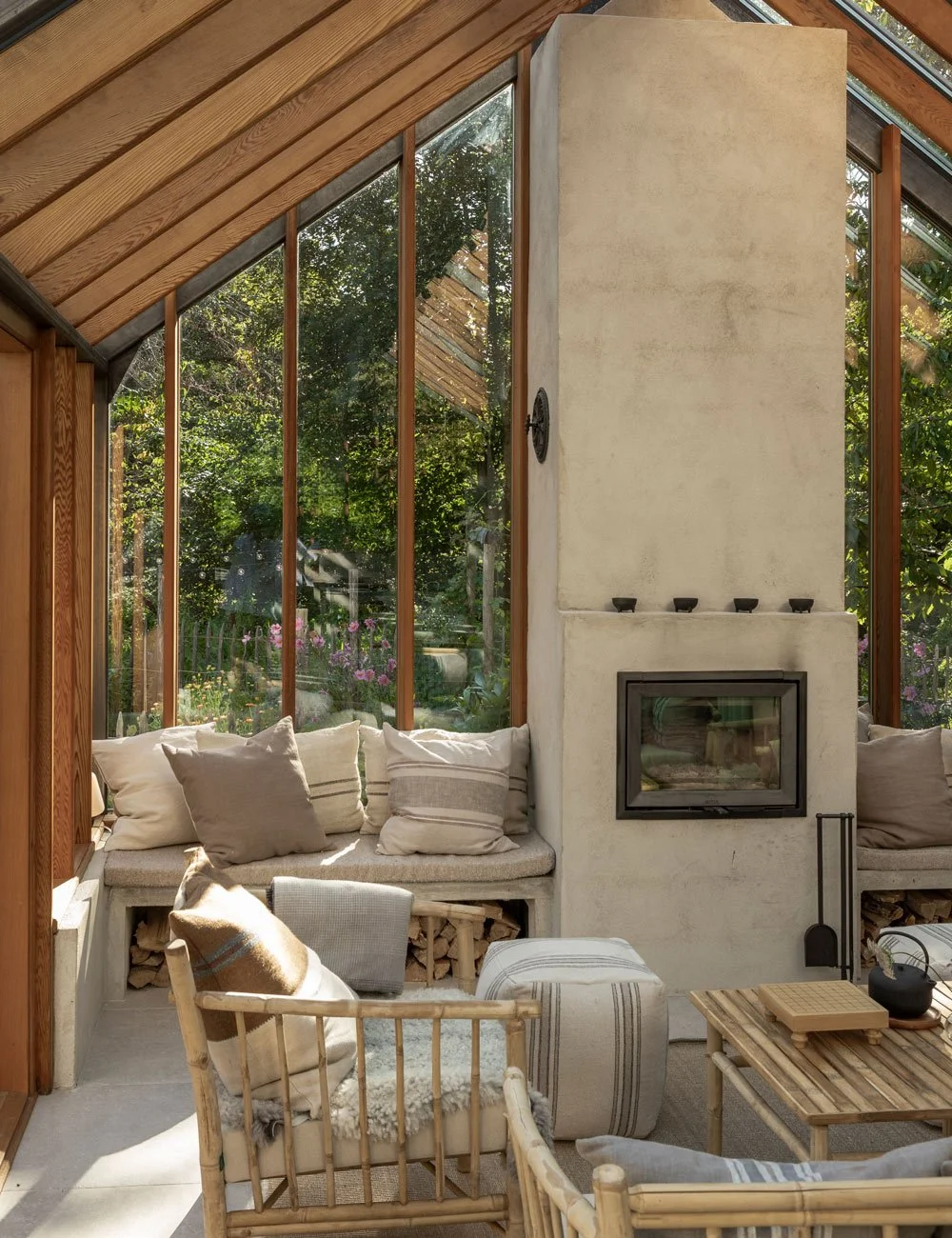
The tight rhythm of the rafters creates a graphic pattern on the ceiling. This pattern changes as the sun moves across the sky. Geothermal heating makes it possible to live in this winter garden year-round, without compromising its ecological balance. The tall fireplace, finished with the same plaster as the walls, is situated at one end. It provides welcome warmth when the Scandinavian winter sets in.
In summer, the glass doors open wide onto the flower-filled meadow. The boundary between the living room and the garden then almost completely disappears. In winter, the same room gently closes in around the fire and thick textiles.
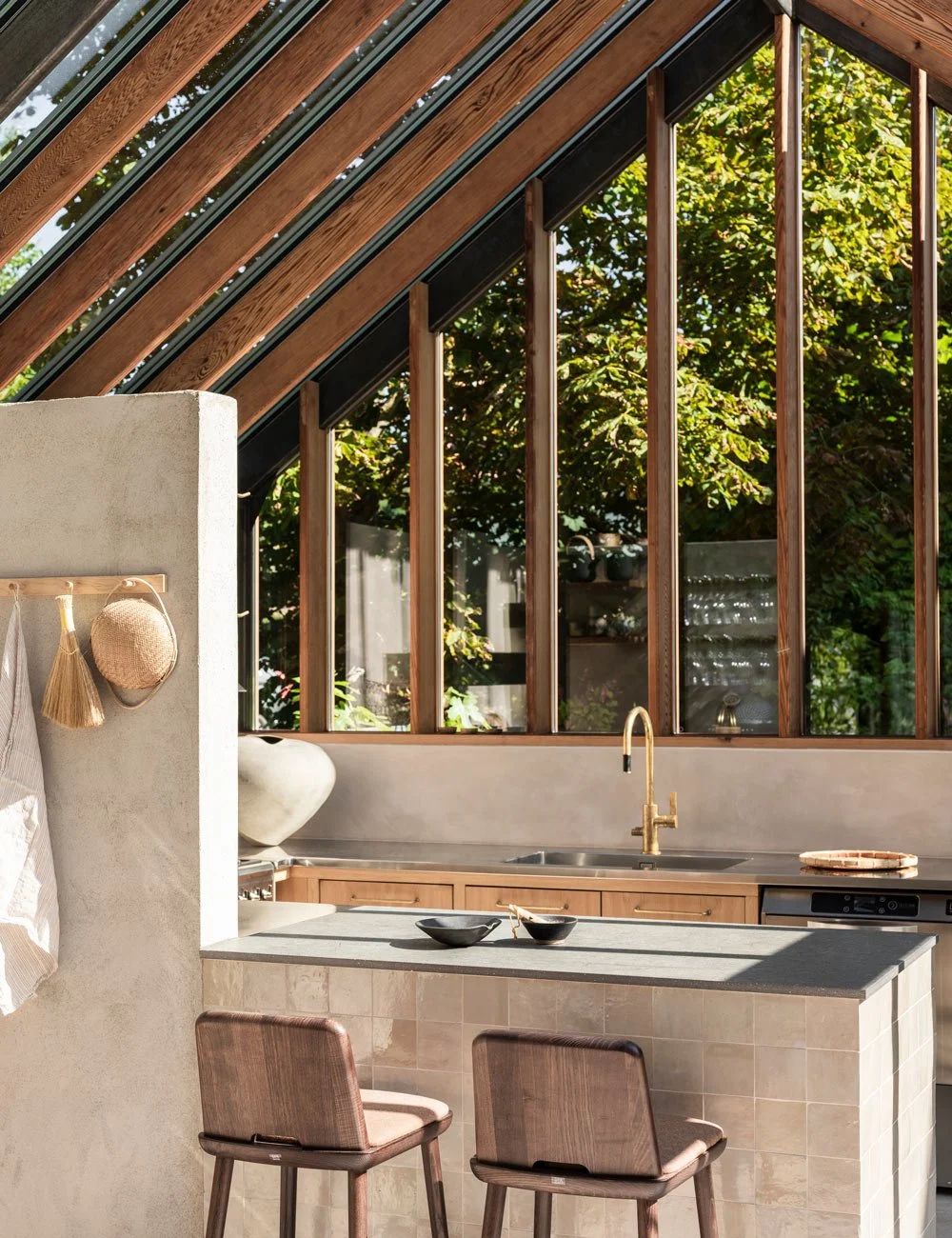
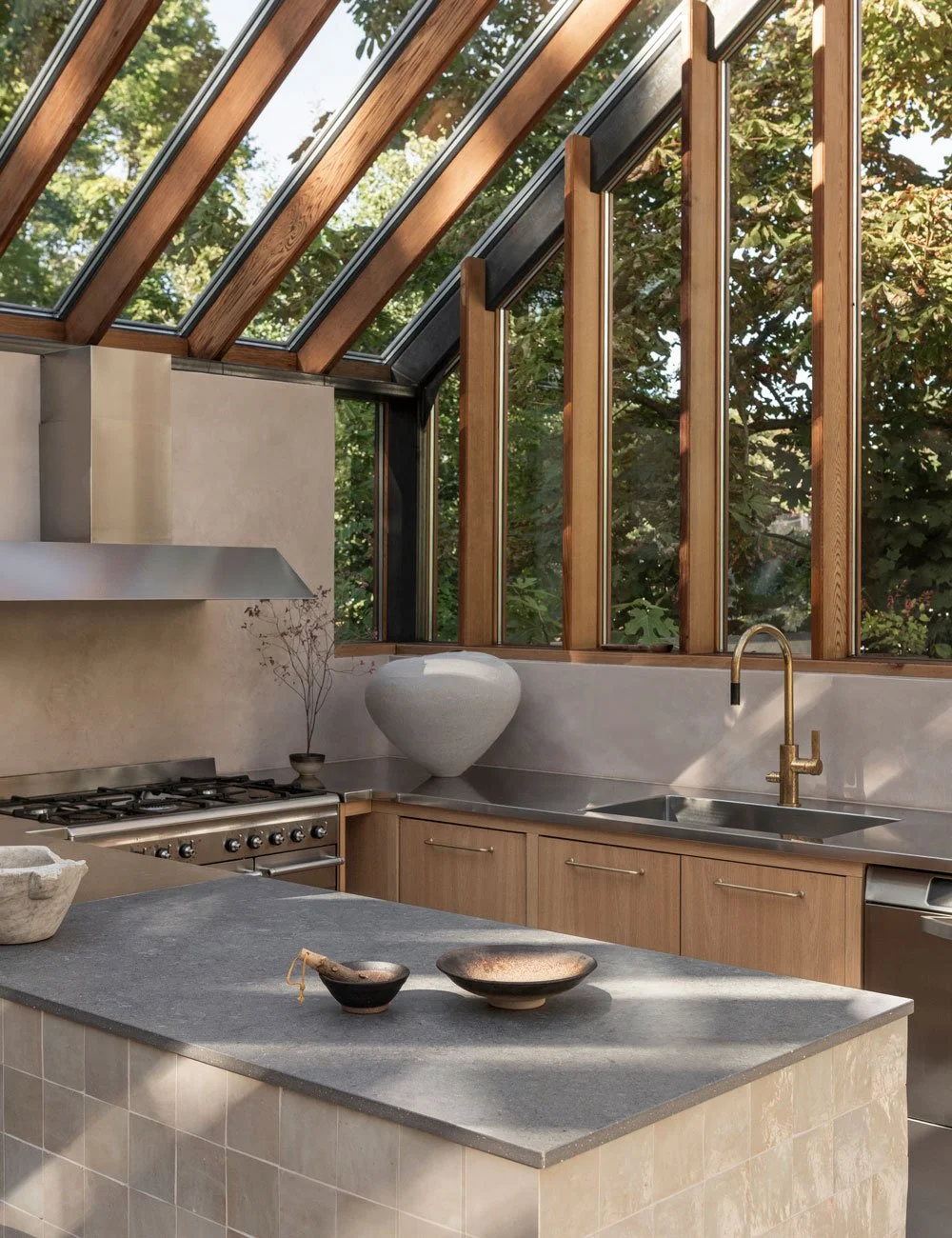
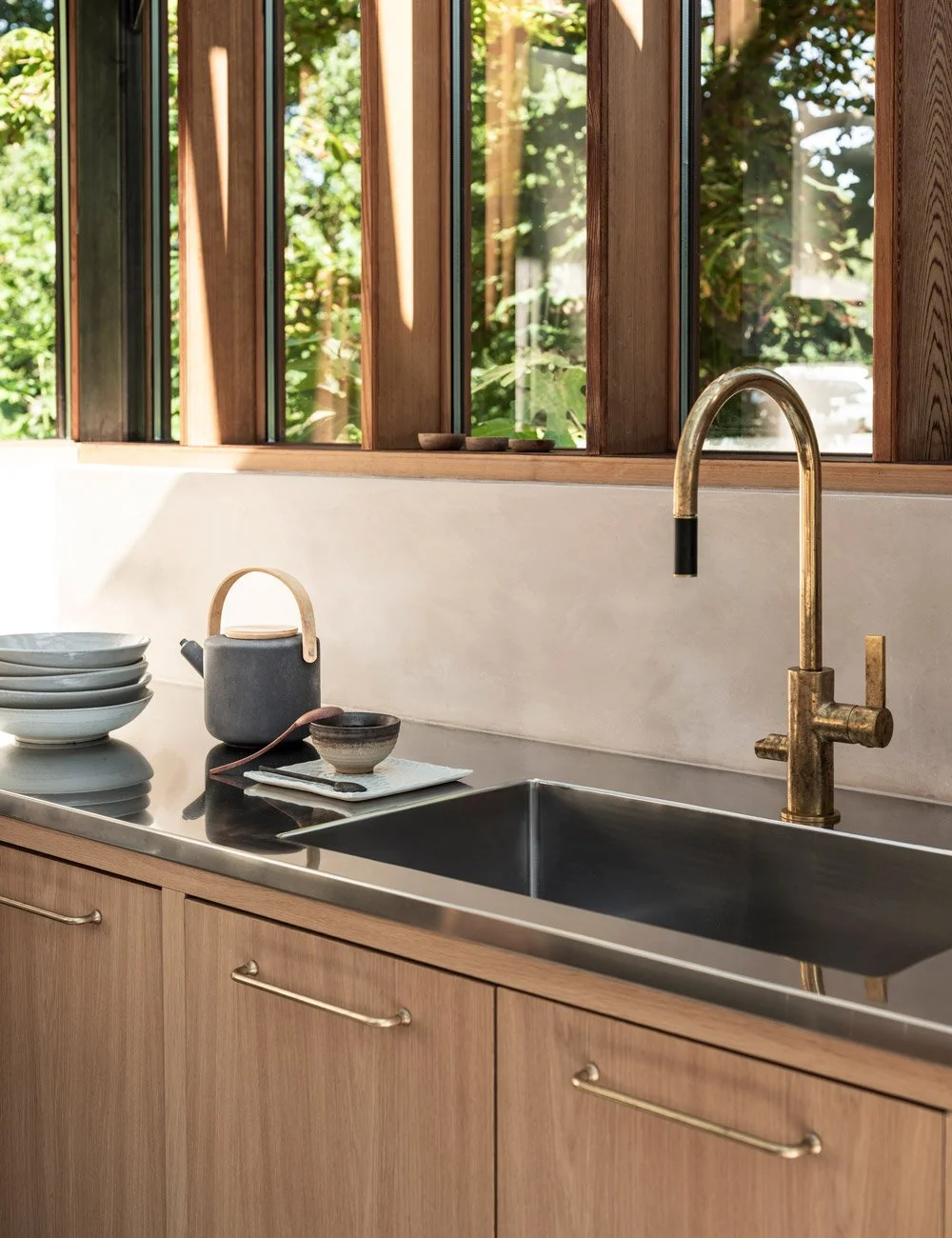
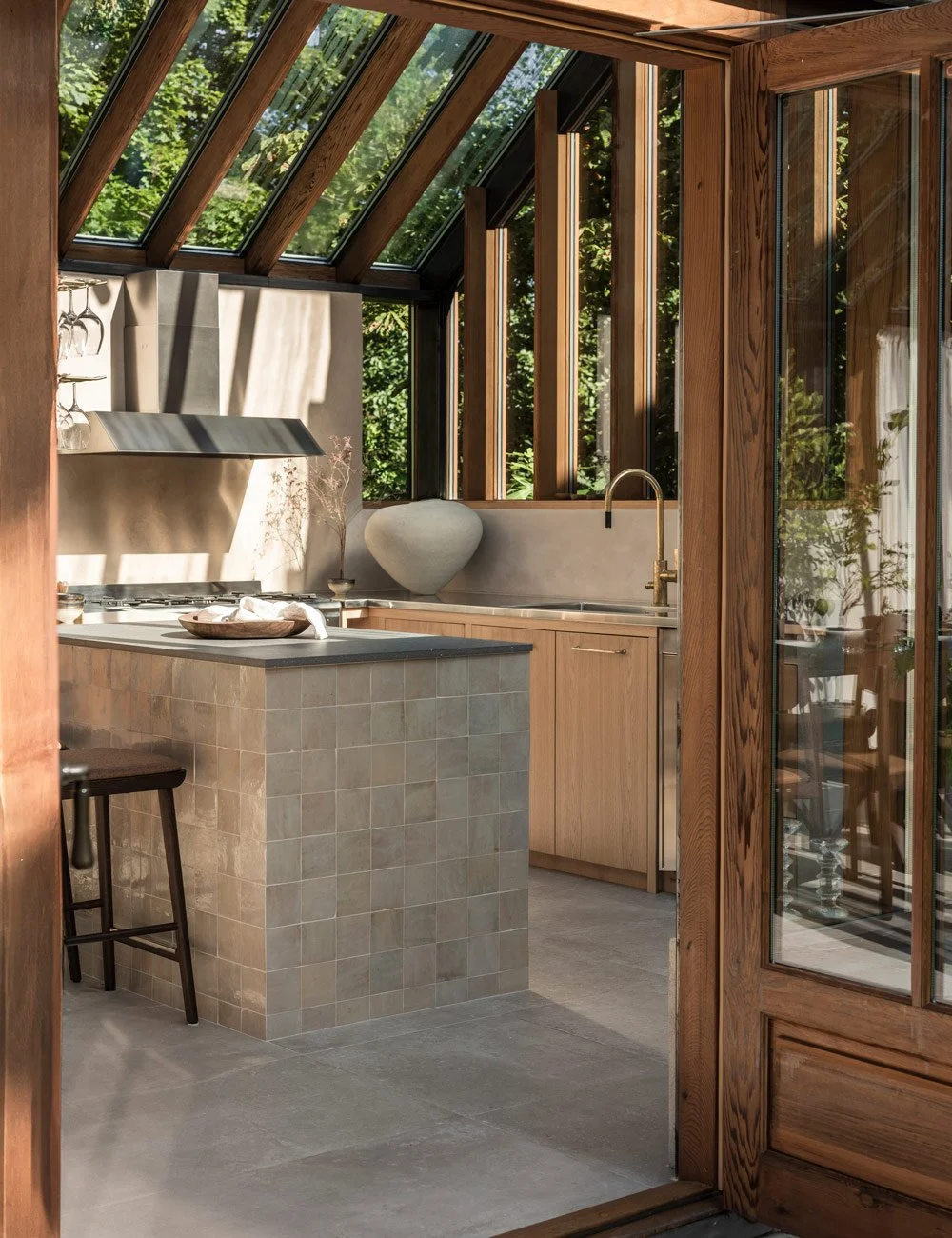
The kitchen occupies a compact yet perfectly designed space. It was custom-designed by Nordiska Kök, featuring light oak paired with stainless steel accents. This wood develops a patina over time and complements the warm hue of the cedar. Its cabinet fronts, discreet and understated, feature brass handles by Corston.
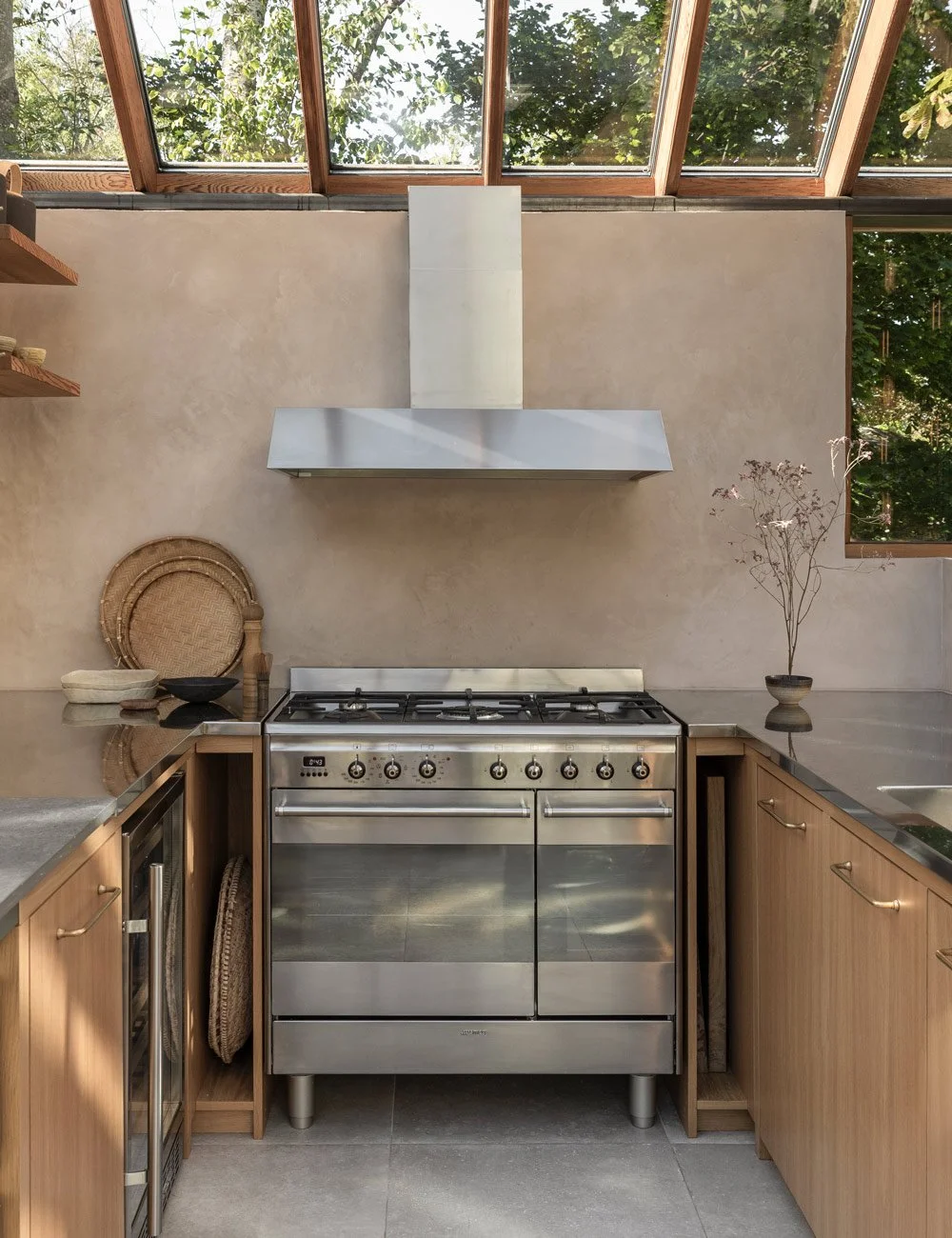
The stainless steel countertop and sink, crafted by Decosteel, lend a professional touch to the overall design. Its gold, graphic-style Tapwell faucet provides a subtle contrast against the brushed metal. The Smeg stove and Fjäråskupan range hood round out a setup worthy of a professional kitchen. The dining room can seat up to twenty-two guests without ever losing its intimate atmosphere.
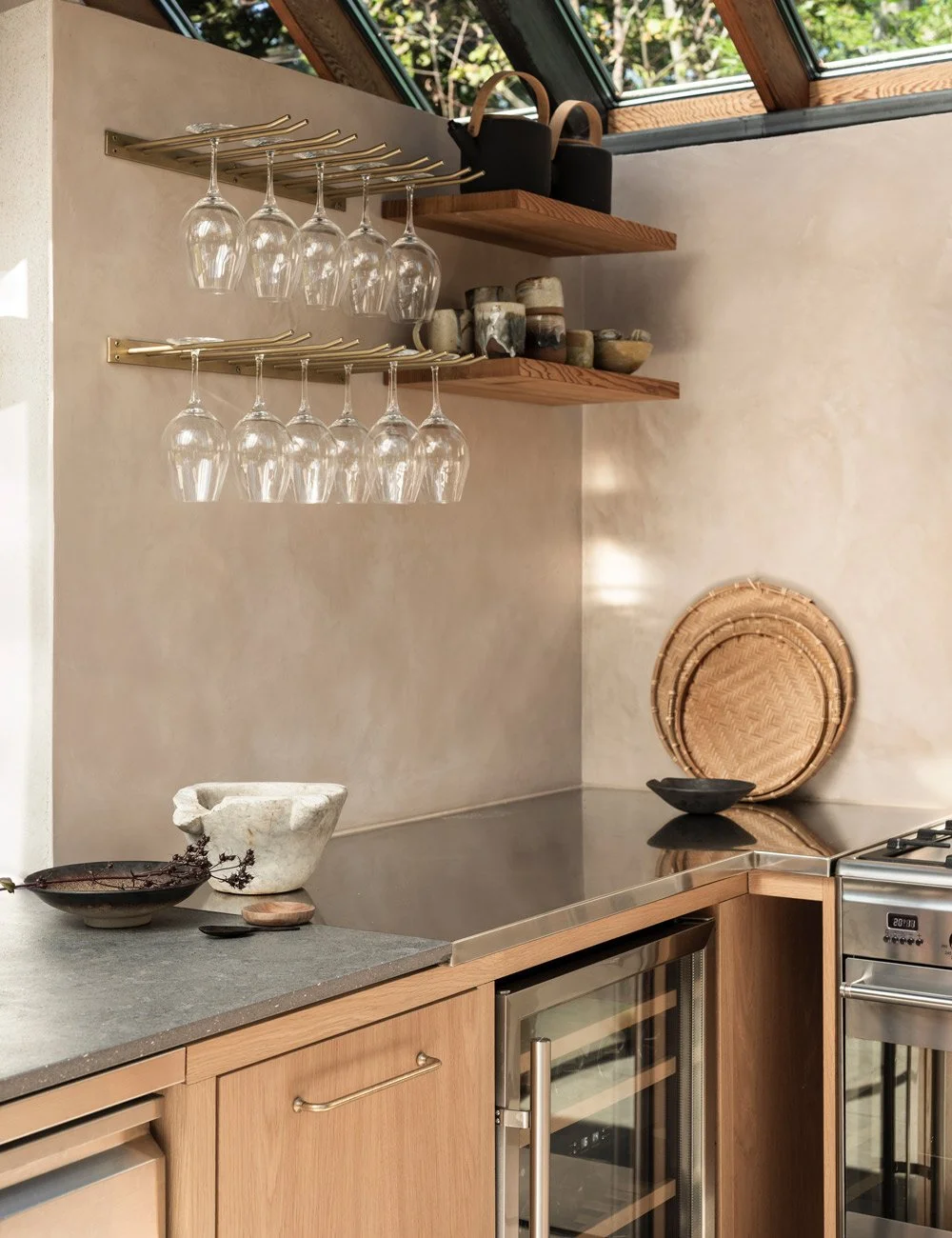
Brass recurs as a unifying theme throughout the room. Gold-colored rails hold wine glasses, suspended upside down above the countertop. This open shelving transforms simple storage into a true element of wall decor. Paired with light wood, the golden metal instantly softens the starkness of the stainless steel.
A half-height wall partition separates the kitchen from the rest of the room. This light partition allows for cooking in a secluded area, away from prying eyes, while maintaining a connection to the dining area. Guests can thus enjoy the convivial atmosphere without noticing the hustle and bustle of the kitchen.
Every centimeter of this compact kitchen has been precisely measured. A refrigerated pantry, a wine cellar, and a dishwasher are tucked away beneath the countertop. Nothing protrudes, nothing disrupts the room’s overall lines. This meticulous layout allows the beauty of the chosen materials to shine. This is the true talent of this Swedish kitchen designer: creating an ergonomic and practical space without sacrificing aesthetics.
The central island is the focal point of the room’s decor. It is clad in handcrafted tiles from France, laid with a subtle relief. This material adds texture to an otherwise very minimalist design. The tiles also introduce a touch of the exotic, a nod to French elegance and its renowned gastronomy.
Behind the stove, tadelakt covers the backsplash wall. This traditional Moroccan plaster, with its subtle sheen, catches the light. It pairs beautifully with wood and steel, and this combination of textures showcases true artisanal craftsmanship, a far cry from standardized solutions.
This blend of origins encapsulates the very spirit of the space. The wood comes from Scandinavia, the plaster from the Maghreb, the tiles from France, and the tableware from Japan and Vietnam. The various elements complement one another discreetly, like the ingredients in a well-balanced recipe.
The long wooden table is flanked by chairs upholstered in natural fabric. A tablecloth of raw linen is set with Japanese and Vietnamese ceramics tableware. A stone pestle from France sits alongside small vases filled with dry branches. Everything seems to have been chosen with the same sensory discernment.
An antique glass-fronted sideboard, made of weathered wood, contrasts with the austere simplicity of the rest of the room. It holds white porcelain tableware and carefully arranged glasses. This vintage piece softens the strict lines of the Scandinavian decor. It brings an immediate sense of warmth to a very controlled space.
Near the fireplace, a built-in bench runs along the wall. Striped linen cushions and wool throws invite you to settle in for a long while. Beneath the seat, firewood is stacked in plain view, ready to feed the fire. This supply of wood becomes a decorative element in its own right, blending practicality with aesthetics.
Woven bamboo armchairs and striped fabric ottomans complete this relaxation area. Their light, airy lines contrast with the geometric mass of the fireplace. The color palette is muted, consisting of linen, light wood, and rough-hewn stone. No garish colors disrupt this harmony built on texture and light.
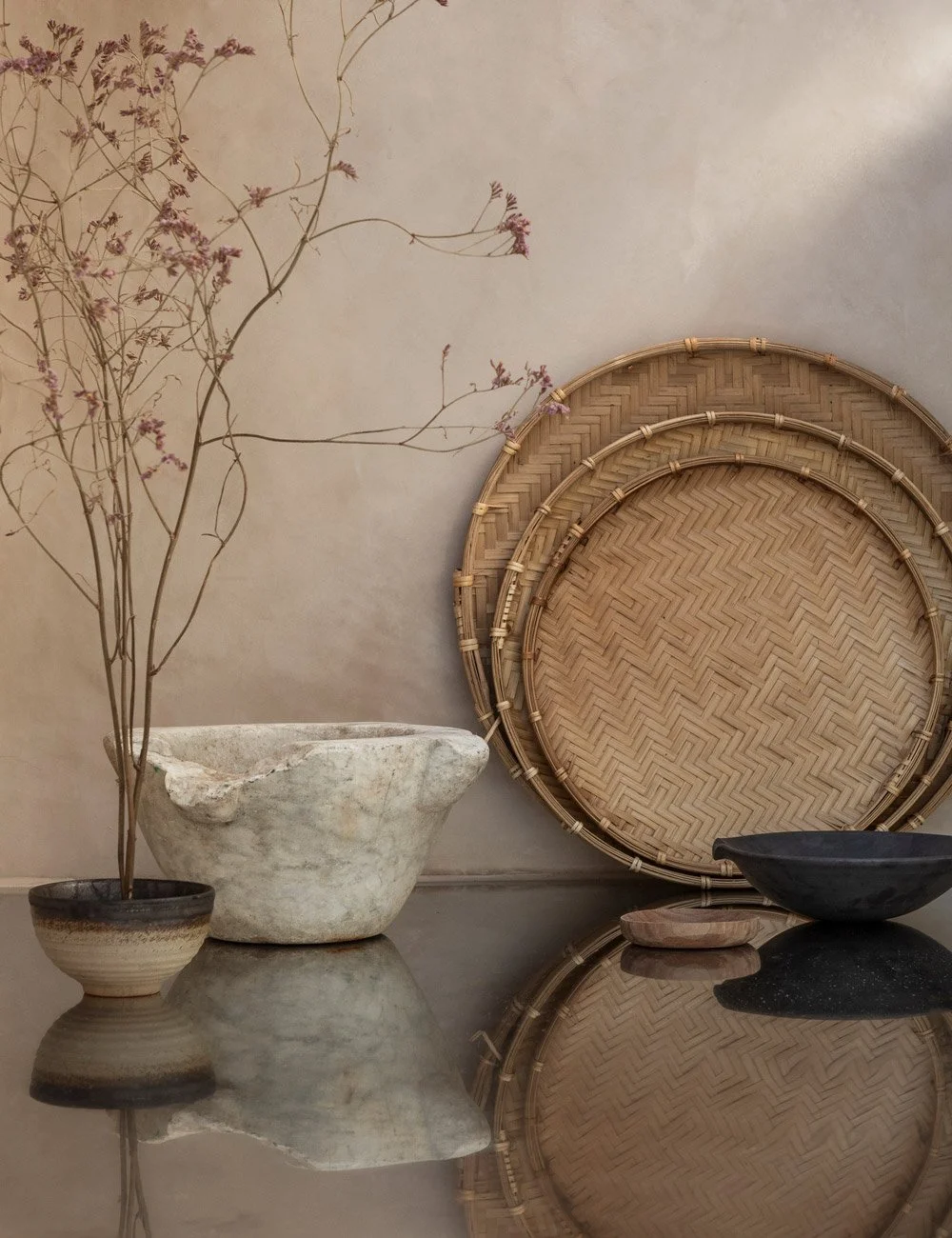
On the countertops, ceramic bowls sit alongside flat-woven baskets. Wooden utensils, a stone mortar, and small pottery pieces form still lifes. This apparent simplicity actually requires a very rigorous selection process.
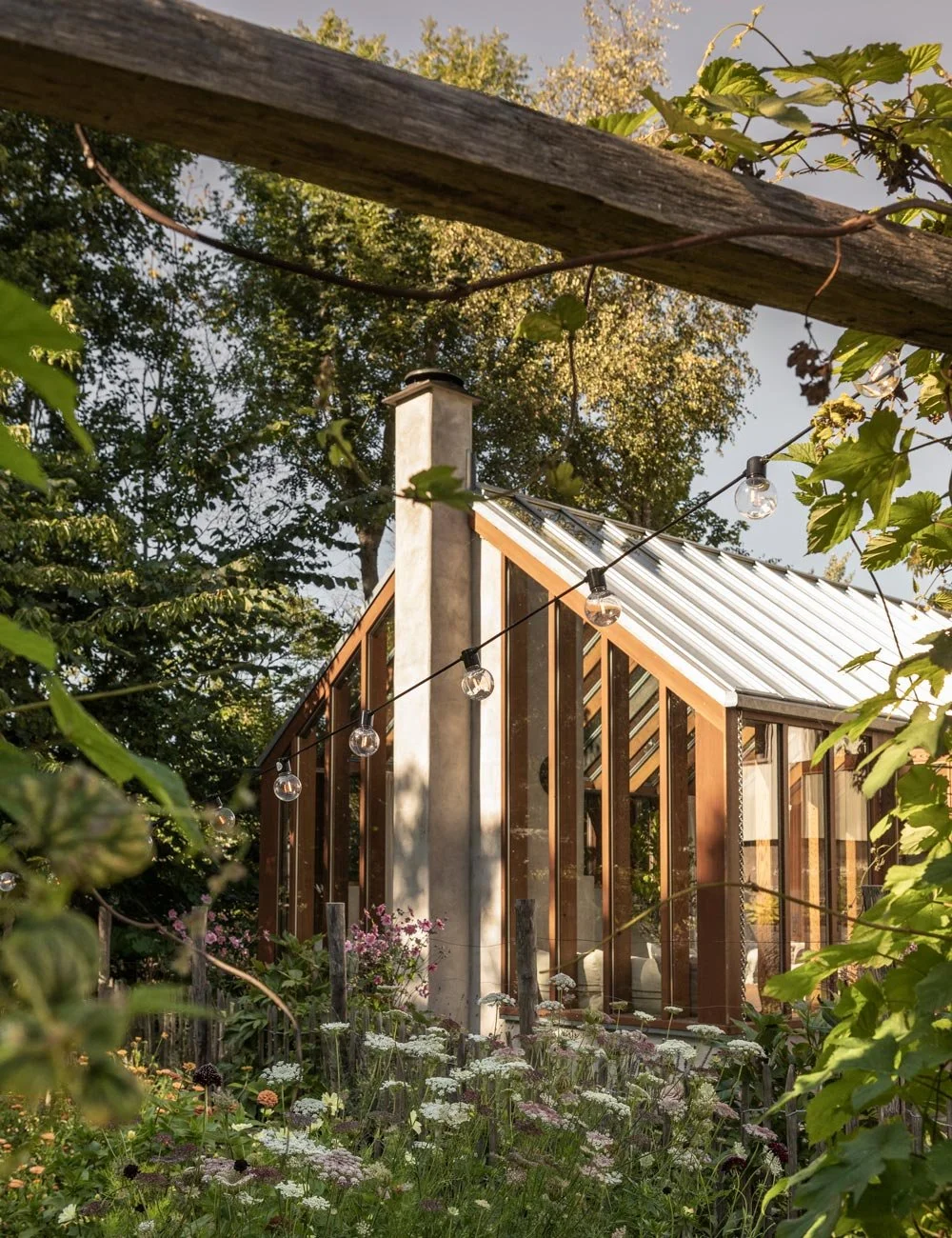
The lighting fixtures are discreet, almost nonexistent, giving way to natural light. When evening falls, a string of bare bulbs highlights the building’s silhouette in the garden. This simple touch extends the magic of the place after sunset. It serves as a reminder that interior design is also considered from the outside.
An orangery is distinctly different from a traditional horticultural greenhouse. It combines insulation, high-quality materials, and true living comfort. A greenhouse, on the other hand, remains a lightweight structure dedicated primarily to growing plants. Ett Orangeri perfectly illustrates this livable version of the winter garden, serving as a blend of kitchen, living room, and dining room.
This trend is also gaining popularity outside of Sweden. The winter garden is making a comeback in renovation projects, often combined with a kitchen or a secondary living room. This Swedish orangery offers a successful example of this desire to live closer to nature. It demonstrates how a glass-enclosed space can remain warm and intimate. With Swedish oak, Moroccan tadelakt, and French tiles, this orangery weaves a dialogue of materials with precision and sensitivity.

Named Ett Orangeri, this glass house belongs to Camilla and Lasse, a couple driven by creativity in all its forms. Music, cooking, and entertaining come together in this space designed as an open-air studio. Swedish nature streams in through every opening.
Camilla tends the garden surrounding the building herself. Wildflowers and vegetable beds provide ingredients for her cooking, which is influenced by Japanese cuisine. Each plate is meant to be as beautiful as it is delicious, serving as a direct extension of the surroundings. This continuity between the garden, the table, and the architecture gives the space its rare sense of cohesion.
Architecture that blurs boundaries
The steel framework is concealed beneath beams of golden cedar. This wood ages gracefully and withstands the damp seasons of the Swedish coast. Its walls are finished with a matte plaster similar to traditional stucco, which gently captures the light. The boundary between interior and exterior fades completely.
The tight rhythm of the rafters creates a graphic pattern on the ceiling. This pattern changes as the sun moves across the sky. Geothermal heating makes it possible to live in this winter garden year-round, without compromising its ecological balance. The tall fireplace, finished with the same plaster as the walls, is situated at one end. It provides welcome warmth when the Scandinavian winter sets in.
In summer, the glass doors open wide onto the flower-filled meadow. The boundary between the living room and the garden then almost completely disappears. In winter, the same room gently closes in around the fire and thick textiles.
A light oak kitchen, blending wood and stainless steel
The kitchen occupies a compact yet perfectly designed space. It was custom-designed by Nordiska Kök, featuring light oak paired with stainless steel accents. This wood develops a patina over time and complements the warm hue of the cedar. Its cabinet fronts, discreet and understated, feature brass handles by Corston.
The stainless steel countertop and sink, crafted by Decosteel, lend a professional touch to the overall design. Its gold, graphic-style Tapwell faucet provides a subtle contrast against the brushed metal. The Smeg stove and Fjäråskupan range hood round out a setup worthy of a professional kitchen. The dining room can seat up to twenty-two guests without ever losing its intimate atmosphere.
Brass recurs as a unifying theme throughout the room. Gold-colored rails hold wine glasses, suspended upside down above the countertop. This open shelving transforms simple storage into a true element of wall decor. Paired with light wood, the golden metal instantly softens the starkness of the stainless steel.
A half-height wall partition separates the kitchen from the rest of the room. This light partition allows for cooking in a secluded area, away from prying eyes, while maintaining a connection to the dining area. Guests can thus enjoy the convivial atmosphere without noticing the hustle and bustle of the kitchen.
Every centimeter of this compact kitchen has been precisely measured. A refrigerated pantry, a wine cellar, and a dishwasher are tucked away beneath the countertop. Nothing protrudes, nothing disrupts the room’s overall lines. This meticulous layout allows the beauty of the chosen materials to shine. This is the true talent of this Swedish kitchen designer: creating an ergonomic and practical space without sacrificing aesthetics.
The French-tiled island, the heart of the decor
The central island is the focal point of the room’s decor. It is clad in handcrafted tiles from France, laid with a subtle relief. This material adds texture to an otherwise very minimalist design. The tiles also introduce a touch of the exotic, a nod to French elegance and its renowned gastronomy.
Behind the stove, tadelakt covers the backsplash wall. This traditional Moroccan plaster, with its subtle sheen, catches the light. It pairs beautifully with wood and steel, and this combination of textures showcases true artisanal craftsmanship, a far cry from standardized solutions.
This blend of origins encapsulates the very spirit of the space. The wood comes from Scandinavia, the plaster from the Maghreb, the tiles from France, and the tableware from Japan and Vietnam. The various elements complement one another discreetly, like the ingredients in a well-balanced recipe.
A dining room adorned with raw materials
The long wooden table is flanked by chairs upholstered in natural fabric. A tablecloth of raw linen is set with Japanese and Vietnamese ceramics tableware. A stone pestle from France sits alongside small vases filled with dry branches. Everything seems to have been chosen with the same sensory discernment.
An antique glass-fronted sideboard, made of weathered wood, contrasts with the austere simplicity of the rest of the room. It holds white porcelain tableware and carefully arranged glasses. This vintage piece softens the strict lines of the Scandinavian decor. It brings an immediate sense of warmth to a very controlled space.
A seating area by the fire
Near the fireplace, a built-in bench runs along the wall. Striped linen cushions and wool throws invite you to settle in for a long while. Beneath the seat, firewood is stacked in plain view, ready to feed the fire. This supply of wood becomes a decorative element in its own right, blending practicality with aesthetics.
Woven bamboo armchairs and striped fabric ottomans complete this relaxation area. Their light, airy lines contrast with the geometric mass of the fireplace. The color palette is muted, consisting of linen, light wood, and rough-hewn stone. No garish colors disrupt this harmony built on texture and light.
Carefully selected objects
On the countertops, ceramic bowls sit alongside flat-woven baskets. Wooden utensils, a stone mortar, and small pottery pieces form still lifes. This apparent simplicity actually requires a very rigorous selection process.
The lighting fixtures are discreet, almost nonexistent, giving way to natural light. When evening falls, a string of bare bulbs highlights the building’s silhouette in the garden. This simple touch extends the magic of the place after sunset. It serves as a reminder that interior design is also considered from the outside.
Orangery or greenhouse: what’s the difference?
An orangery is distinctly different from a traditional horticultural greenhouse. It combines insulation, high-quality materials, and true living comfort. A greenhouse, on the other hand, remains a lightweight structure dedicated primarily to growing plants. Ett Orangeri perfectly illustrates this livable version of the winter garden, serving as a blend of kitchen, living room, and dining room.
This trend is also gaining popularity outside of Sweden. The winter garden is making a comeback in renovation projects, often combined with a kitchen or a secondary living room. This Swedish orangery offers a successful example of this desire to live closer to nature. It demonstrates how a glass-enclosed space can remain warm and intimate. With Swedish oak, Moroccan tadelakt, and French tiles, this orangery weaves a dialogue of materials with precision and sensitivity.


Comments