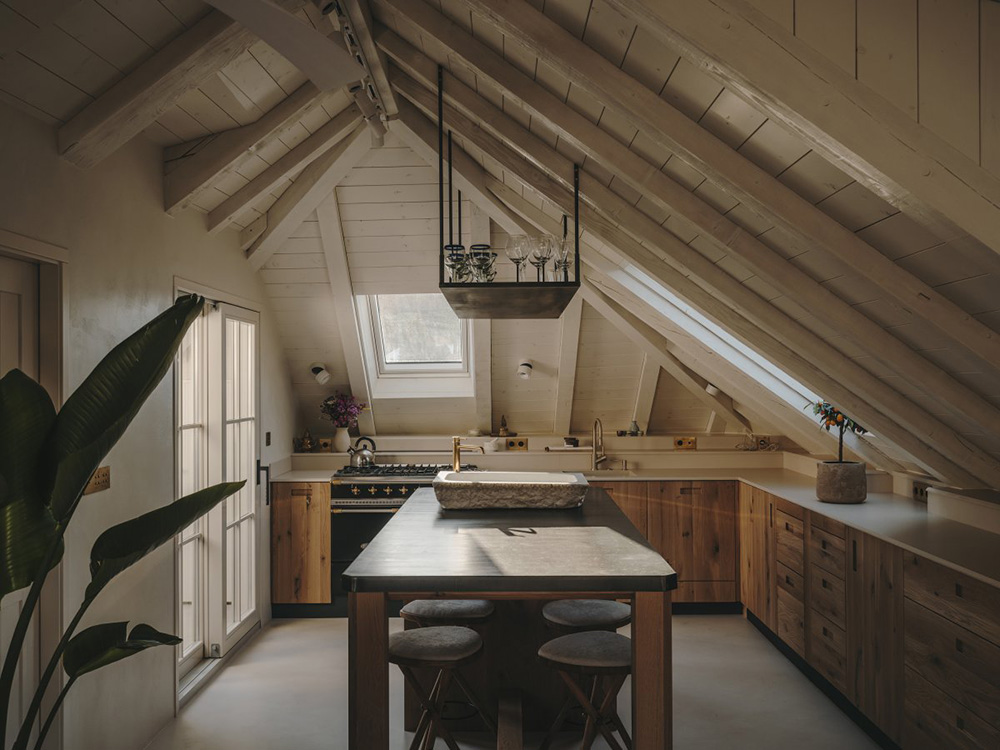
A 19th-century palace in Croatia transformed into a contemporary place
Follow Planète Déco on Google — add us to your favourites to keep our decor articles in your news feedImmerse yourself in the interior design of Palazzo Caterina in Hvar, Croatia, a fully renovated 19th-century palace
Some buildings stand the test of time, their beauty undiminished despite the passing years. Palazzo Caterina, located on the main square of the town of Hvar, is a former 19th-century palace in Croatia that is one such example. Its limestone façade has overlooked St. Stephen’s Cathedral for over 200 years, and its recent transformation into a luxury boutique hotel has done nothing to diminish its magnificence, quite the contrary.
Before stepping through the palazzo’s doors, one must understand the island. Hvar holds a special place in the Dalmatian archipelago. Croatia has thousands of islands, but Hvar boasts several rare assets, including 2,700 hours of sunshine annually. It is also home to the Adriatic’s most beautiful lavender fields and terraced vineyards that plunge toward a sea of pure blue.
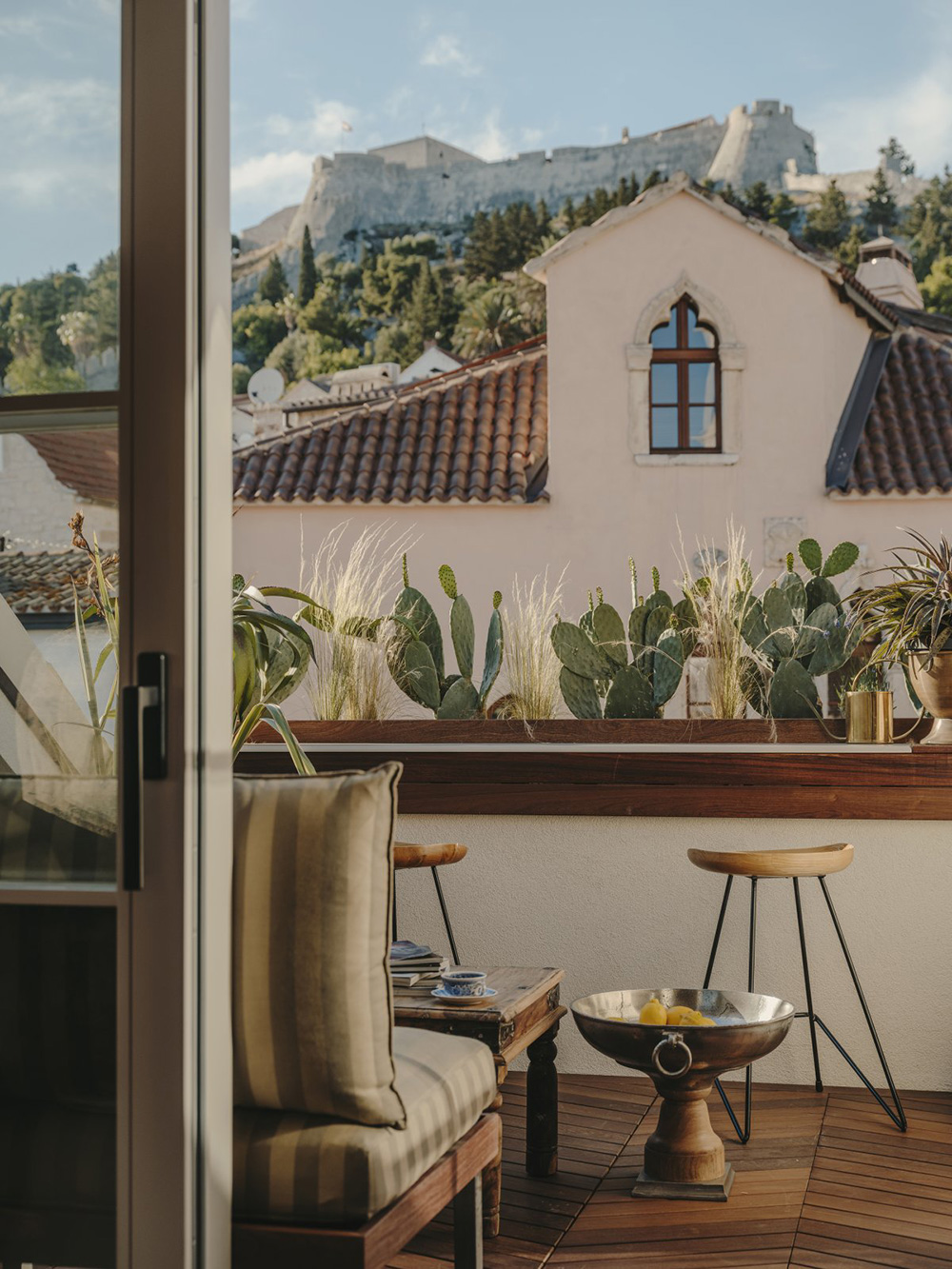
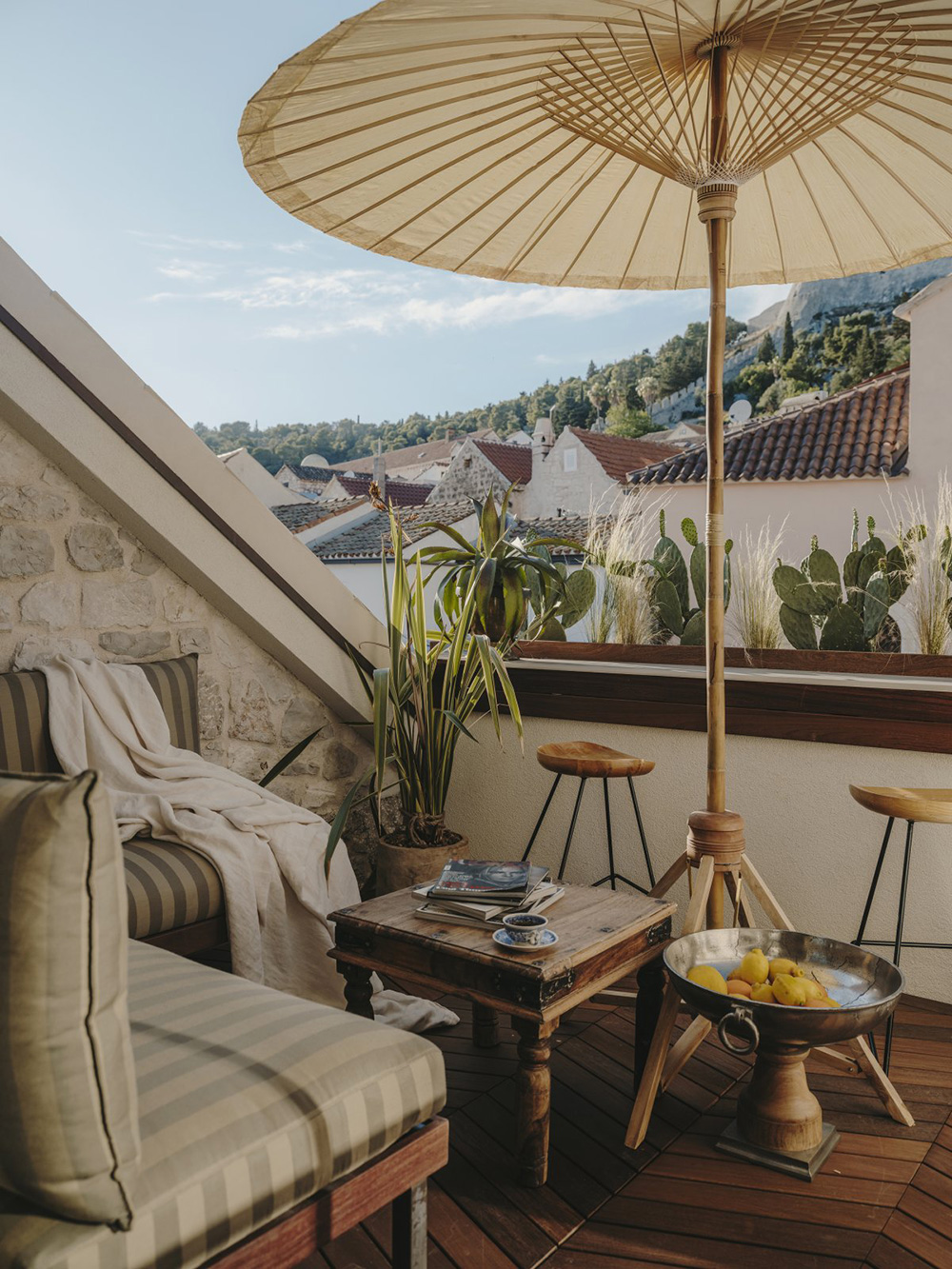
The town of Hvar, the island’s capital, preserves an almost intact historic urban fabric with its narrow streets. Its Spanish fortress overlooks everything from a hilltop. It is a blend of pale stone, warmth, and proximity to water that sparkles just a stone’s throw away. In the background, one can glimpse the Pakleni islets.
It was against this backdrop that the Mallorca-based design duo Rôck&Villa, composed of Paulo Valcic and Stefan Relic, was commissioned to renovate Palazzo Caterina. A mission that was as much an emotional challenge as it was a technical one.
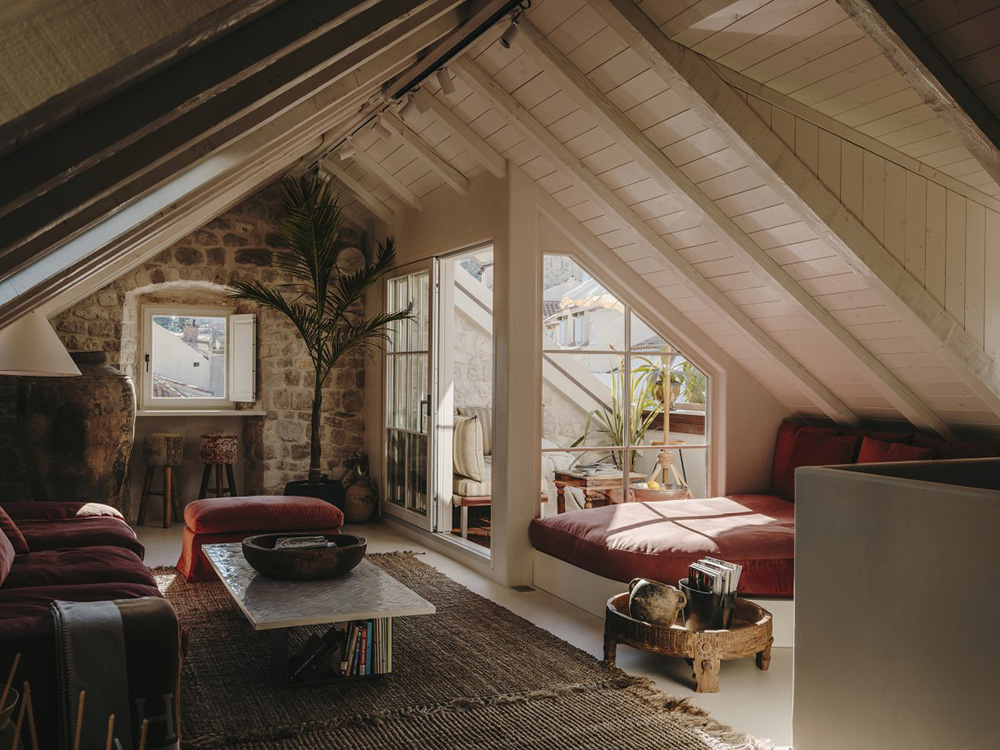
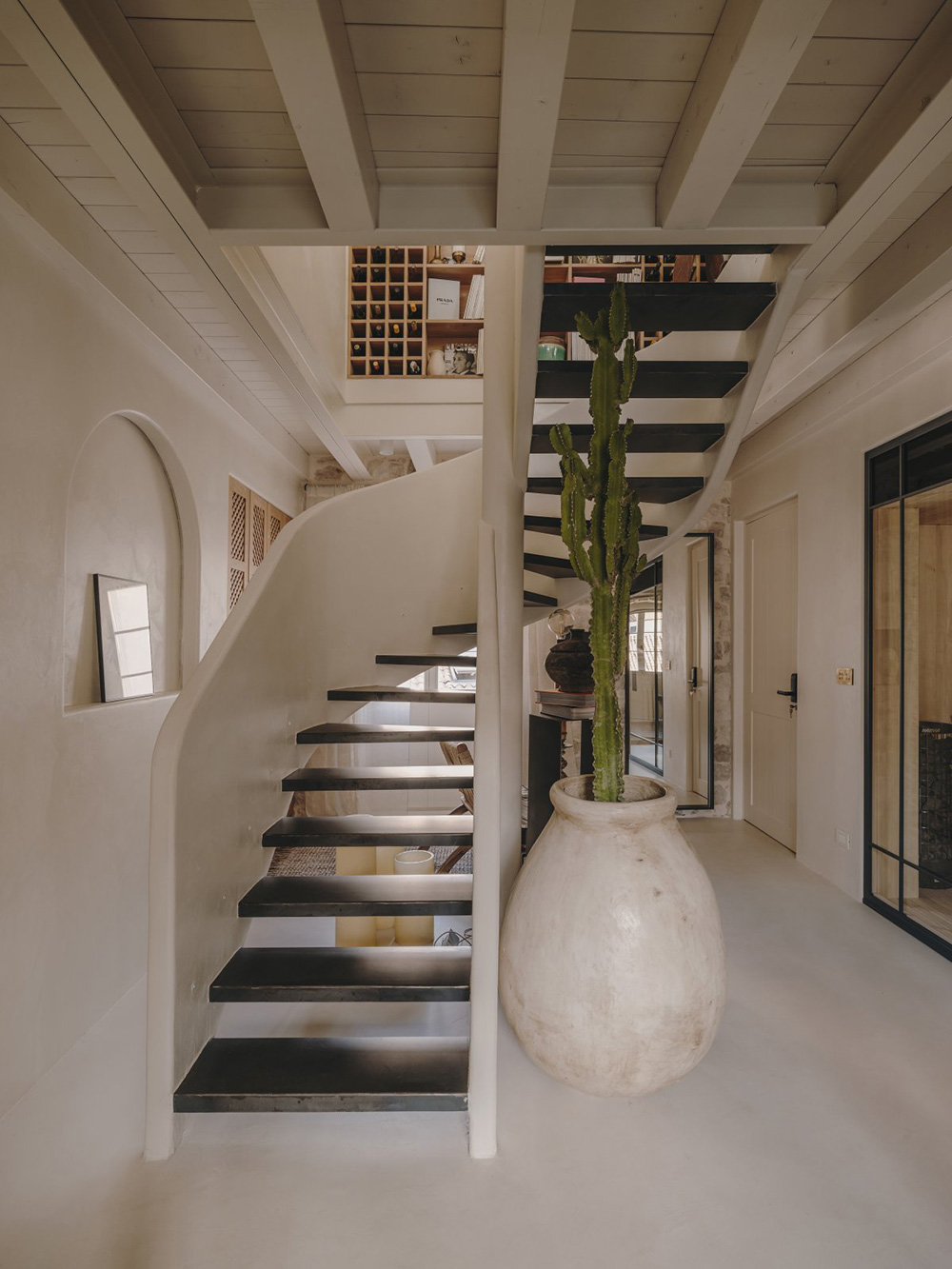
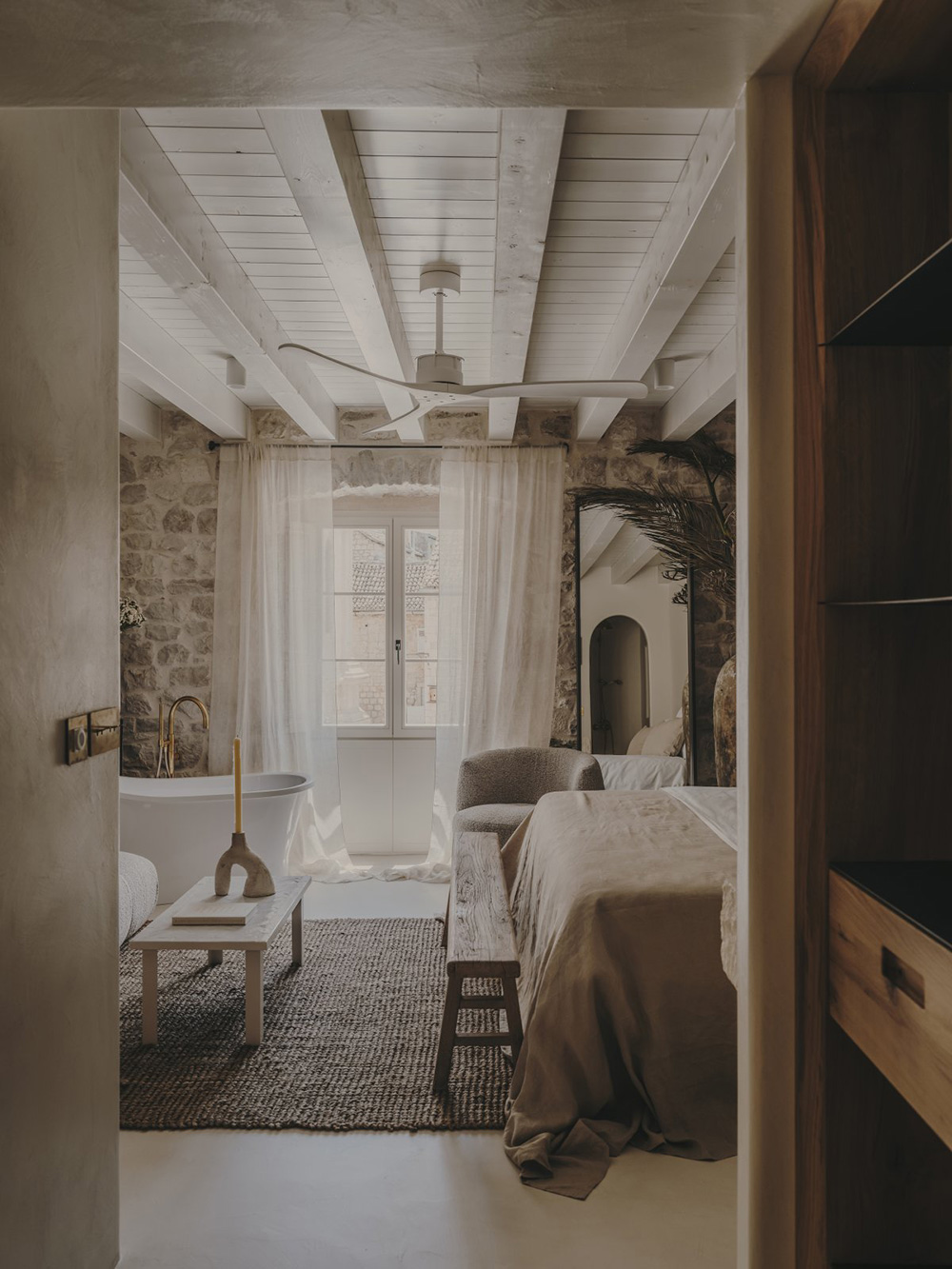
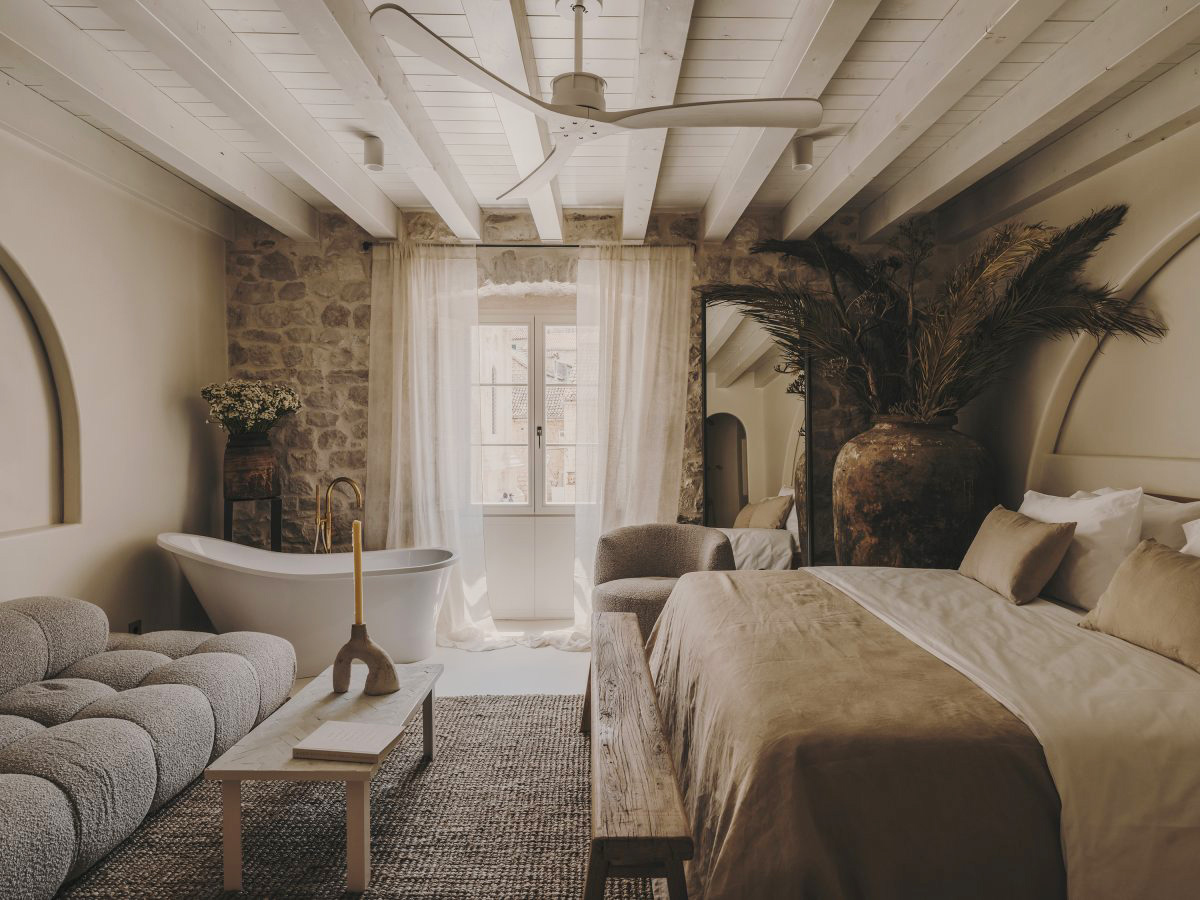
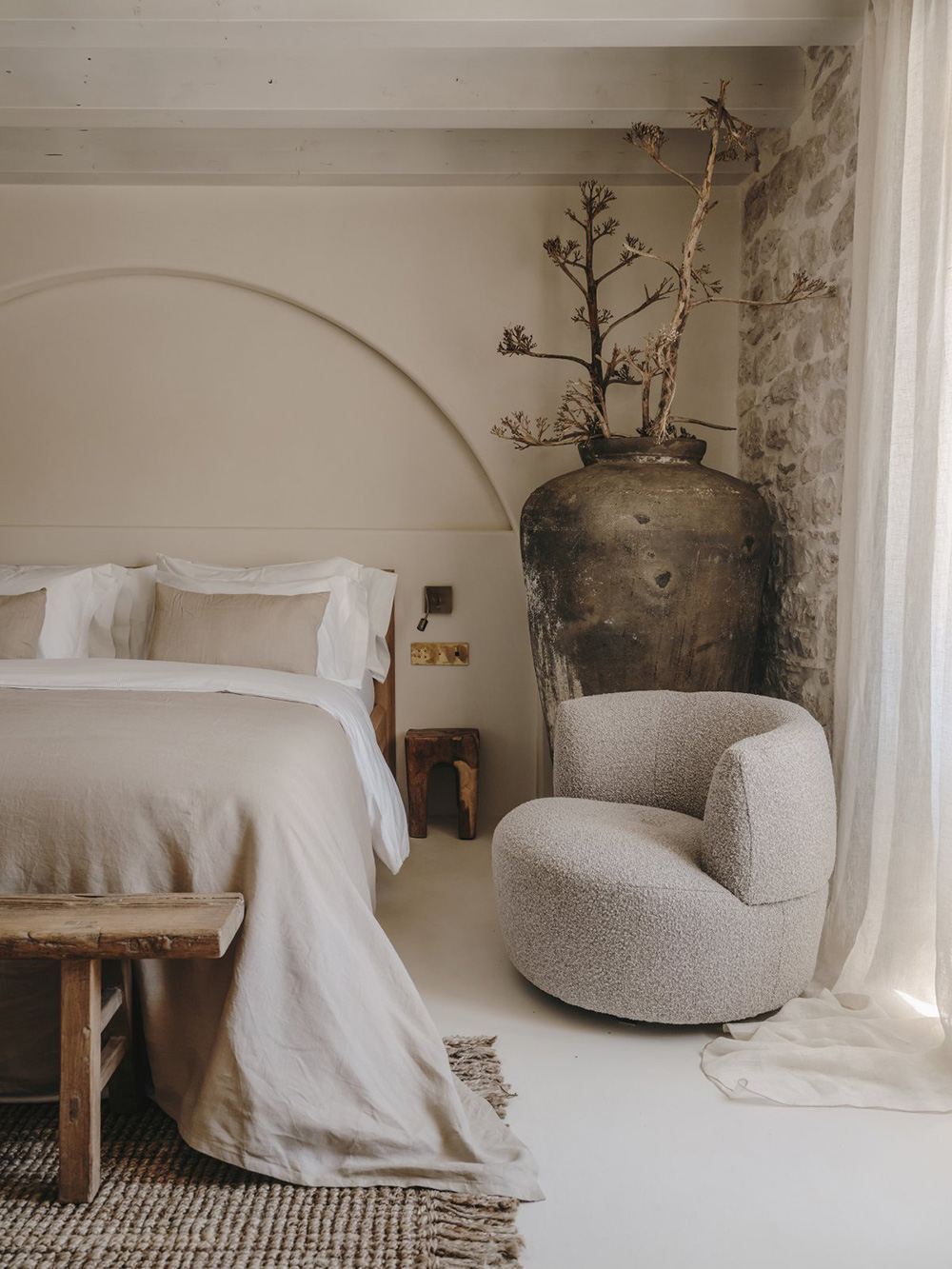
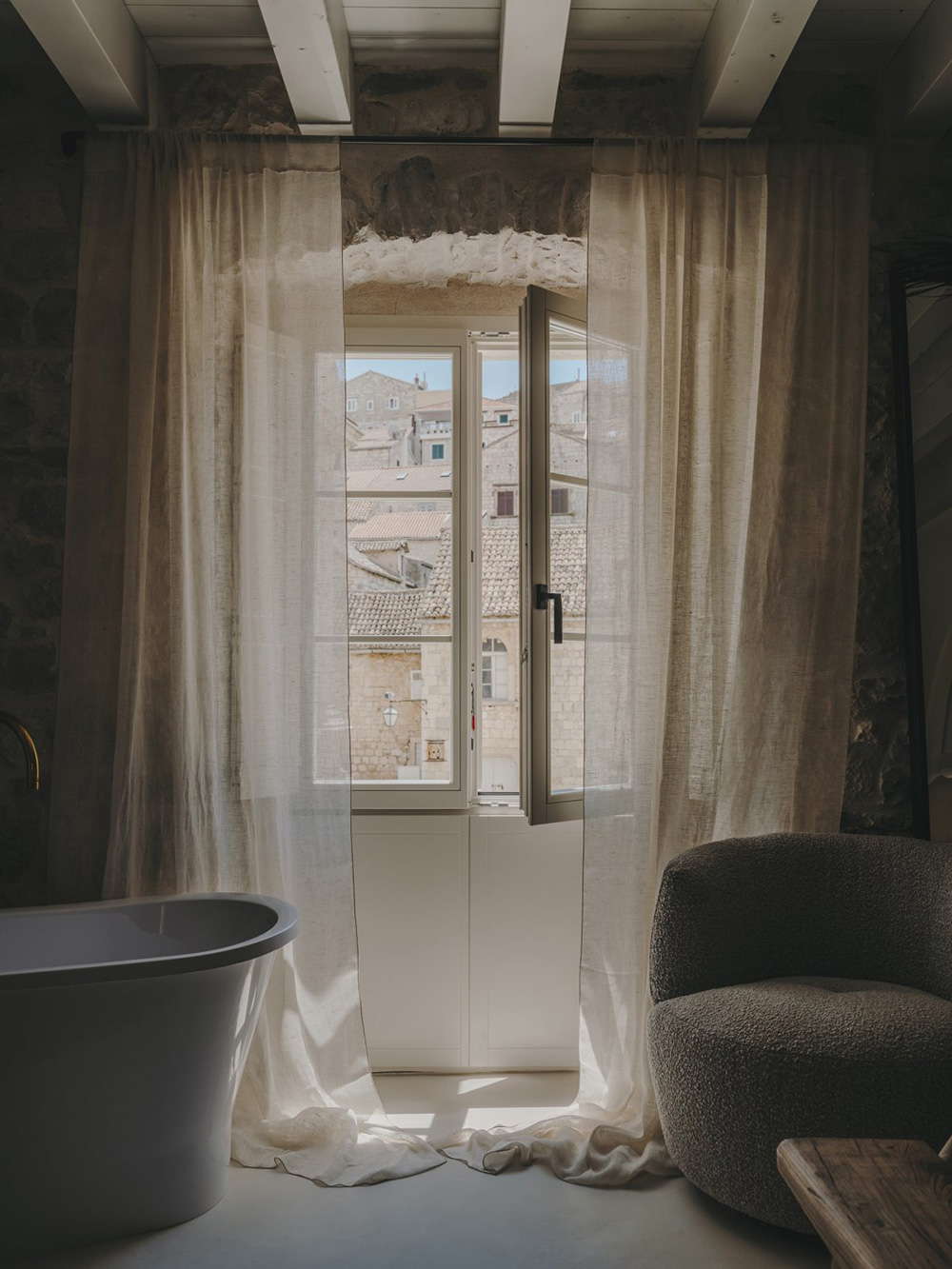
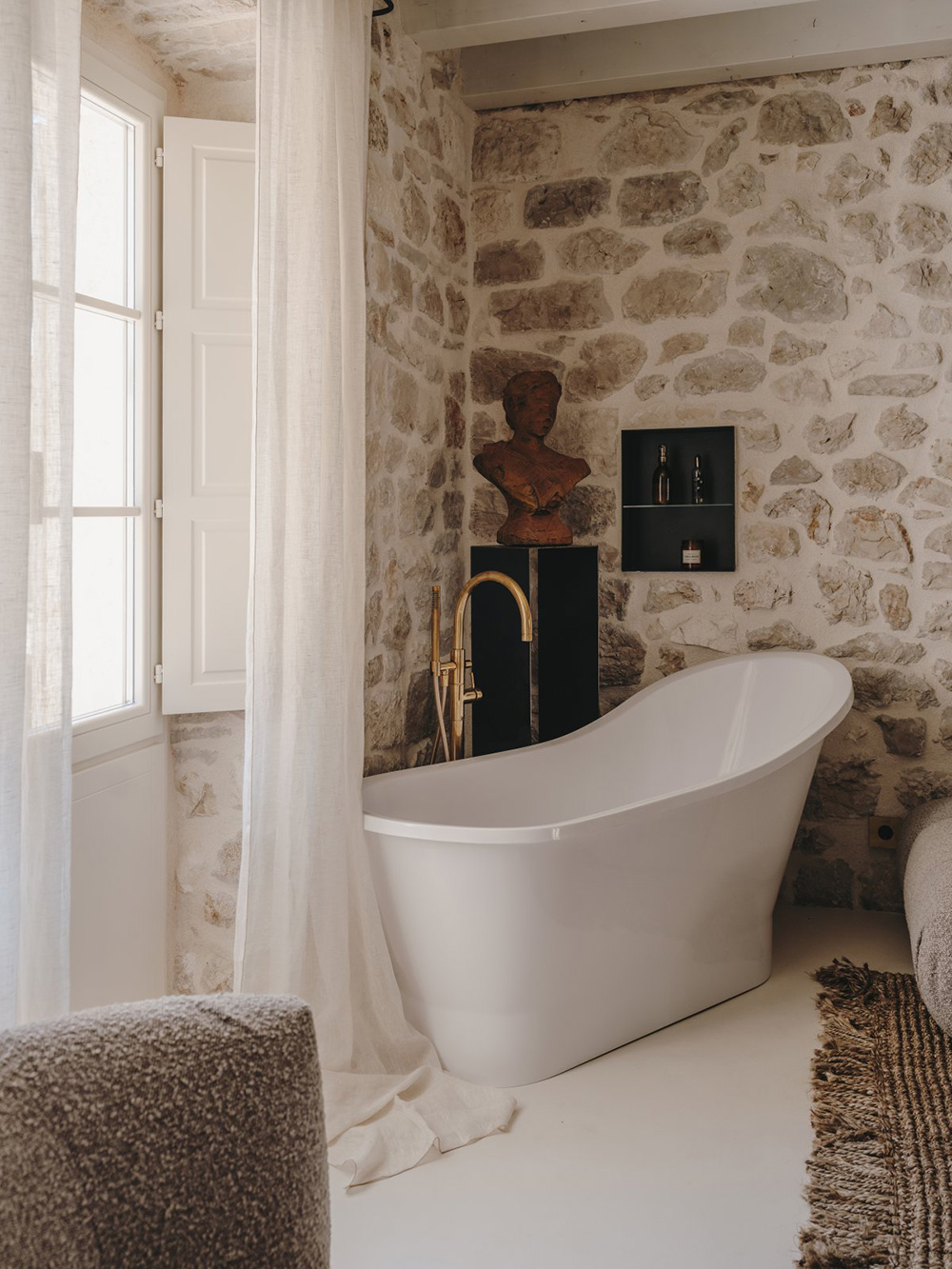
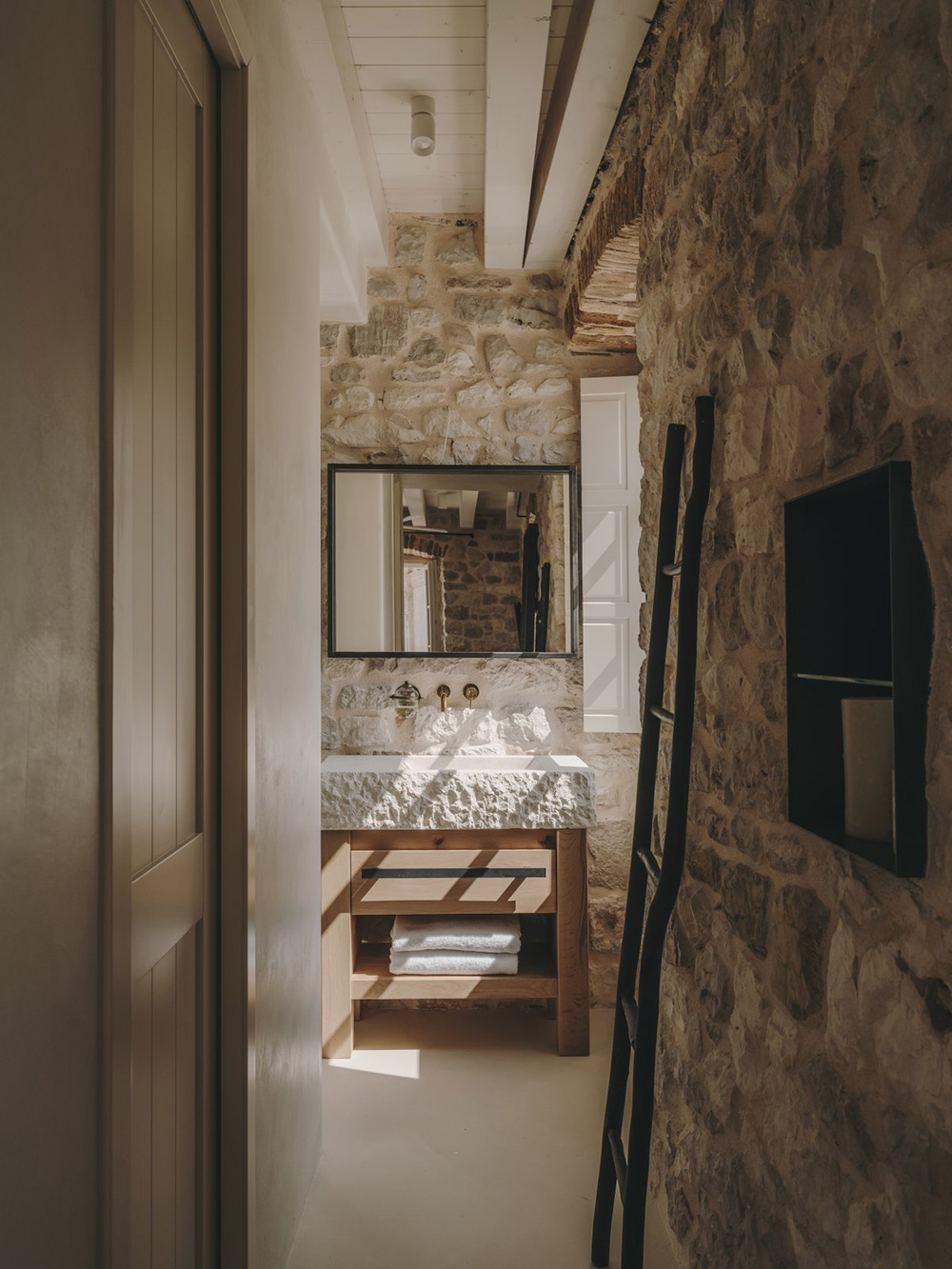
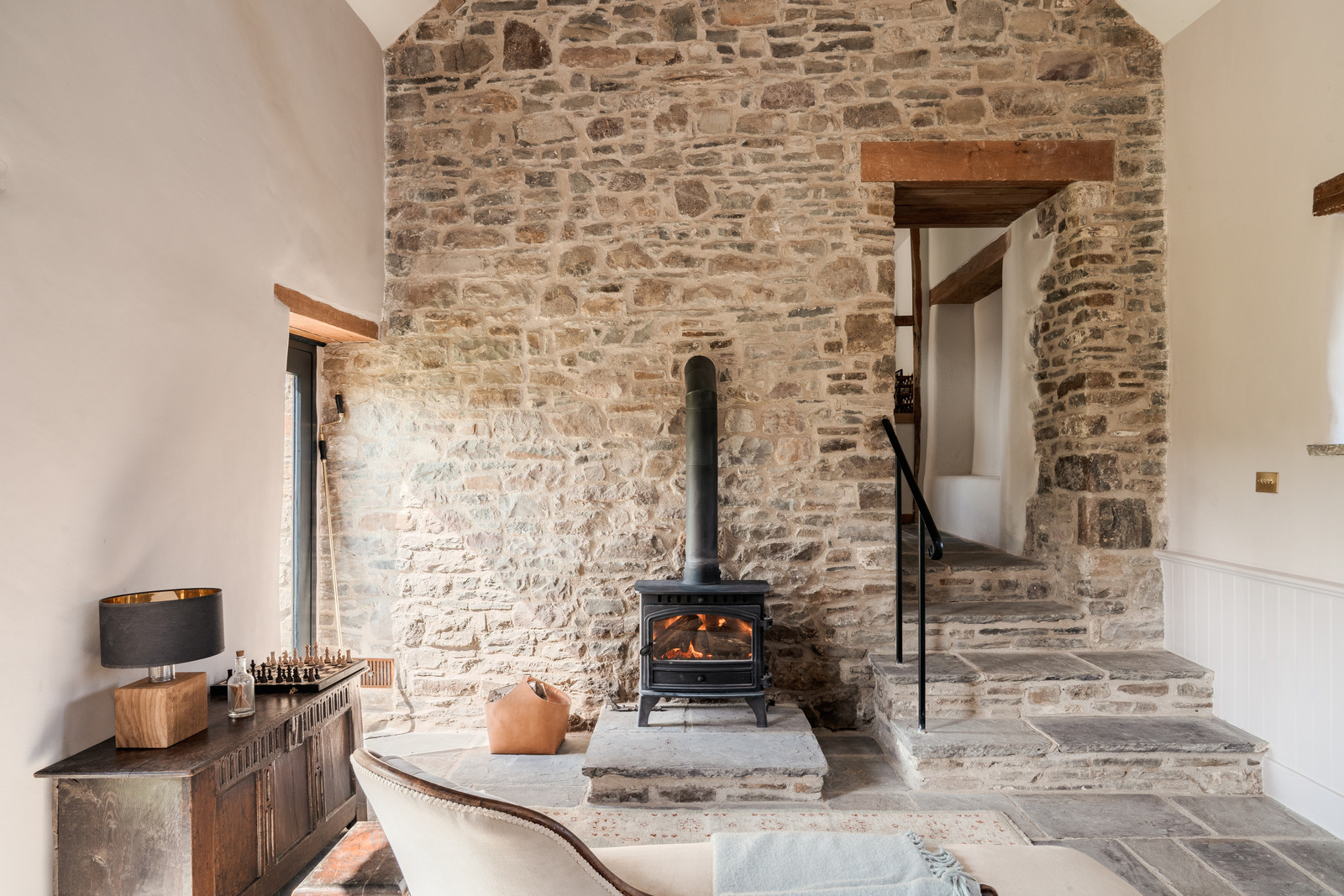
The building dates back to the 1800s. Its structure bears the marks of every era: round arches in the load-bearing walls, moldings on the door frames, and generously proportioned stone staircases. Rôck&Villa team chose to highlight all these elements. The exposed stone walls remain visible in the suites, with their irregular texture and slightly pinkish cream color. The ceiling beams retain their raw cross-section.
What the architects incorporated is summed up in this sentence from their Instagram account "the renovation seeks to combine the building’s heritage with carefully selected contemporary elements, custom-made furniture, handcrafted objects, and modern amenities."
This 19th-century palace in Croatia offers three types of accommodations. The Two Arches Suite (31sqm) and Caterina’s Suite (36sqm) both open onto St. Stephen’s Square and the cathedral. The Private Villa spans 250sqm and can accommodate four people.
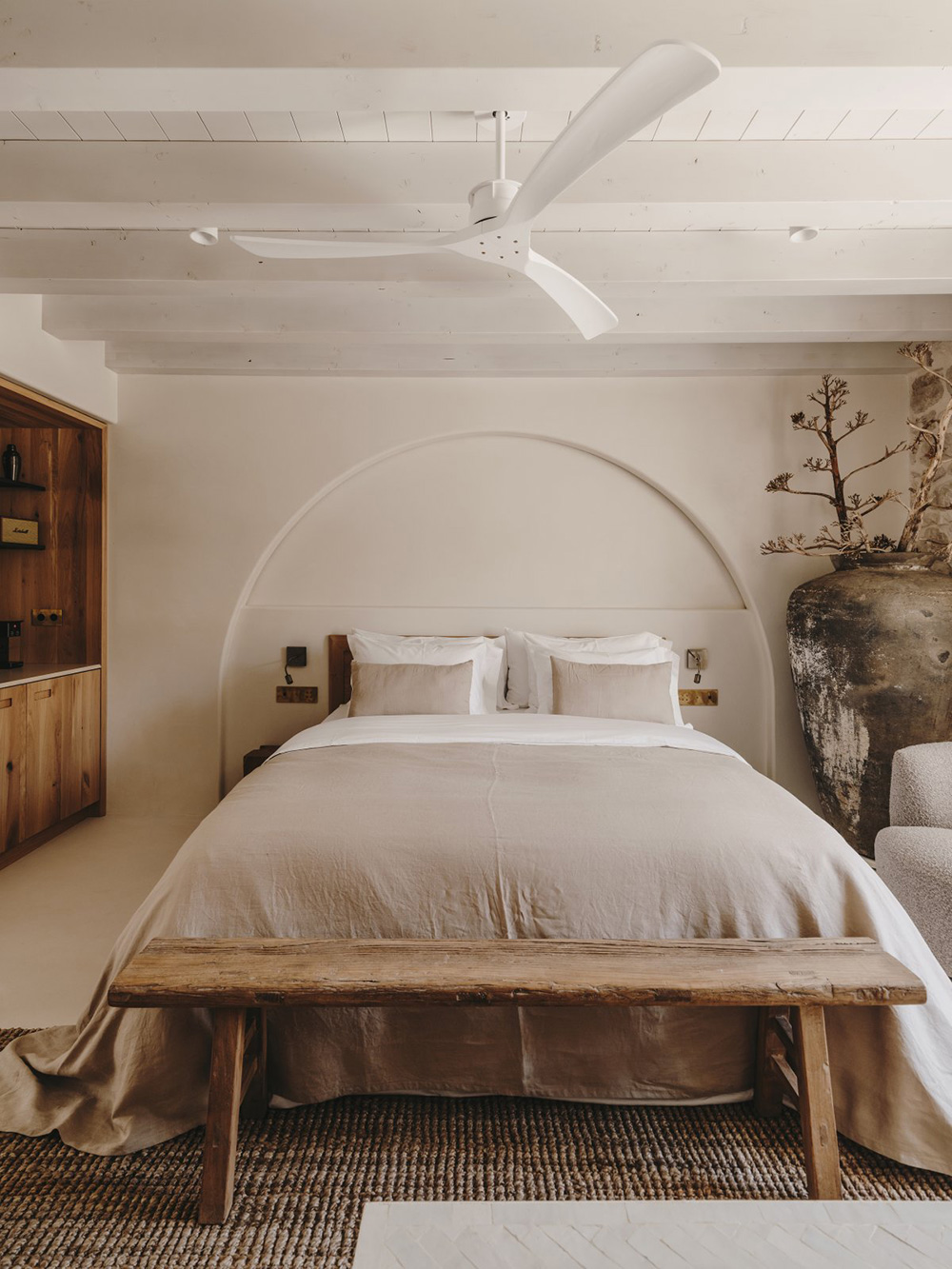
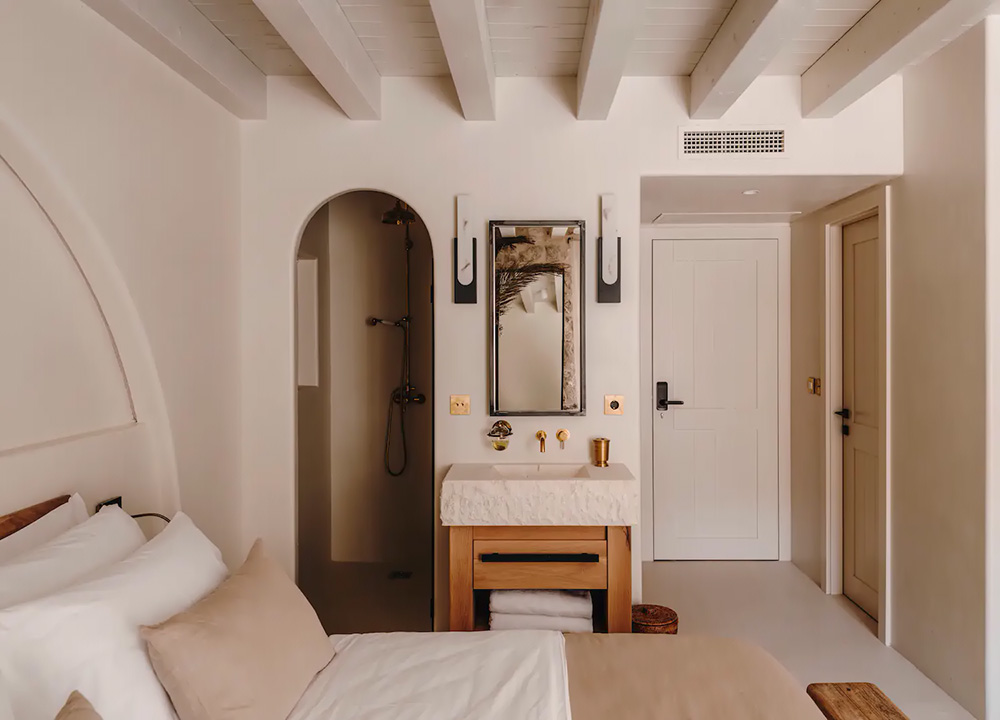
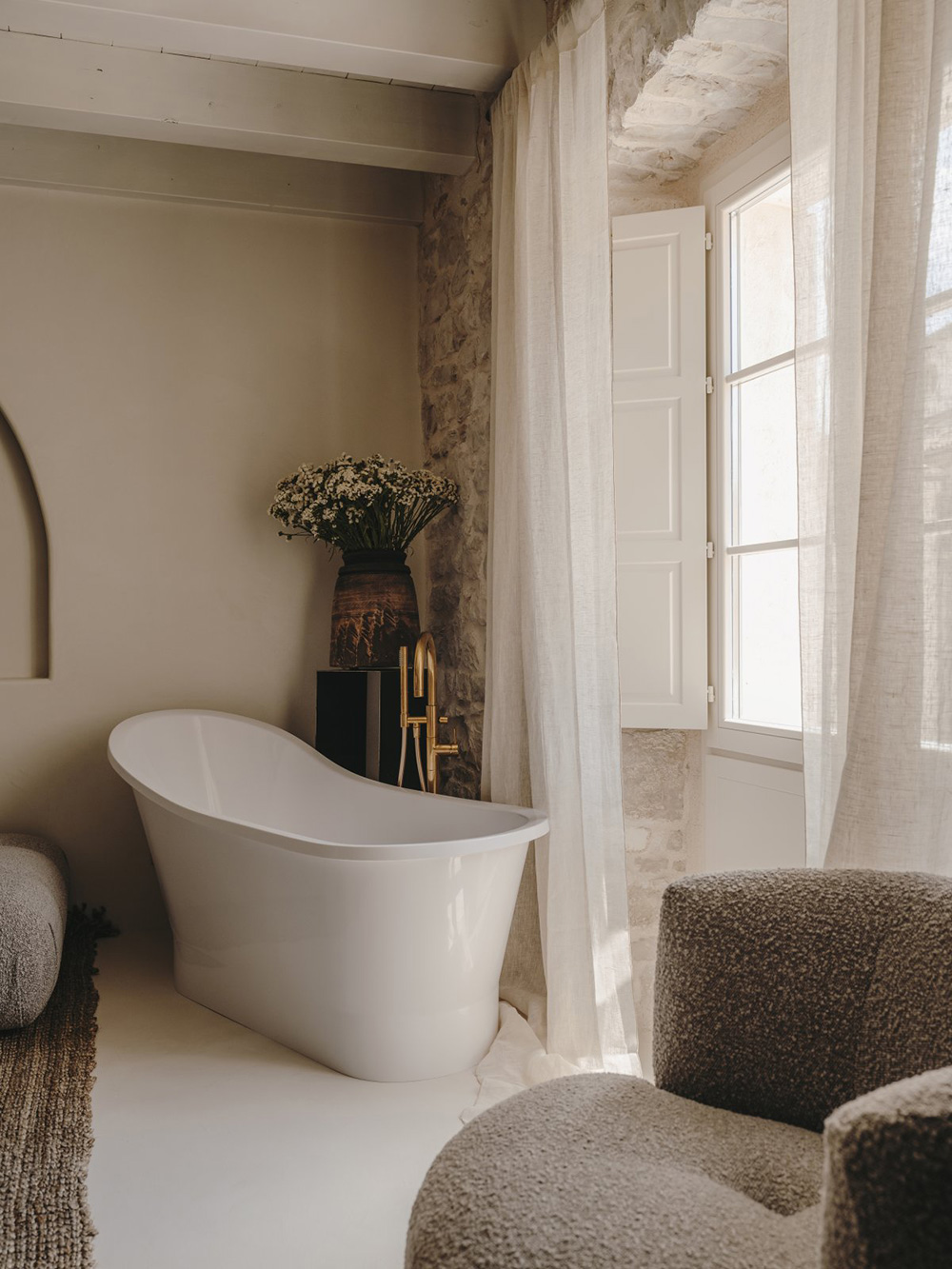
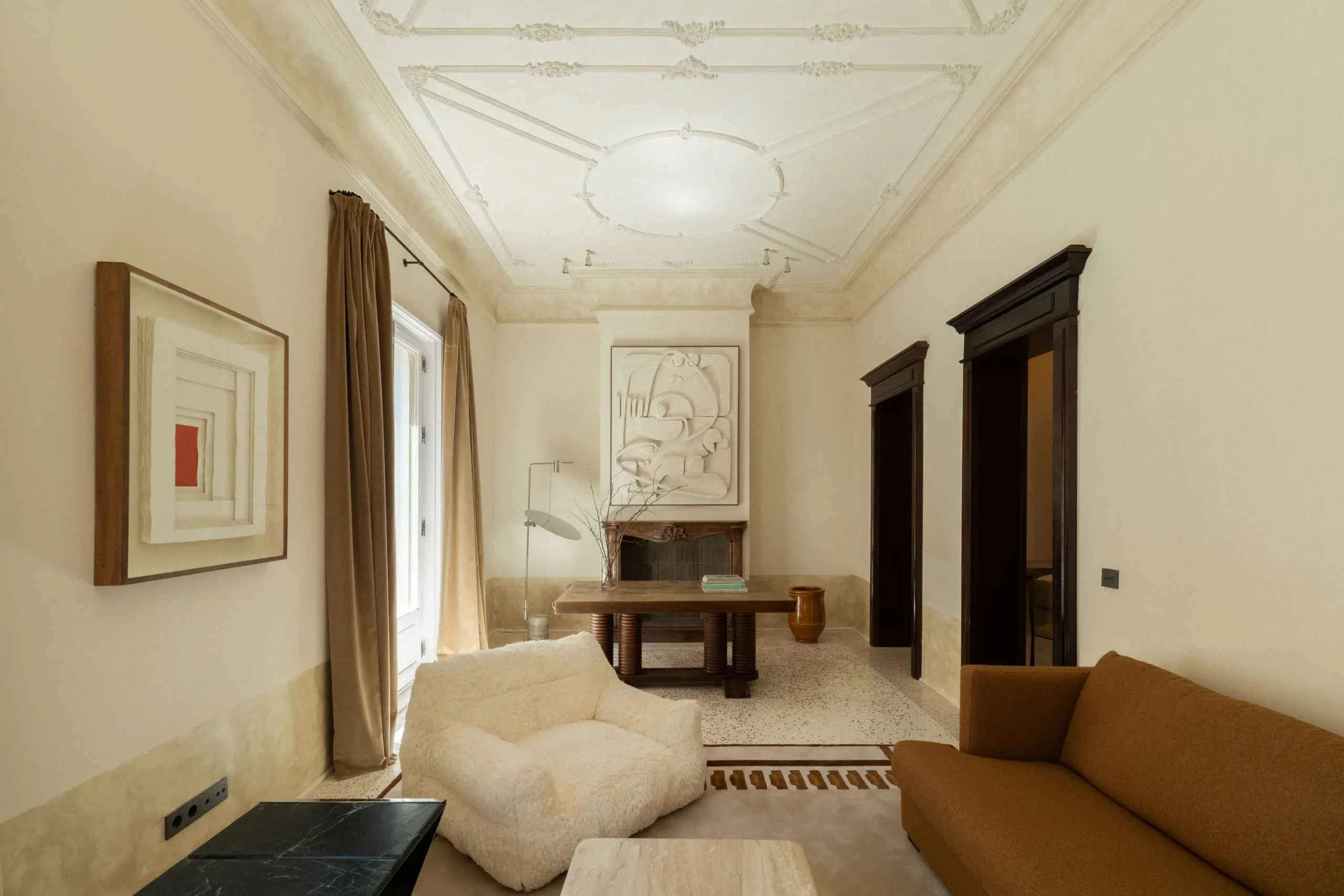
In the suites, the high ceilings play a decisive role. While the rooms are of standard dimensions, their height creates a sense of amplified space. The color palette revolves around three tones: the limestone white of the walls, the sandy hues of the linen textiles, and the gray of certain pieces of furniture.
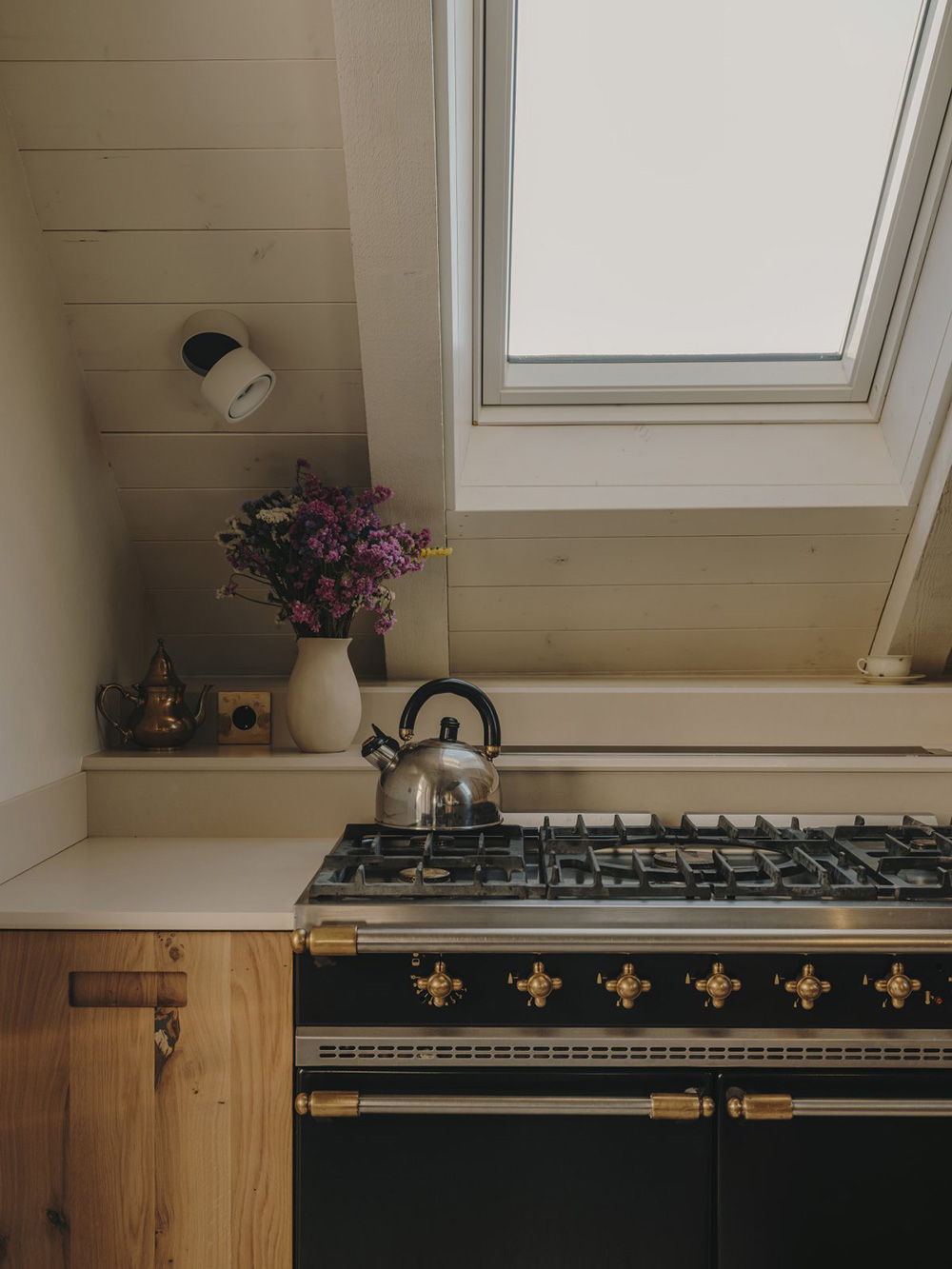
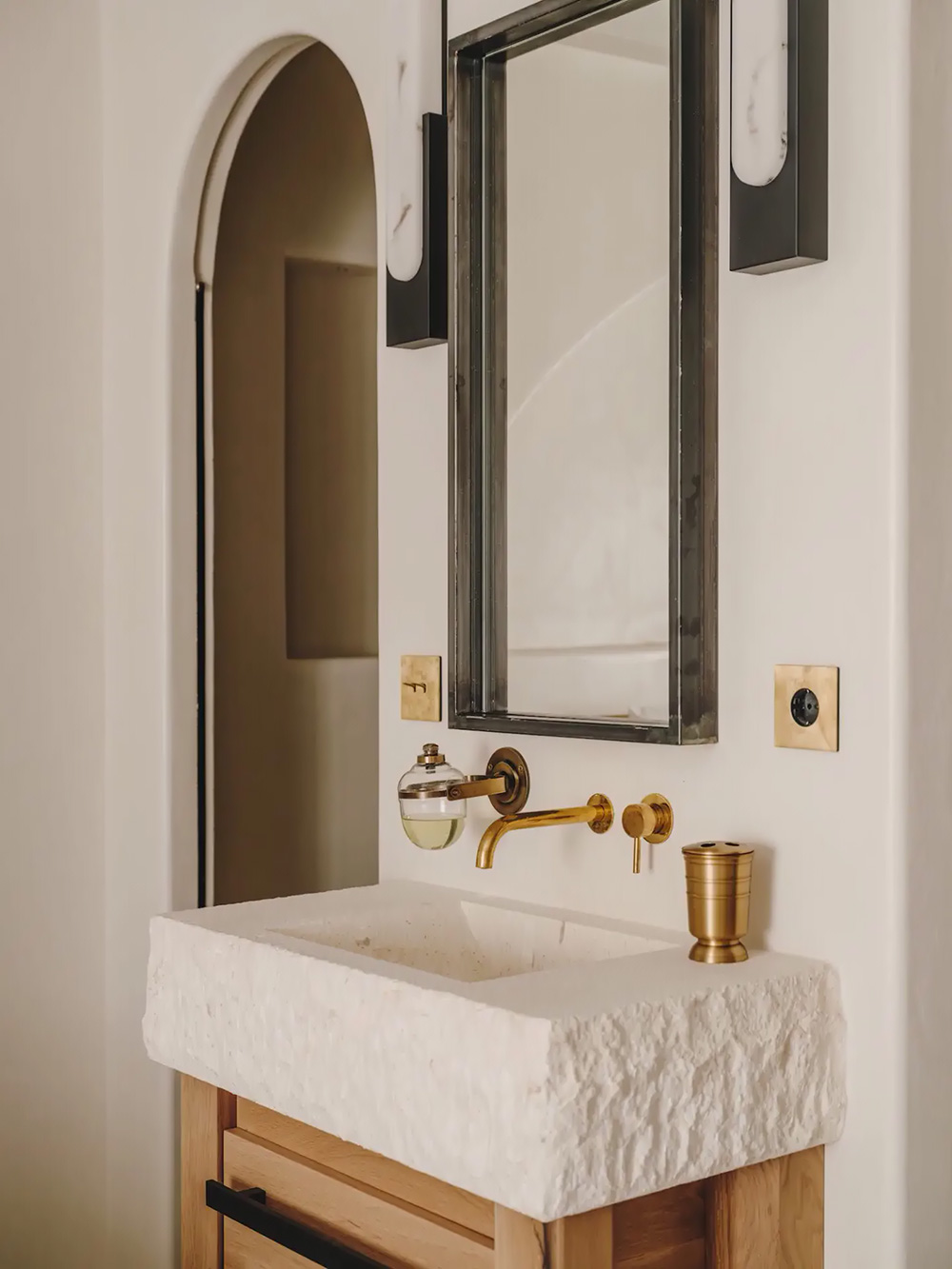
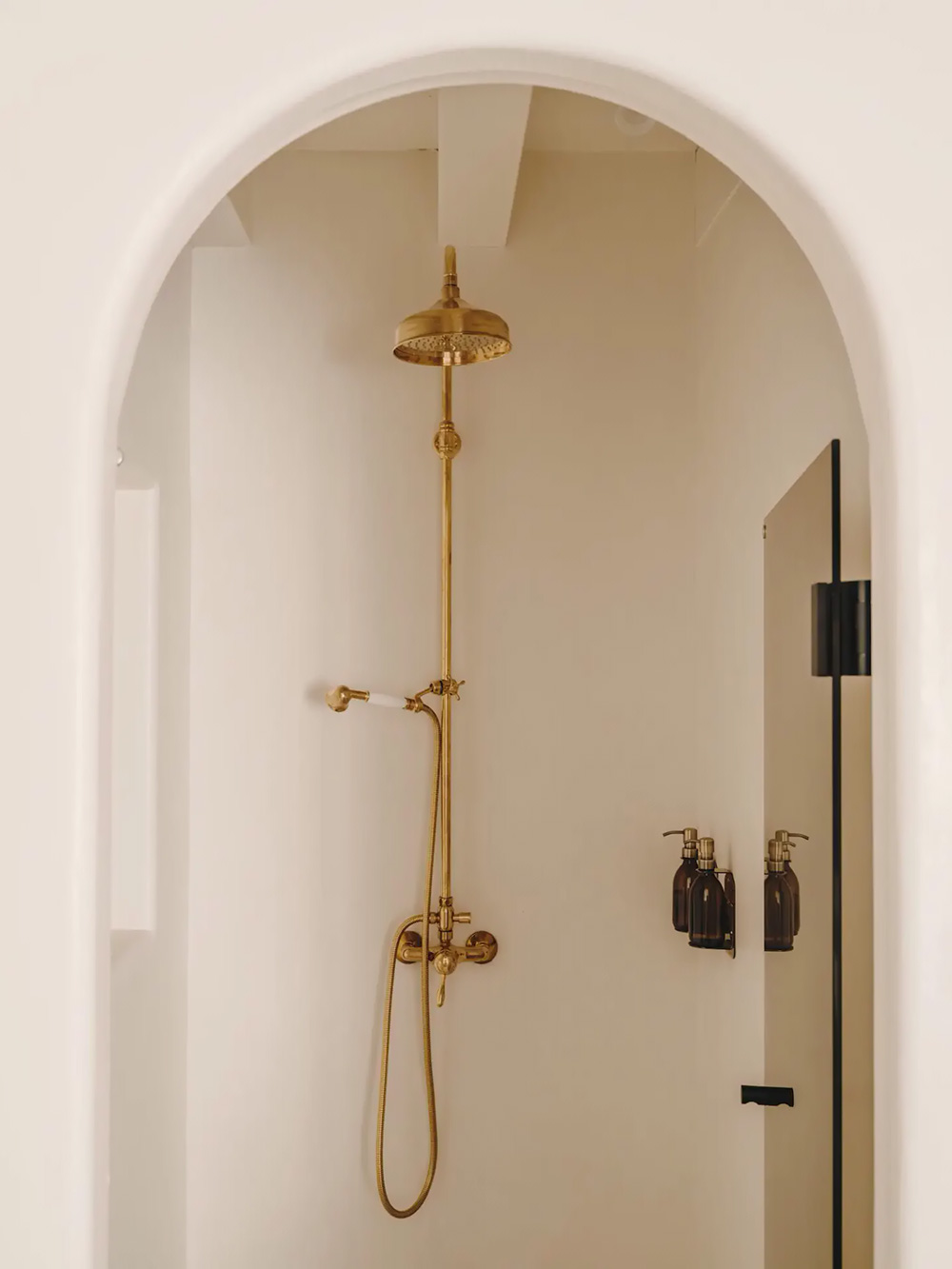
There are no bright colors, nor any folkloric references to traditional tiles. And the custom-made furniture combines clean lines, slender metal legs, and natural materials, such as light wood or local stone.
The Private Villa at Palazzo Caterina is completely independent. Its 250sqm can accommodate up to four people, and it occupies a large portion of the historic building. Within this vast space, the decorative choices take on a new dimension. The spaces are generous, and movement is unobstructed. Each room develops its own identity while remaining consistent with the overall design.
Of course, we find the same fundamentals as in the suites, with exposed stone and a neutral palette built around linen, sand, and gray. Not to mention the custom-made furniture with clean lines.
This type of accommodation is designed for travelers who want a more independent experience than a hotel offers.
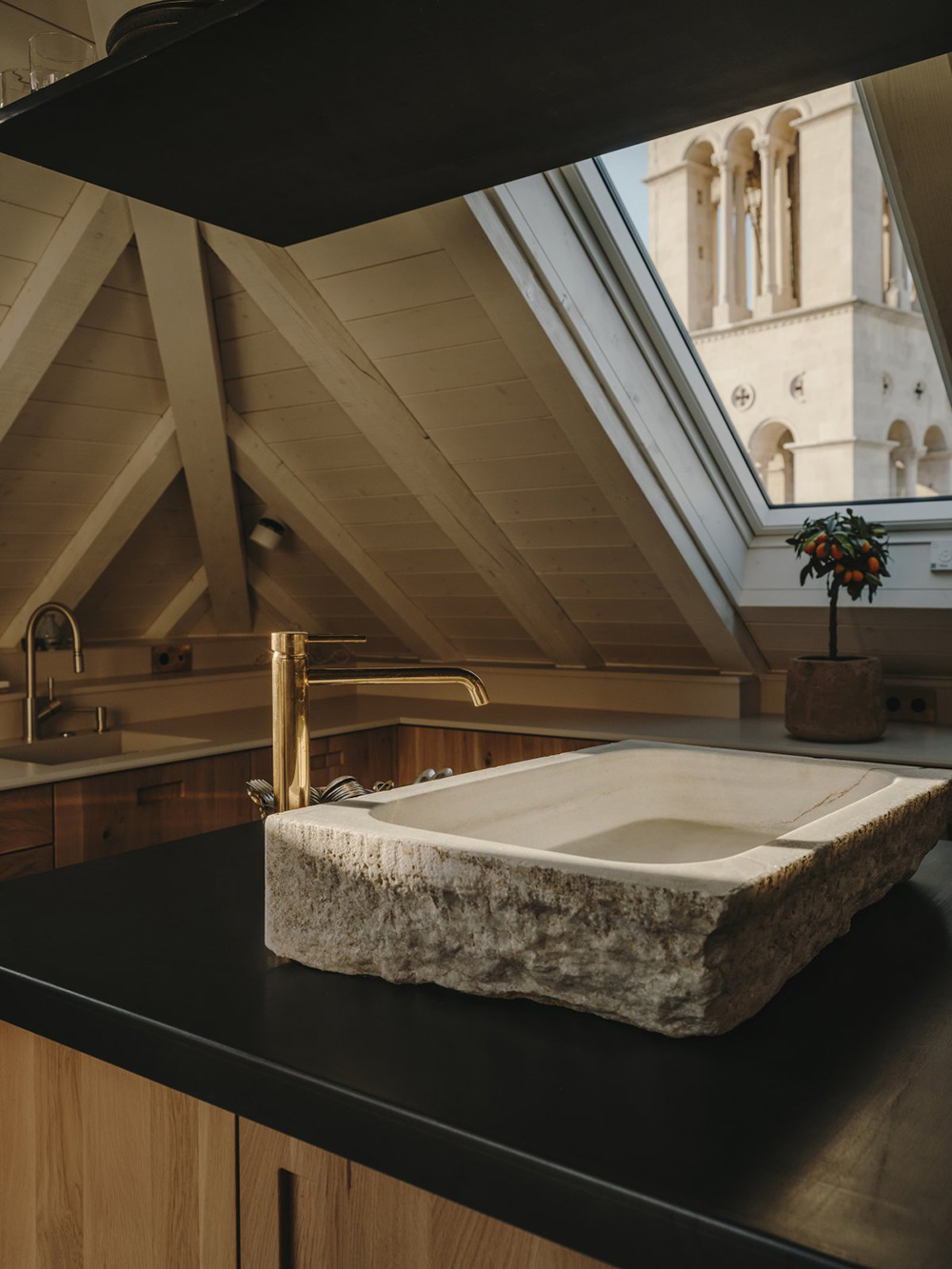
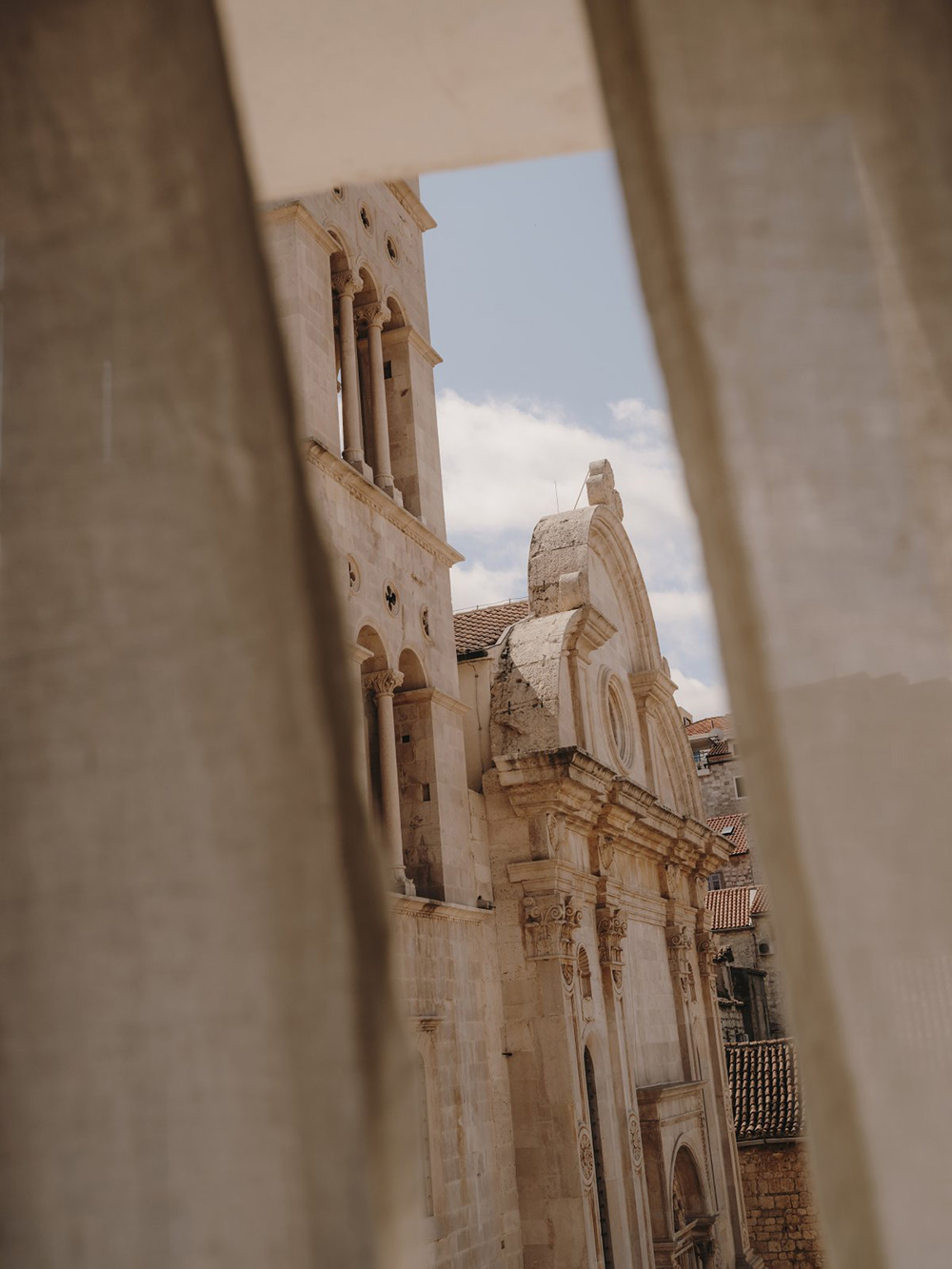
The villa also boasts a direct view of the square and the cathedral, just like the suites. But with its greater number of windows and interconnected rooms, the relationship with the urban landscape takes on a different character. Saint-Étienne Cathedral maintains a constant presence within the house.
First and foremost, the decision to preserve the exposed stonework is the key choice that makes all the difference. A wall of rough limestone provides a texture that no wallpaper could ever imitate, transporting you directly to a bygone era.
The understated color palette also works well, lending a great deal of warmth to the atmosphere. The location is an undeniable asset, with views of the cathedral from the windows. A 17th-century Baroque façade as a backdrop is better than any artwork hanging on the wall.
We might perhaps regret an interior that’s very controlled, almost too restrained. Mediterranean minimalist elegance often produces this effect, we admire it, but we feel a bit too much like we’re in a theater. The few touches of local craftsmanship present, with handmade objects and regional textiles, are a step in the right direction. But we’d like to see more of them to feel more like we’re in Croatia, and not just anywhere in Southern Europe.
The conversion of heritage buildings into distinctive lodging has been one of the most interesting trends in hotel design over the past decade. Italy set the precedent with its palazzi transformed into boutique hotels. Croatia, and Hvar in particular, is embracing this model thanks to the abundance of historic buildings and the quality of the existing architecture. Dalmatian limestone, arched openings, and the proportions of these palaces provide the perfect raw material for renovation.
Palazzo Caterina succeeds in the essentials. It creates a dialogue between a 19th-century building and a contemporary aesthetic without sacrificing one for the other. It opts for simplicity because the presence of the stone speaks for itself.
Palazzo Caterina offers an answer to a difficult question: how to inhabit the past without turning it into a museum.
What Palazzo Caterina demonstrates is that it is possible to renovate a listed 19th-century palace, making it more comfortable without betraying its soul. The contemporary furniture, chosen with care, does not clash with the original elements, rather, it highlights them through contrast. This approach avoids two common pitfalls: restoration to the original state, which freezes the space in a static past, and overly sterile renovation, which erases the building’s inherent character. For this renovation, the professionals opted for a harmonious blend. And it’s a success...

To stay at Palazzo Caterina, a 19th-century palace in Croatia, click this link!
Hvar, the island unlike any other
Before stepping through the palazzo’s doors, one must understand the island. Hvar holds a special place in the Dalmatian archipelago. Croatia has thousands of islands, but Hvar boasts several rare assets, including 2,700 hours of sunshine annually. It is also home to the Adriatic’s most beautiful lavender fields and terraced vineyards that plunge toward a sea of pure blue.
The town of Hvar, the island’s capital, preserves an almost intact historic urban fabric with its narrow streets. Its Spanish fortress overlooks everything from a hilltop. It is a blend of pale stone, warmth, and proximity to water that sparkles just a stone’s throw away. In the background, one can glimpse the Pakleni islets.
It was against this backdrop that the Mallorca-based design duo Rôck&Villa, composed of Paulo Valcic and Stefan Relic, was commissioned to renovate Palazzo Caterina. A mission that was as much an emotional challenge as it was a technical one.
What the professionals kept and what they dared to change
The building dates back to the 1800s. Its structure bears the marks of every era: round arches in the load-bearing walls, moldings on the door frames, and generously proportioned stone staircases. Rôck&Villa team chose to highlight all these elements. The exposed stone walls remain visible in the suites, with their irregular texture and slightly pinkish cream color. The ceiling beams retain their raw cross-section.
What the architects incorporated is summed up in this sentence from their Instagram account "the renovation seeks to combine the building’s heritage with carefully selected contemporary elements, custom-made furniture, handcrafted objects, and modern amenities."
Two suites and a villa
This 19th-century palace in Croatia offers three types of accommodations. The Two Arches Suite (31sqm) and Caterina’s Suite (36sqm) both open onto St. Stephen’s Square and the cathedral. The Private Villa spans 250sqm and can accommodate four people.
In the suites, the high ceilings play a decisive role. While the rooms are of standard dimensions, their height creates a sense of amplified space. The color palette revolves around three tones: the limestone white of the walls, the sandy hues of the linen textiles, and the gray of certain pieces of furniture.
There are no bright colors, nor any folkloric references to traditional tiles. And the custom-made furniture combines clean lines, slender metal legs, and natural materials, such as light wood or local stone.
The Private Villa
The Private Villa at Palazzo Caterina is completely independent. Its 250sqm can accommodate up to four people, and it occupies a large portion of the historic building. Within this vast space, the decorative choices take on a new dimension. The spaces are generous, and movement is unobstructed. Each room develops its own identity while remaining consistent with the overall design.
Of course, we find the same fundamentals as in the suites, with exposed stone and a neutral palette built around linen, sand, and gray. Not to mention the custom-made furniture with clean lines.
This type of accommodation is designed for travelers who want a more independent experience than a hotel offers.
The villa also boasts a direct view of the square and the cathedral, just like the suites. But with its greater number of windows and interconnected rooms, the relationship with the urban landscape takes on a different character. Saint-Étienne Cathedral maintains a constant presence within the house.
What really works
First and foremost, the decision to preserve the exposed stonework is the key choice that makes all the difference. A wall of rough limestone provides a texture that no wallpaper could ever imitate, transporting you directly to a bygone era.
The understated color palette also works well, lending a great deal of warmth to the atmosphere. The location is an undeniable asset, with views of the cathedral from the windows. A 17th-century Baroque façade as a backdrop is better than any artwork hanging on the wall.
What leaves something to be desired
We might perhaps regret an interior that’s very controlled, almost too restrained. Mediterranean minimalist elegance often produces this effect, we admire it, but we feel a bit too much like we’re in a theater. The few touches of local craftsmanship present, with handmade objects and regional textiles, are a step in the right direction. But we’d like to see more of them to feel more like we’re in Croatia, and not just anywhere in Southern Europe.
A project that fits into a broader trend
The conversion of heritage buildings into distinctive lodging has been one of the most interesting trends in hotel design over the past decade. Italy set the precedent with its palazzi transformed into boutique hotels. Croatia, and Hvar in particular, is embracing this model thanks to the abundance of historic buildings and the quality of the existing architecture. Dalmatian limestone, arched openings, and the proportions of these palaces provide the perfect raw material for renovation.
Palazzo Caterina succeeds in the essentials. It creates a dialogue between a 19th-century building and a contemporary aesthetic without sacrificing one for the other. It opts for simplicity because the presence of the stone speaks for itself.
Palazzo Caterina offers an answer to a difficult question: how to inhabit the past without turning it into a museum.
What Palazzo Caterina demonstrates is that it is possible to renovate a listed 19th-century palace, making it more comfortable without betraying its soul. The contemporary furniture, chosen with care, does not clash with the original elements, rather, it highlights them through contrast. This approach avoids two common pitfalls: restoration to the original state, which freezes the space in a static past, and overly sterile renovation, which erases the building’s inherent character. For this renovation, the professionals opted for a harmonious blend. And it’s a success...


To stay at Palazzo Caterina, a 19th-century palace in Croatia, click this link!


Comments