A century-old garage transformed into an authentic loft in Toronto
An early 20th-century auto garage has been converted into an authentic loft in Toronto. We analyze all the design choices
This authentic loft is located in a former garage from the early 20th century, which has been converted into a three-story home. It has retained its raw character from its past with a consistency that is quite rare.
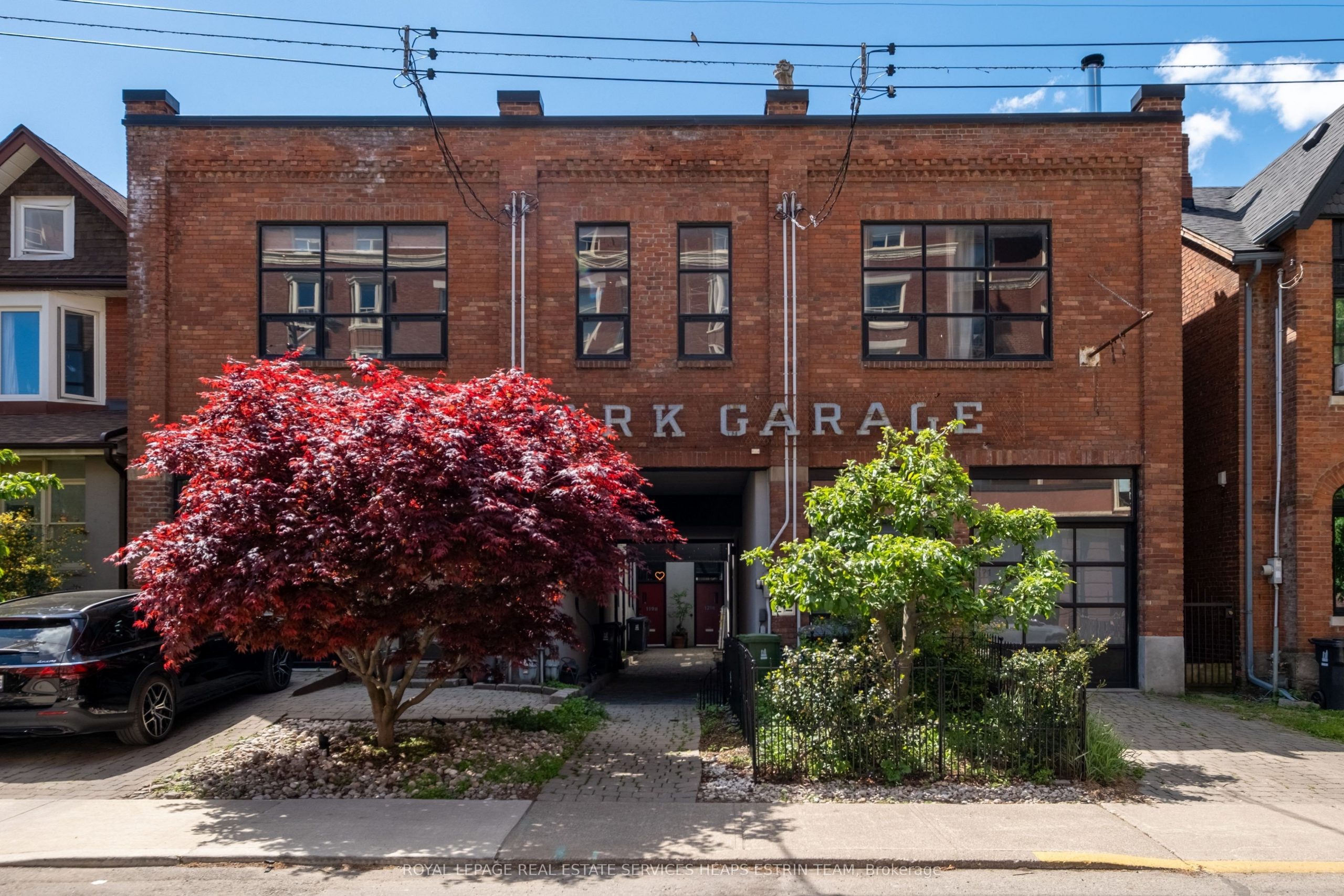
The building was called the High Park Garage. The inscription remains visible on the brick facade, half-hidden by a Japanese maple planted in front of the entrance. For this renovation project, there was no attempt to erase the industrial past, as that would have stripped it of much of its charm.
The large, evenly spaced windows with black muntins stand out against the old masonry. This color choice accentuates the building’s historic character. There is no need to modernize it at all costs.
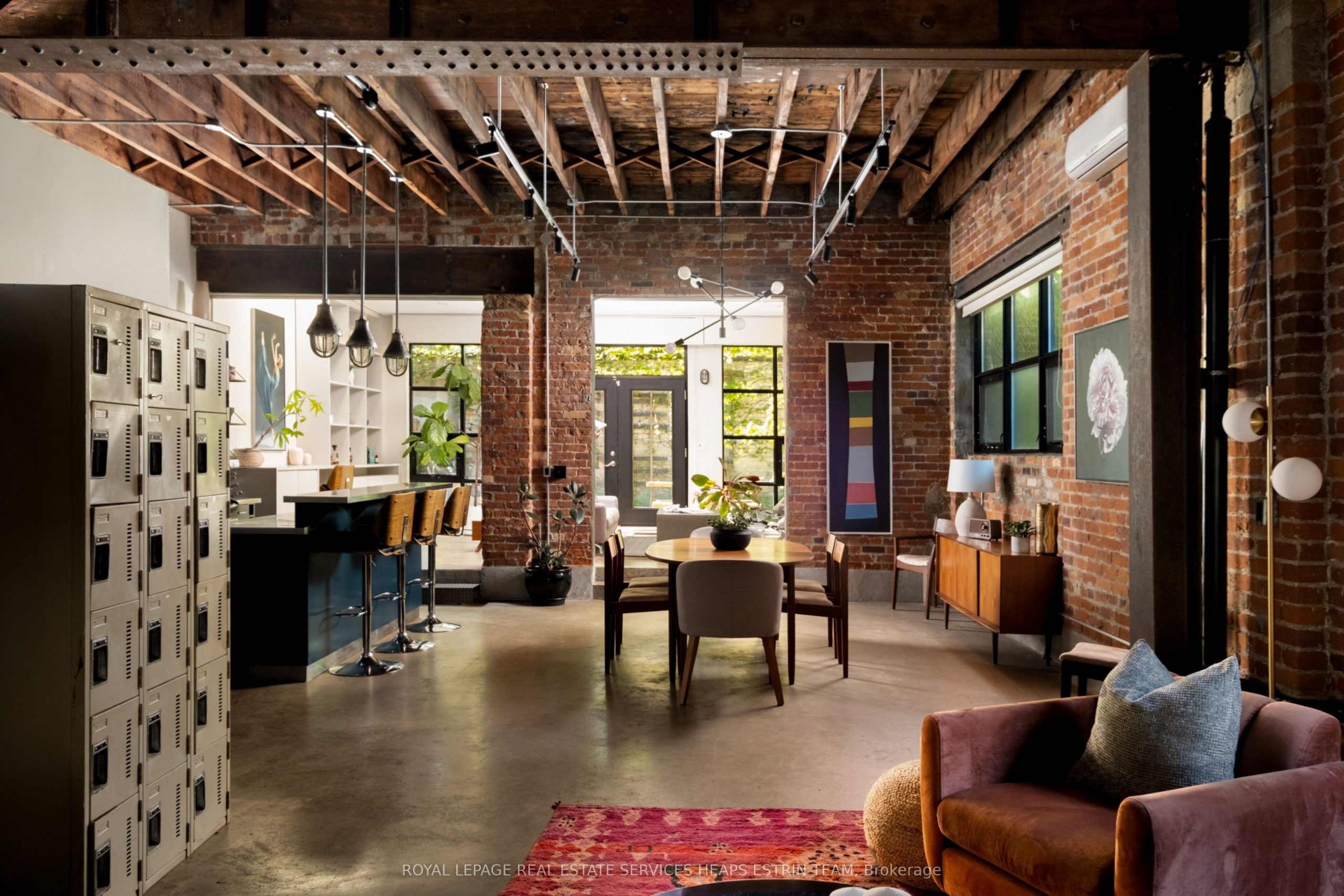
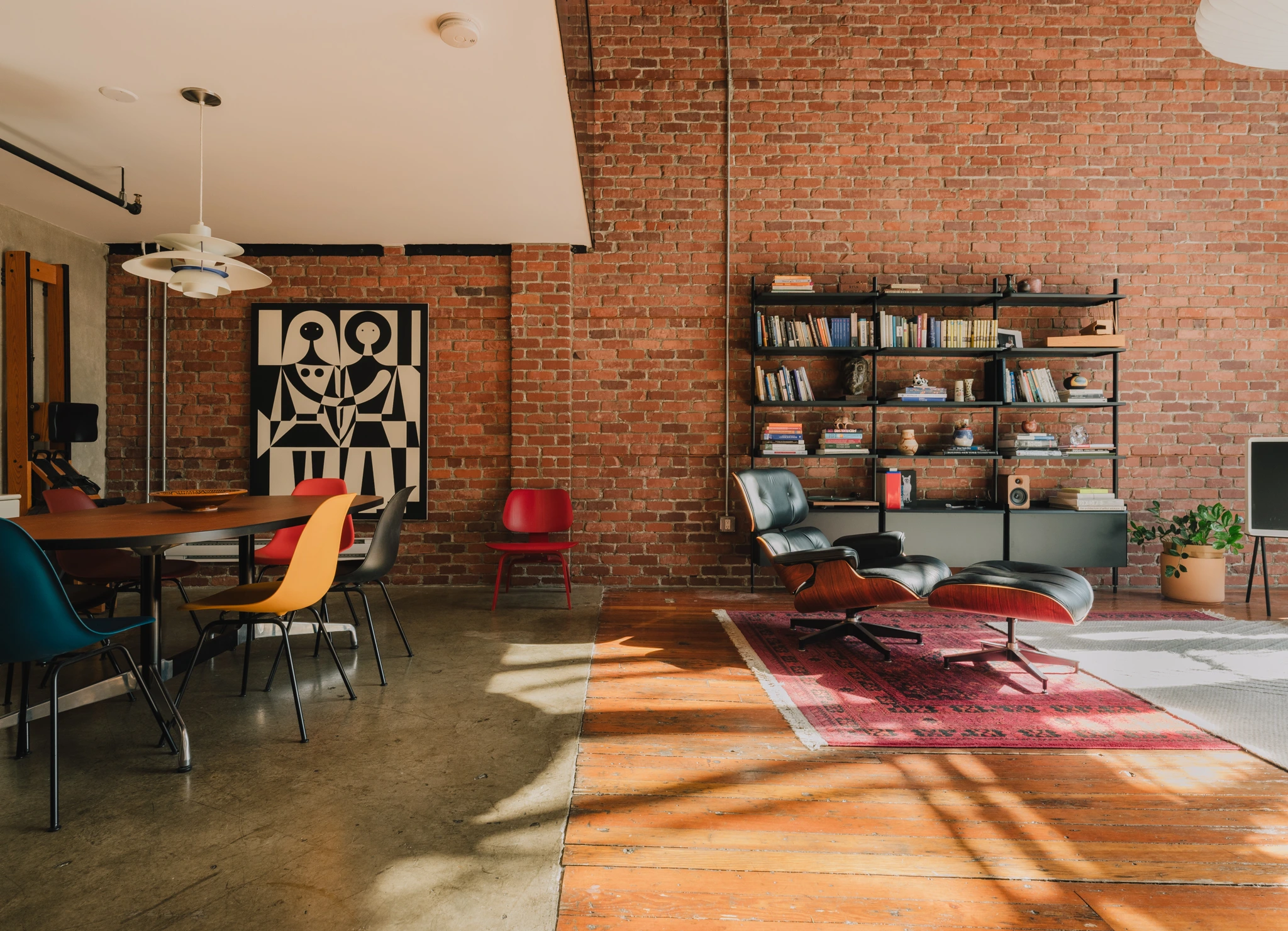
The ground floor opens onto a single, completely open living space, situated beneath the original beams that run at a height of approximately 3.65 meters. A polished concrete floor, which conceals the heating system, covers the entire level.
The palette chosen for the decor by the current occupants plays on four materials: red brick on the walls, the dark wood of the century-old beams, the raw steel of certain fixtures, and the concrete floor. The furniture cleverly breaks up this industrial austerity.
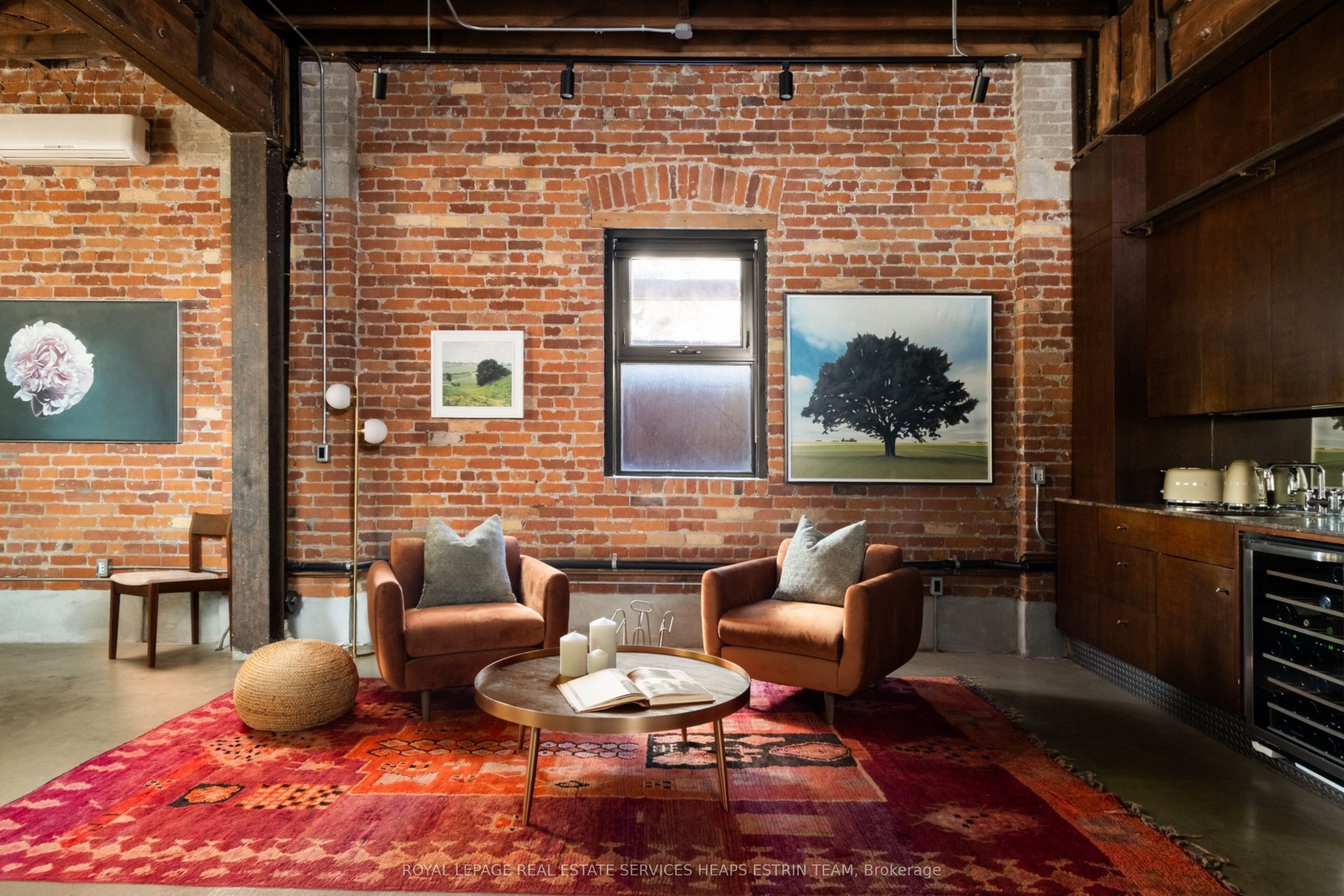
Its red velvet armchairs bring an immediate warmth. The large red and fuchsia kilim rug, laid directly on the concrete, creates a colorful and dynamic area. It’s a bold choice, as such a saturated rug in such a dark space can heighten the feeling of darkness. The brick walls provide exactly the same chromatic warmth in shades of orange and terracotta.
The consistency of the color palette is very deliberate. Brick, red velvet, red kilim, they all belong to the same family of hues, but with very different textures.
This loft has a surprise in store: it features two completely separate kitchens, each with its own decorative style and specific purpose.
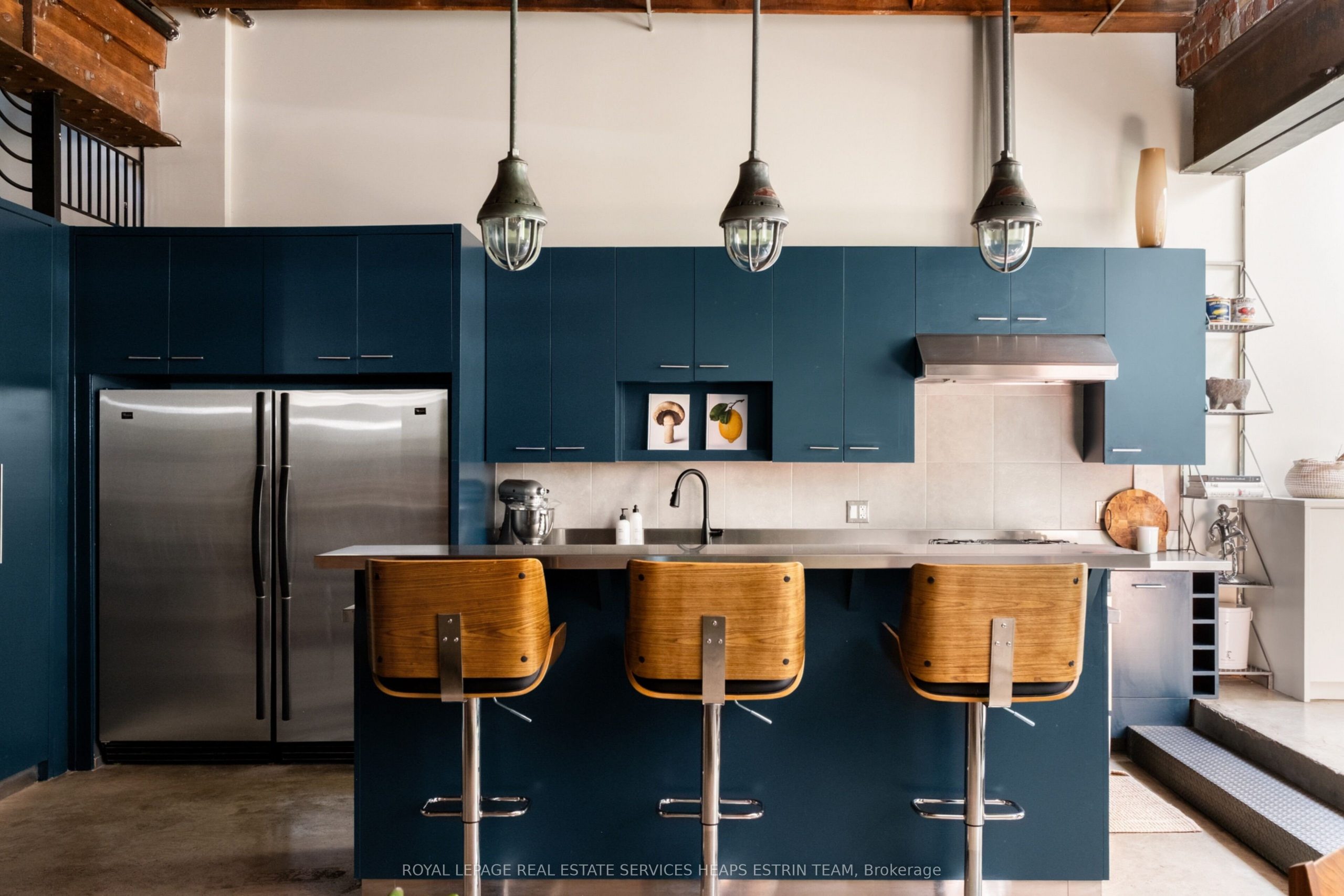
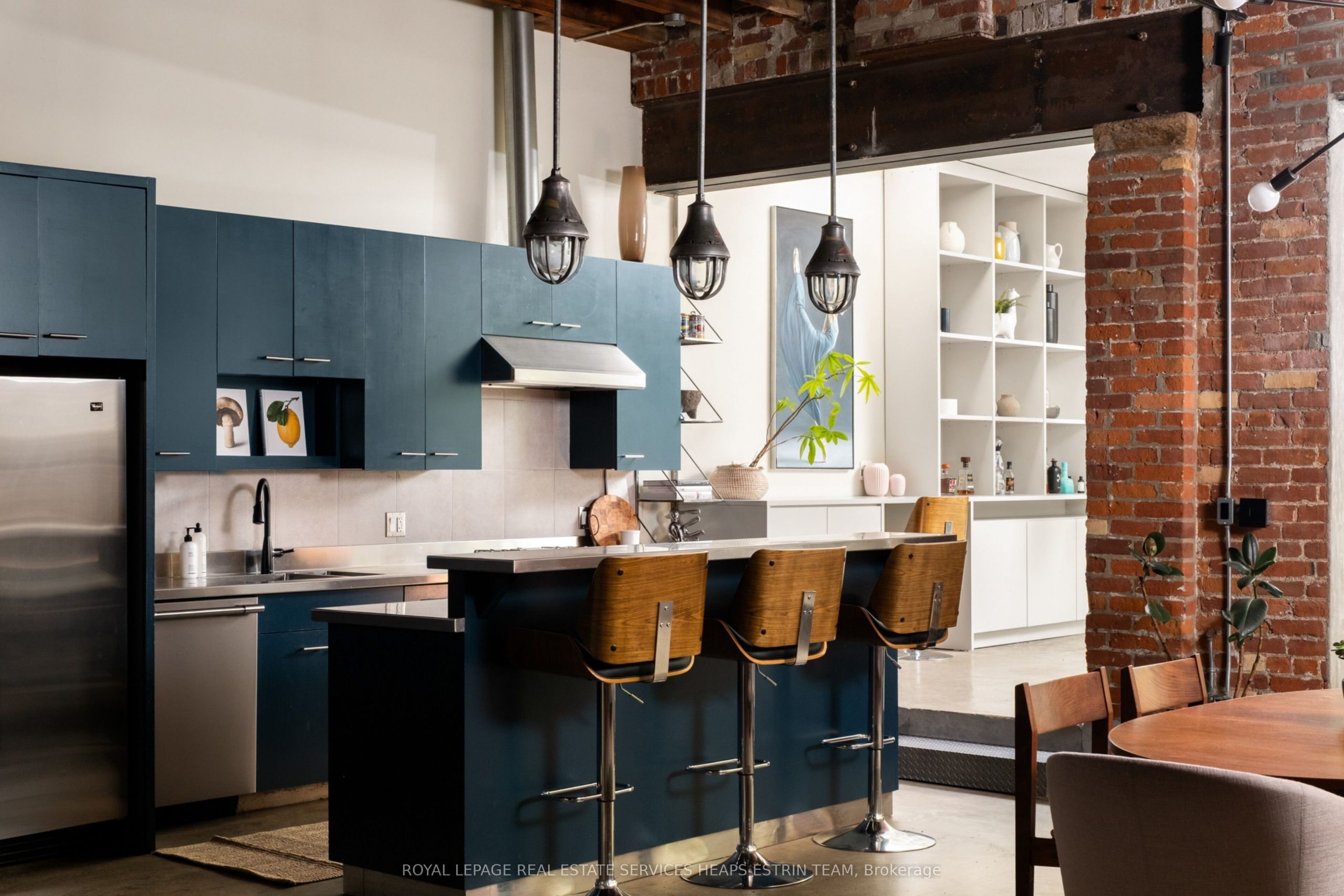
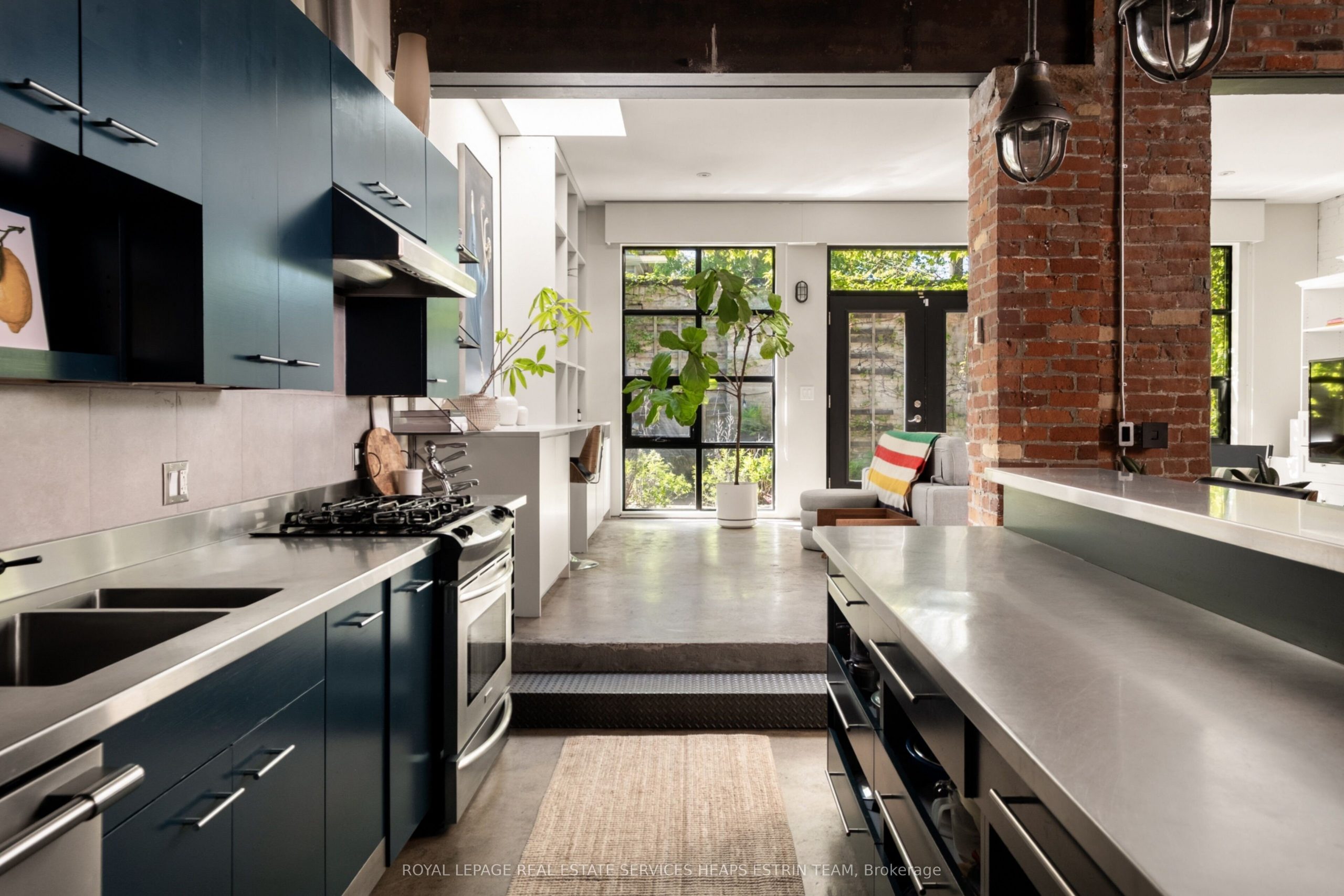
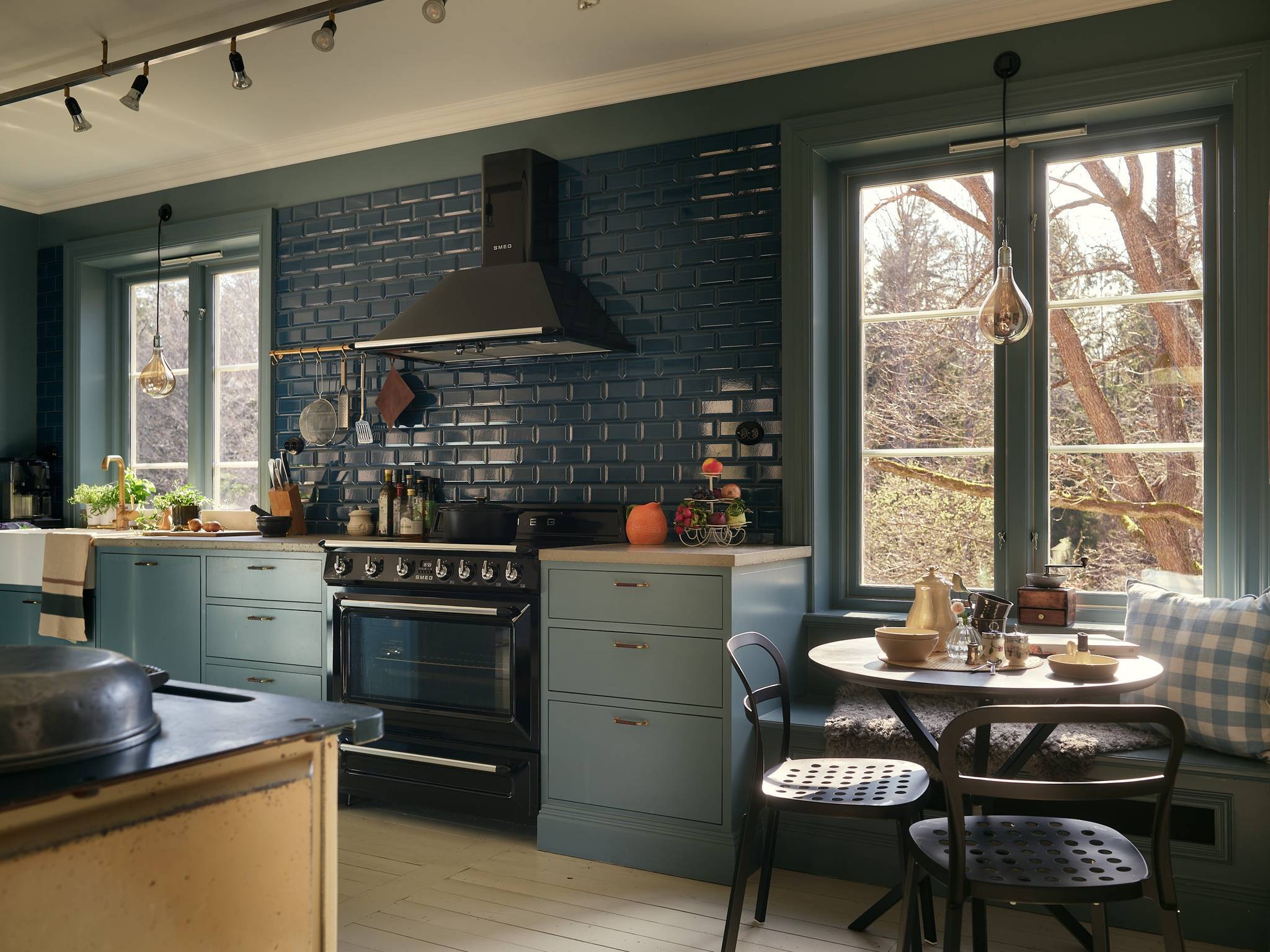
The first one is blue. You wouldn’t necessarily expect to see petrol blue in this space. And yet, it’s a contrast that works perfectly here. This first kitchen occupies one side of the ground floor, with furniture in a rather cool tone that highlights the warmth of the brick. The brushed stainless steel countertop and the light-colored tile backsplash also provide a counterpoint to the brick.
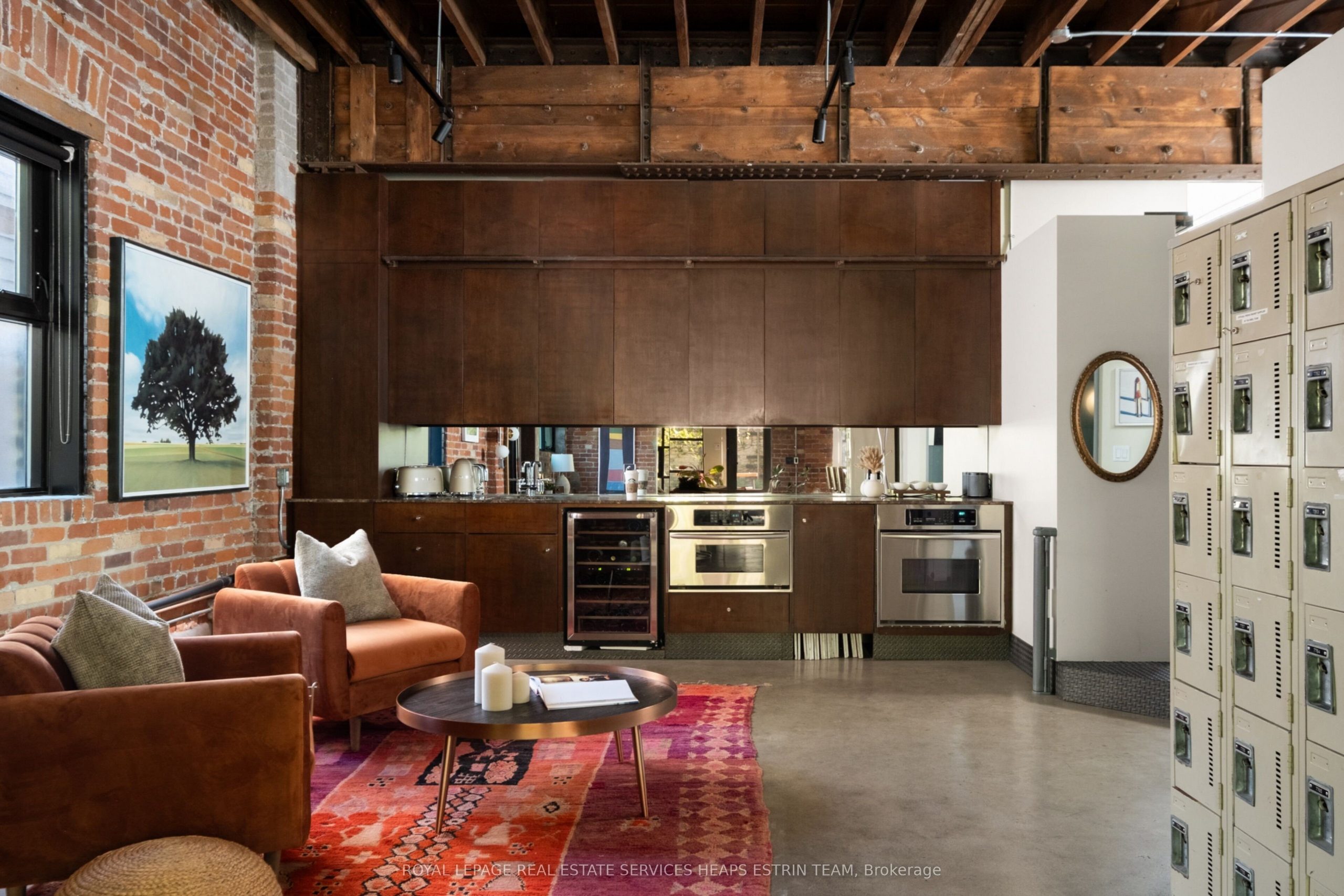
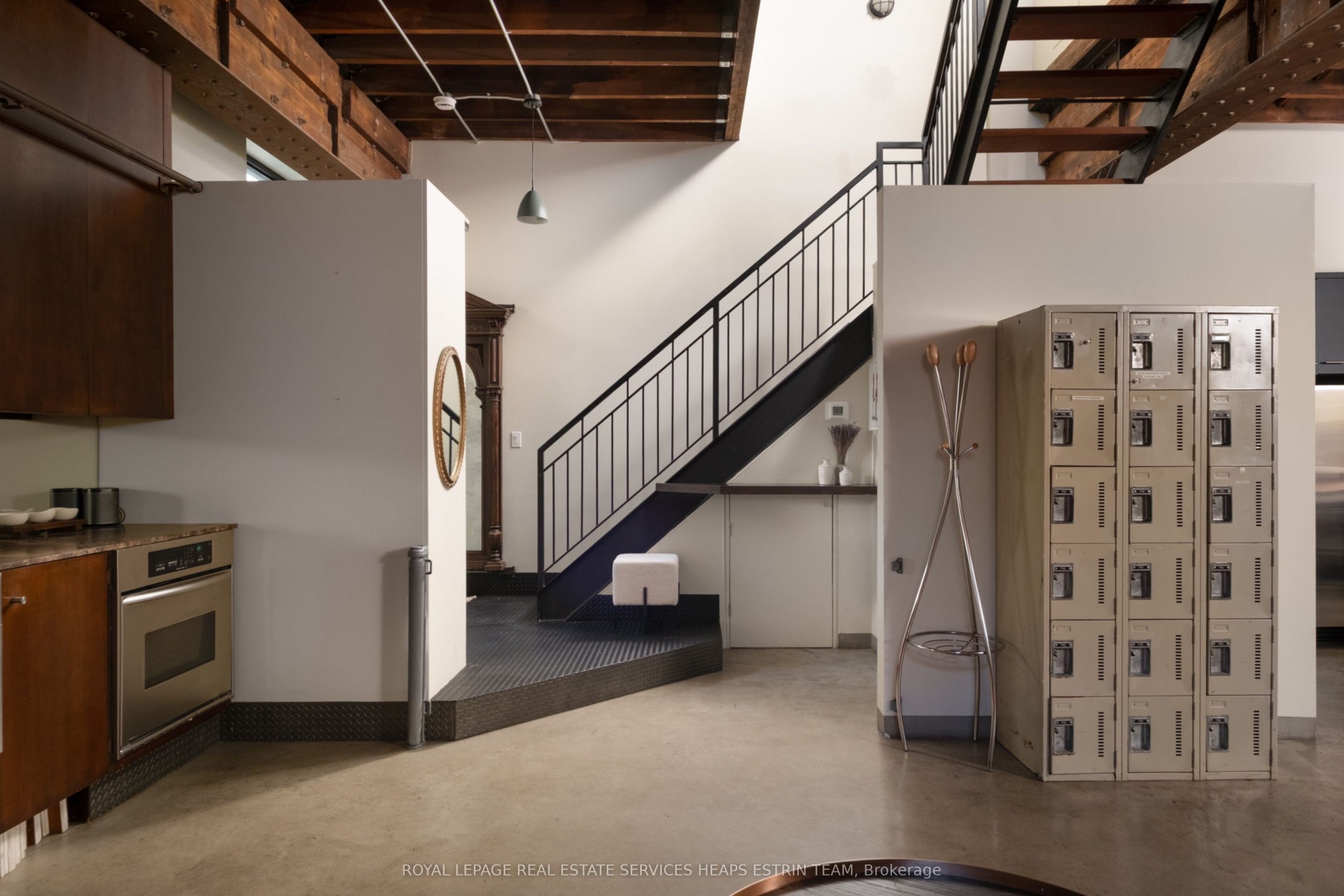
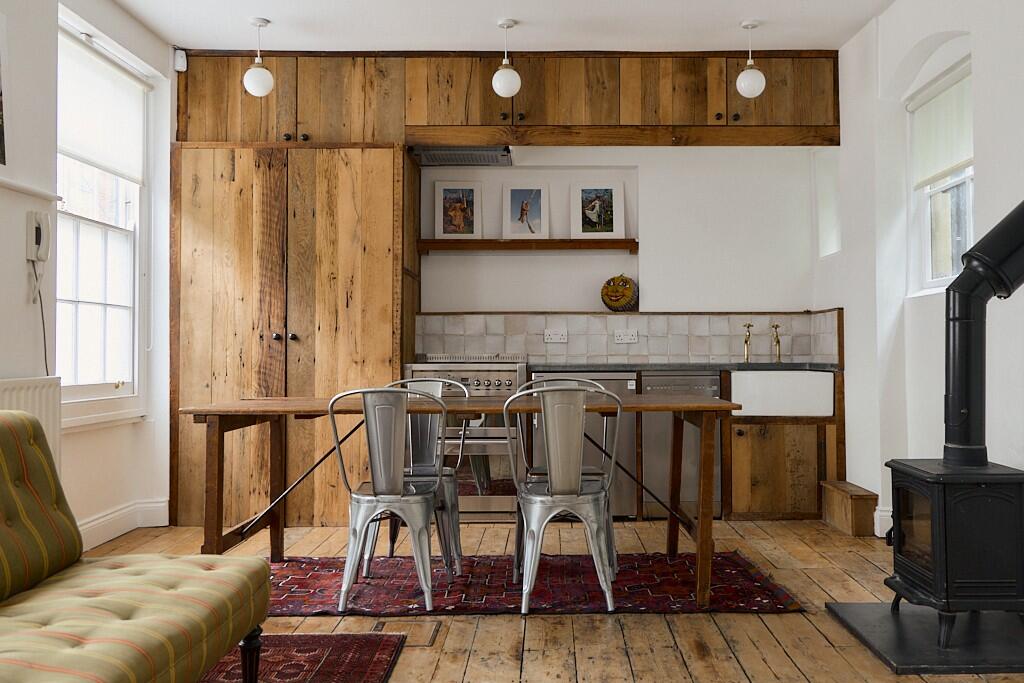
The second kitchen is completely different in style and color palette; it occupies another corner of the ground floor. Its very dark brown, almost mahogany-stained wood cabinet fronts rise up to the beams, forming a massive monolithic block. Its countertop is granite. The most surprising detail is the beveled mirror backsplash, which reflects the space and amplifies the light in a naturally dark corner.
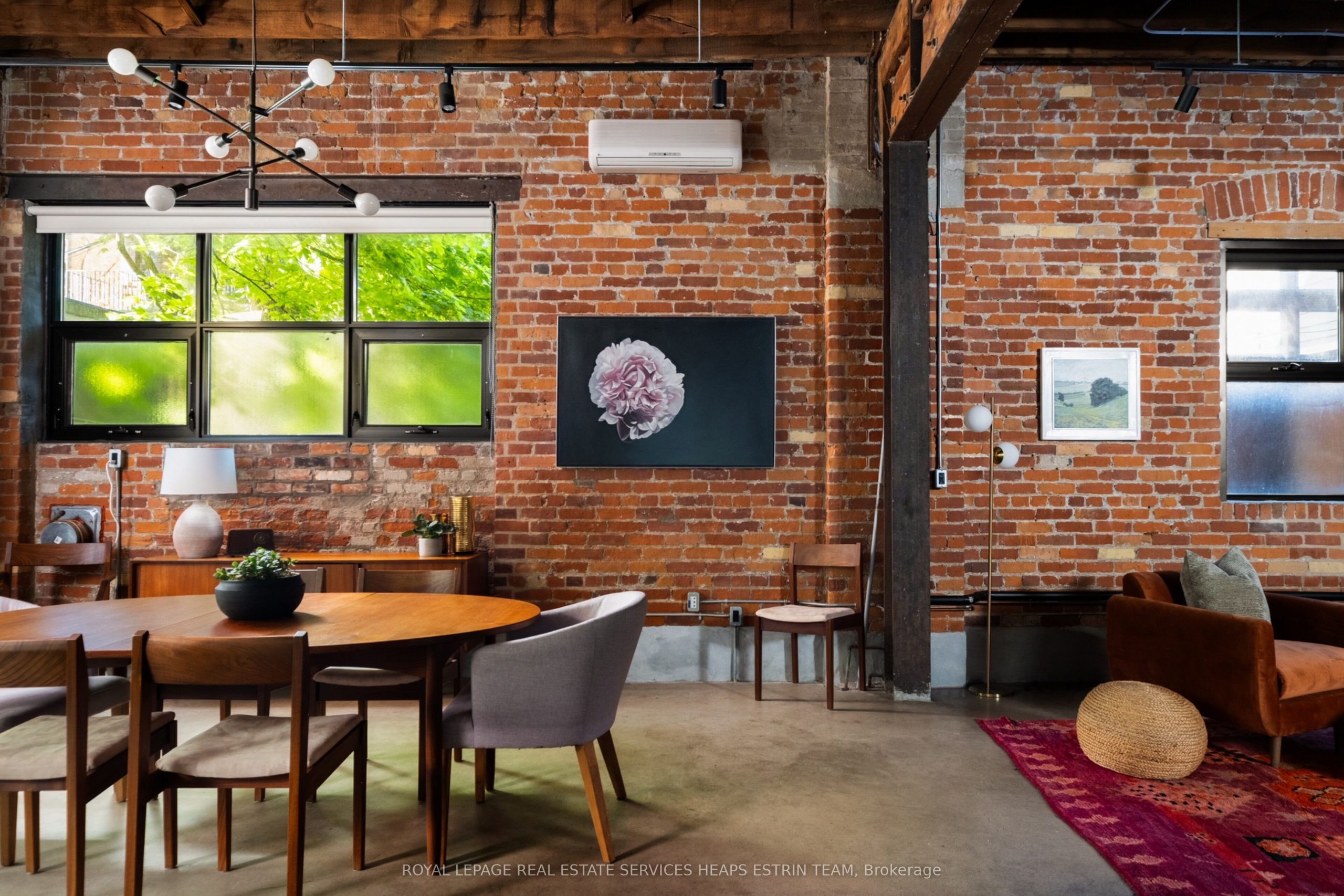
There is plenty of artwork in this loft. The most striking piece is a large photo of a pink peony against a very dark, almost black background, hung directly on the red brick. The contrast between the dark background of the photo and the warmth of the brickwork creates a sense of depth.
Next to it, you’ll notice a black-lacquered metal Sputnik-style pendant light with multiple arms and white globes. This fixture, typical of the 1950s and 1960s, enjoyed a resurgence in the 2000s with the rise of lofts. It pairs perfectly with the solid teak round table and Scandinavian chairs. It’s a timeless mid-century style well-suited to the spirit of the place. Metal lockers were salvaged, perhaps from an old school or the changing room of the former garage. They have been preserved in their original steel-gray finish.
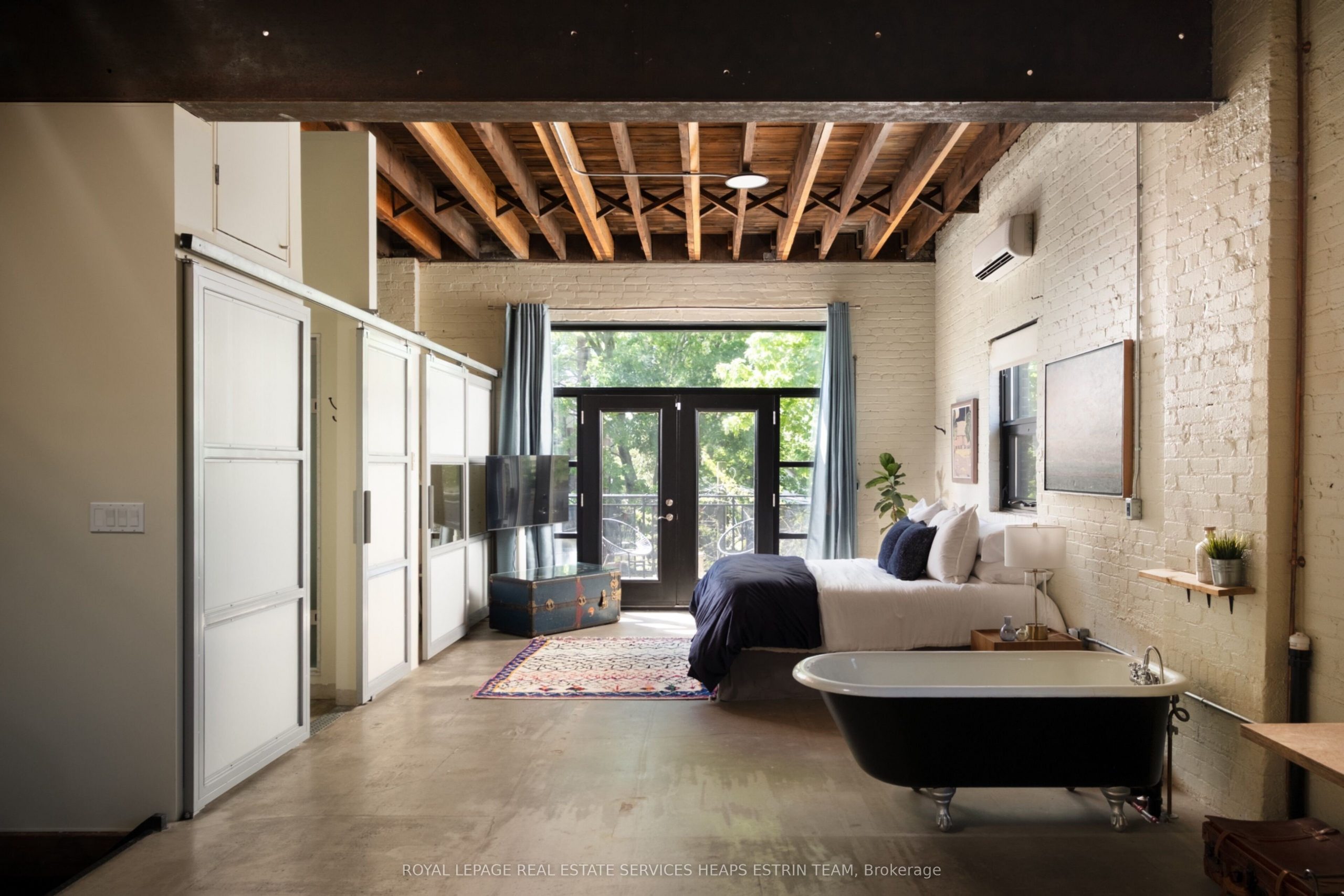
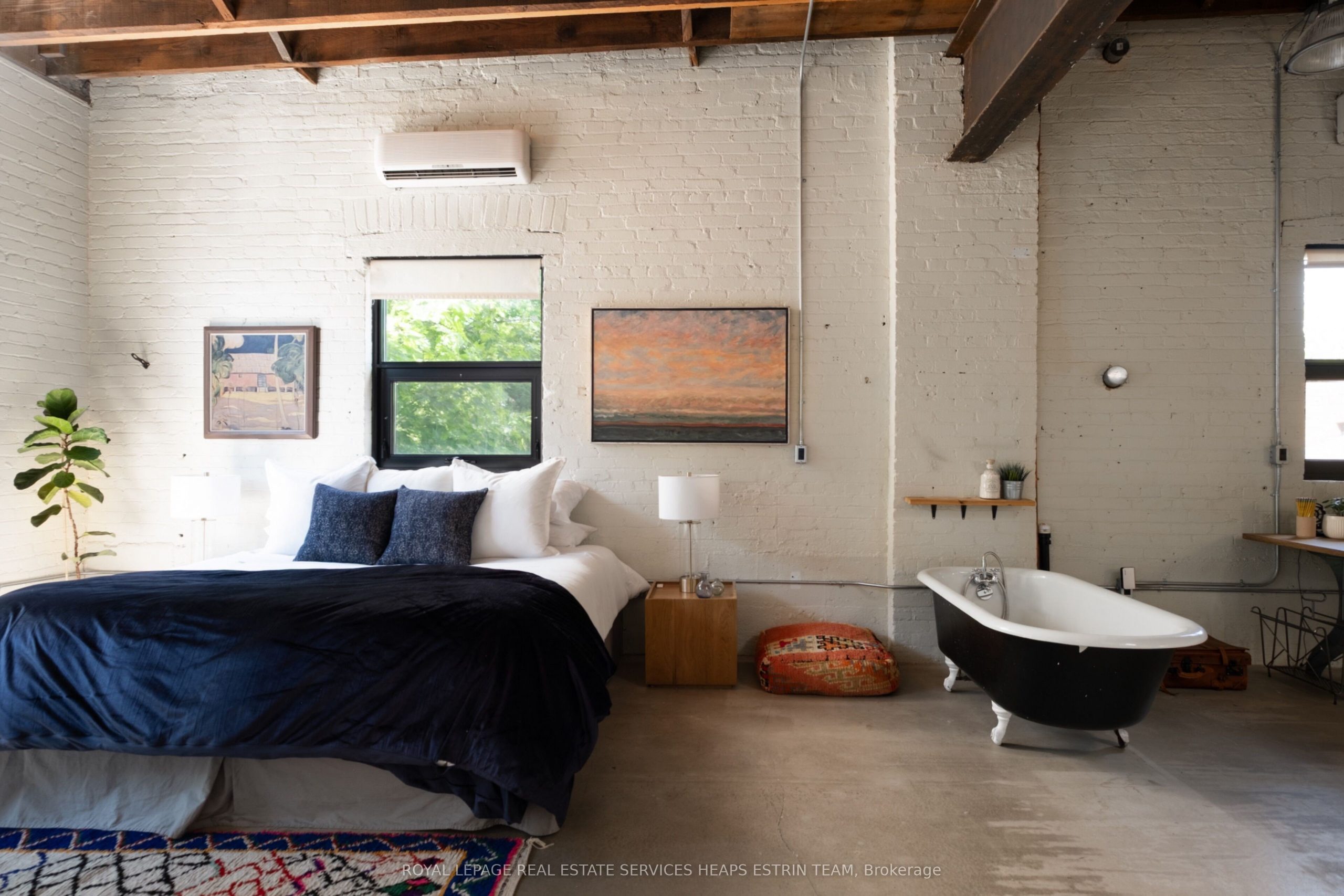
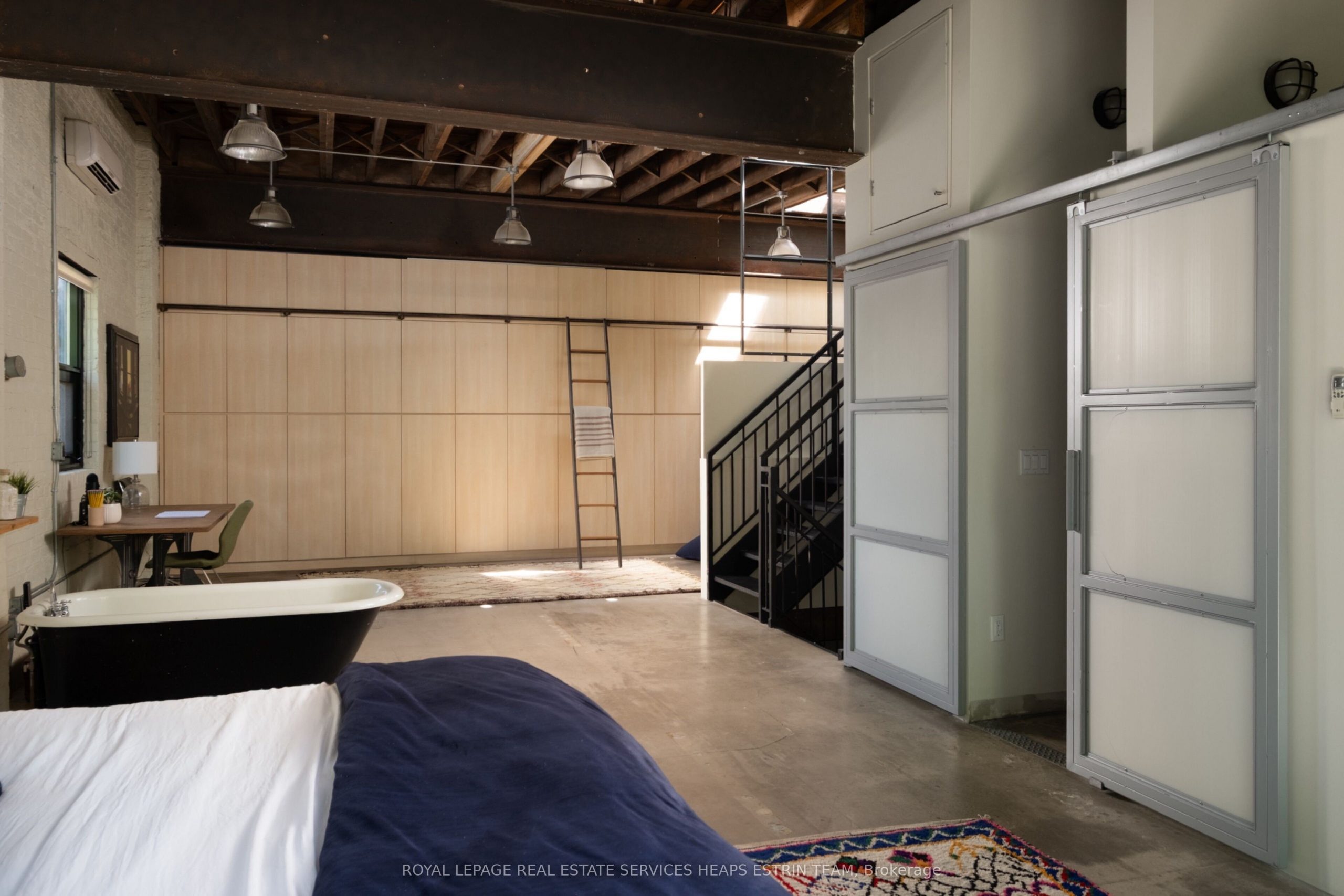
Its second level holds the biggest surprise. The master bedroom features a freestanding cast-iron bathtub, black-lacquered on the outside, facing the bed.
This choice is always divisive (it’s not our personal preference for our own home, but it works quite well in this setting). Practically speaking, it seems difficult to keep tidy, yet easy to live with. Aesthetically, it’s quite beautiful. The silver-polished claw-foot tub against the gray concrete, in front of the white-painted bricks, with the exposed beams on the ceiling, in photos, it’s perfect.
The bricks in this room are painted white, unlike on the ground floor where they remain unpainted. This difference in treatment between the levels is a good decision because it distinguishes the living areas from the sleeping areas, and the bedroom feels lighter.
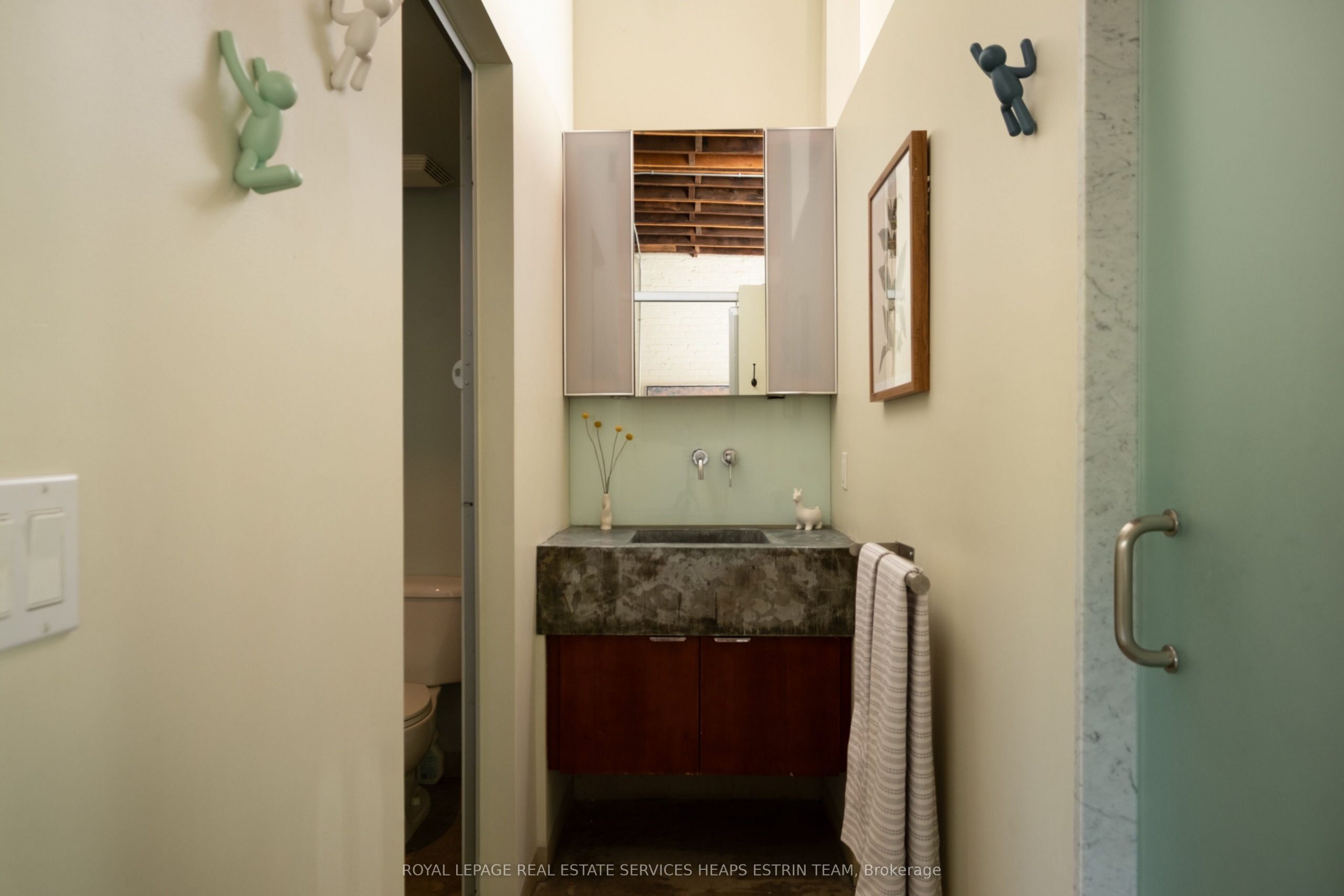
The bathroom is small but also a unique space. Its raw concrete sink with its stainless steel wall-mounted faucets, the celadon green glass backsplash, and the colorful “human-shaped” coat hooks hanging on the walls create a very personal atmosphere.
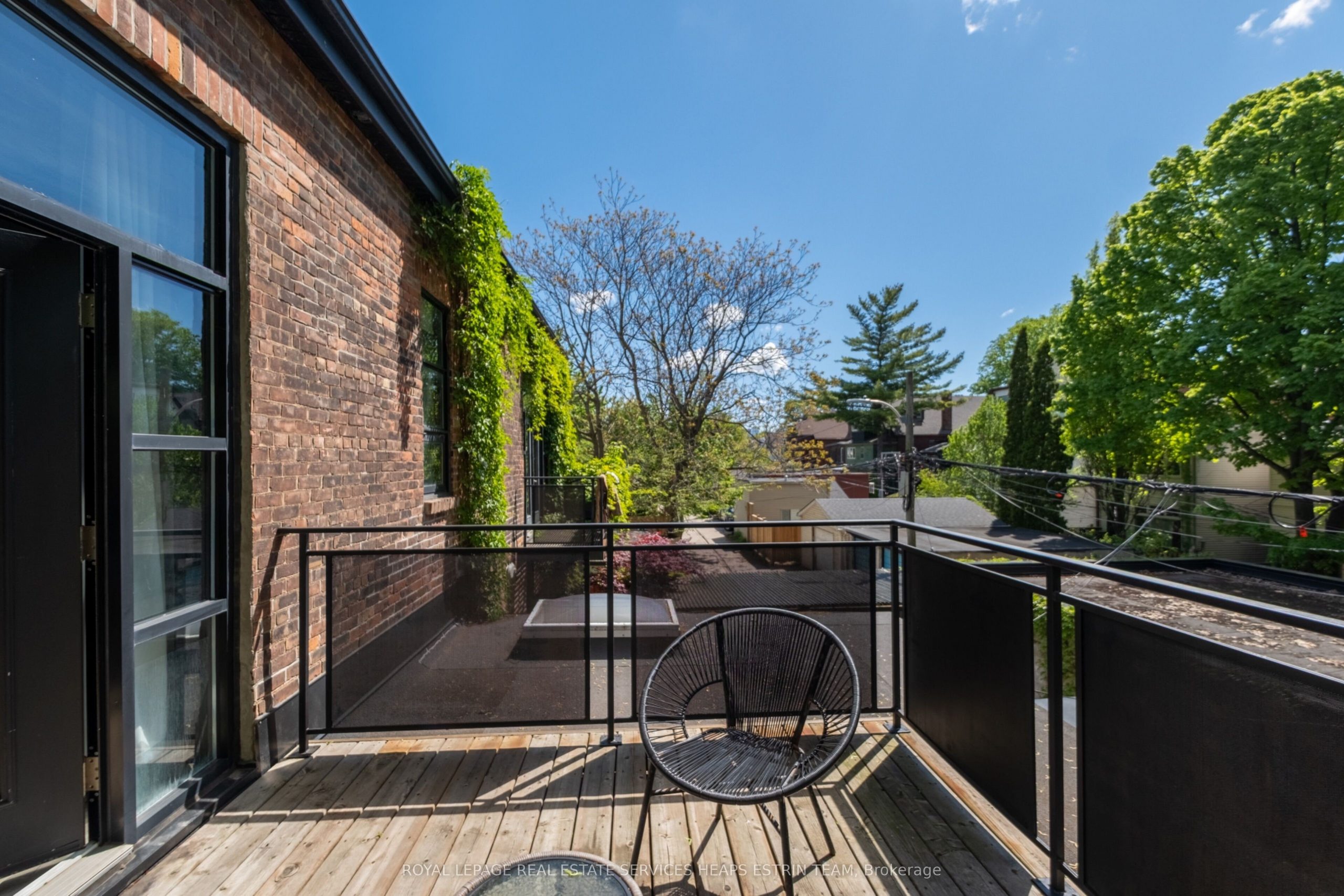
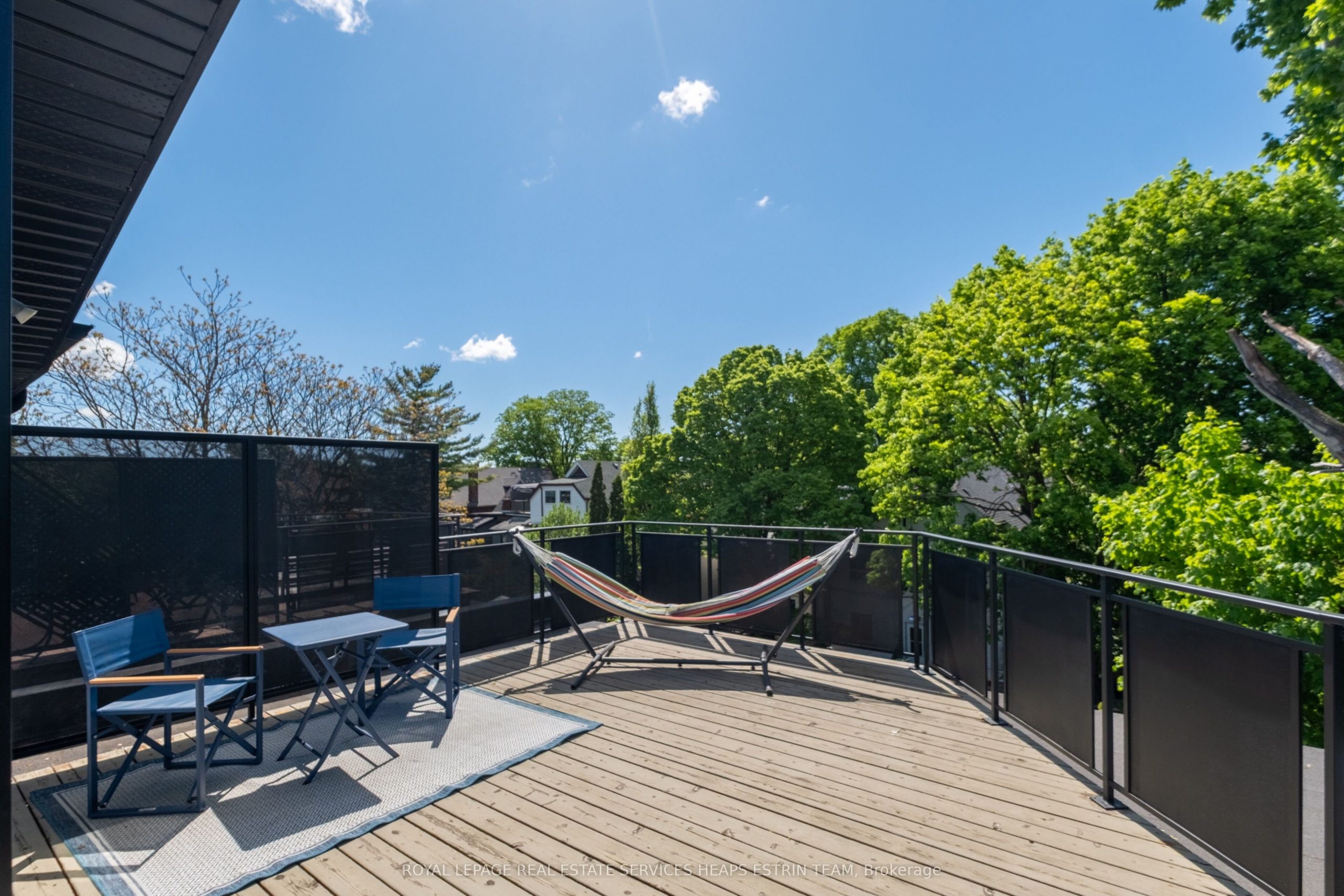
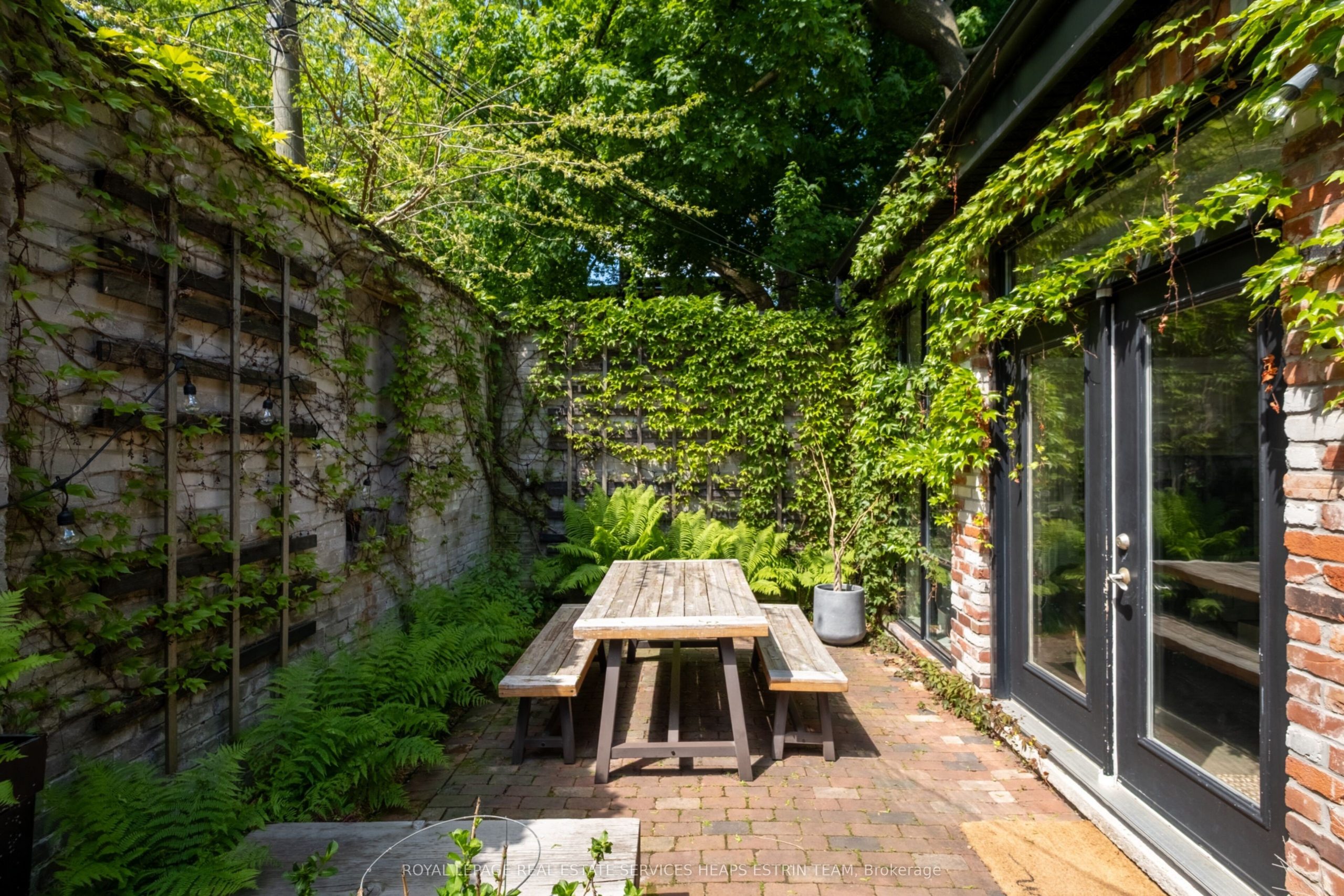
The inner courtyard, accessible from the living room, is one of the highlights of this authentic loft. Its gray stone walls are hidden beneath ivy and Virginia creeper. Ferns cover the brick floor. A long, weathered wooden table with matching benches occupies the central space. The whole scene almost resembles a priest’s garden. And it’s a welcome green oasis in a city as large as Toronto. On the third level, the terrace perched among the foliage offers a view of the neighborhood’s century-old maple trees.
This loft achieves something quite difficult. It remains true to the identity of the building that houses it, while avoiding an overly industrial look. All too often, conversions like these fall into clichés and end up looking more like showrooms than actual homes. Here, the red kilim, the velvet armchairs, the claw-foot bathtub, the coat hooks in the bathroom, and the ivy-covered courtyard help it stand out from the typical look.
Overall, it’s an inspiring project for those looking for ways to blend eras and materials within a single space.
Roncesvalles Village is located in west Toronto, five kilometers from downtown, between High Park and the Parkdale neighborhood. It’s a part of the city with a vibrant neighborhood vibe, featuring independent grocery stores, cafés, and even a farmers’ market on Saturday mornings.
The architecture here blends red-brick Victorian homes, a few early 20th-century commercial buildings, and contemporary additions of varying degrees of success. The building we’re focusing on clearly belongs to the category that deserves our attention.

This authentic loft is for sale by clicking on this link
The building was called the High Park Garage. The inscription remains visible on the brick facade, half-hidden by a Japanese maple planted in front of the entrance. For this renovation project, there was no attempt to erase the industrial past, as that would have stripped it of much of its charm.
The large, evenly spaced windows with black muntins stand out against the old masonry. This color choice accentuates the building’s historic character. There is no need to modernize it at all costs.
The ground floor
The ground floor opens onto a single, completely open living space, situated beneath the original beams that run at a height of approximately 3.65 meters. A polished concrete floor, which conceals the heating system, covers the entire level.
The palette chosen for the decor by the current occupants plays on four materials: red brick on the walls, the dark wood of the century-old beams, the raw steel of certain fixtures, and the concrete floor. The furniture cleverly breaks up this industrial austerity.
Its red velvet armchairs bring an immediate warmth. The large red and fuchsia kilim rug, laid directly on the concrete, creates a colorful and dynamic area. It’s a bold choice, as such a saturated rug in such a dark space can heighten the feeling of darkness. The brick walls provide exactly the same chromatic warmth in shades of orange and terracotta.
The consistency of the color palette is very deliberate. Brick, red velvet, red kilim, they all belong to the same family of hues, but with very different textures.
Two kitchens, one for everyday life, one for entertaining
This loft has a surprise in store: it features two completely separate kitchens, each with its own decorative style and specific purpose.
The first one is blue. You wouldn’t necessarily expect to see petrol blue in this space. And yet, it’s a contrast that works perfectly here. This first kitchen occupies one side of the ground floor, with furniture in a rather cool tone that highlights the warmth of the brick. The brushed stainless steel countertop and the light-colored tile backsplash also provide a counterpoint to the brick.
The second kitchen is completely different in style and color palette; it occupies another corner of the ground floor. Its very dark brown, almost mahogany-stained wood cabinet fronts rise up to the beams, forming a massive monolithic block. Its countertop is granite. The most surprising detail is the beveled mirror backsplash, which reflects the space and amplifies the light in a naturally dark corner.
The living area and its artwork
There is plenty of artwork in this loft. The most striking piece is a large photo of a pink peony against a very dark, almost black background, hung directly on the red brick. The contrast between the dark background of the photo and the warmth of the brickwork creates a sense of depth.
Next to it, you’ll notice a black-lacquered metal Sputnik-style pendant light with multiple arms and white globes. This fixture, typical of the 1950s and 1960s, enjoyed a resurgence in the 2000s with the rise of lofts. It pairs perfectly with the solid teak round table and Scandinavian chairs. It’s a timeless mid-century style well-suited to the spirit of the place. Metal lockers were salvaged, perhaps from an old school or the changing room of the former garage. They have been preserved in their original steel-gray finish.
The bedroom on the second level
Its second level holds the biggest surprise. The master bedroom features a freestanding cast-iron bathtub, black-lacquered on the outside, facing the bed.
This choice is always divisive (it’s not our personal preference for our own home, but it works quite well in this setting). Practically speaking, it seems difficult to keep tidy, yet easy to live with. Aesthetically, it’s quite beautiful. The silver-polished claw-foot tub against the gray concrete, in front of the white-painted bricks, with the exposed beams on the ceiling, in photos, it’s perfect.
The bricks in this room are painted white, unlike on the ground floor where they remain unpainted. This difference in treatment between the levels is a good decision because it distinguishes the living areas from the sleeping areas, and the bedroom feels lighter.
The bathroom and its details that make all the difference
The bathroom is small but also a unique space. Its raw concrete sink with its stainless steel wall-mounted faucets, the celadon green glass backsplash, and the colorful “human-shaped” coat hooks hanging on the walls create a very personal atmosphere.
The outdoor spaces with a courtyard and a terrace
The inner courtyard, accessible from the living room, is one of the highlights of this authentic loft. Its gray stone walls are hidden beneath ivy and Virginia creeper. Ferns cover the brick floor. A long, weathered wooden table with matching benches occupies the central space. The whole scene almost resembles a priest’s garden. And it’s a welcome green oasis in a city as large as Toronto. On the third level, the terrace perched among the foliage offers a view of the neighborhood’s century-old maple trees.
Our take on this loft and its decor
This loft achieves something quite difficult. It remains true to the identity of the building that houses it, while avoiding an overly industrial look. All too often, conversions like these fall into clichés and end up looking more like showrooms than actual homes. Here, the red kilim, the velvet armchairs, the claw-foot bathtub, the coat hooks in the bathroom, and the ivy-covered courtyard help it stand out from the typical look.
Overall, it’s an inspiring project for those looking for ways to blend eras and materials within a single space.
The Roncesvalles Village neighborhood in Toronto
Roncesvalles Village is located in west Toronto, five kilometers from downtown, between High Park and the Parkdale neighborhood. It’s a part of the city with a vibrant neighborhood vibe, featuring independent grocery stores, cafés, and even a farmers’ market on Saturday mornings.
The architecture here blends red-brick Victorian homes, a few early 20th-century commercial buildings, and contemporary additions of varying degrees of success. The building we’re focusing on clearly belongs to the category that deserves our attention.


This authentic loft is for sale by clicking on this link


Comments