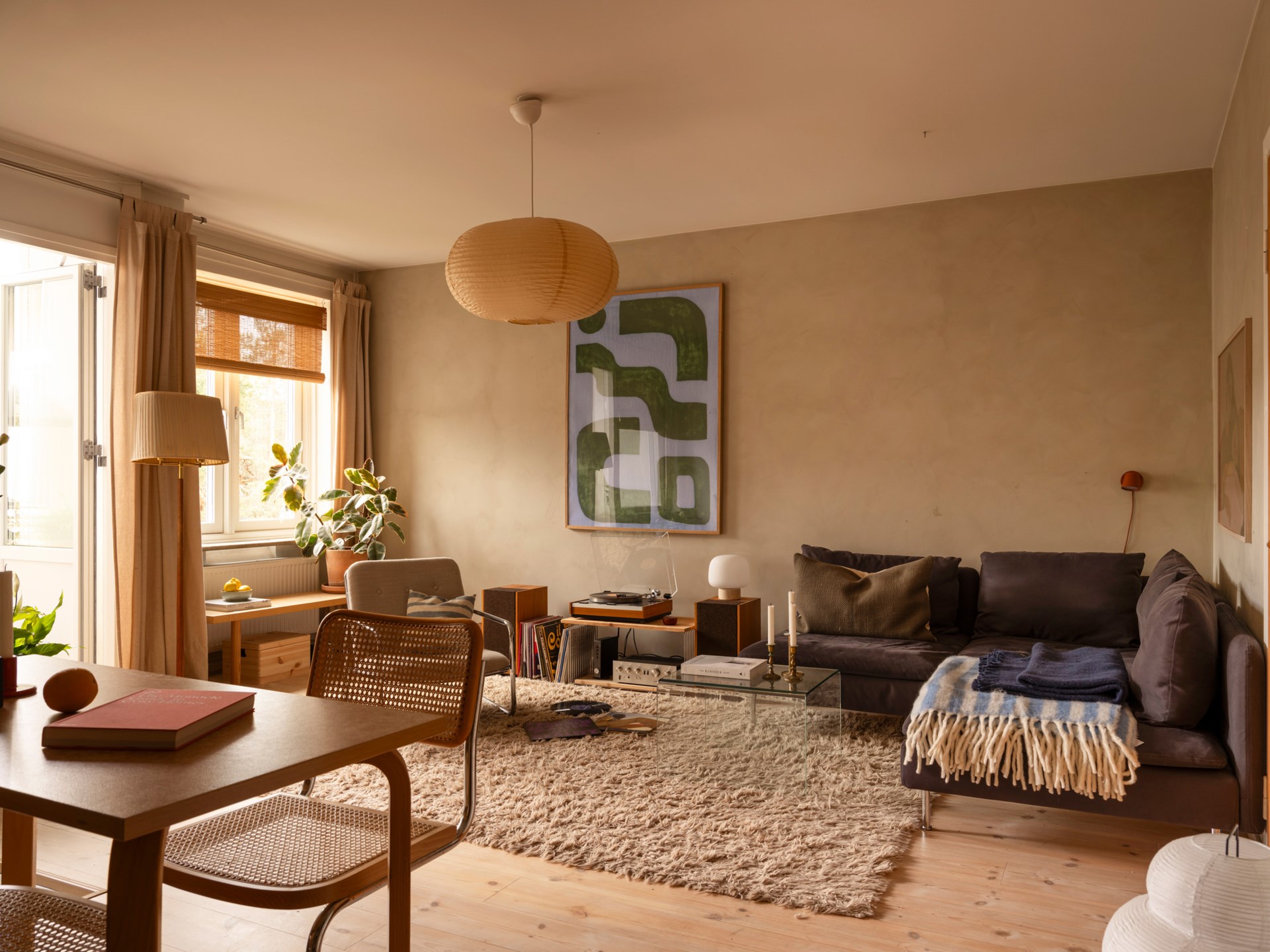
A 67sqm apartment from the 1950s with an ochre interior
This 67sqm apartment in Stockholm dates from the 1950s and its warm interior is an ode to the color ochre.
In this 67sqm apartment located in a 1950s building, what strikes you the moment you step through the door is the ochre color that envelops every surface. The walls have the color of warm sand, and an original brick fireplace sits proudly in the living room.
A bold and rare color palette in the living room
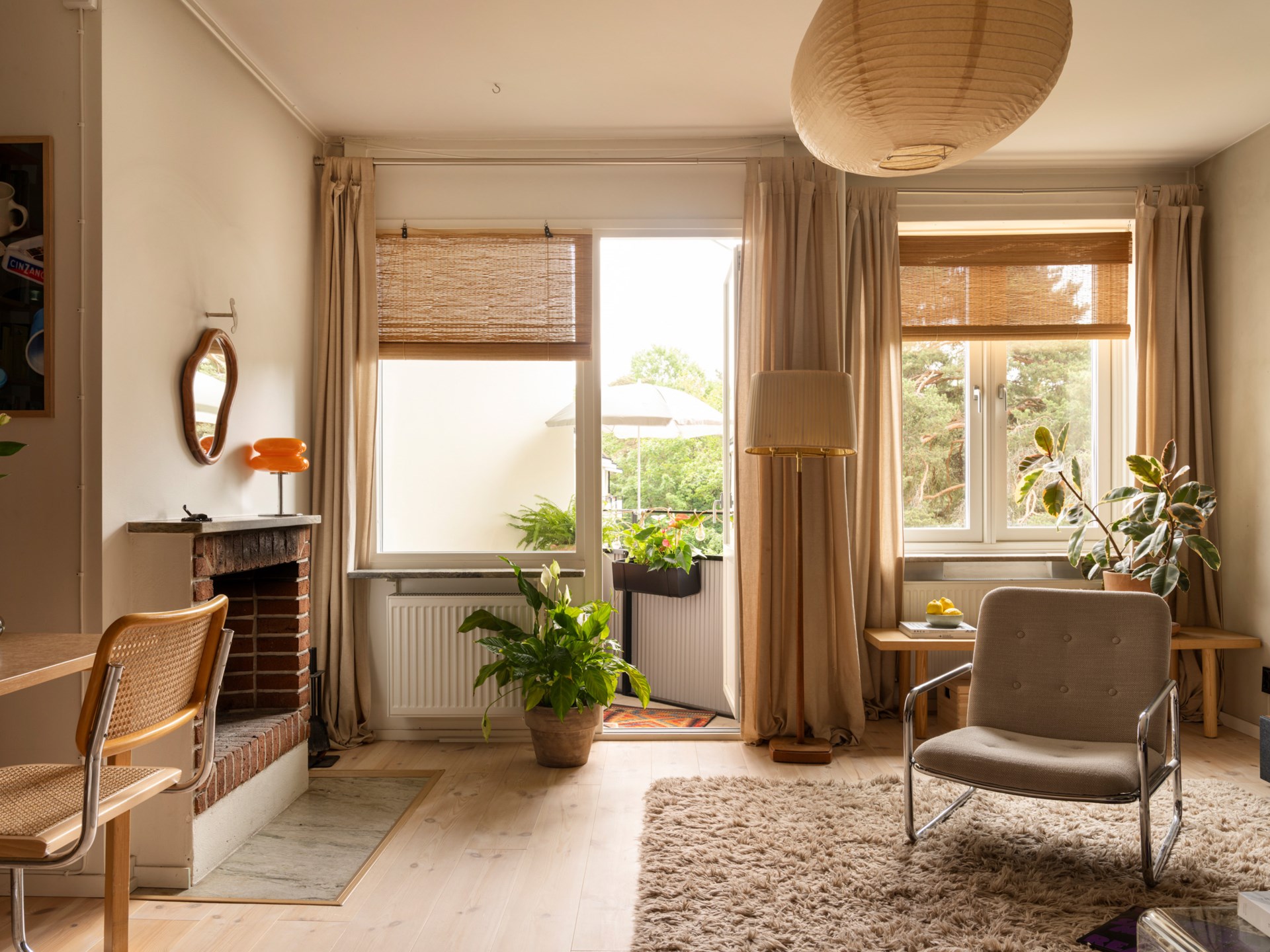
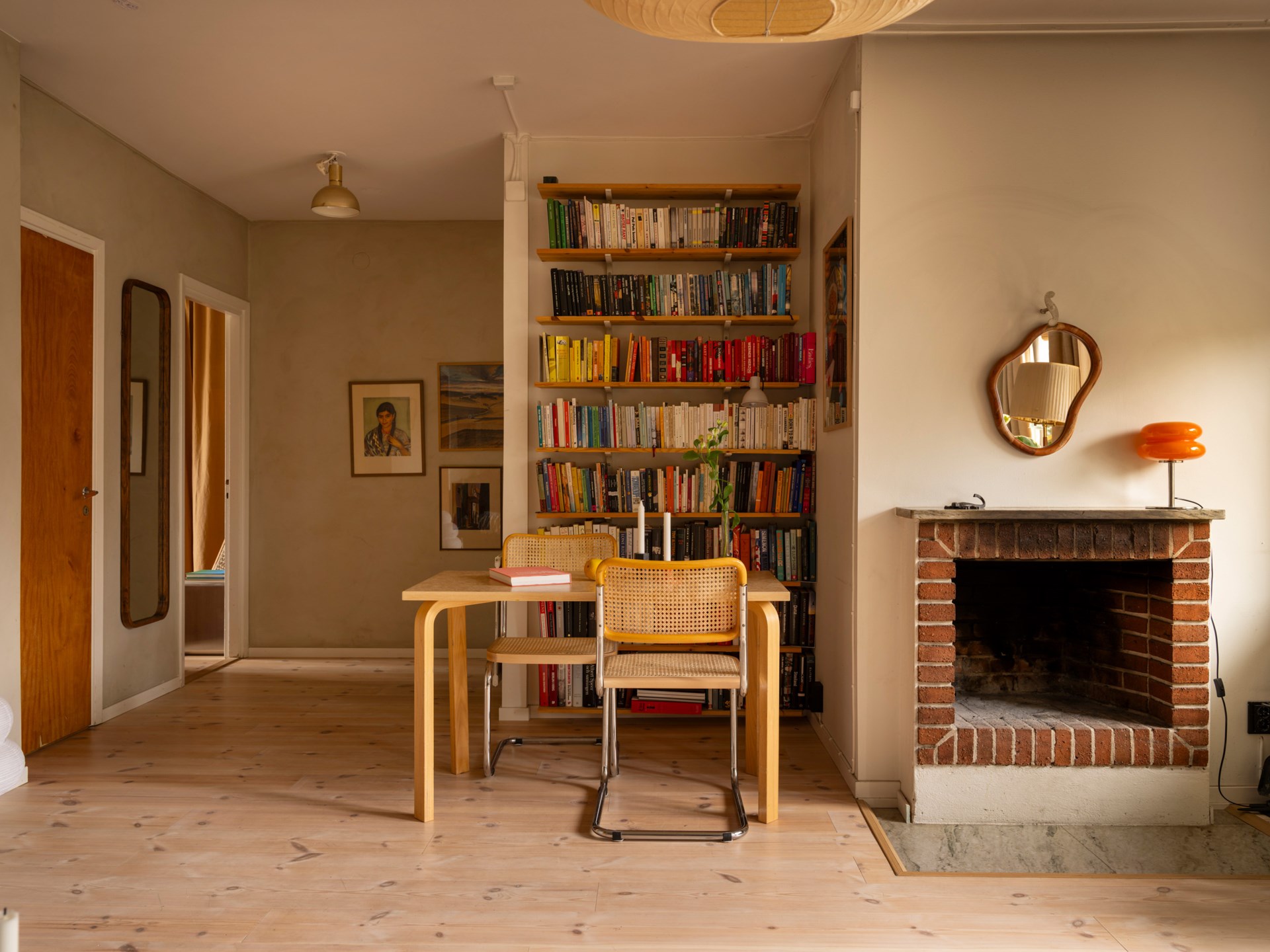
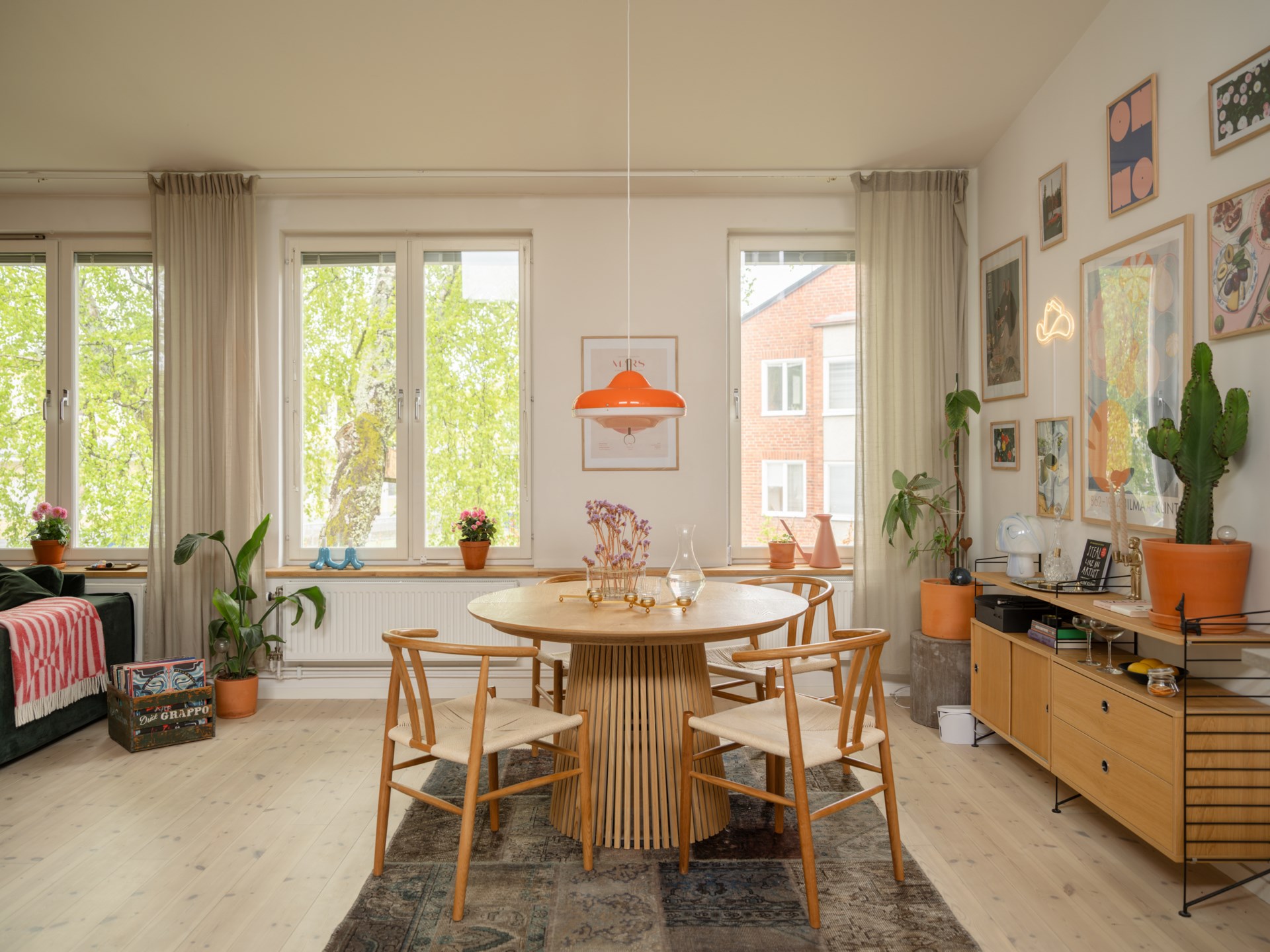
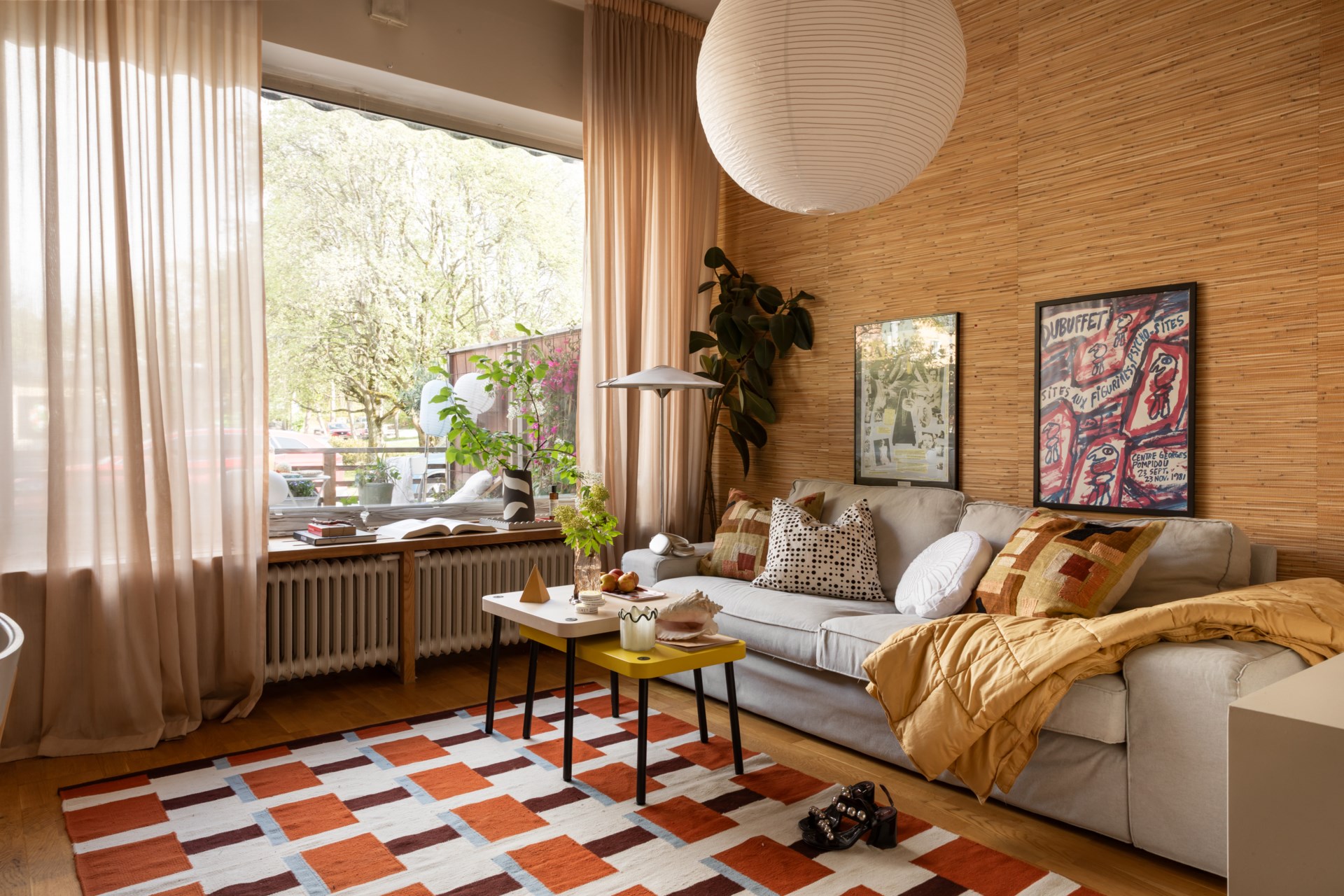
It is a strong choice by the owners, with this hue found throughout every room. The living room, with its southwest-facing windows, features lime-washed walls and white-pigmented pine floors. The raw brick fireplace, built directly into the wall, occupies one corner and warms the atmosphere when temperatures drop. An orange lamp placed on the mantel adds a small pop touch that injects energy into this ochre universe.
Natural linen curtains fall from floor to ceiling, and woven bamboo blinds provide a second layer of light control over the windows. This choice of layering two types of sun protection, blind and curtain, cleverly solves the problem of direct morning light.
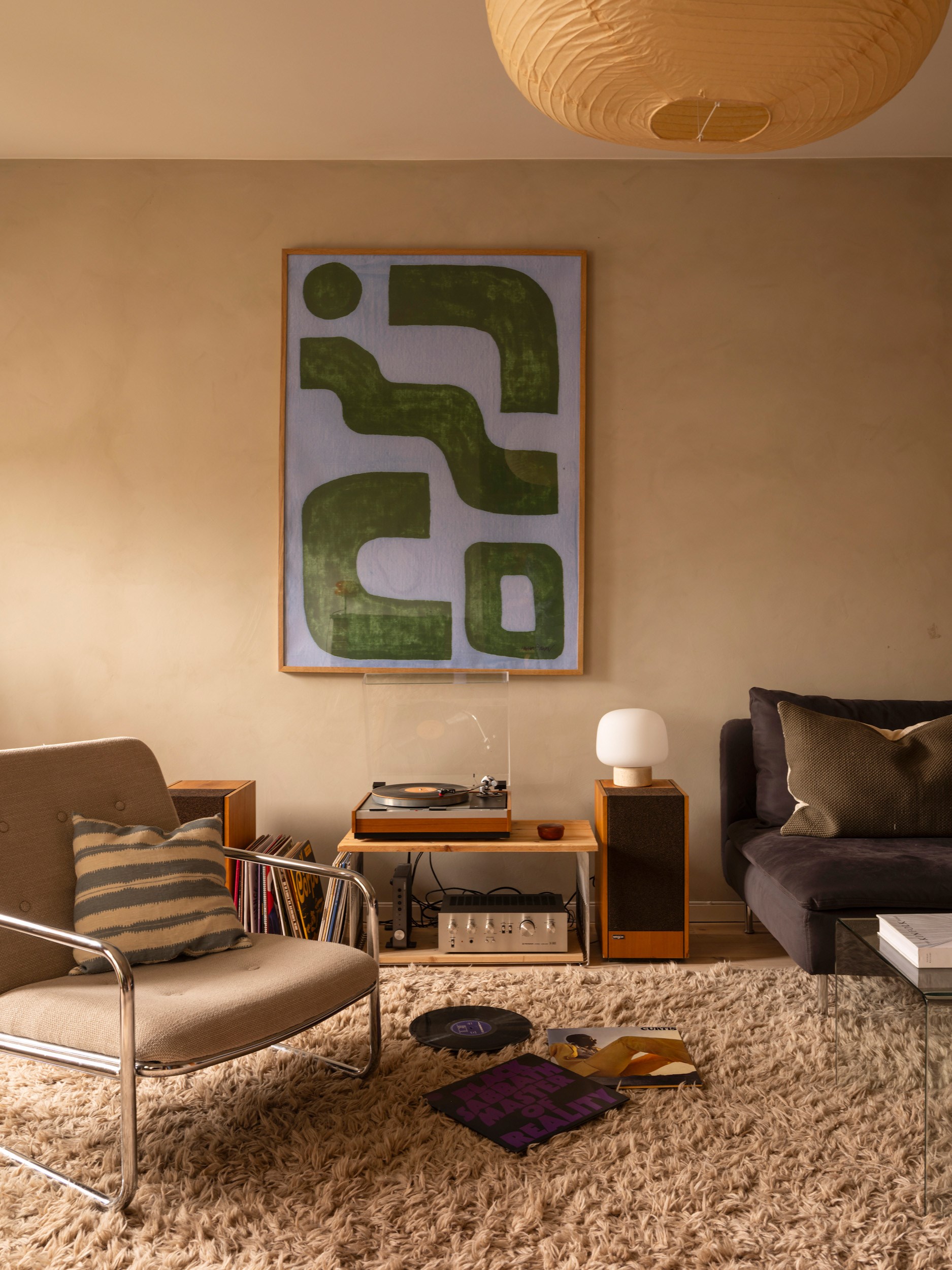
The living room features a brown corner sofa and a shaggy rug with long beige pile. The room also includes a bookcase where the books are arranged roughly by color. It is an original approach, perhaps not the most practical, prioritizing decoration over convenience, and it is a concept that holds its own. The gradient from red to yellow passing through orange complements the overall terracotta palette.
The living room opens onto a balcony overlooking the forest. In summer, it becomes a full additional room in its own right.
The two-tone designer kitchen
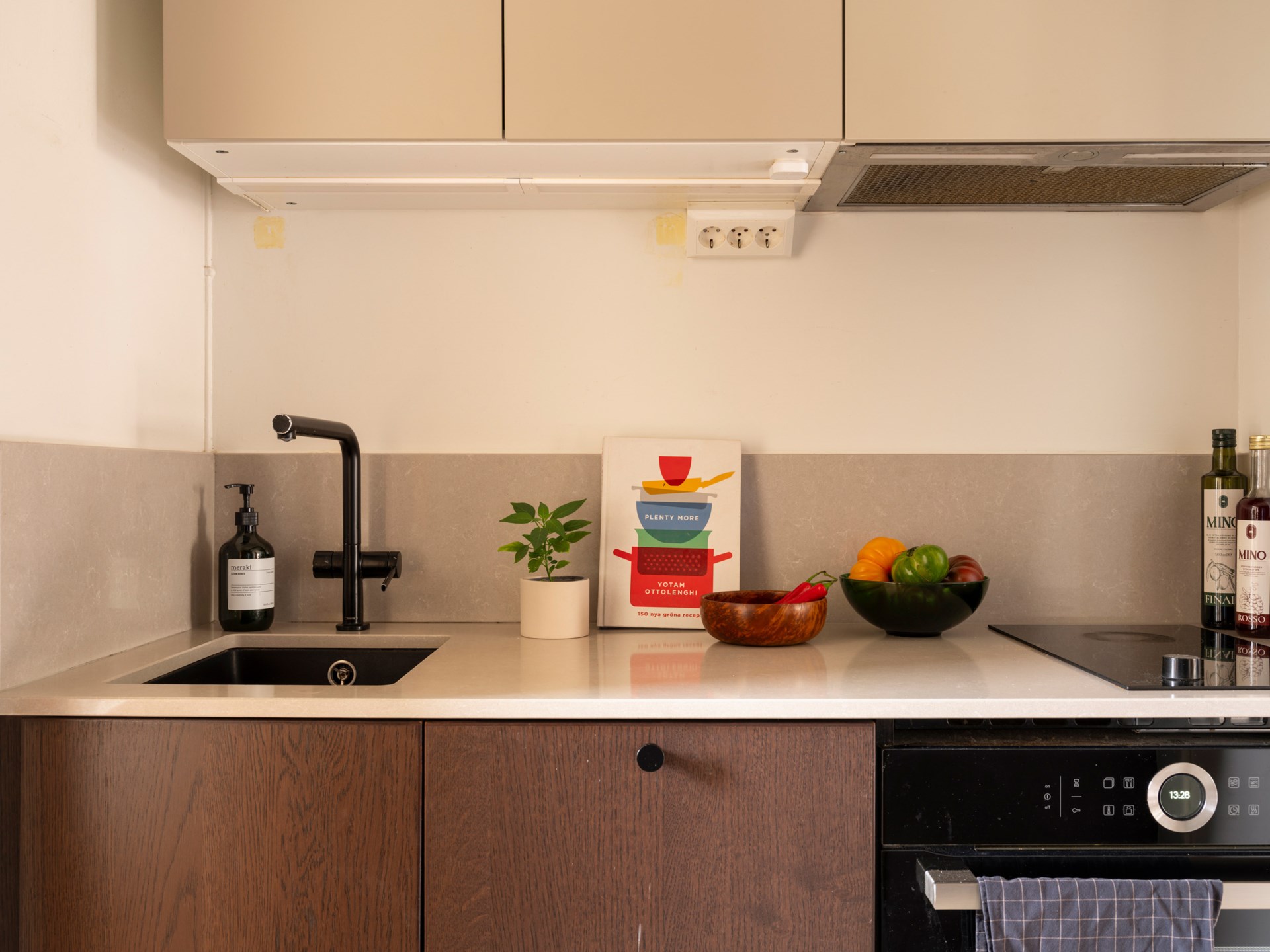
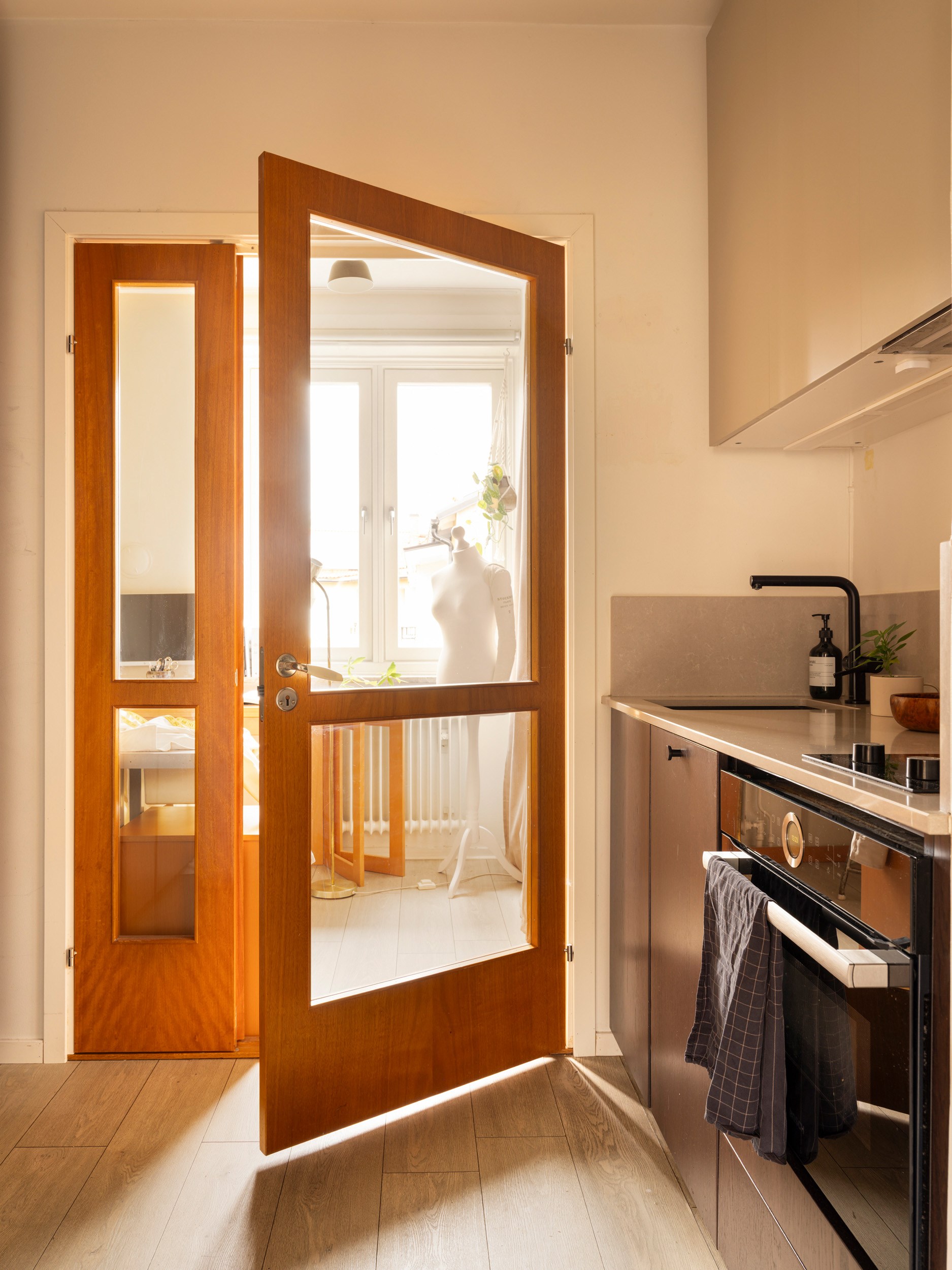
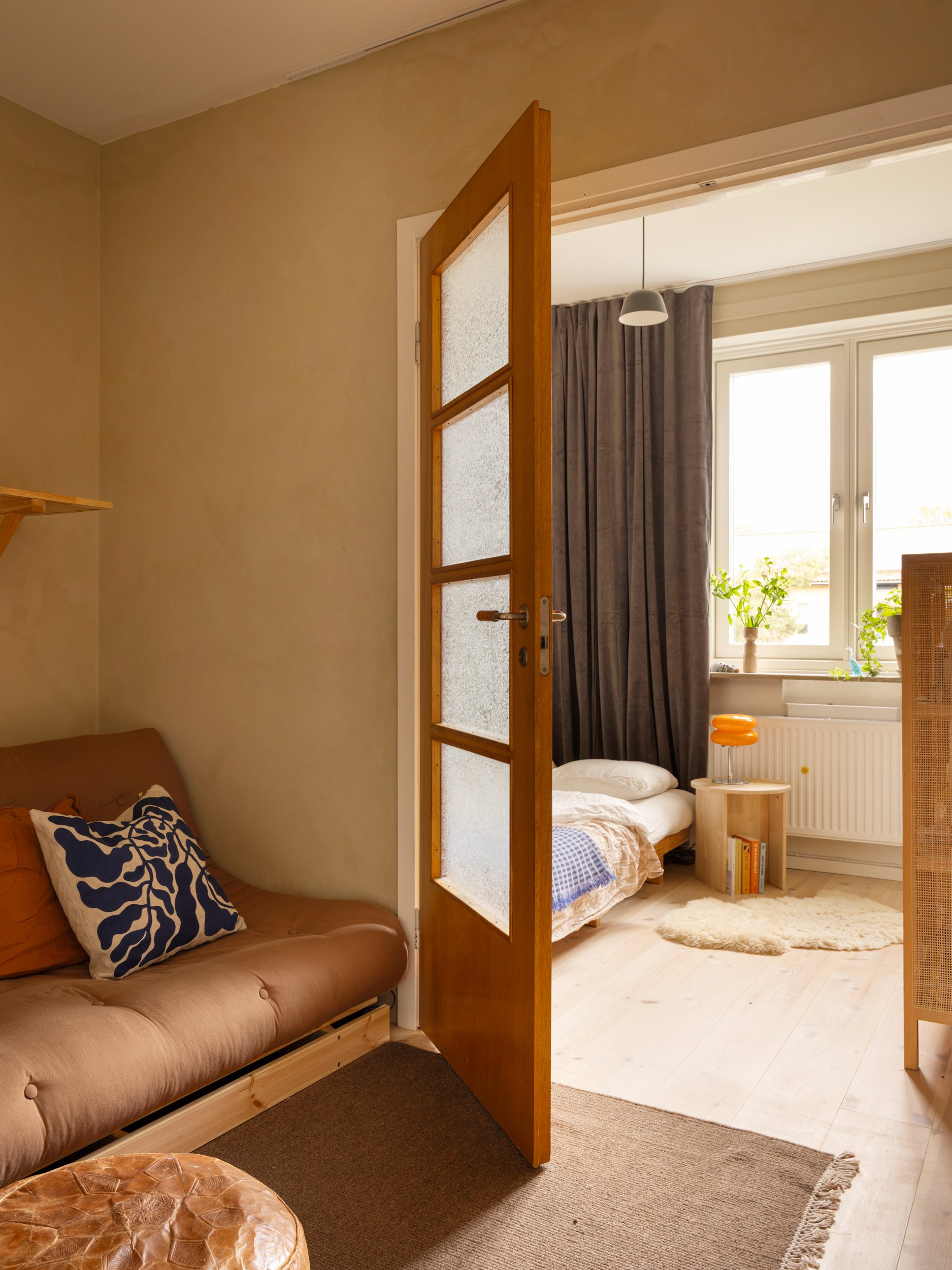
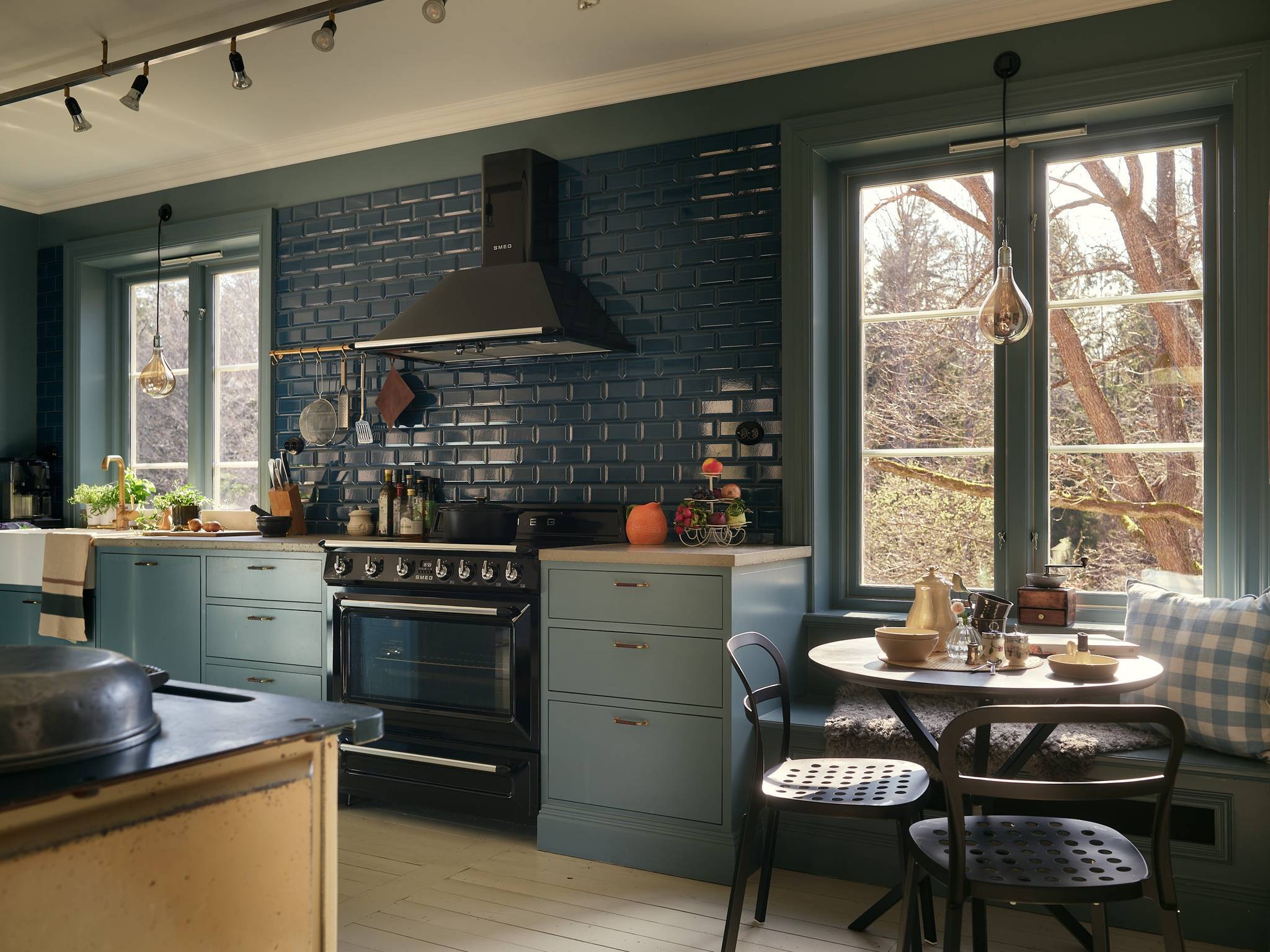
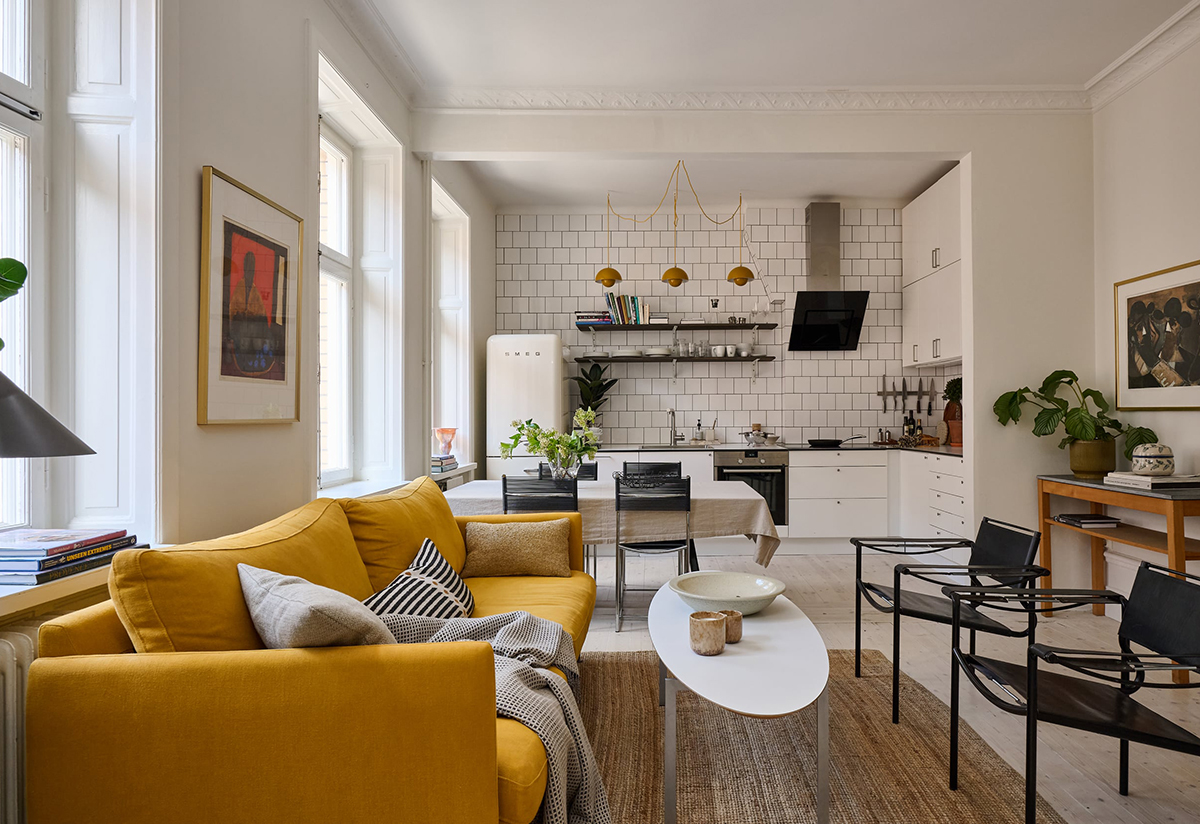
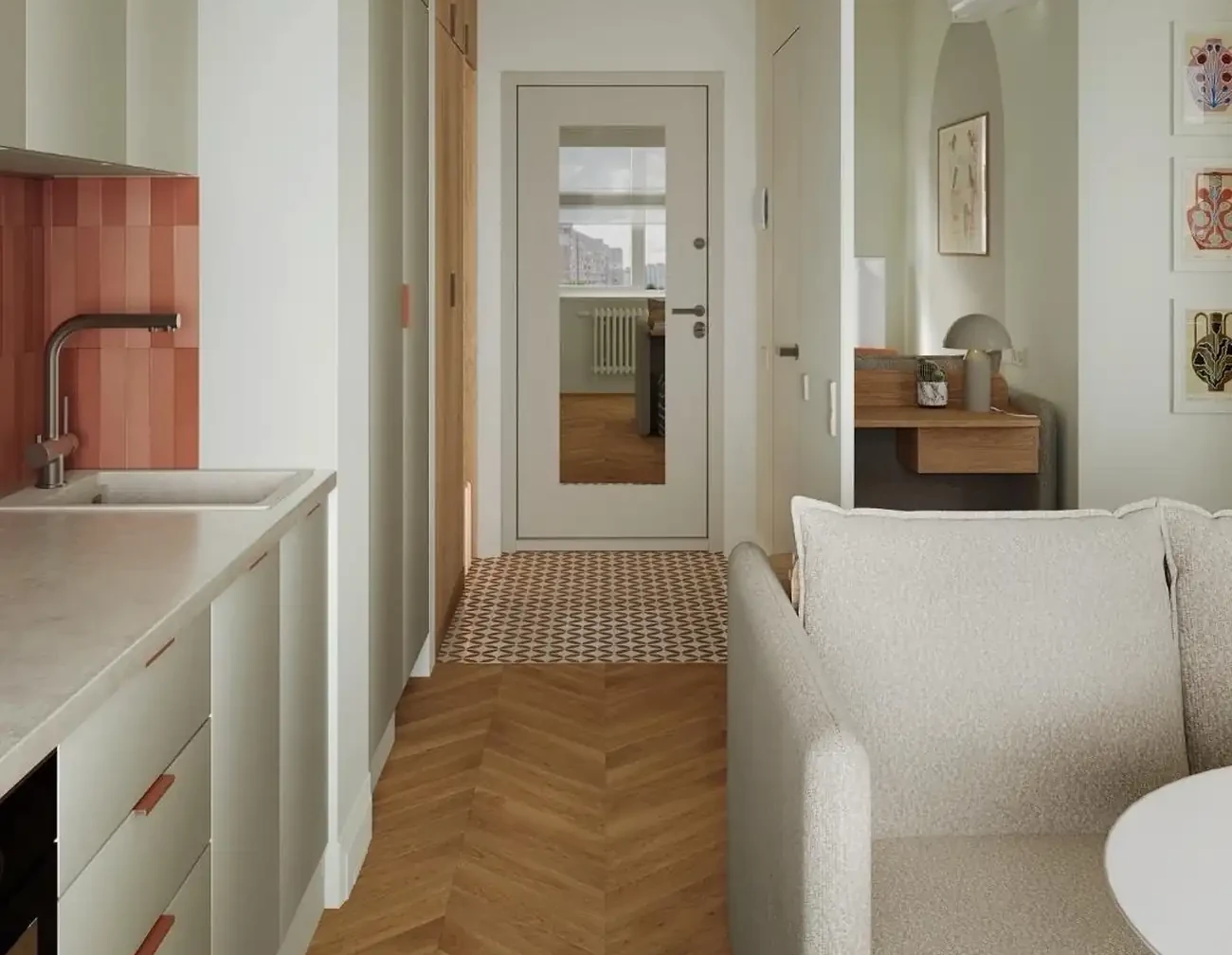
While the rest of the apartment exudes a vintage atmosphere, the kitchen takes a more contemporary approach. Its cabinetry is in dark walnut-style wood, with smooth flat-panel lower units and beige upper cabinets to lighten the mood. The worktop and backsplash are in ivory white composite quartz. The result is warm, functional, and very much in keeping with the rest of the apartment. A colorful poster leans against the tiles. The double-leaf glazed interior doors, typical of the 1950s, separate the kitchen from the adjacent rooms while allowing light to pass through.
Master bedroom
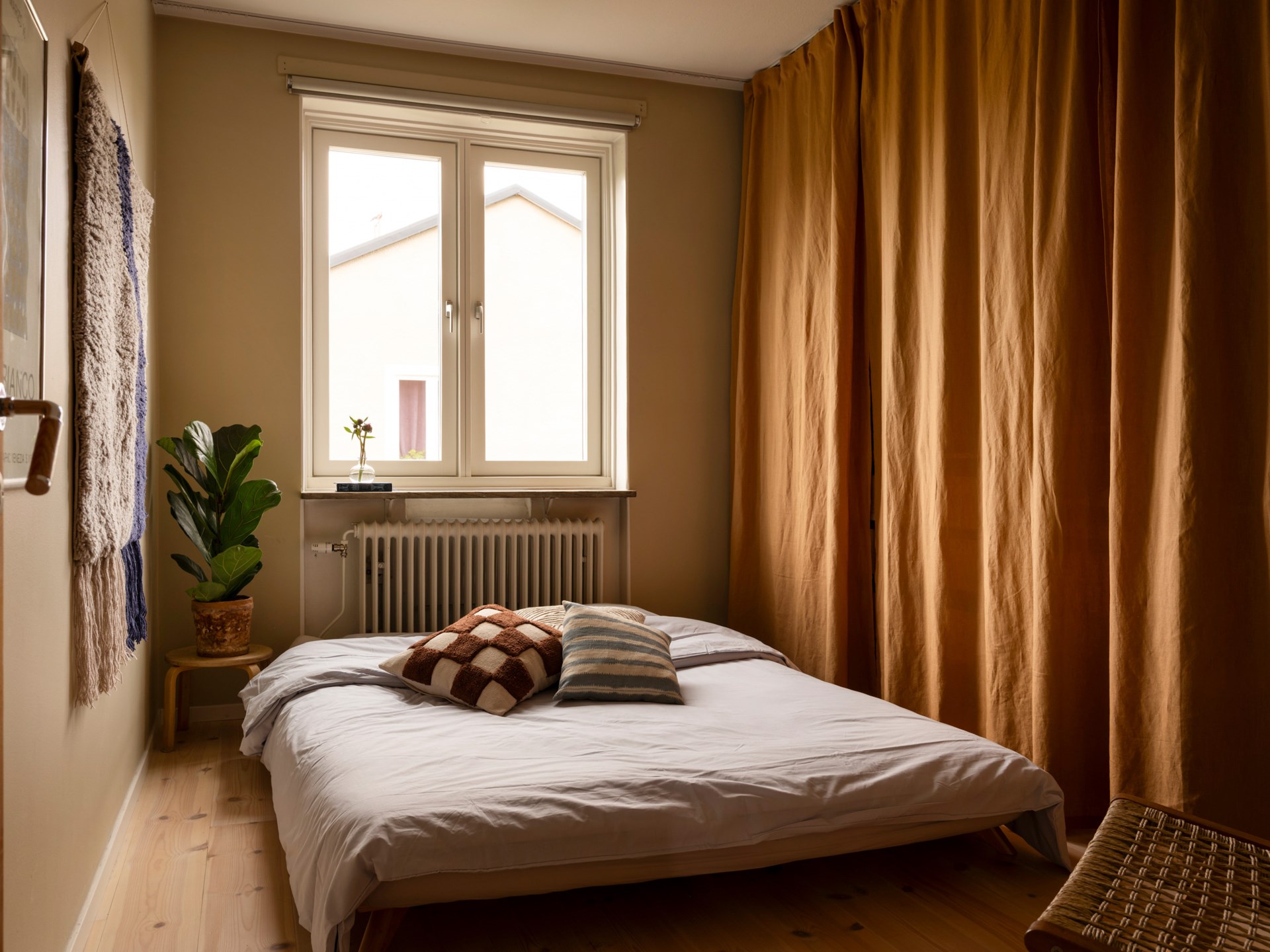
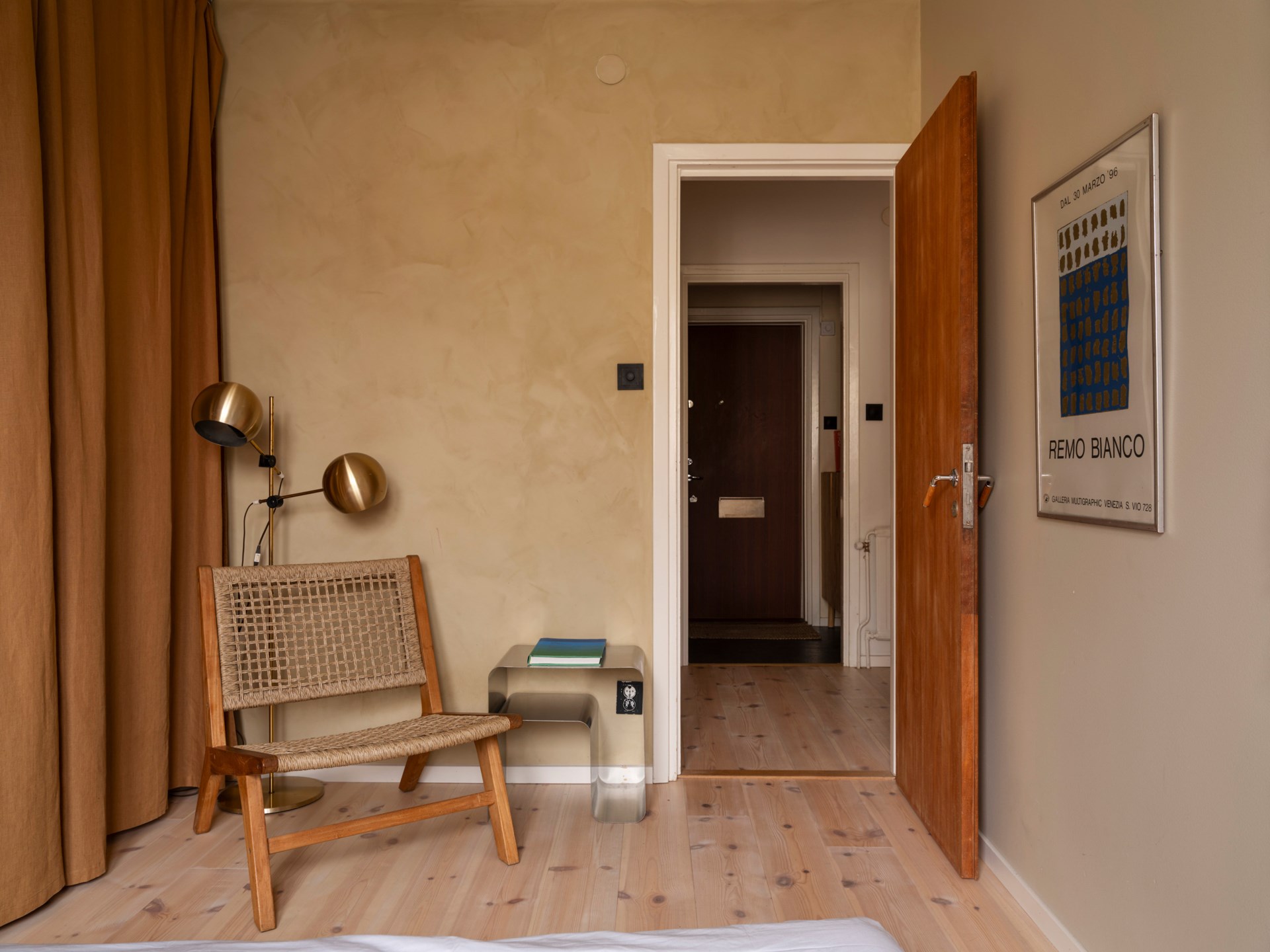
The master bedroom is very understated, containing only the essentials. The walls are finished in beige lime paint, and the floor is in light pine. A large curtain in ochre-rust linen covers an entire wall from floor to ceiling, serving as a practical and inexpensive solution to conceal a dressing room. In one corner, a woven rattan chair and a brass lamp create a small minimalist reading nook.
Flexible additional rooms
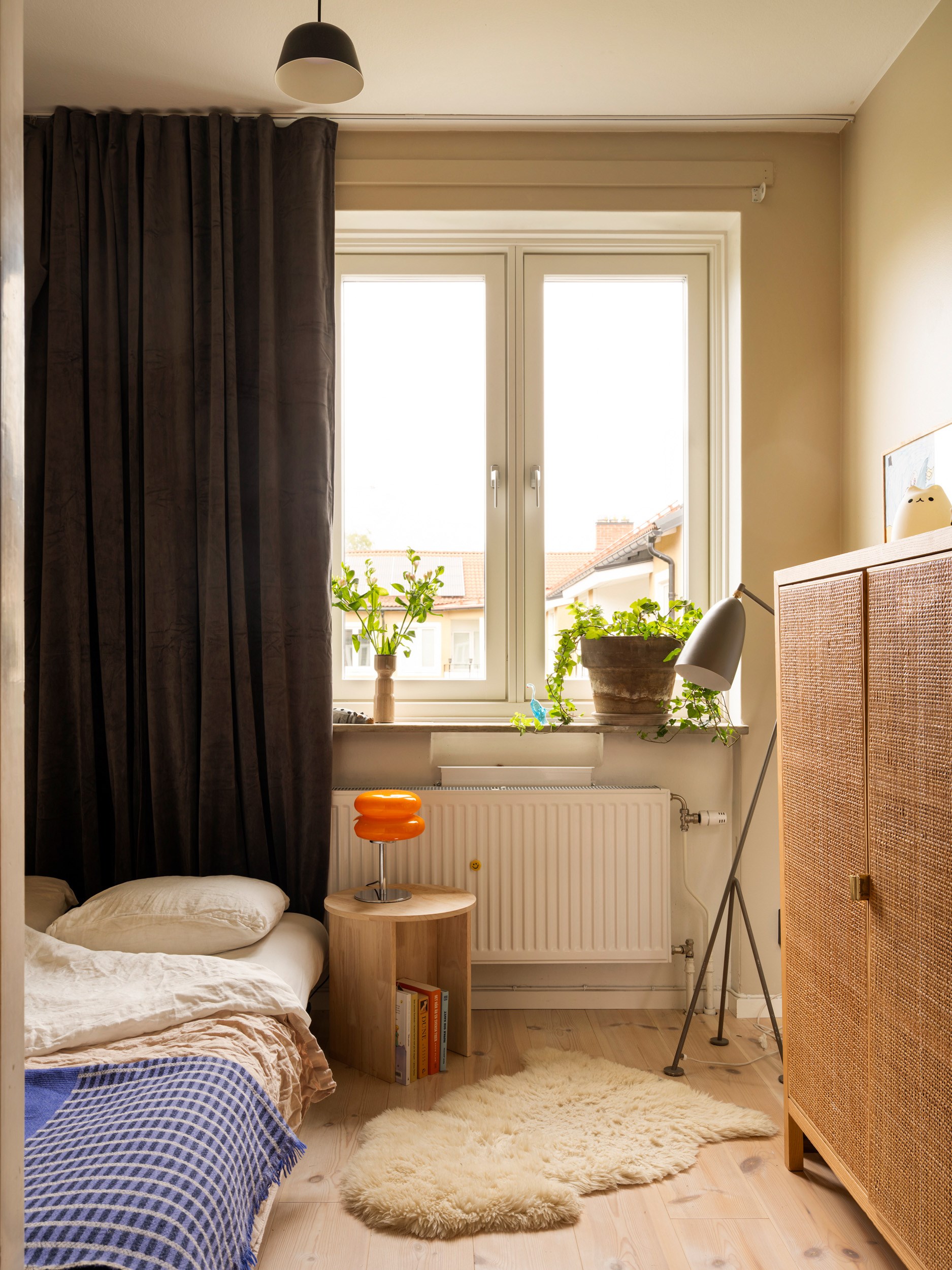
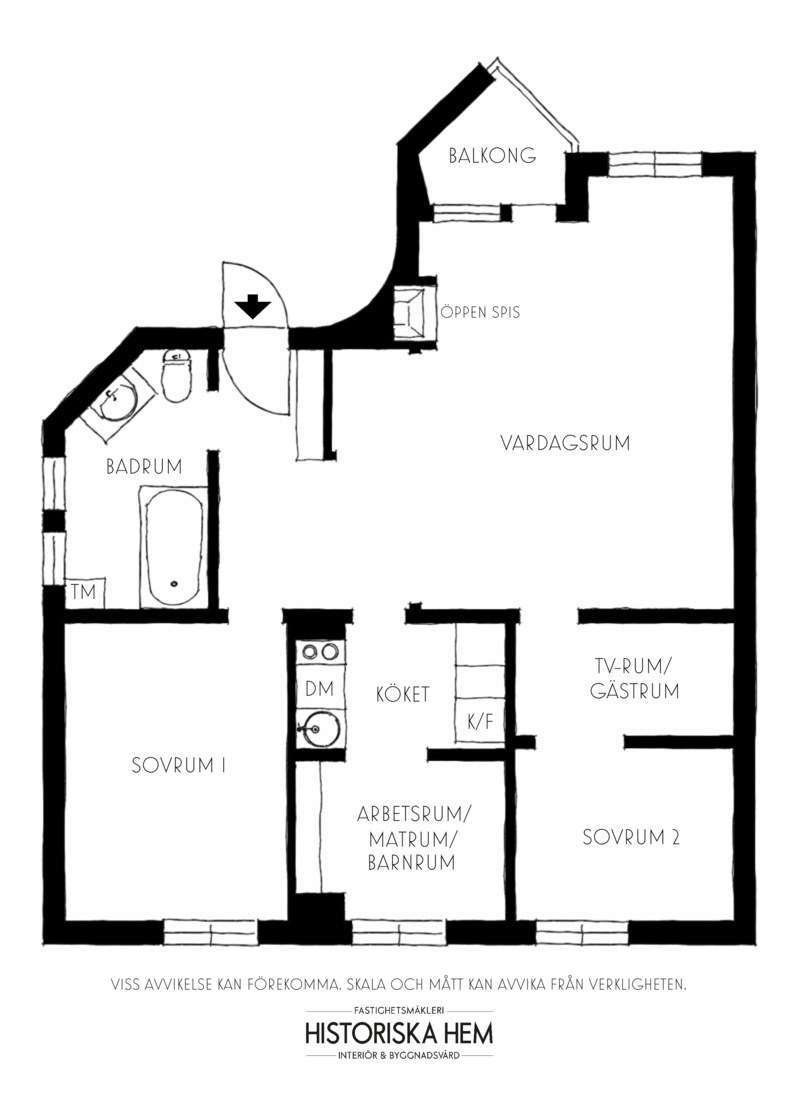
One of the great strengths of this apartment lies in its layout. A large bedroom has been divided into two separate spaces using double glazed doors. The inner room works perfectly as a child's bedroom or a home office, while the other can accommodate guests or serve as a TV room depending on needs.
A third small bedroom is tucked behind the kitchen, also accessed through varnished wooden glazed doors. It serves as the owners' sewing studio.
What we love about this interior
The apartment succeeds in staging the same color throughout every room without ever falling into monotony. The orange accents, the mushroom lamp on the fireplace mantel, the rust curtains, and the kitchen poster add just the right amount of visual interest to keep things from feeling dull.
A neighborhood close to nature (as is often the case in Sweden)
Hägersten is located in the southwest of Stockholm. The Solberga district, where this 67sqm apartment sits, runs alongside a forest of pines and birch trees, the Solbergaskogen, visible directly from the balcony.
The Swedish capital has this distinctive quality of blending urban density with nature accessible on foot. This is not a manicured park with trimmed lawns, but a real forest with old pine trees. The apartment enjoys this view from its well-positioned balcony, bathed in afternoon sun.
The building was constructed by Sven Backström and Leif Reinius, an essential duo in postwar Swedish social architecture. Their principle was to design buildings with open courtyards, to recreate a sense of community in a city that was urbanizing rapidly. The City of Stockholm has classified these buildings at green level, the highest distinction for their historical, cultural, and artistic value.













This 67sqm apartment is for sale at Historiska



Comments