A 115sqm Parisian apartment transformed into a family haven by d'Ussel & Decoster
D'Ussel & Decoster tastefully and intelligently renovates a 115sqm Parisian apartment, a quintessential Haussmann-style home
When a newlywed couple in their thirties moved in, this 115sqm apartment was in good condition. Located in a Haussmann-style building in the 3rd arrondissement, built in 1864, it retained its ceiling moldings and its intact herringbone parquet flooring. But the whole place felt a bit cold and didn’t reflect their personalities. That’s where the Parisian firm d’Ussel & Decoster stepped in, with a clear mission. It was to make the space feel warm while preserving its beautiful heritage. Four months of renovations later, this 115sqm Parisian apartment has been completely transformed.
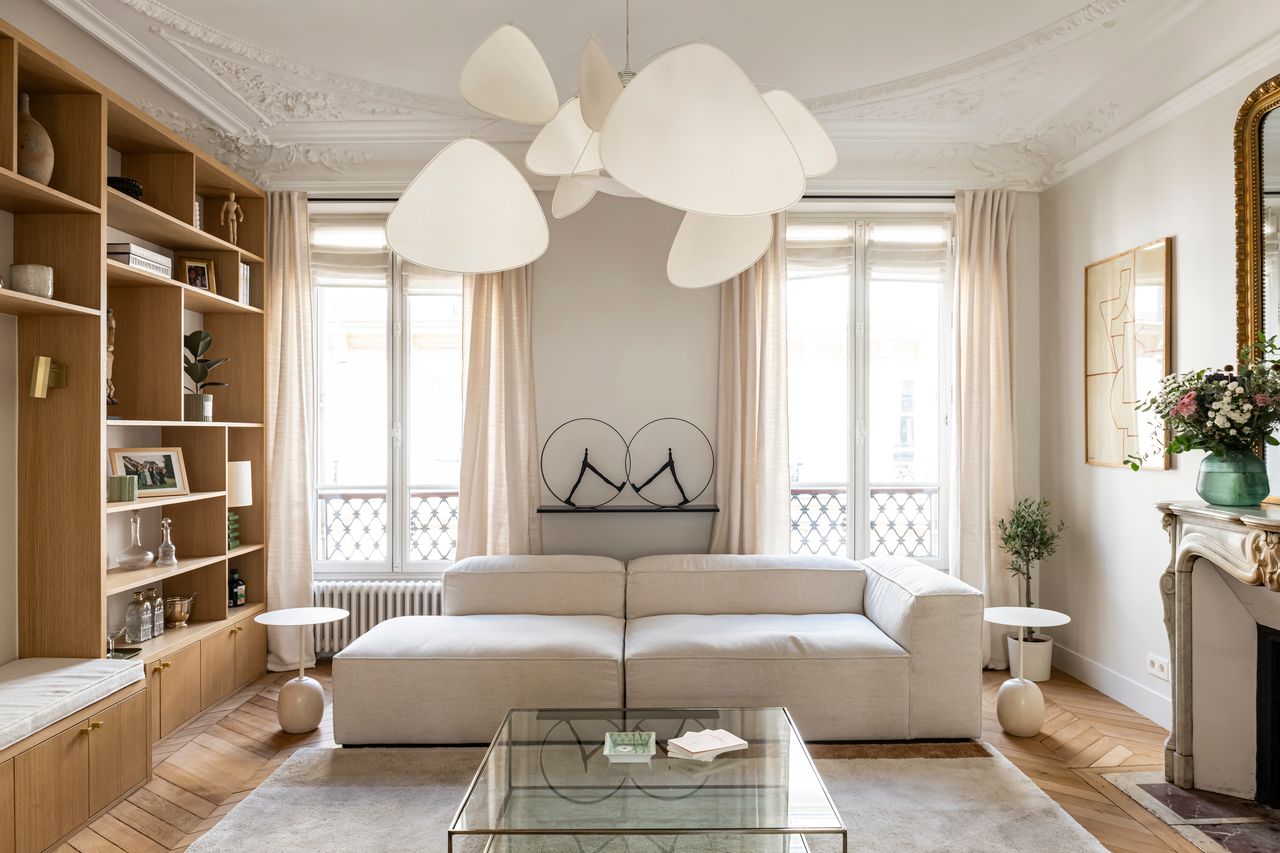
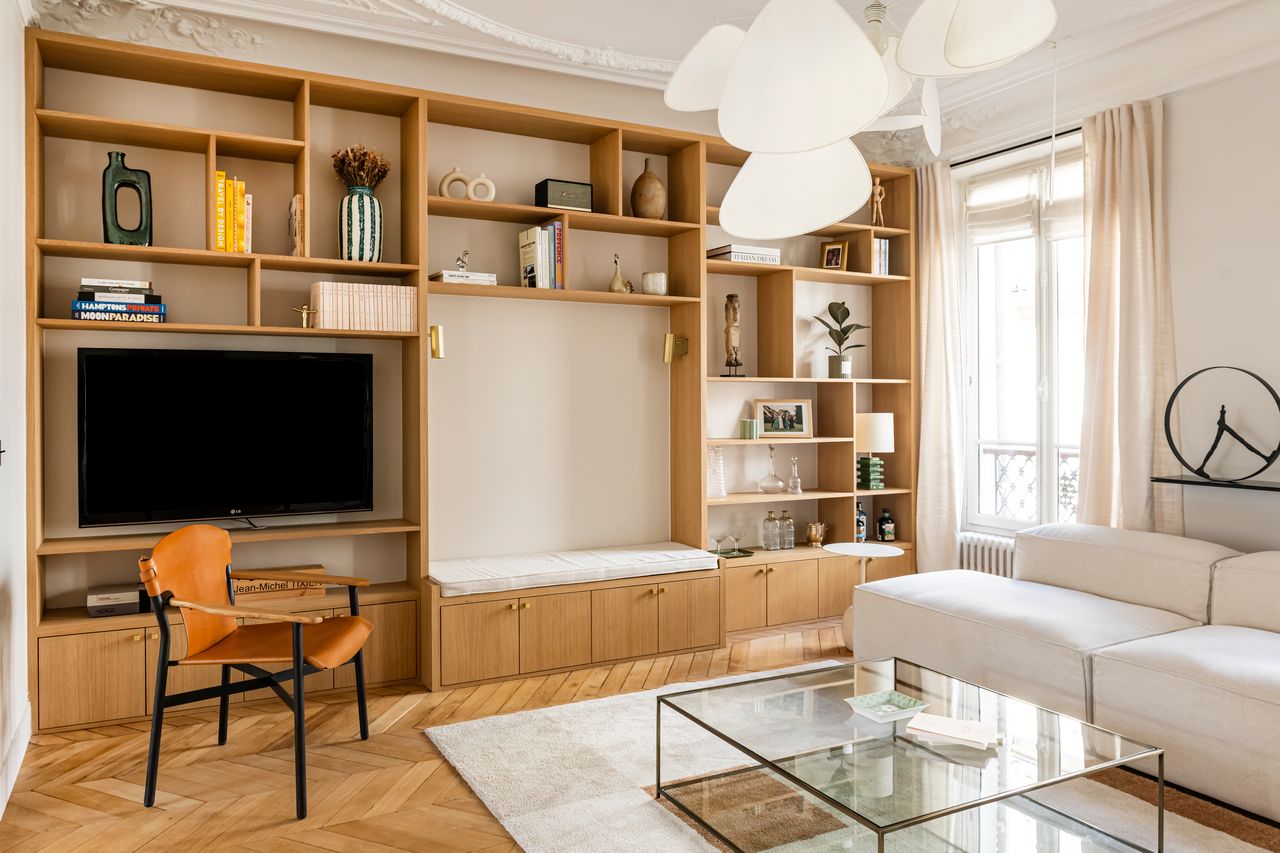
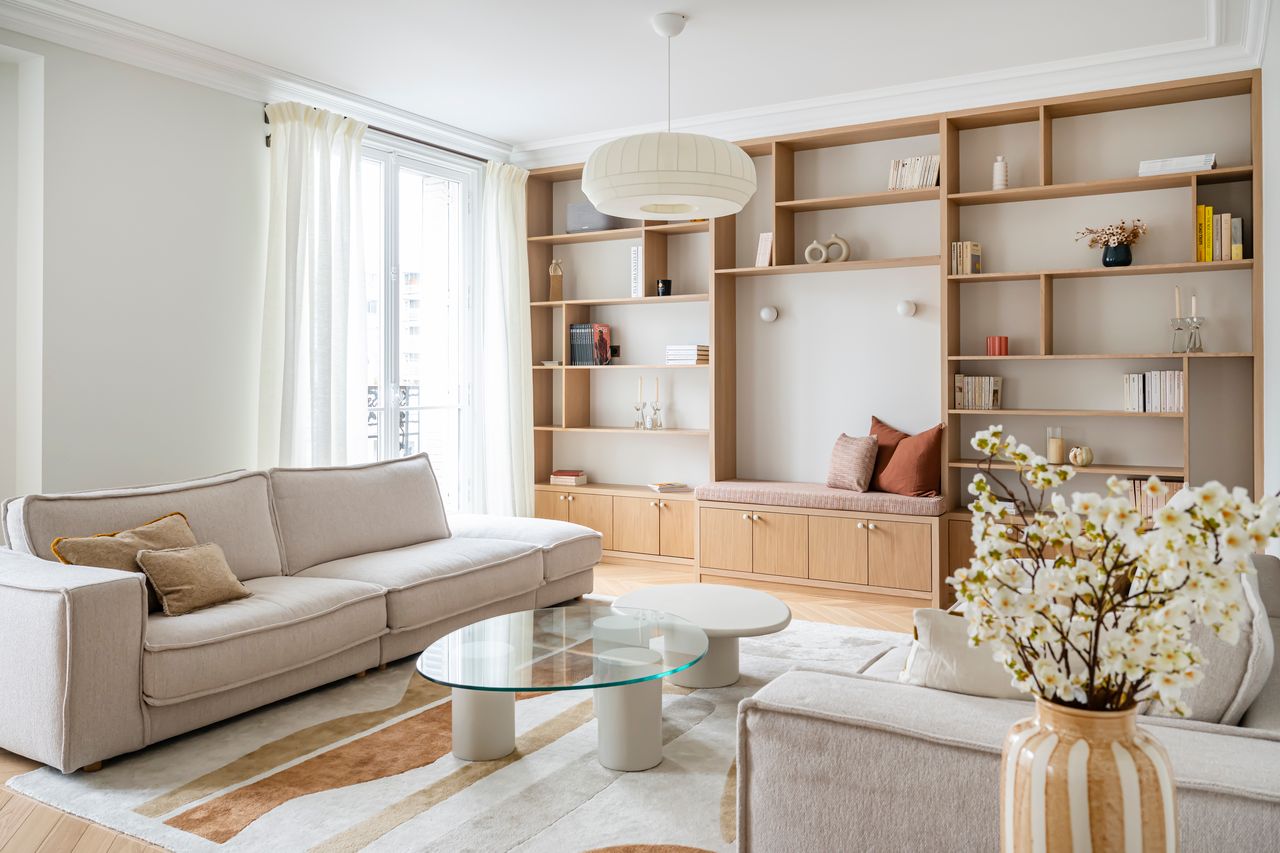
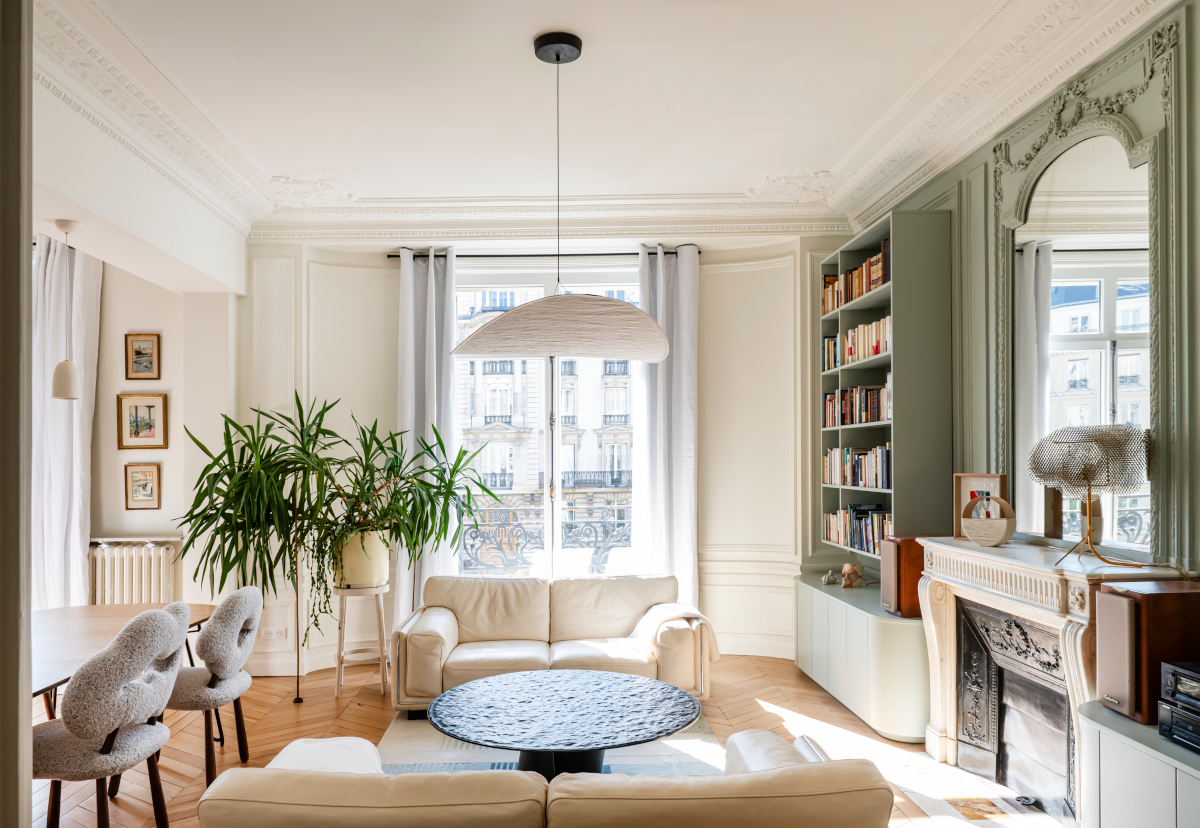
The first room you notice is the living room. A custom-built bookshelf in natural oak runs the entire length of one wall. It incorporates a TV area, an upholstered bench, and irregular niches scattered here and there.
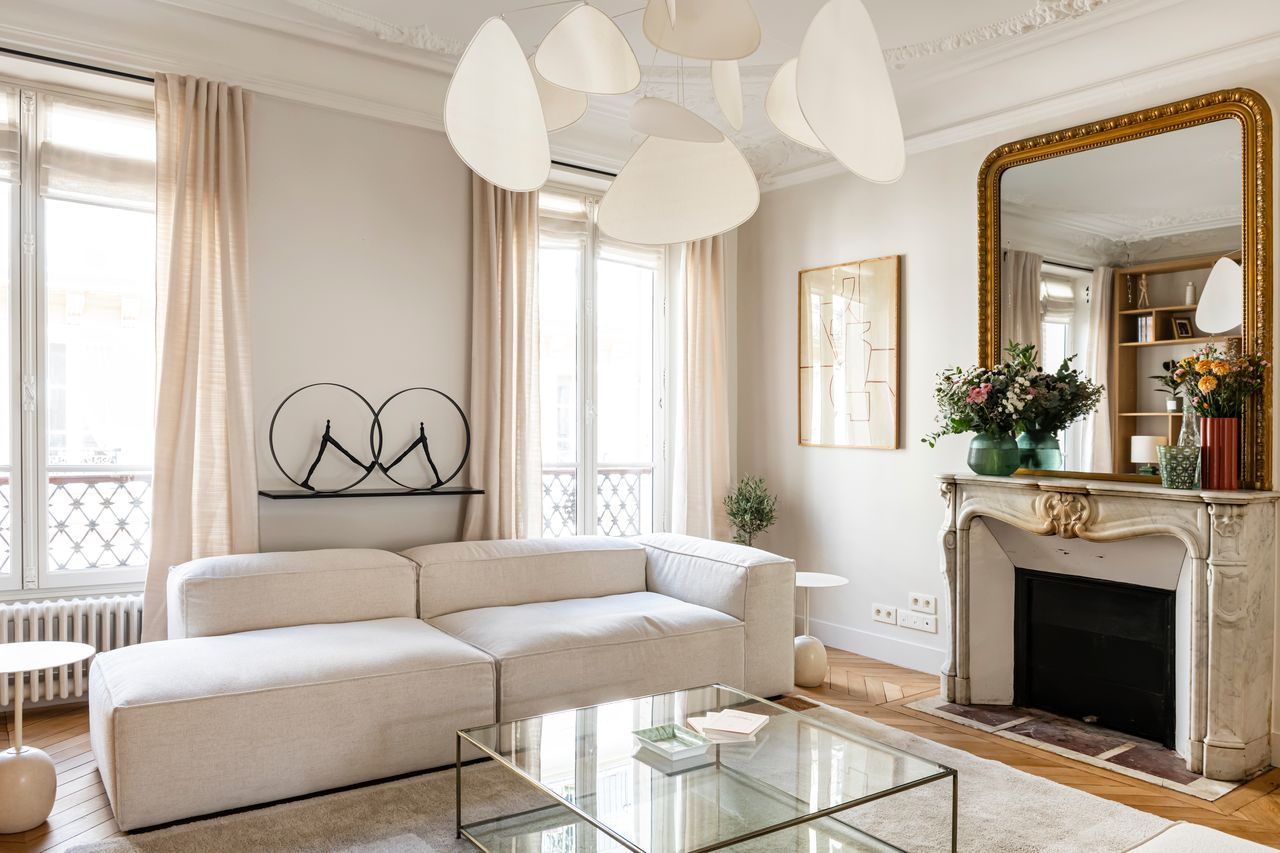
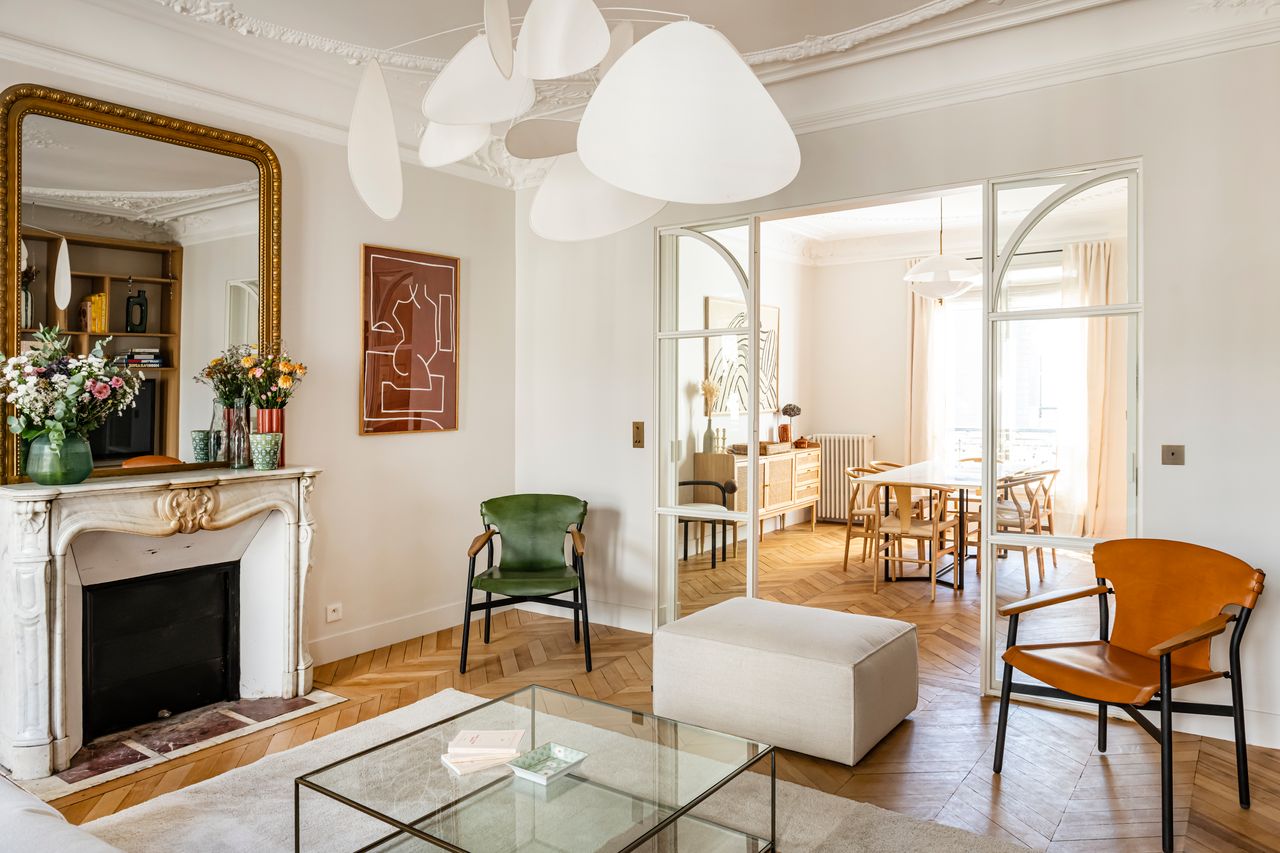
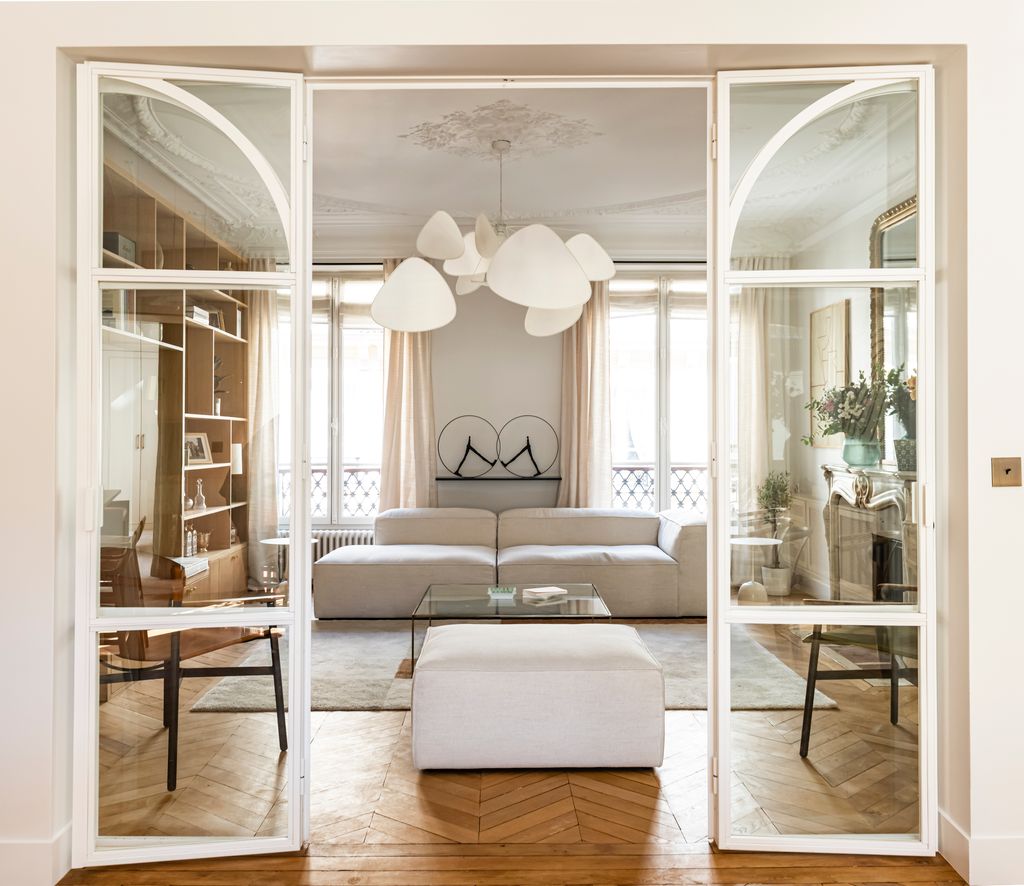
Opposite this bookcase, Bolia’s Cosima sofa takes center stage. This modular model with a very low seat features a pale linen hue that complements the golden hardwood floors. The coffee table, with a glass top and brass frame, has a light, airy appearance.
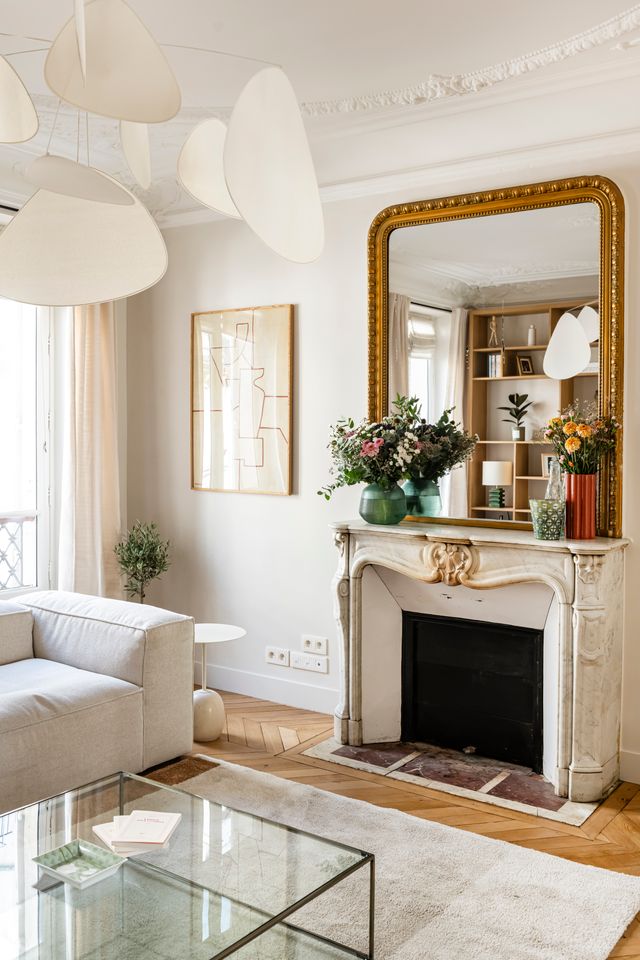
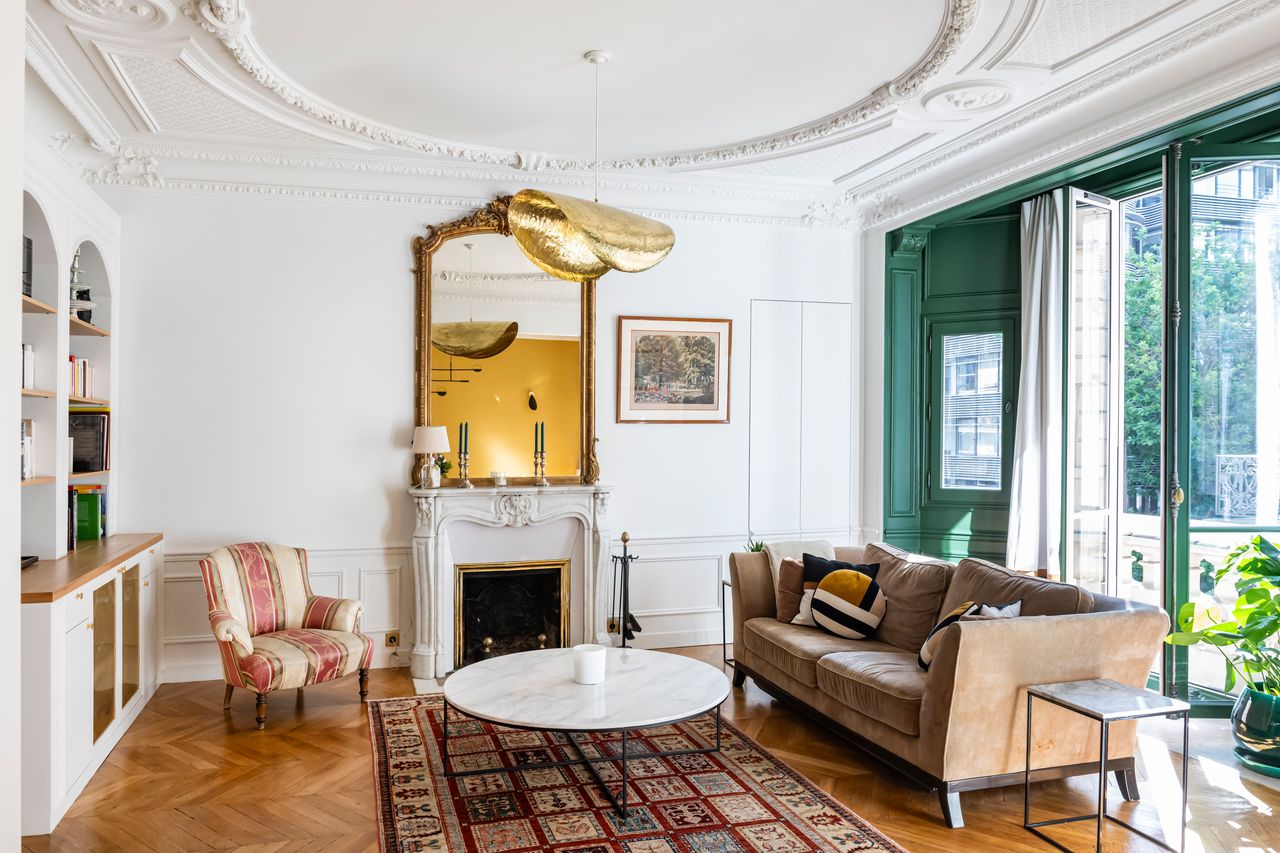
And from the ceiling, suspended between the period moldings, a light fixture composed of large white fabric panels resembles a giant Calder mobile. The carved white marble fireplace, with its generously proportioned gilded mirror, speaks to the era in which the building was constructed.
Between the living room and the dining room, the architects designed a glass partition with an arched pattern. The white mullions, clear glass panes, and half-moon curves evoke 19th-century botanical greenhouses, a recurring motif in the French architectural imagination. But behind the aesthetics lies a very practical reason: to separate spaces according to the occasion, whether it’s entertaining friends or keeping the family dog, an energetic Beagle, contained. Beauty combined with functionality perfectly sums up the approach of d’Ussel & Decoster.
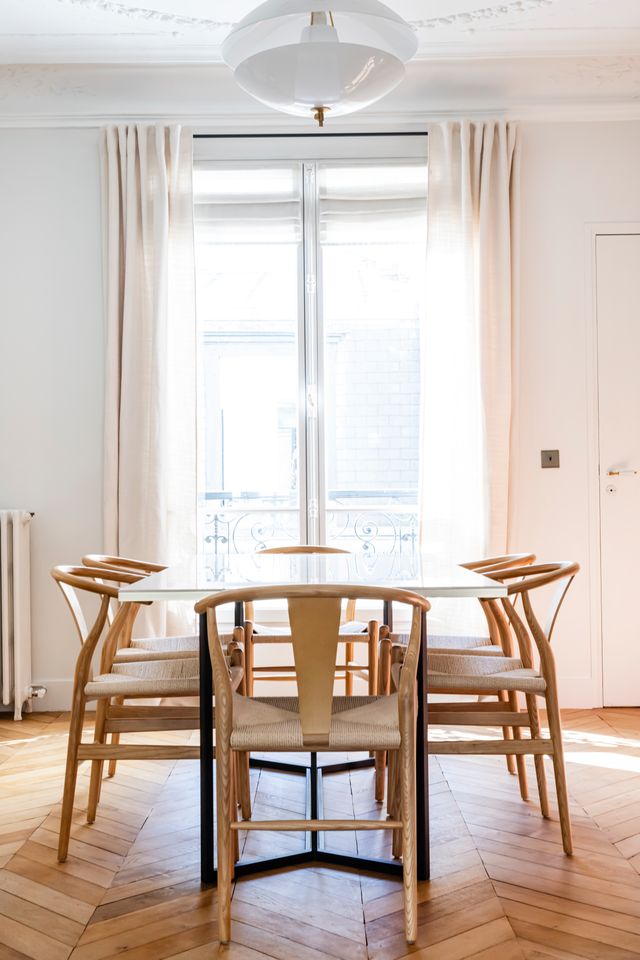
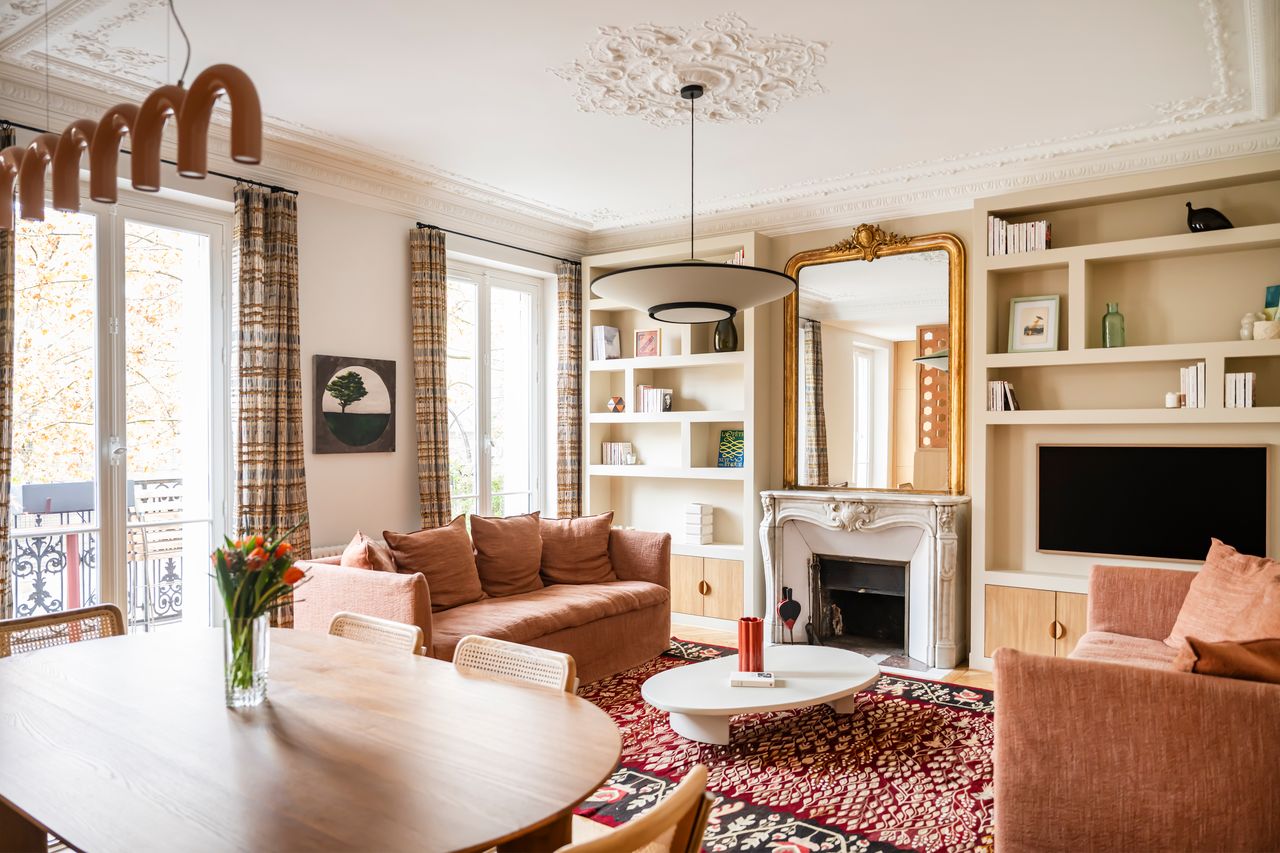
The dining room, on the other side of the glass wall, is bright. Hans Wegner’s CH24 chairs, made of natural oak and braided paper cord, surround a table with a glass top on a black metal base. An opalescent globe pendant light hangs from the ceiling, which features preserved moldings.
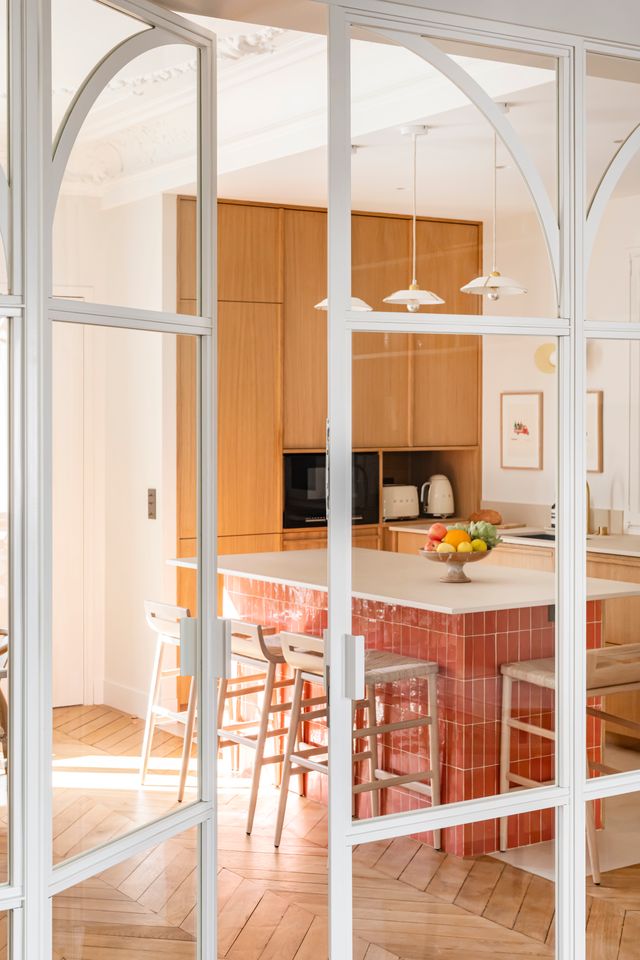
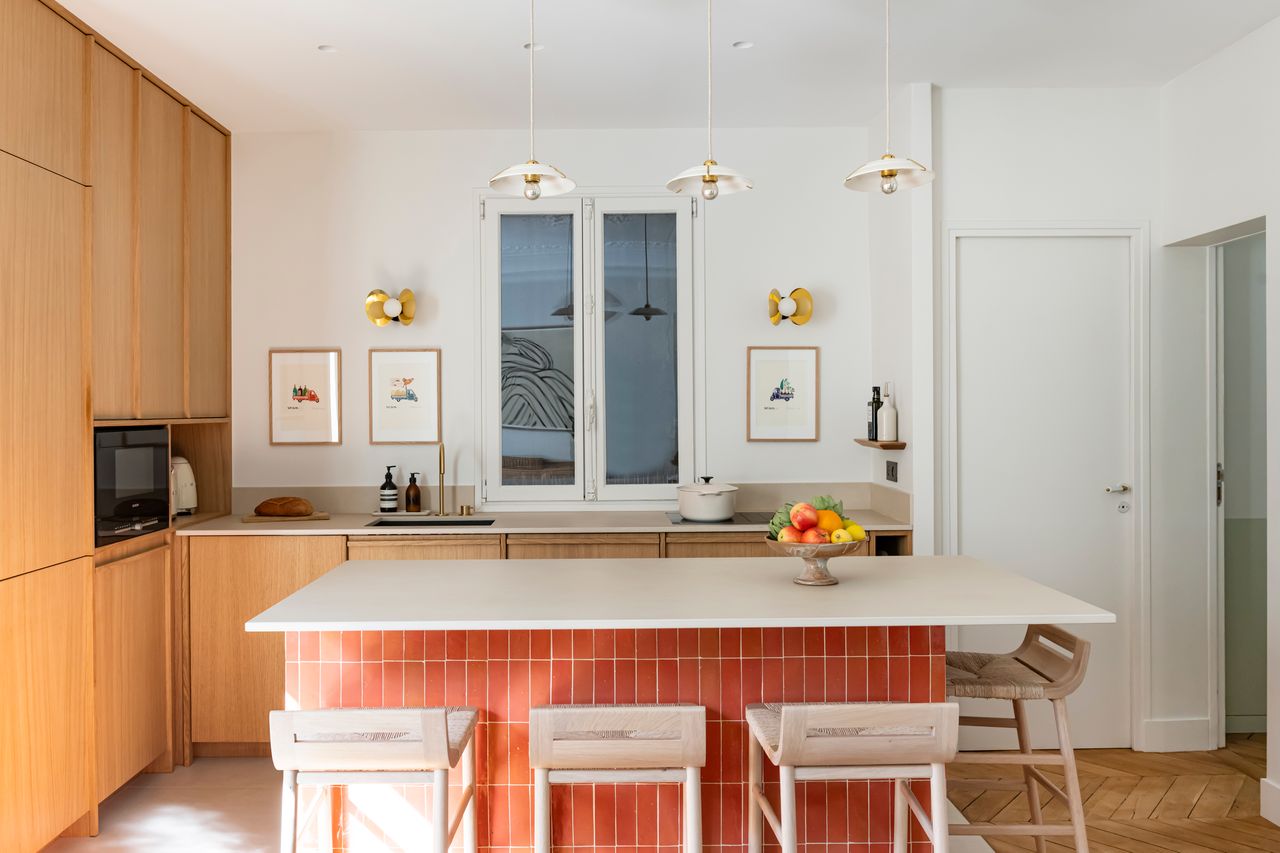
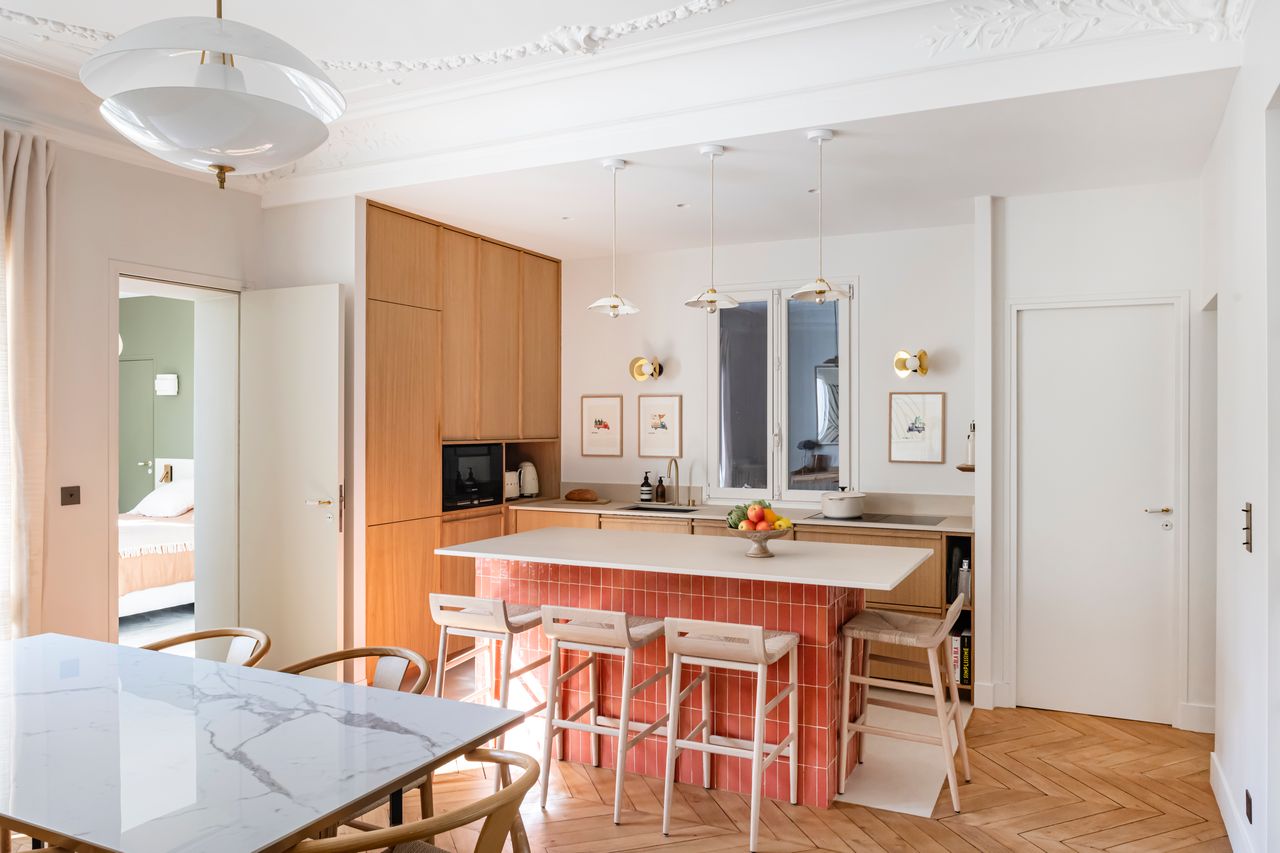
You enter the kitchen through a second glass partition, which also features arches. The central island is covered in brick-red rectangular tiles laid in an Italian-style pattern. It's an almost unexpected choice in this Haussmann-style apartment. This bold color choice stands out in an apartment where the overall color palette remains neutral. It creates a focal point, a signature element, something that leaves a lasting impression on visitors.
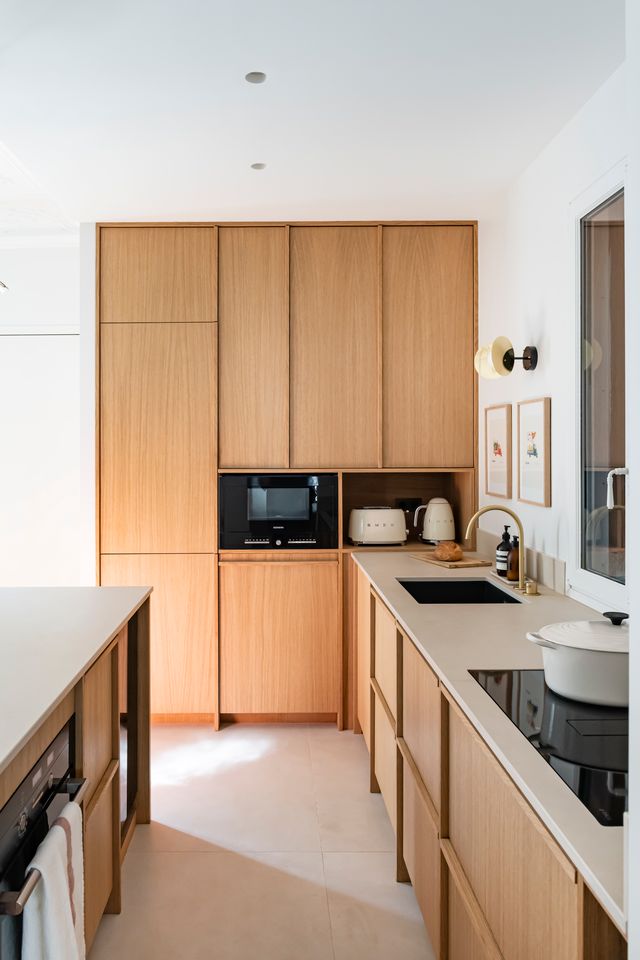
The cabinet fronts are made of natural oak. The range hood is integrated into a tall wooden unit that reaches the ceiling. Its countertop is a subtle stone gray that tempers the energy of the red. A trio of pendant lights with white shades and brass bases hangs above the island.
Gold wall sconces flank the window, framing three small picture frames. This blend of vibrant color and natural materials is one of the project’s key design choices. And while the kitchen cabinets are from IKEA, the cabinet fronts were custom-made. This choice allows the project to stay within a reasonable budget without it being obvious.
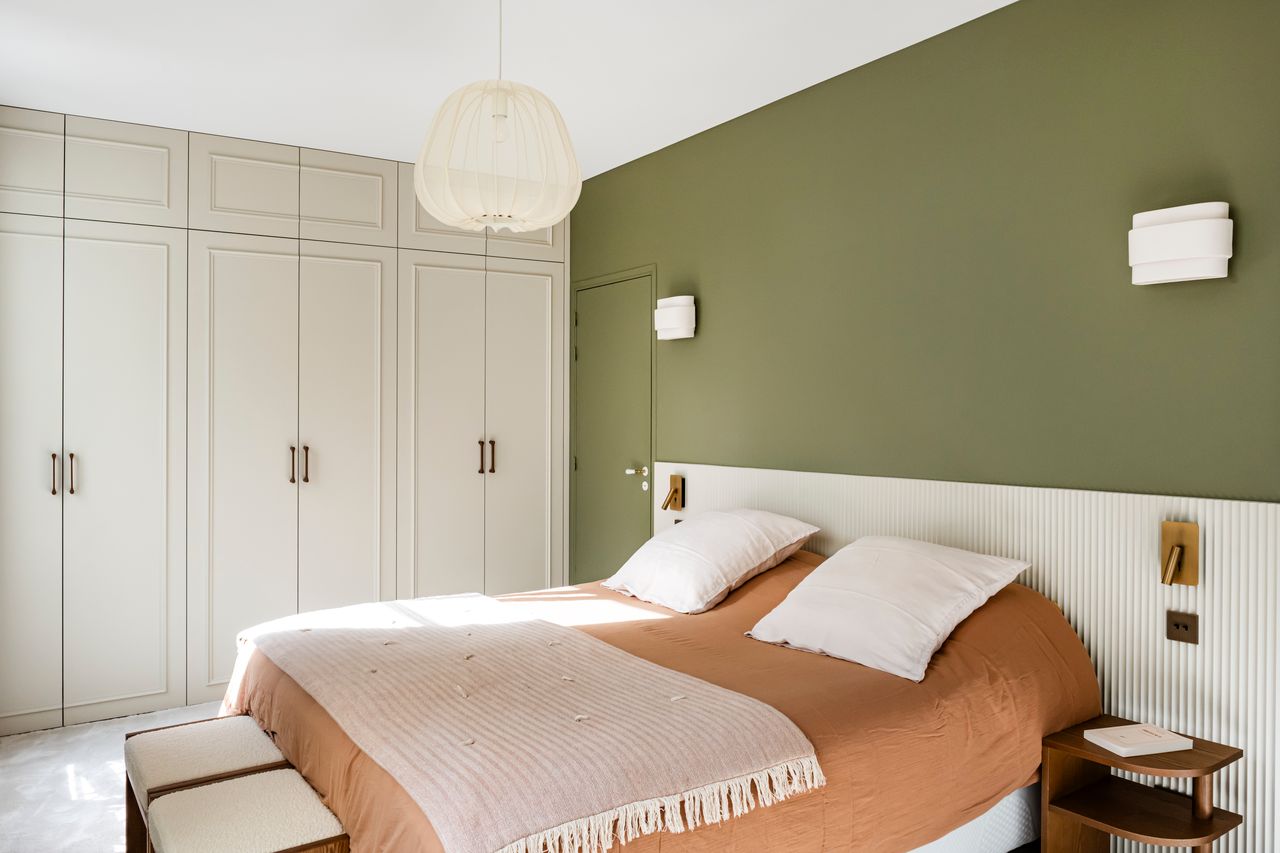
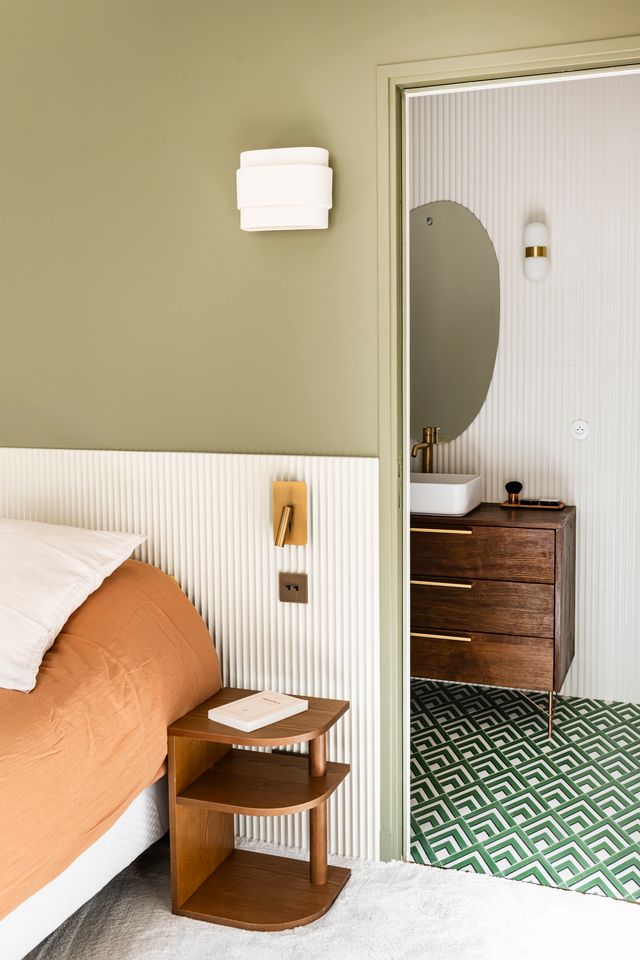
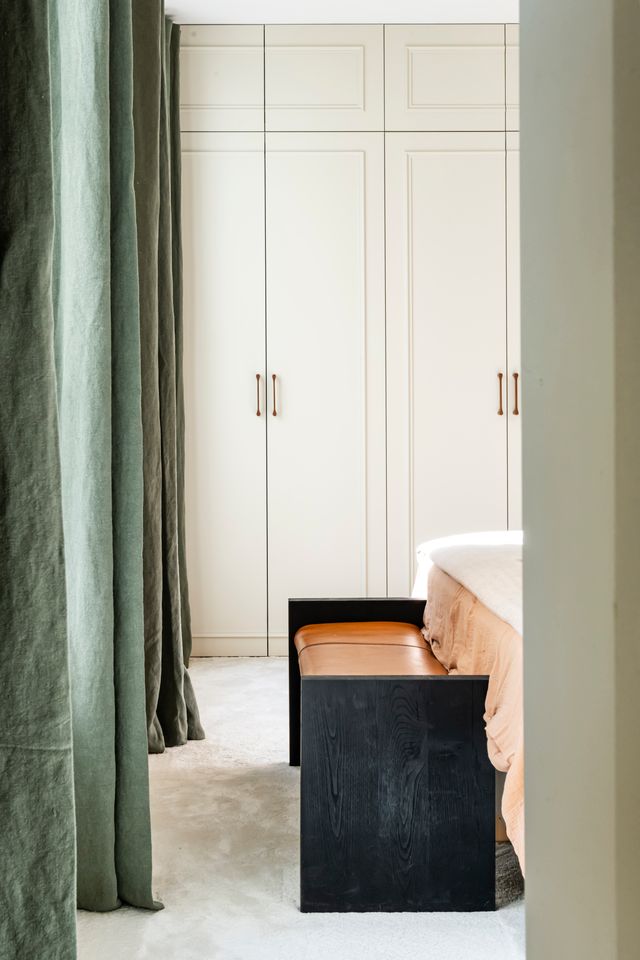
In the master bedroom, a wall painted sage green covers the entire upper section behind the bed. The headboard is made of Orac panels with vertical grooves, creating a texture reminiscent of wood paneling but with a modern twist. The terracotta bedding and the white plaster wall sconces above the nightstands pair beautifully with the light-colored hardwood floors in the hallway.
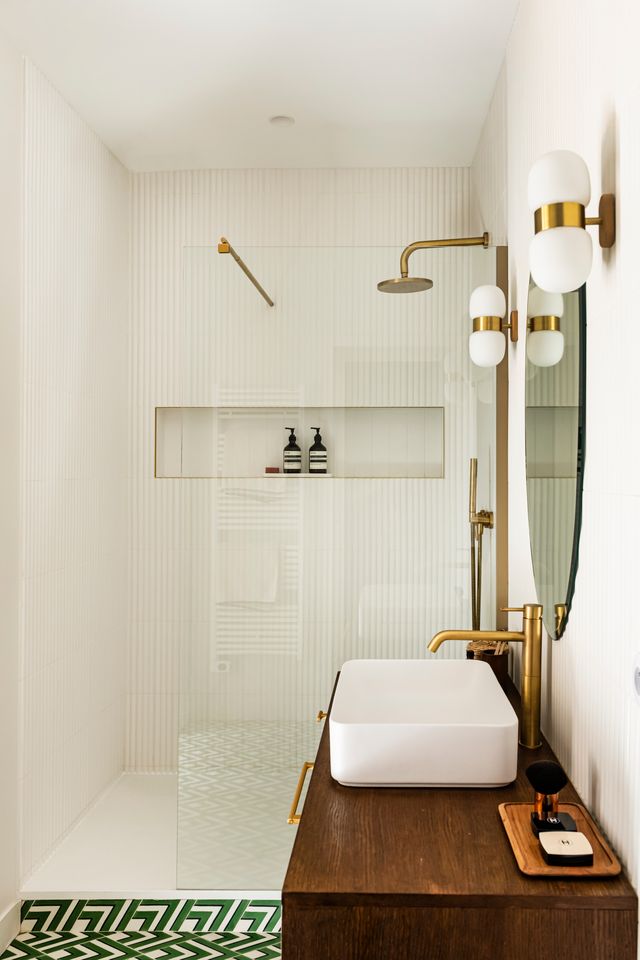
Its adjoining bathroom is all about contrast. The dark green and white geometric-patterned cement floor tiles contrast with the dark walnut vanity, the oval mirror, and the brushed brass faucets and fixtures. Its walk-in shower, lined with white striped tiles, is simple and practical.
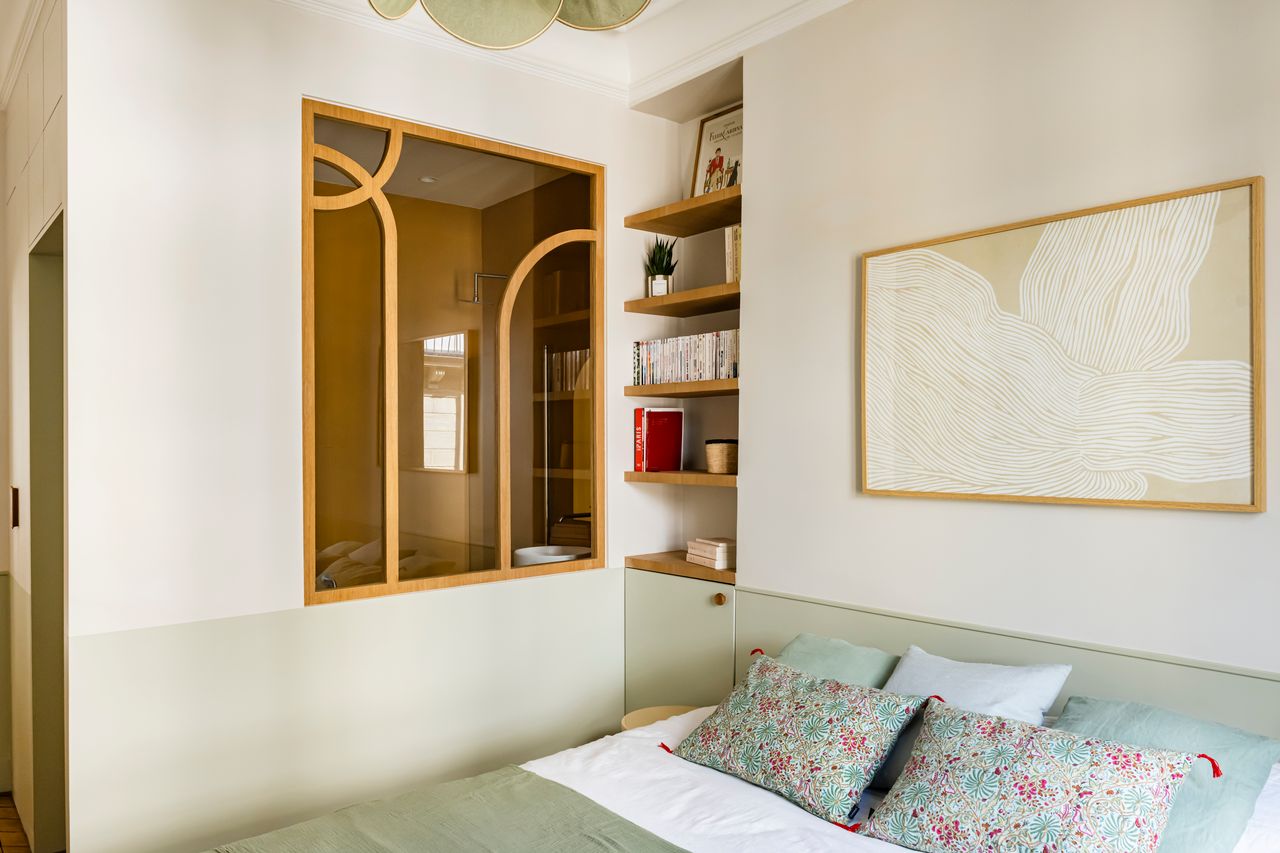
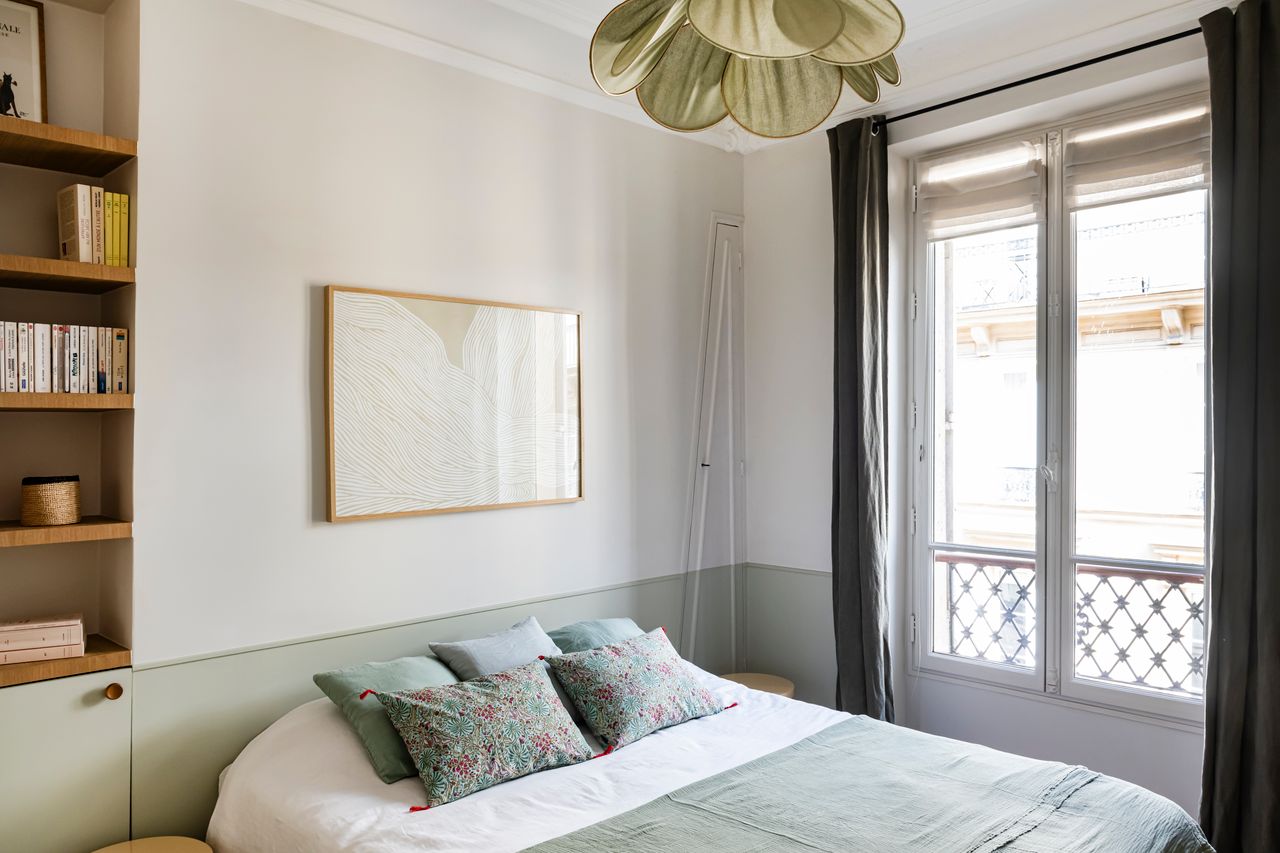
The future children’s room has a personality all its own. A second glass partition, this time with a honey-stained wood frame and arches, separates the bedroom from its bathroom. The celadon-green half-wall, the bed with a headboard integrated into a low cabinet, and the framed shelves in the wall niche were all designed with the idea that the room might have different occupants in the future.
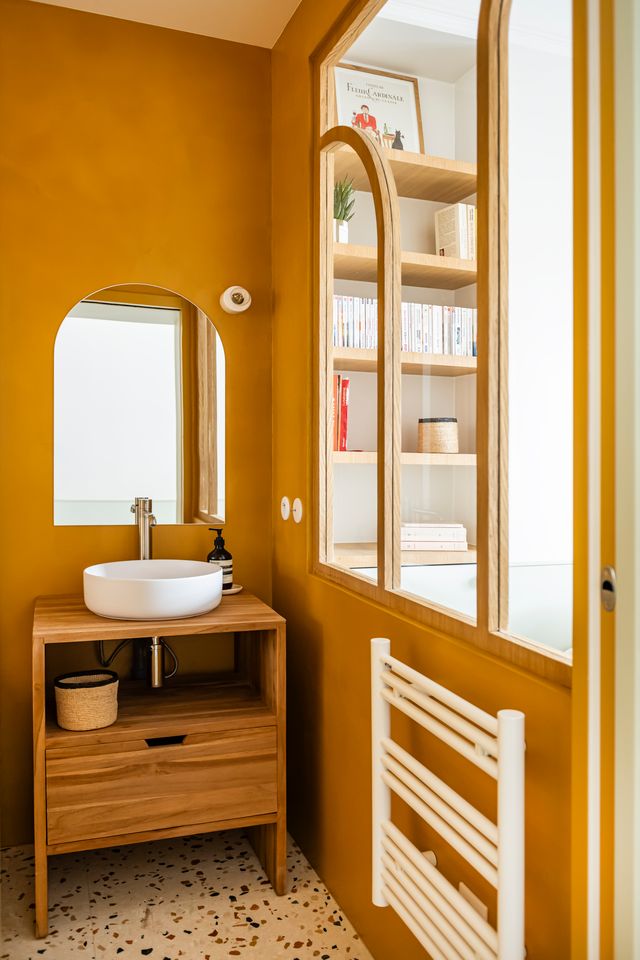
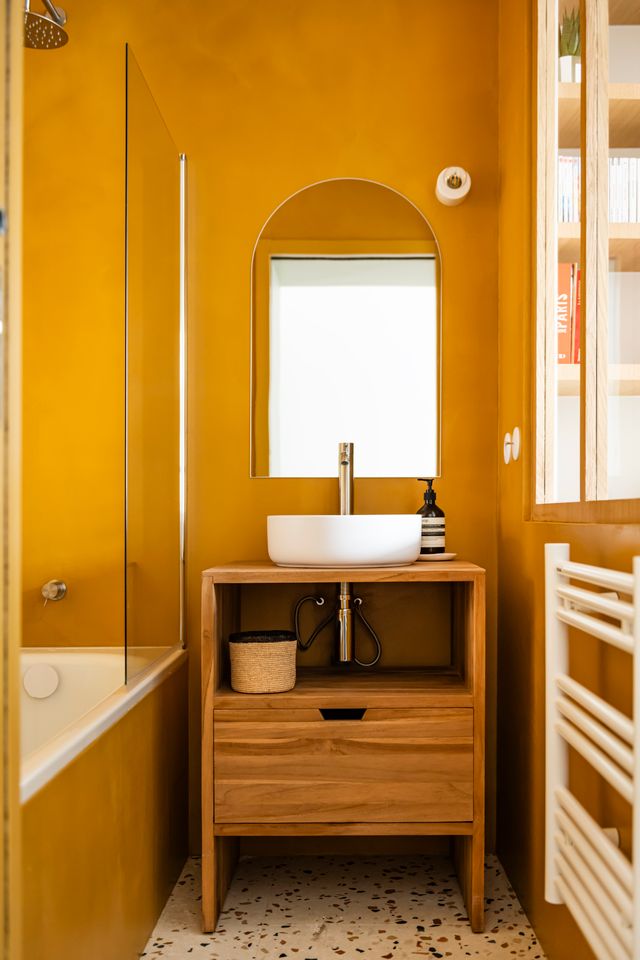
The adjoining bathroom is entirely covered in mustard-colored polished concrete, from floor to ceiling. This color makes the space unique. d'Ussel & Decoster even brought in a plasterer to recreate the missing moldings, so that the room looks as though it has always been there.
The hallway is often the neglected stepchild of renovations. People put up a coat rack, paint the walls white, and move on to the next thing. But not here, where the agency’s work has created a true decompression chamber.
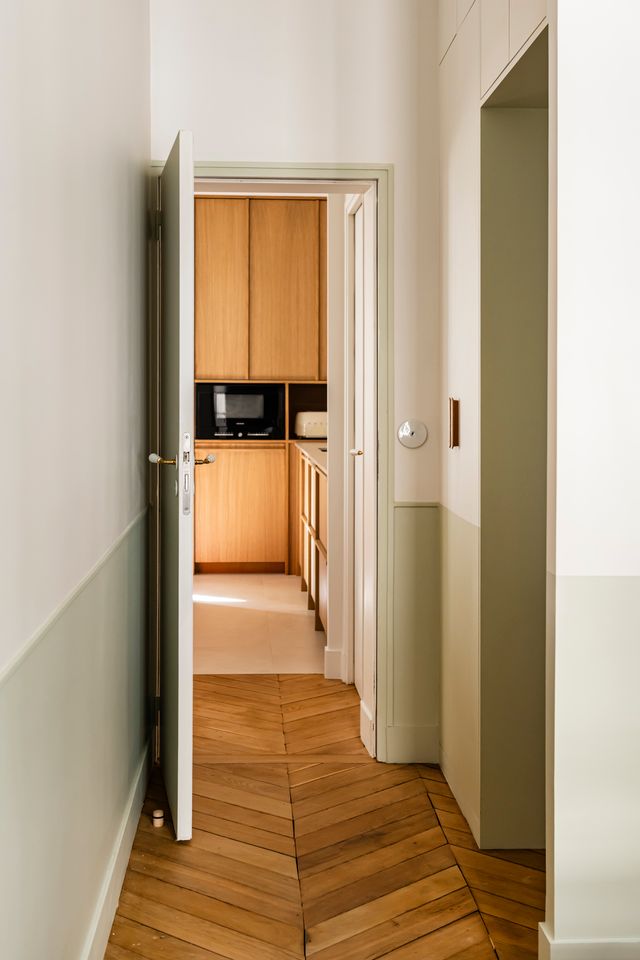
The first visible change is the treatment of the walls. A solid band of celadon green runs along the lower half, separated from the creamy white above by a clean line. This two-tone choice instantly transforms the perception of space. The hallway appears less long and less narrow.
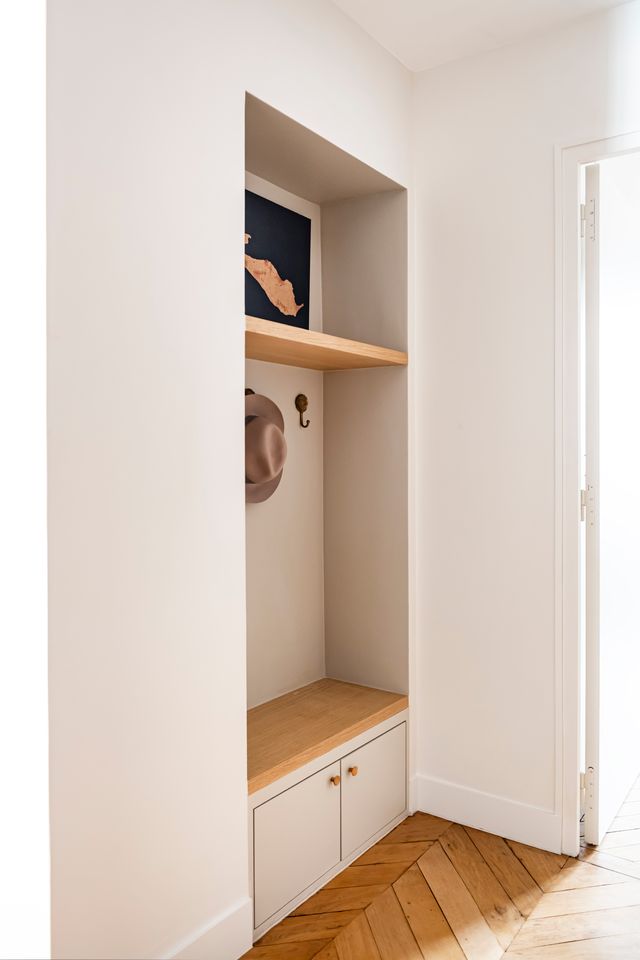
In the entryway niche, the design firm created a small custom piece of furniture. It features an oak bench with closed storage below, an open shelf above, and a brass hook for hanging a hat or jacket. It is a compact, discreet, and functional piece of furniture.
The herringbone parquet floor extends from the living room to the end of the hallway, providing valuable visual continuity in this apartment, which consists of areas with very different atmospheres. It serves as a unifying element between the white of the living room and the red of the kitchen.
France has a unique vision with the renovation of Haussmann-style apartments. These generous spaces, moldings, and herringbone parquet floors form a strong architectural framework, within which every decorative choice is measured against 150 years of history. It is unthinkable to completely erase this history, as if it belonged to a bygone era.
D’Ussel & Decoster rejects this approach but modernizes the space through its design. Here we find the red of the kitchen island, the mustard yellow of the bathroom, and the deep green of the bedroom. The firm blends pieces from Fritz Hansen, Red Edition, Bolia, and Atelier Areti. It is this sense of mixing, this lack of fear of contrast, that defines a certain French style, in the best sense of the term. Photo: ©Julien Pépy

A living room that bridges the past and the present
The first room you notice is the living room. A custom-built bookshelf in natural oak runs the entire length of one wall. It incorporates a TV area, an upholstered bench, and irregular niches scattered here and there.
Opposite this bookcase, Bolia’s Cosima sofa takes center stage. This modular model with a very low seat features a pale linen hue that complements the golden hardwood floors. The coffee table, with a glass top and brass frame, has a light, airy appearance.
And from the ceiling, suspended between the period moldings, a light fixture composed of large white fabric panels resembles a giant Calder mobile. The carved white marble fireplace, with its generously proportioned gilded mirror, speaks to the era in which the building was constructed.
The glass partition, an architectural and practical feature
Between the living room and the dining room, the architects designed a glass partition with an arched pattern. The white mullions, clear glass panes, and half-moon curves evoke 19th-century botanical greenhouses, a recurring motif in the French architectural imagination. But behind the aesthetics lies a very practical reason: to separate spaces according to the occasion, whether it’s entertaining friends or keeping the family dog, an energetic Beagle, contained. Beauty combined with functionality perfectly sums up the approach of d’Ussel & Decoster.
The dining room, on the other side of the glass wall, is bright. Hans Wegner’s CH24 chairs, made of natural oak and braided paper cord, surround a table with a glass top on a black metal base. An opalescent globe pendant light hangs from the ceiling, which features preserved moldings.
The kitchen behind a second glass partition
You enter the kitchen through a second glass partition, which also features arches. The central island is covered in brick-red rectangular tiles laid in an Italian-style pattern. It's an almost unexpected choice in this Haussmann-style apartment. This bold color choice stands out in an apartment where the overall color palette remains neutral. It creates a focal point, a signature element, something that leaves a lasting impression on visitors.
The cabinet fronts are made of natural oak. The range hood is integrated into a tall wooden unit that reaches the ceiling. Its countertop is a subtle stone gray that tempers the energy of the red. A trio of pendant lights with white shades and brass bases hangs above the island.
Gold wall sconces flank the window, framing three small picture frames. This blend of vibrant color and natural materials is one of the project’s key design choices. And while the kitchen cabinets are from IKEA, the cabinet fronts were custom-made. This choice allows the project to stay within a reasonable budget without it being obvious.
The bedrooms, a balance of color and intimacy
In the master bedroom, a wall painted sage green covers the entire upper section behind the bed. The headboard is made of Orac panels with vertical grooves, creating a texture reminiscent of wood paneling but with a modern twist. The terracotta bedding and the white plaster wall sconces above the nightstands pair beautifully with the light-colored hardwood floors in the hallway.
Its adjoining bathroom is all about contrast. The dark green and white geometric-patterned cement floor tiles contrast with the dark walnut vanity, the oval mirror, and the brushed brass faucets and fixtures. Its walk-in shower, lined with white striped tiles, is simple and practical.
The future children’s room has a personality all its own. A second glass partition, this time with a honey-stained wood frame and arches, separates the bedroom from its bathroom. The celadon-green half-wall, the bed with a headboard integrated into a low cabinet, and the framed shelves in the wall niche were all designed with the idea that the room might have different occupants in the future.
The adjoining bathroom is entirely covered in mustard-colored polished concrete, from floor to ceiling. This color makes the space unique. d'Ussel & Decoster even brought in a plasterer to recreate the missing moldings, so that the room looks as though it has always been there.
The hallway and entryway, designed as a buffer zone
The hallway is often the neglected stepchild of renovations. People put up a coat rack, paint the walls white, and move on to the next thing. But not here, where the agency’s work has created a true decompression chamber.
The first visible change is the treatment of the walls. A solid band of celadon green runs along the lower half, separated from the creamy white above by a clean line. This two-tone choice instantly transforms the perception of space. The hallway appears less long and less narrow.
In the entryway niche, the design firm created a small custom piece of furniture. It features an oak bench with closed storage below, an open shelf above, and a brass hook for hanging a hat or jacket. It is a compact, discreet, and functional piece of furniture.
The herringbone parquet floor extends from the living room to the end of the hallway, providing valuable visual continuity in this apartment, which consists of areas with very different atmospheres. It serves as a unifying element between the white of the living room and the red of the kitchen.
What this project says about French interior design
France has a unique vision with the renovation of Haussmann-style apartments. These generous spaces, moldings, and herringbone parquet floors form a strong architectural framework, within which every decorative choice is measured against 150 years of history. It is unthinkable to completely erase this history, as if it belonged to a bygone era.
D’Ussel & Decoster rejects this approach but modernizes the space through its design. Here we find the red of the kitchen island, the mustard yellow of the bathroom, and the deep green of the bedroom. The firm blends pieces from Fritz Hansen, Red Edition, Bolia, and Atelier Areti. It is this sense of mixing, this lack of fear of contrast, that defines a certain French style, in the best sense of the term. Photo: ©Julien Pépy


Comments