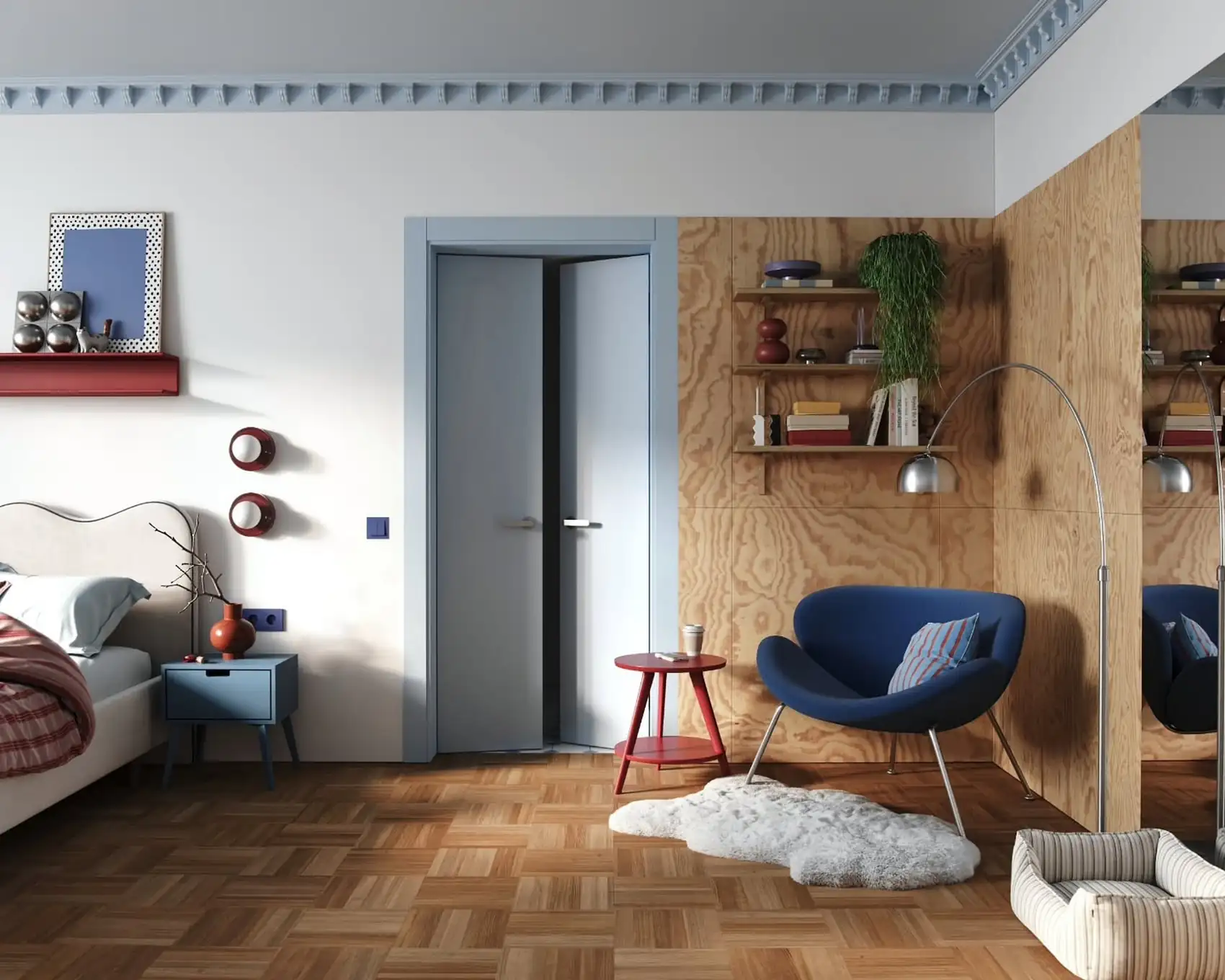
An optimized 38sqm studio transformed by color
Follow Planète Déco on Google — add us to your favourites to keep our decor articles in your news feedAn optimized 38sqm studio, a burgundy-blue-wood color palette. All storage in the entryway, the living area freed up. A lesson in efficiency
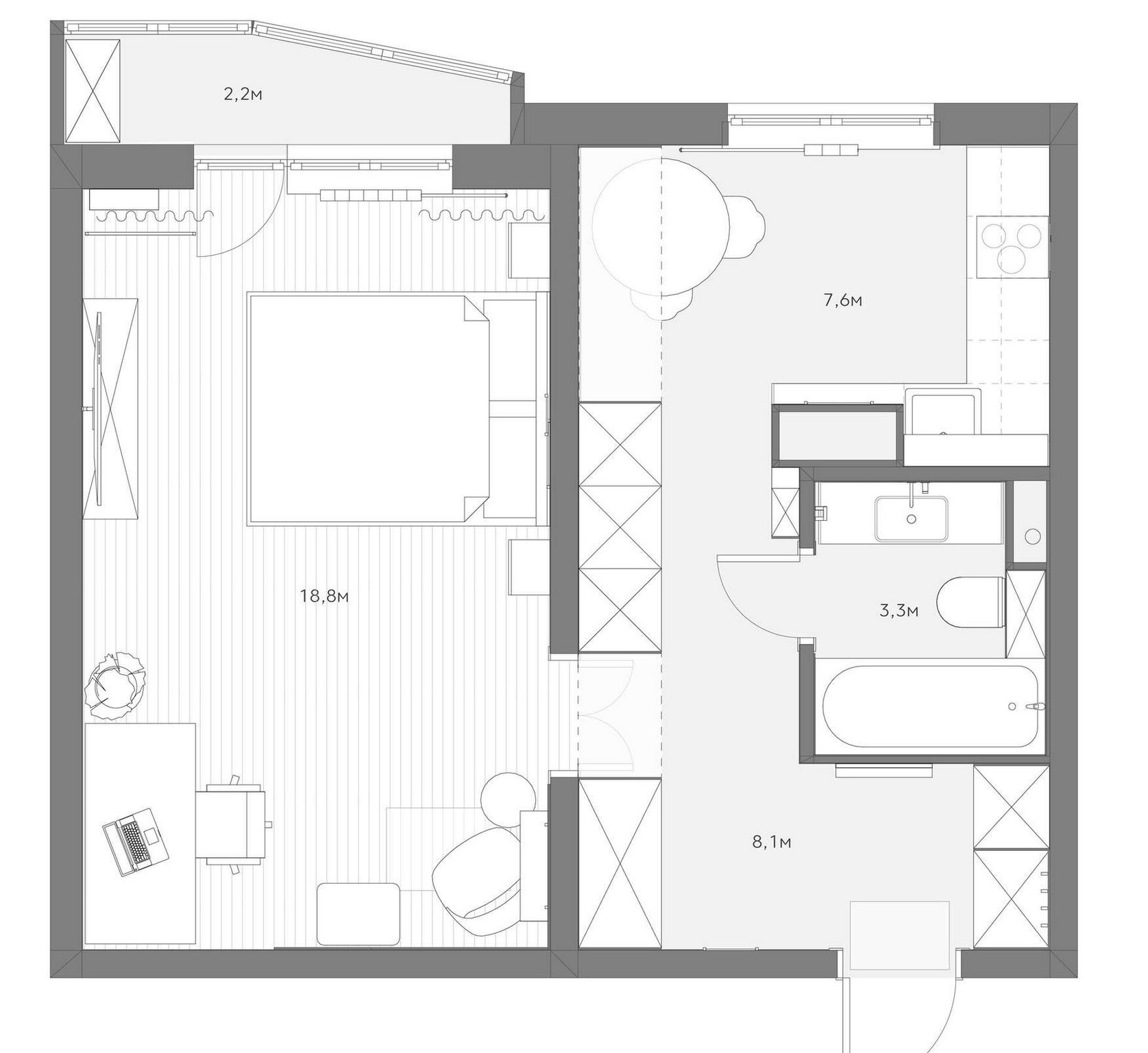
A one-room apartment, one owner, and a dog, these were the starting points for designing this optimized 38sqm studio. Interior designer Nastya Pastarnak faced a simple challenge: to make this small apartment functional. She succeeded in creating an interior that stands out from the ordinary thanks to its use of color.
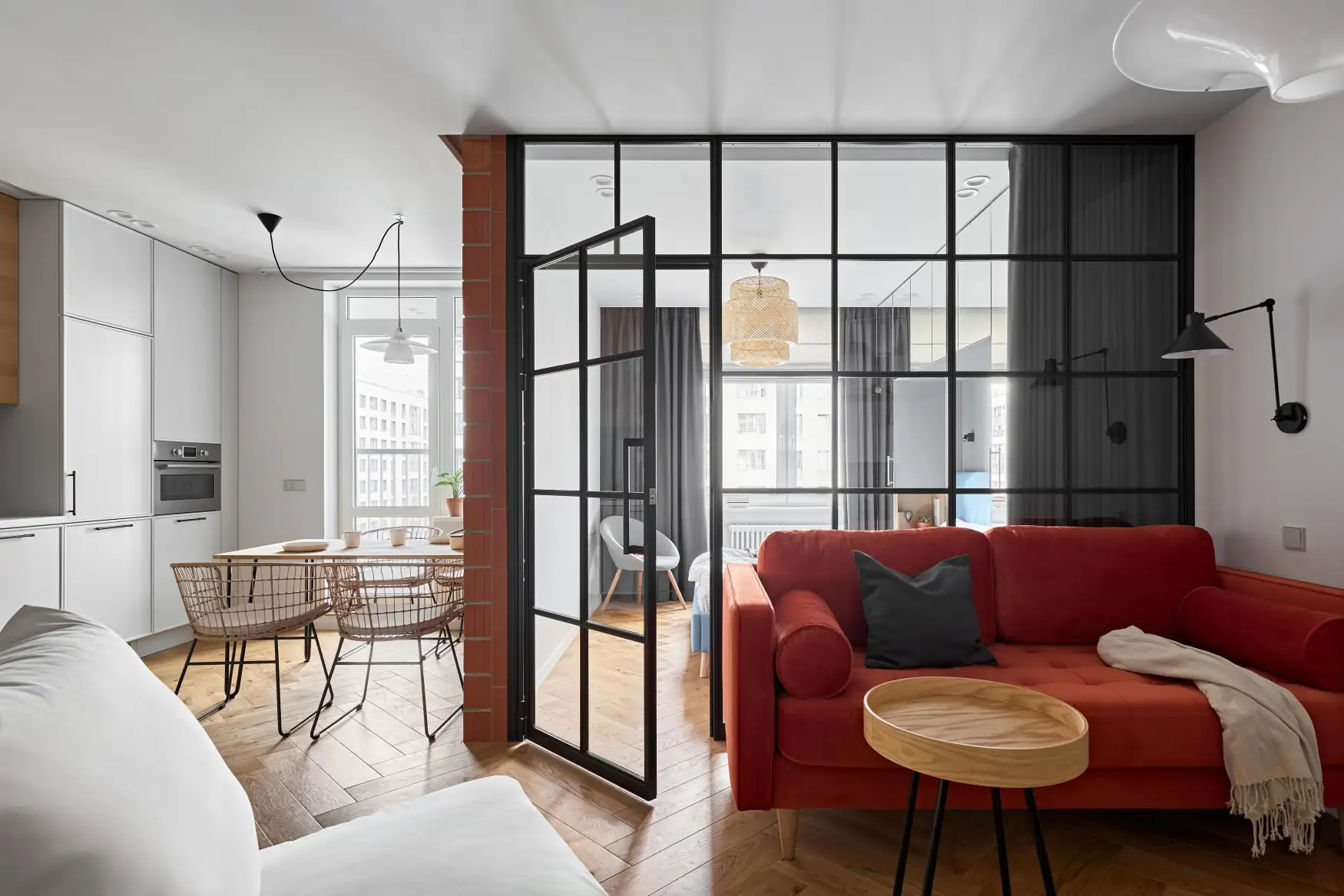
The walls are white, the old hardwood floors have been renovated and preserved, and the finishes are light. This strategic decision allows all the colorful elements to take center stage. Burgundy, blue, and natural wood stand out all the more because nothing competes with them.
This is an approach rarely seen in small spaces. Often, people use multiple accent colors against a neutral background without really coordinating them. Here, the palette is consistent throughout all the rooms, with the same three shades appearing each time in a different form.
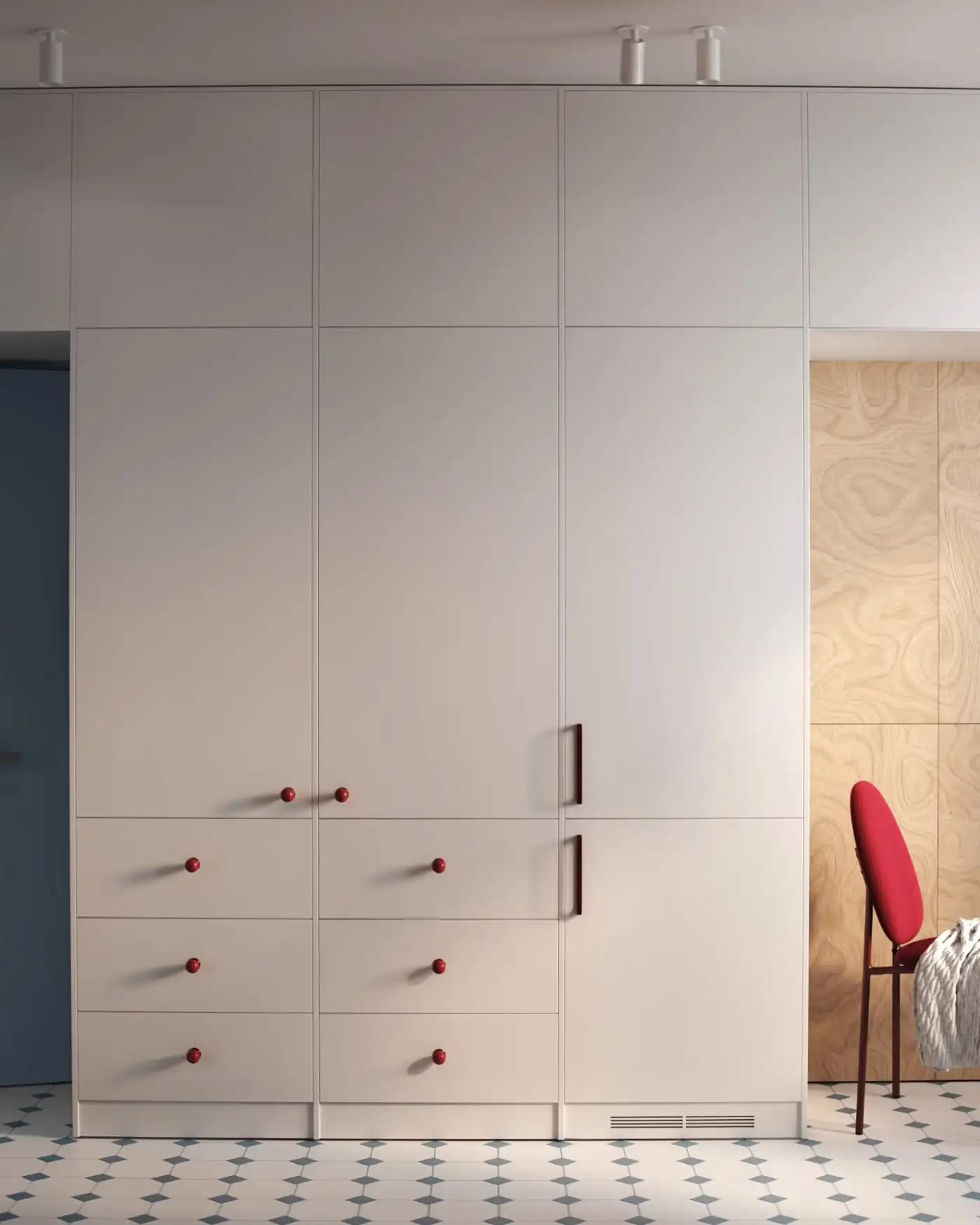
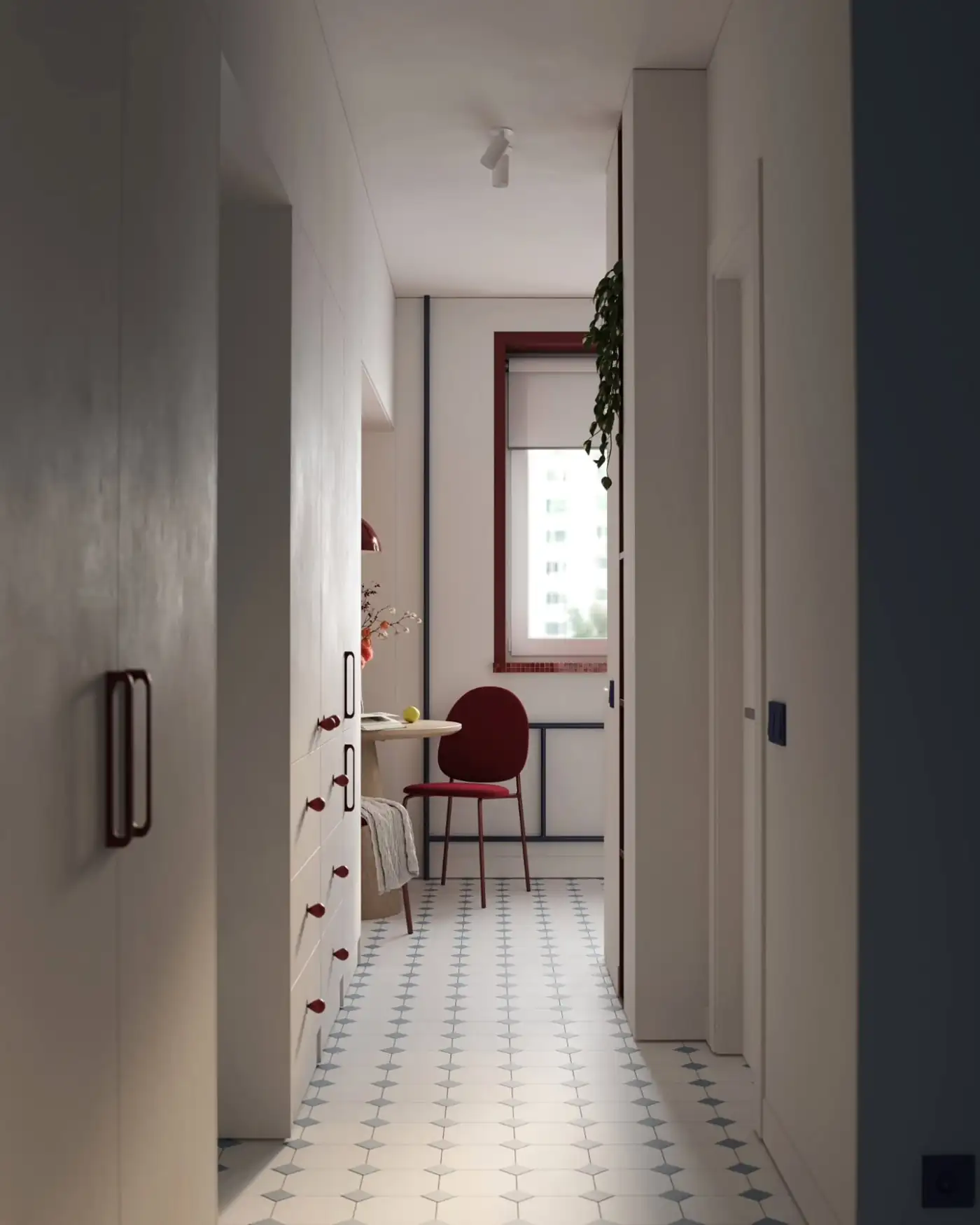
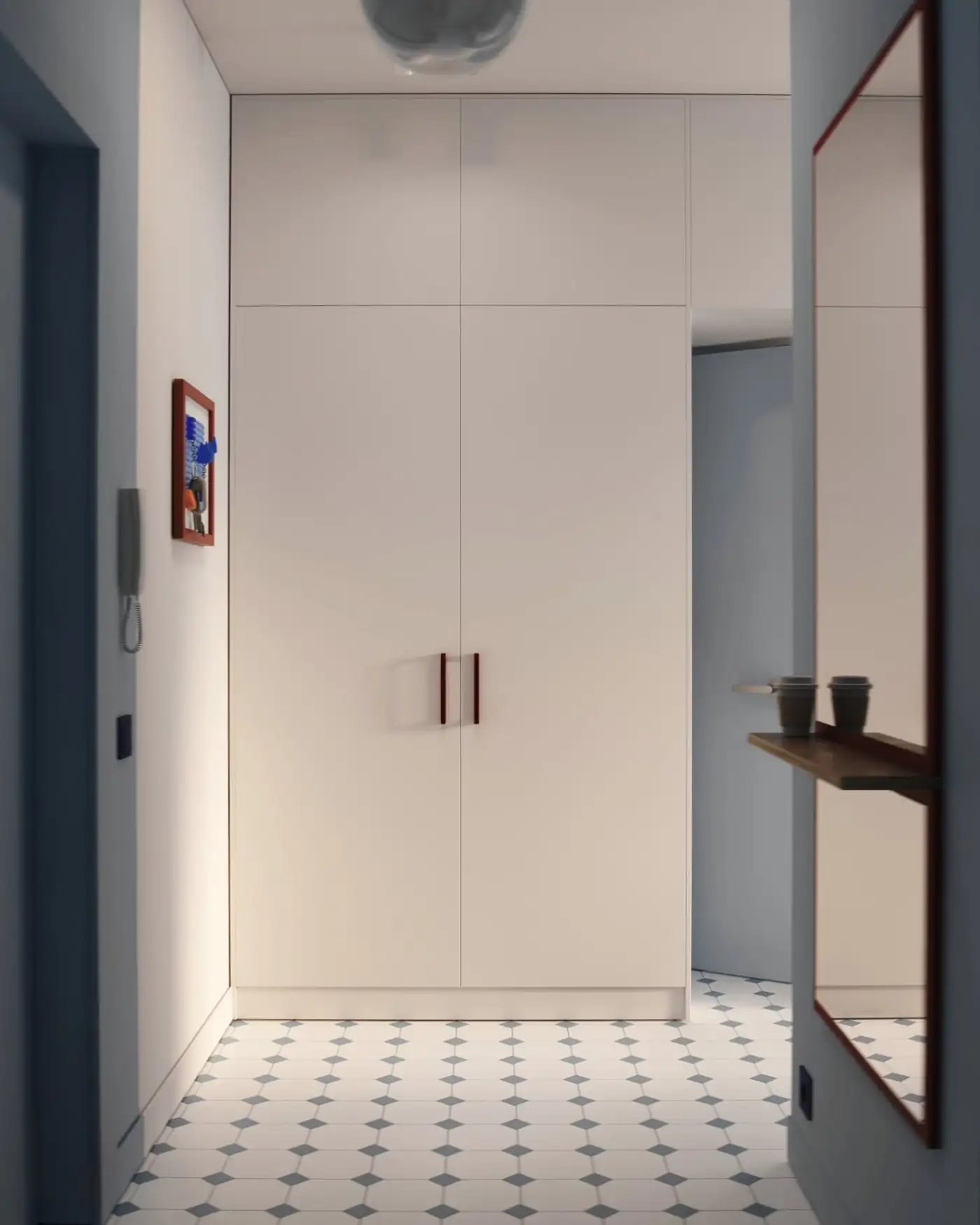
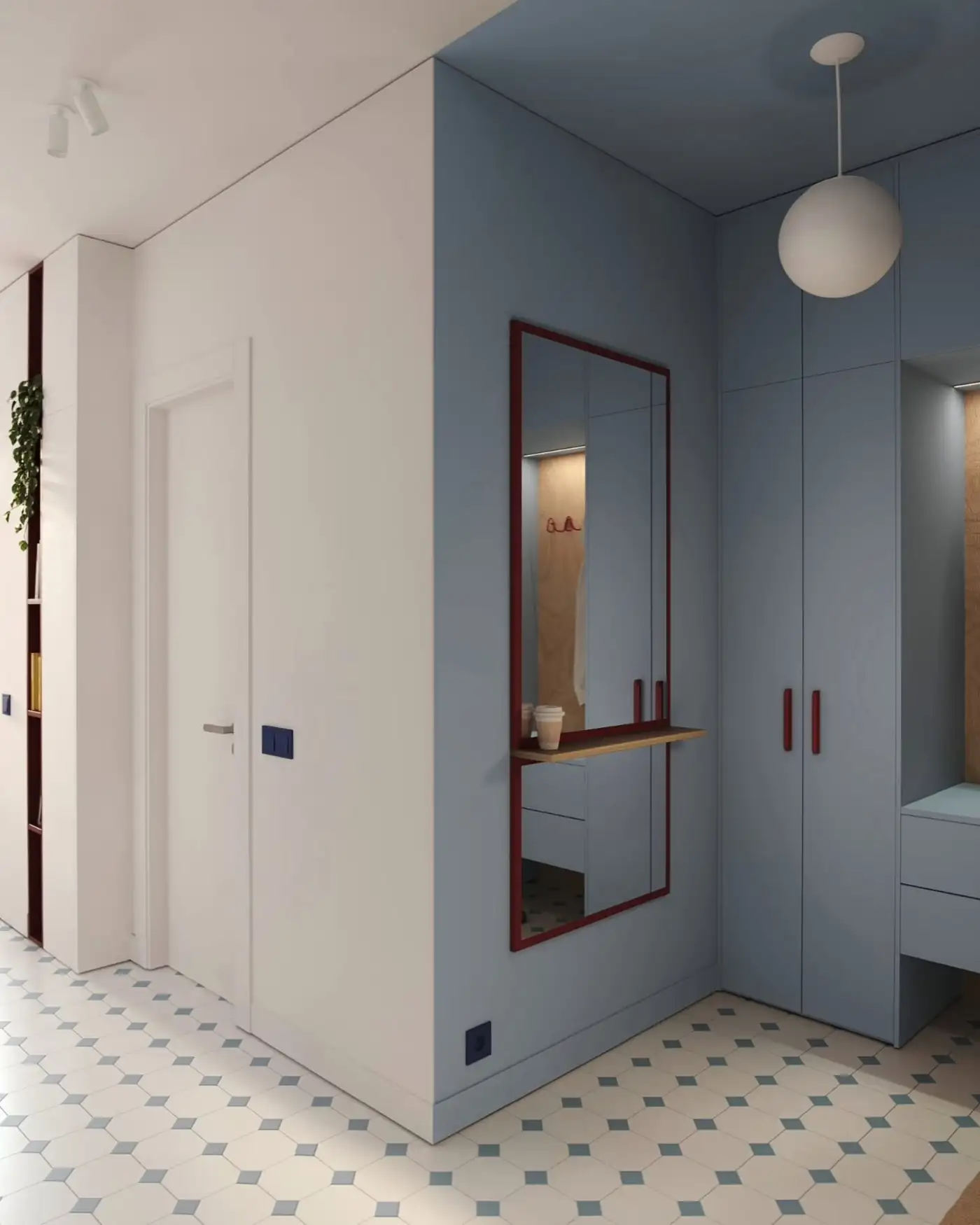
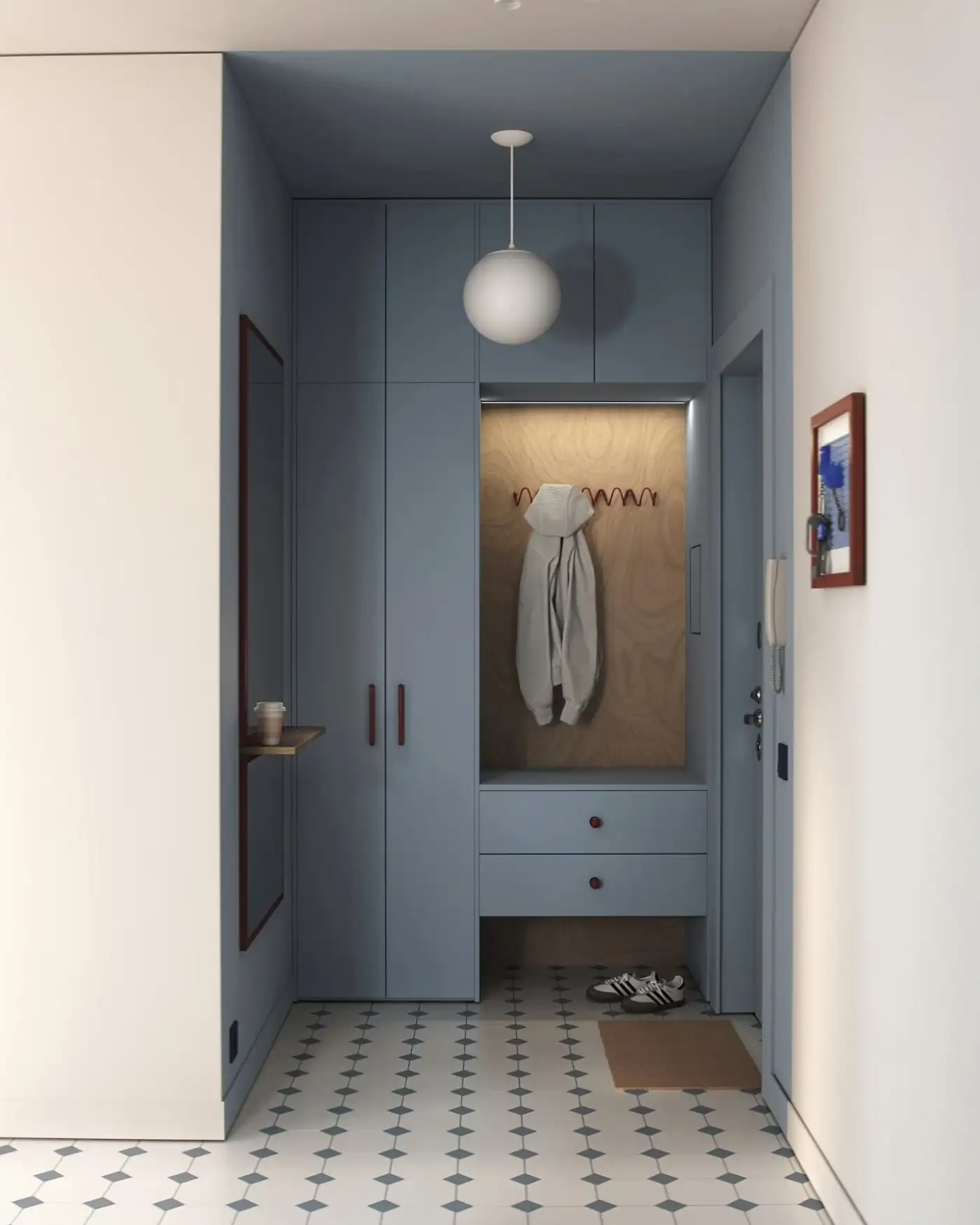
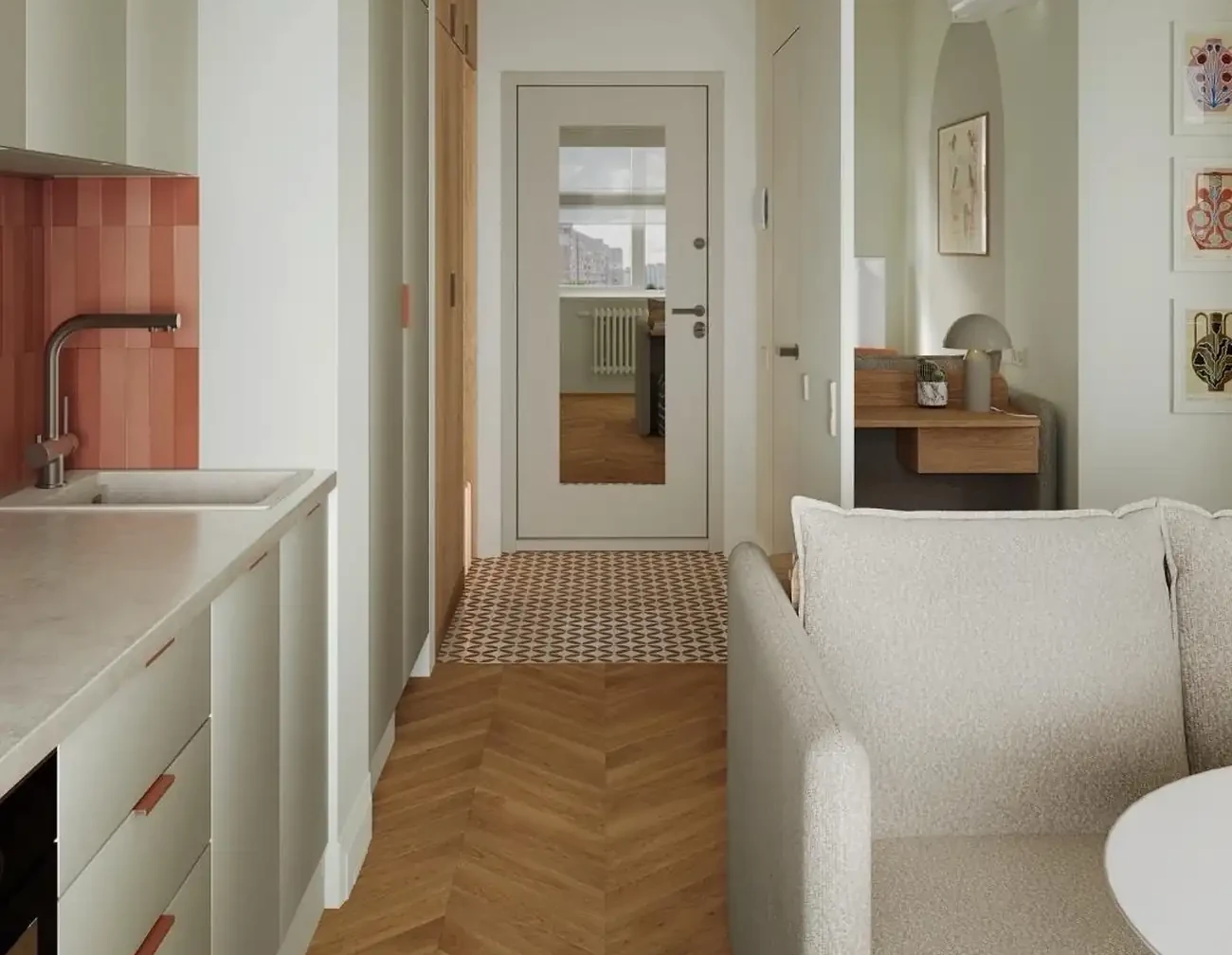
The entryway houses all the apartment’s storage. A block of floor-to-ceiling built-in cabinets runs between the hallway and the kitchen. The smooth, pale blue-gray cabinet fronts unify the space.
The detail that catches the eye is undoubtedly an open niche lined with light wood, illuminated to reveal the grain of the material. A mirror with burgundy trim completes the decor. It introduces the main color right at the entrance, even before you step into the living area.
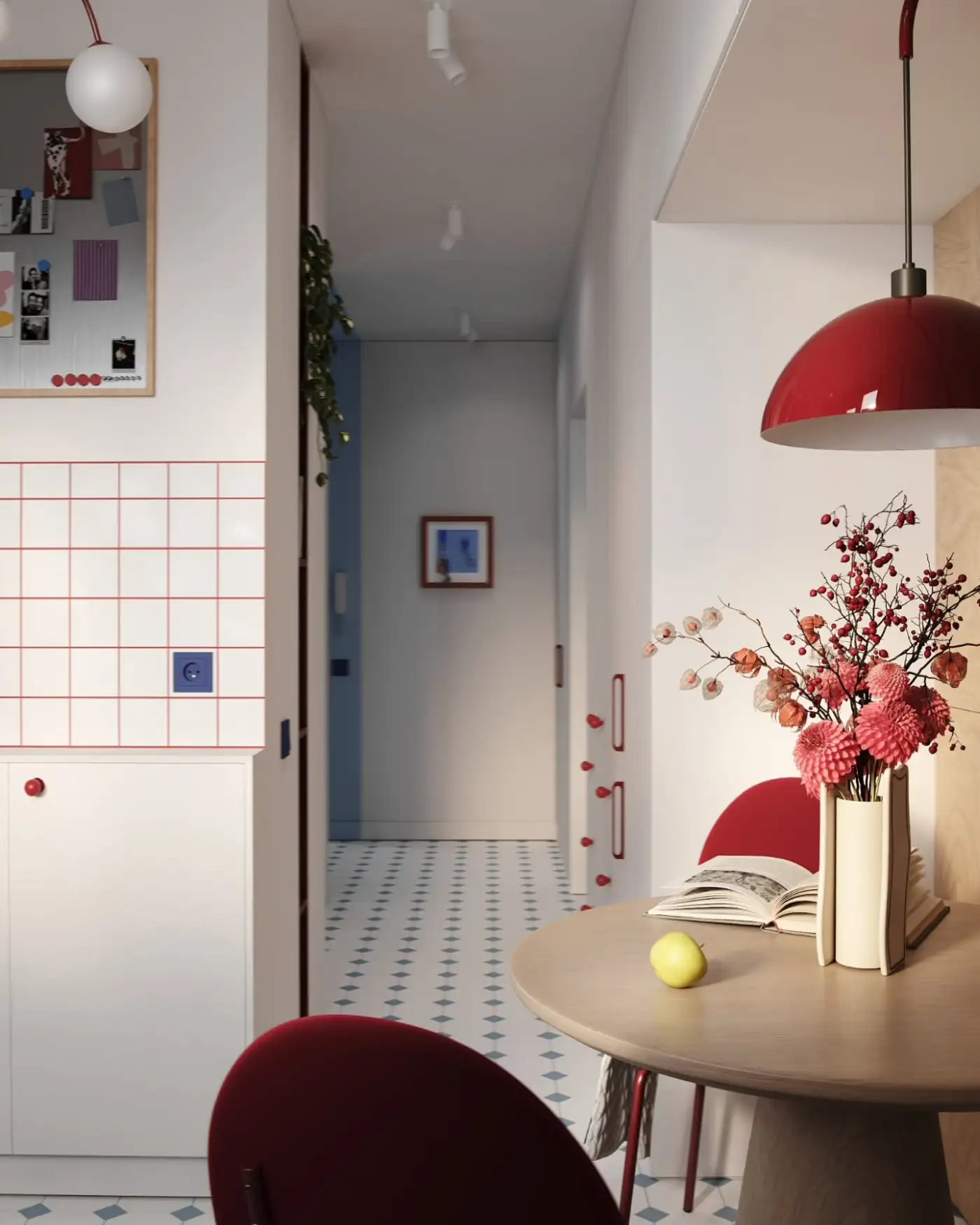
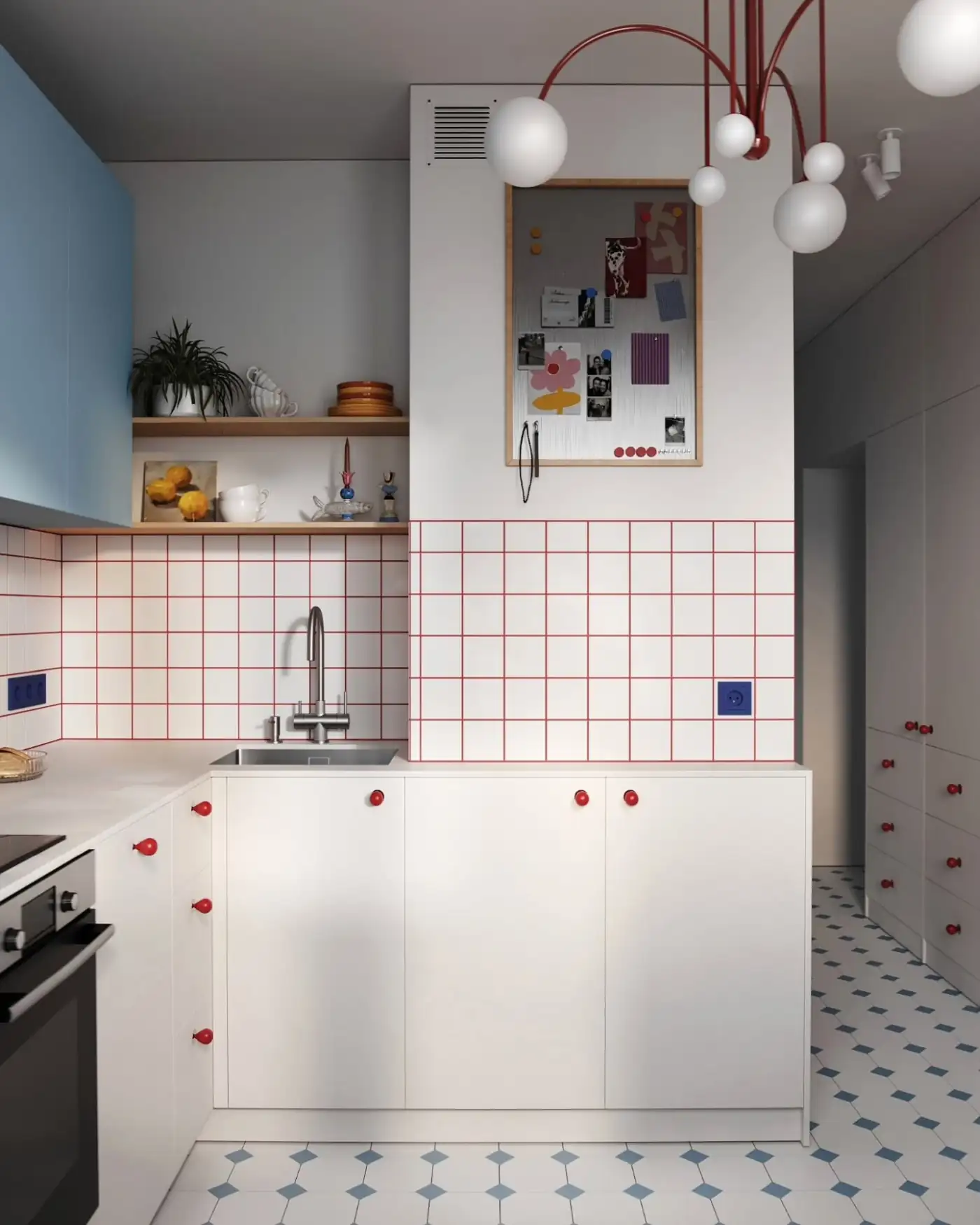
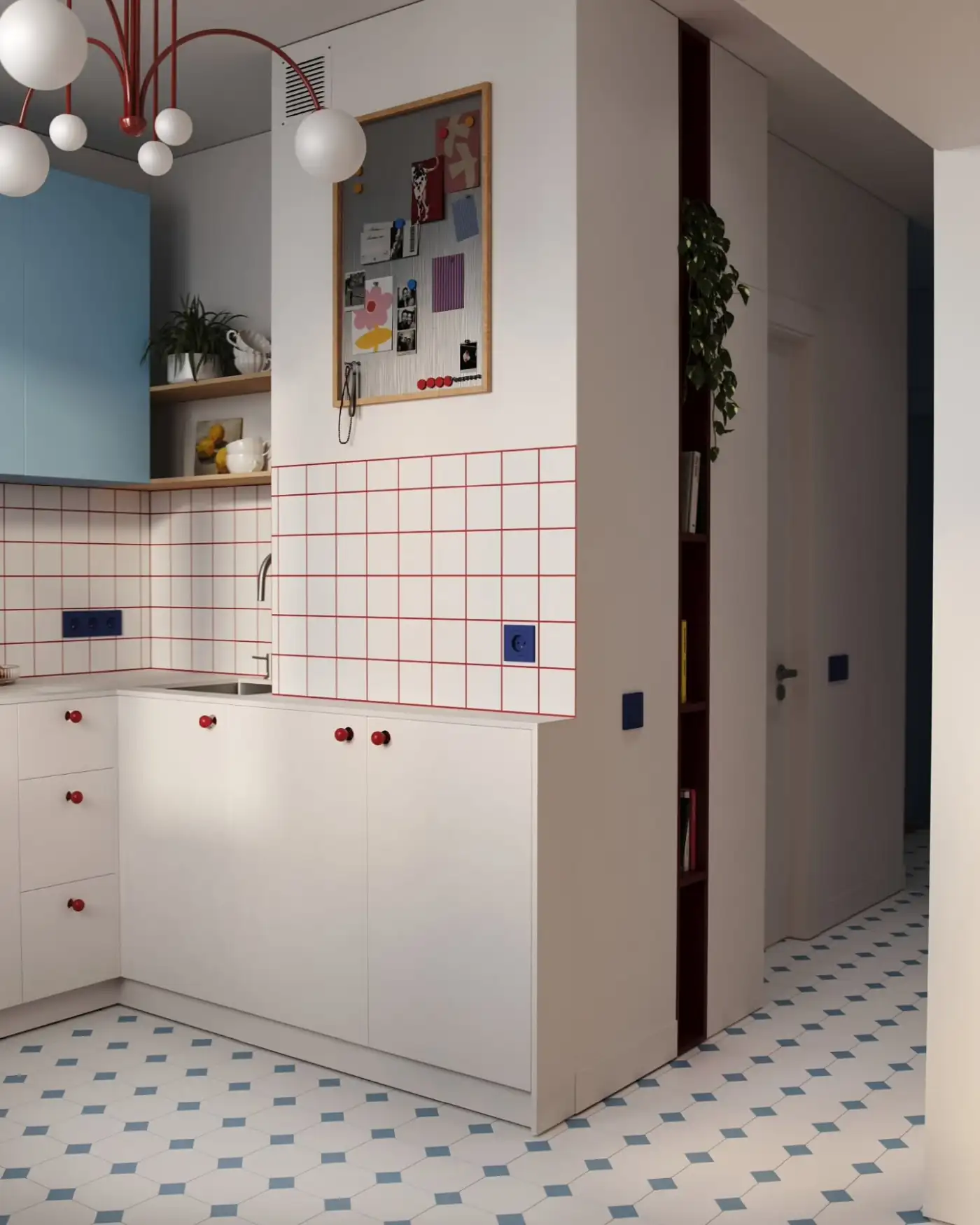
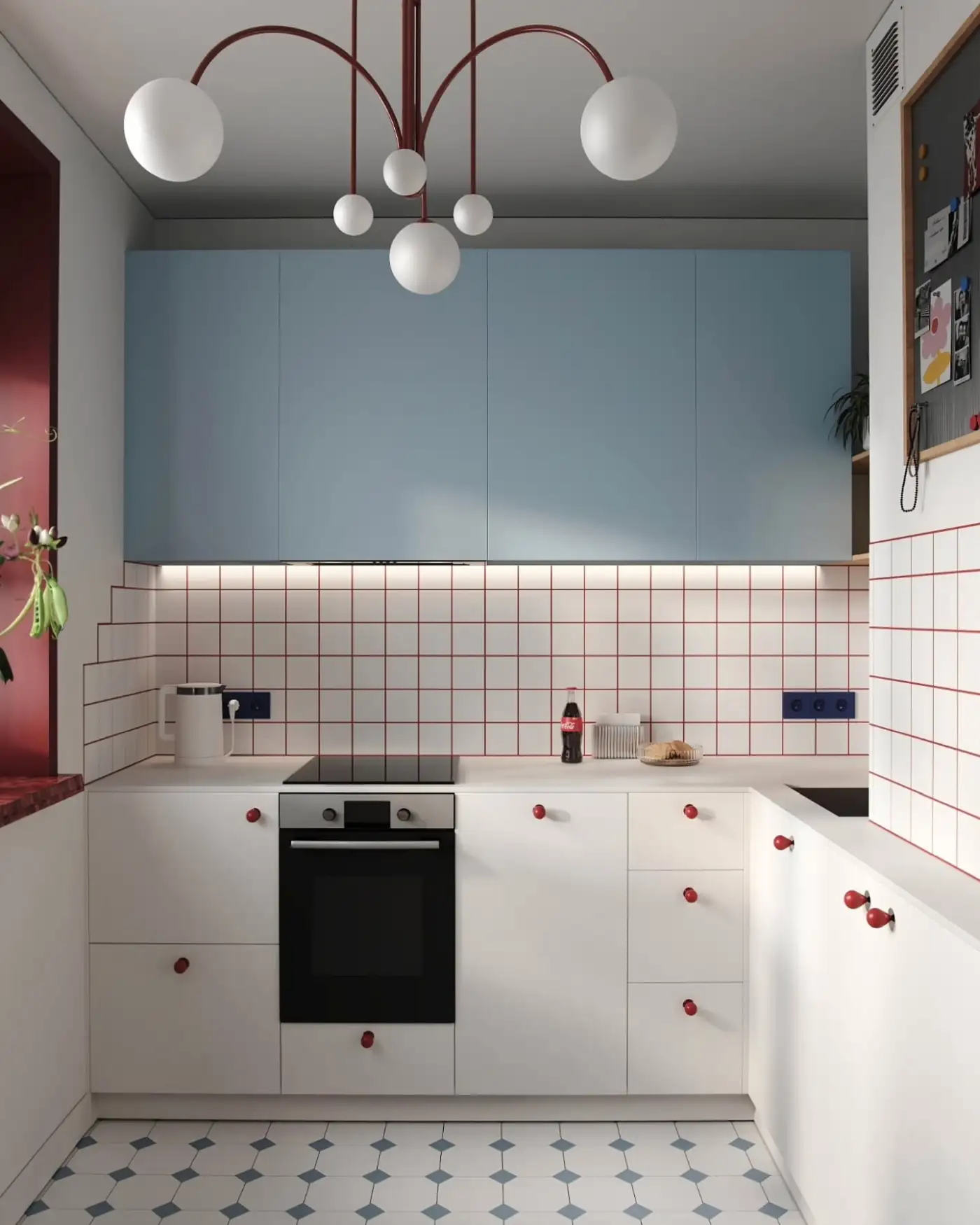
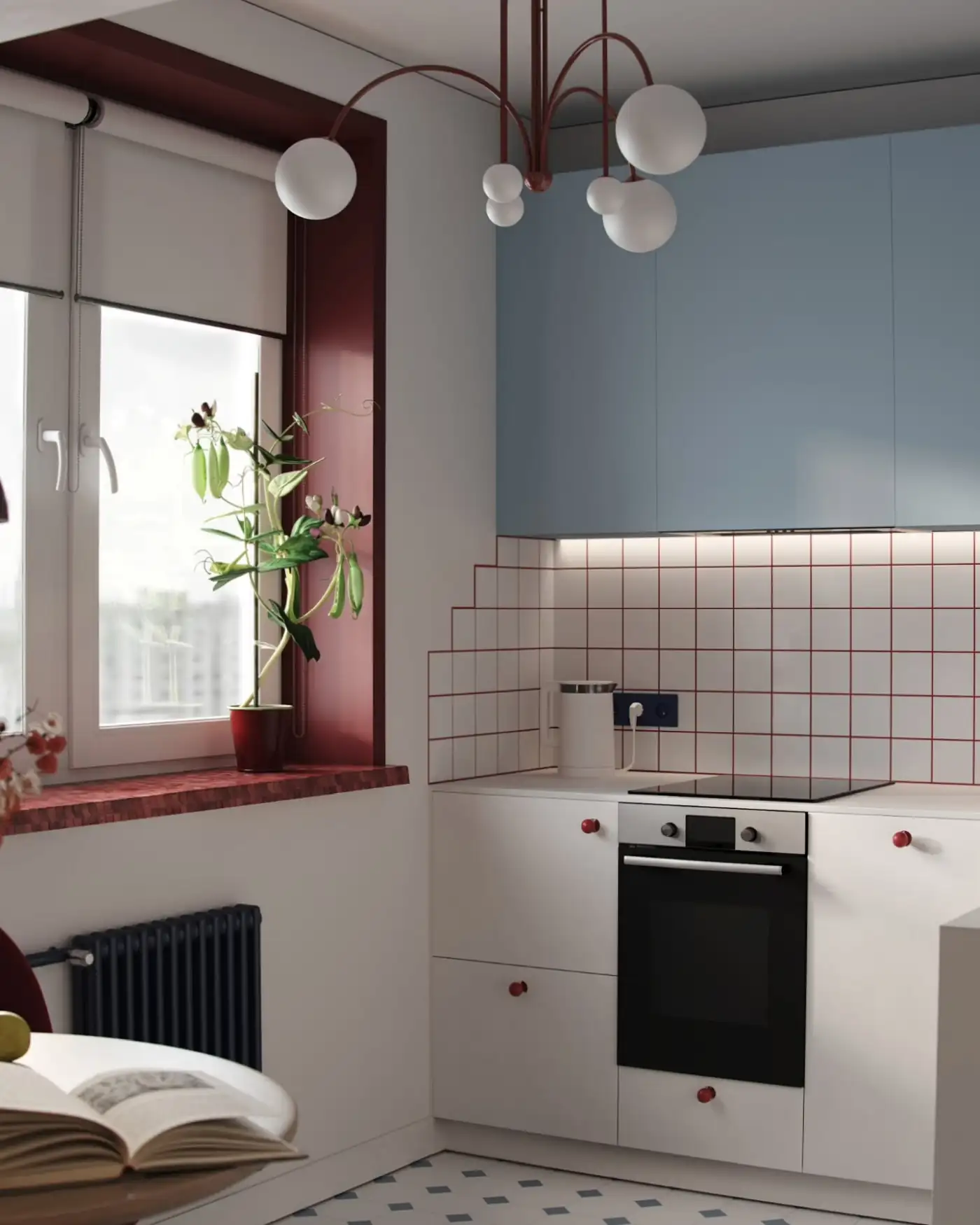
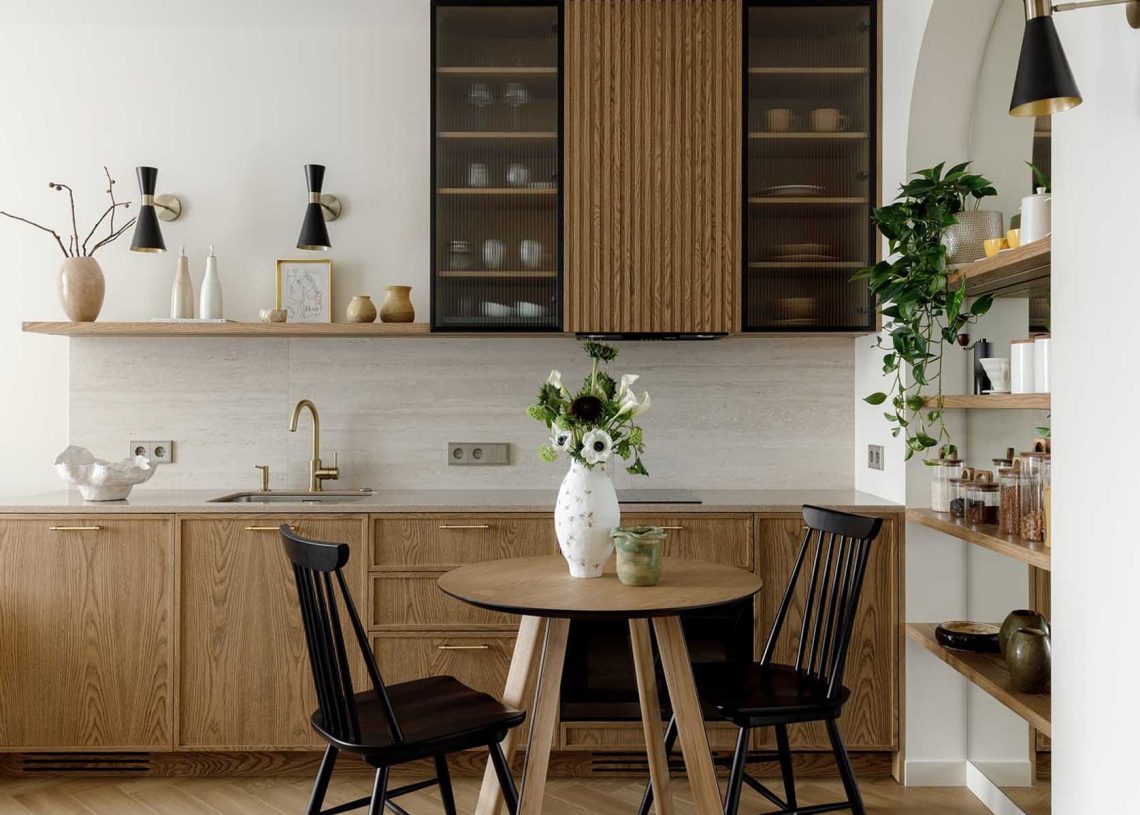
The kitchen is compact, with white lower cabinets and blue upper ones. So far, nothing out of the ordinary. What makes all the difference is the color chosen for the grout between the white tiles. This small detail creates a strong visual impact with minimal effort. The red cabinet knobs, the two-tone burgundy and white light fixtures, everything follows the same color scheme.
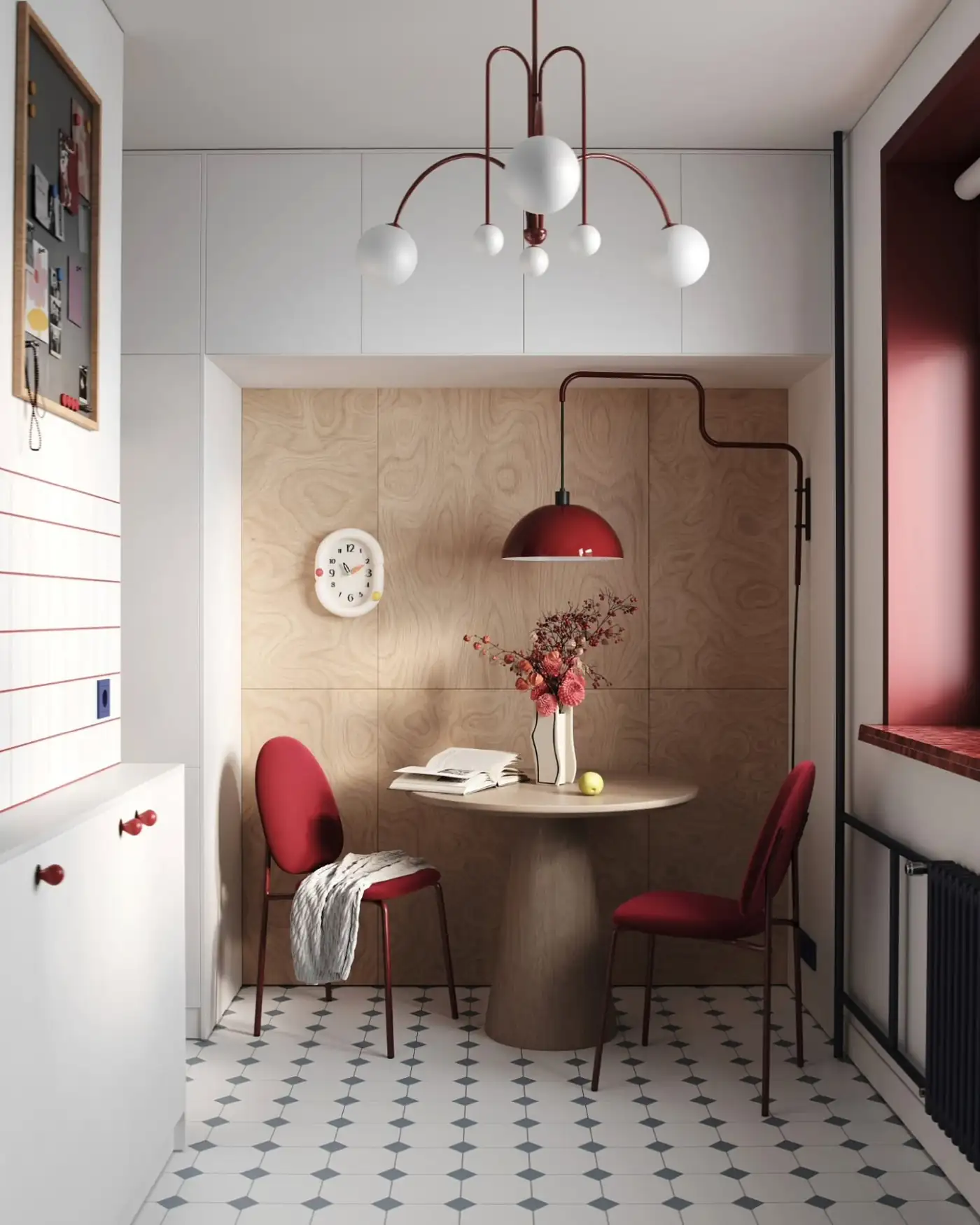
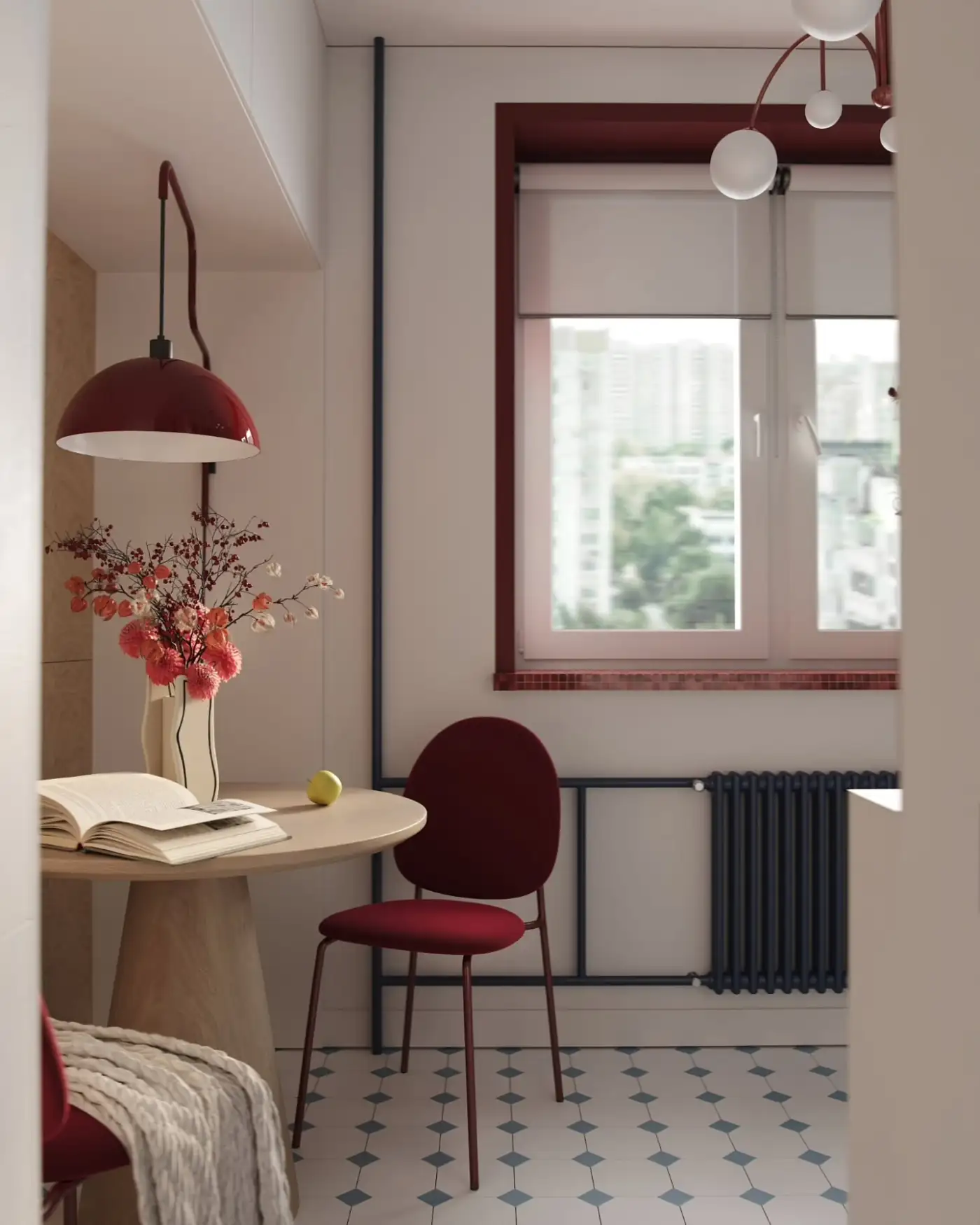
Next to it, the dining area takes a different approach. It features a round table, two red chairs, and a wall sconce with an articulated arm. The atmosphere is inspired by a Parisian neighborhood bistro, even though we’re far from Paris.
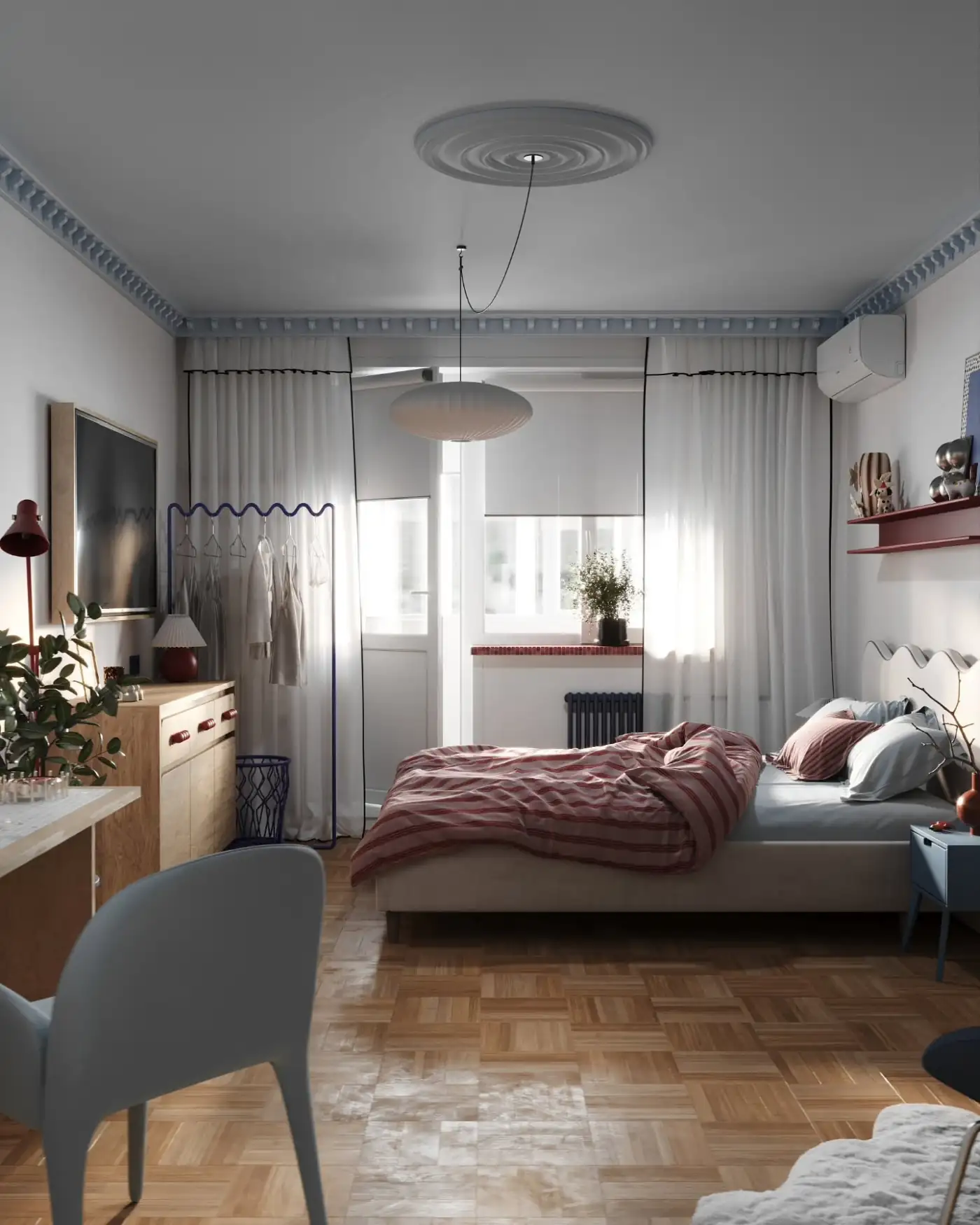
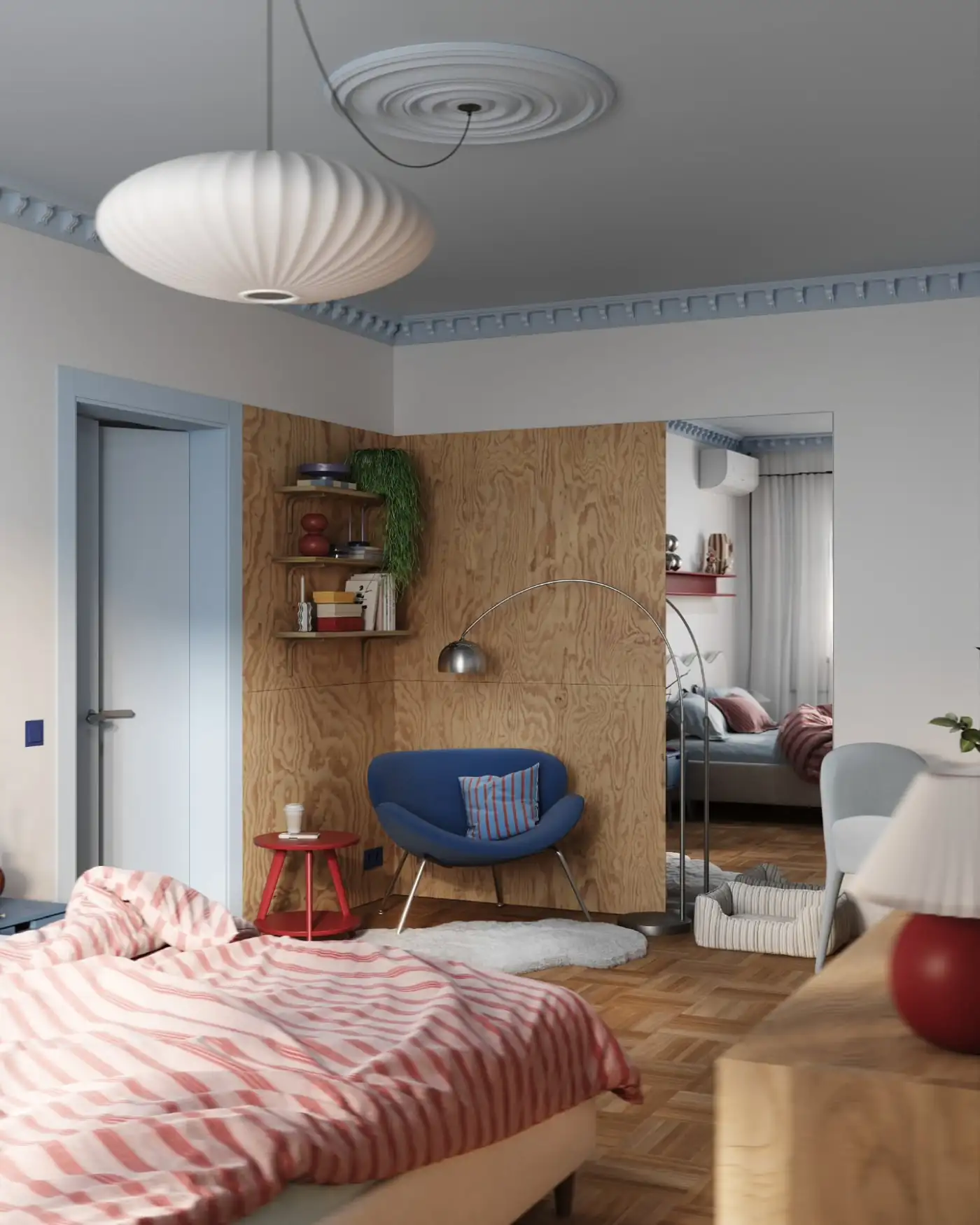
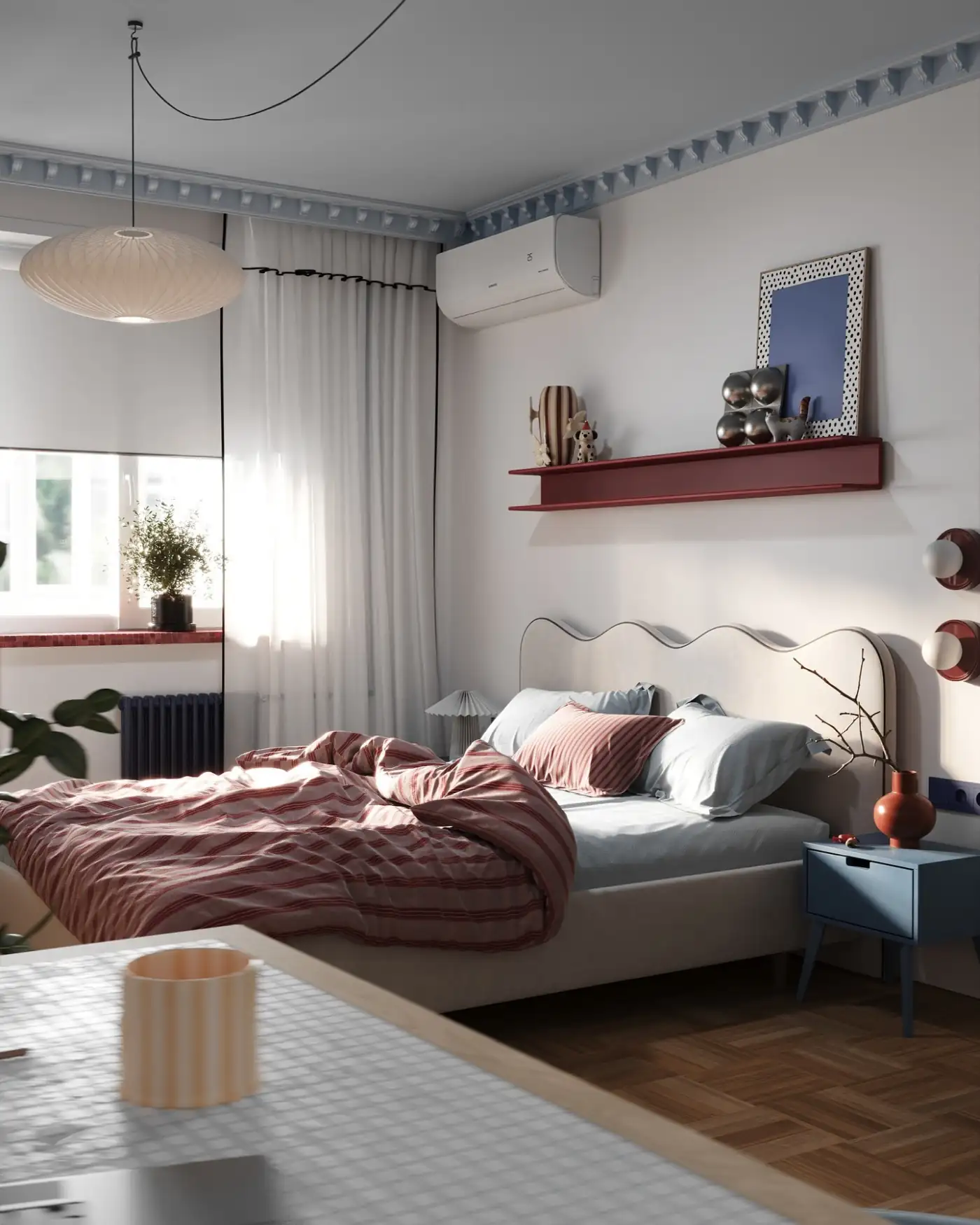
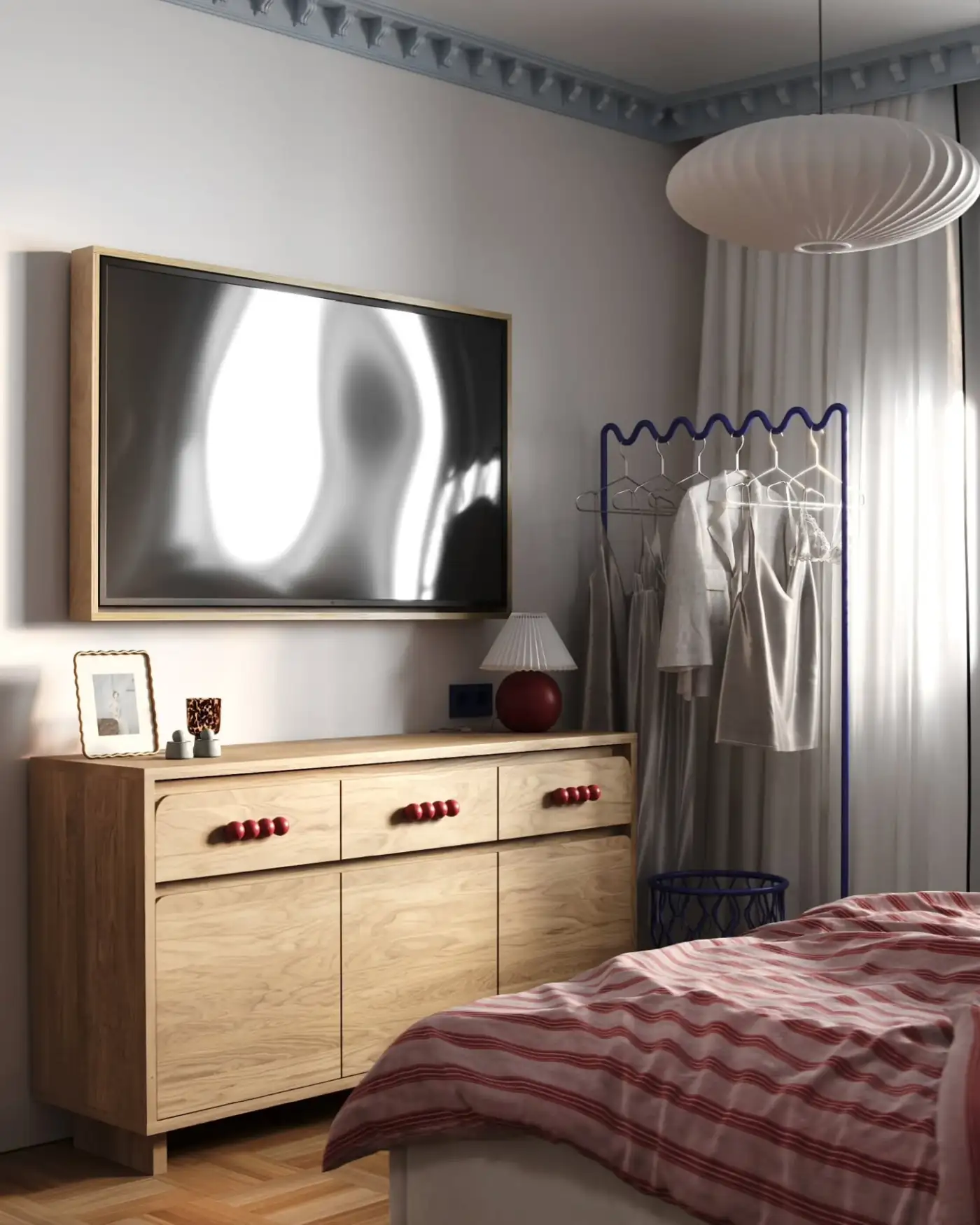
The main room serves multiple functions, as is often the case in studio apartments. It combines the bedroom, living room, and office. No storage furniture is visible because all storage is in the entryway. The room contains only the essentials: a bed, a dresser, open shelves, an armchair, and a desk.
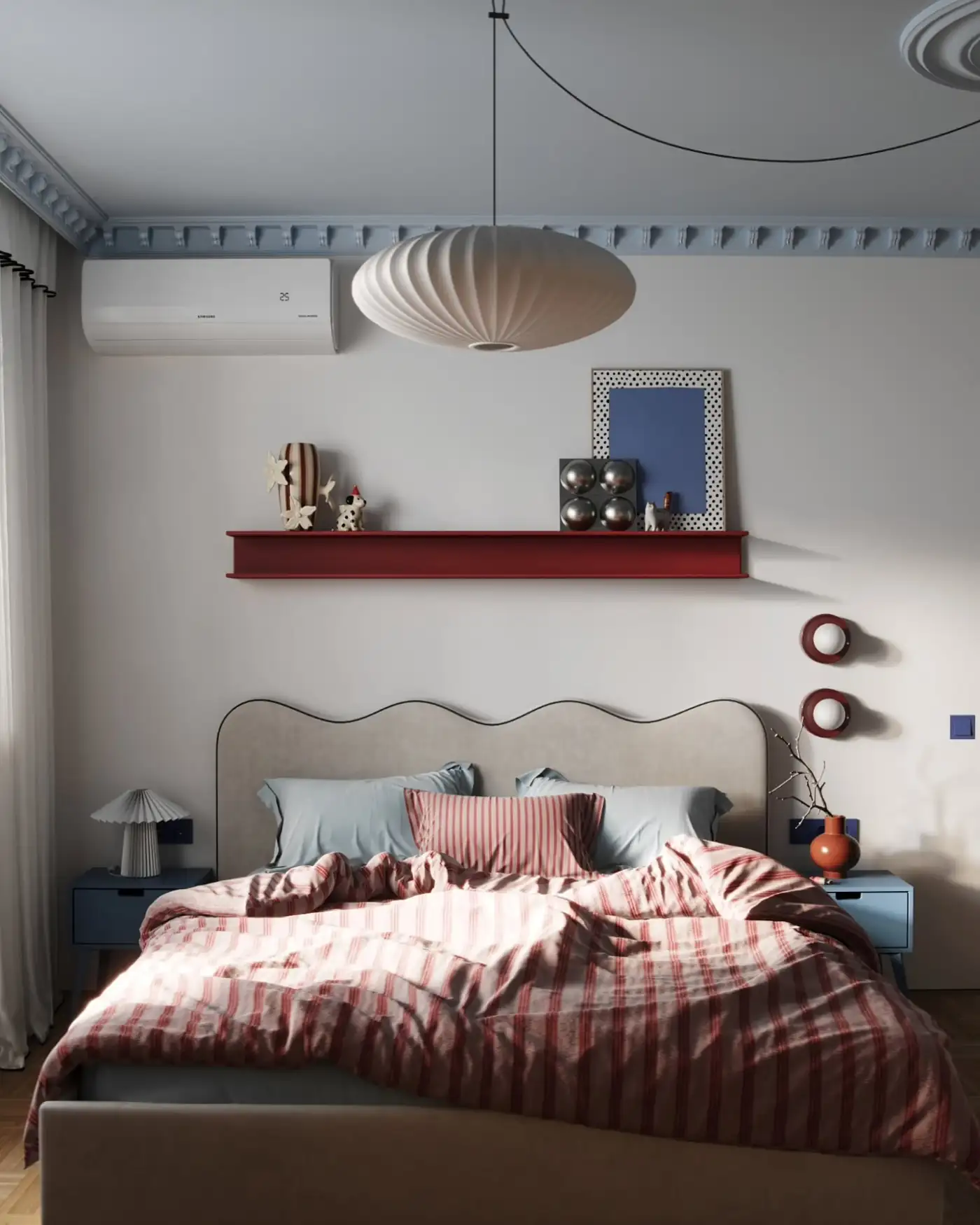
The wavy headboard adds a soft touch to an interior that primarily features straight lines. Above it, a burgundy wall shelf and sconces highlight this focal point. The ceiling has retained its original medallion and cornice, as we are in an older building.
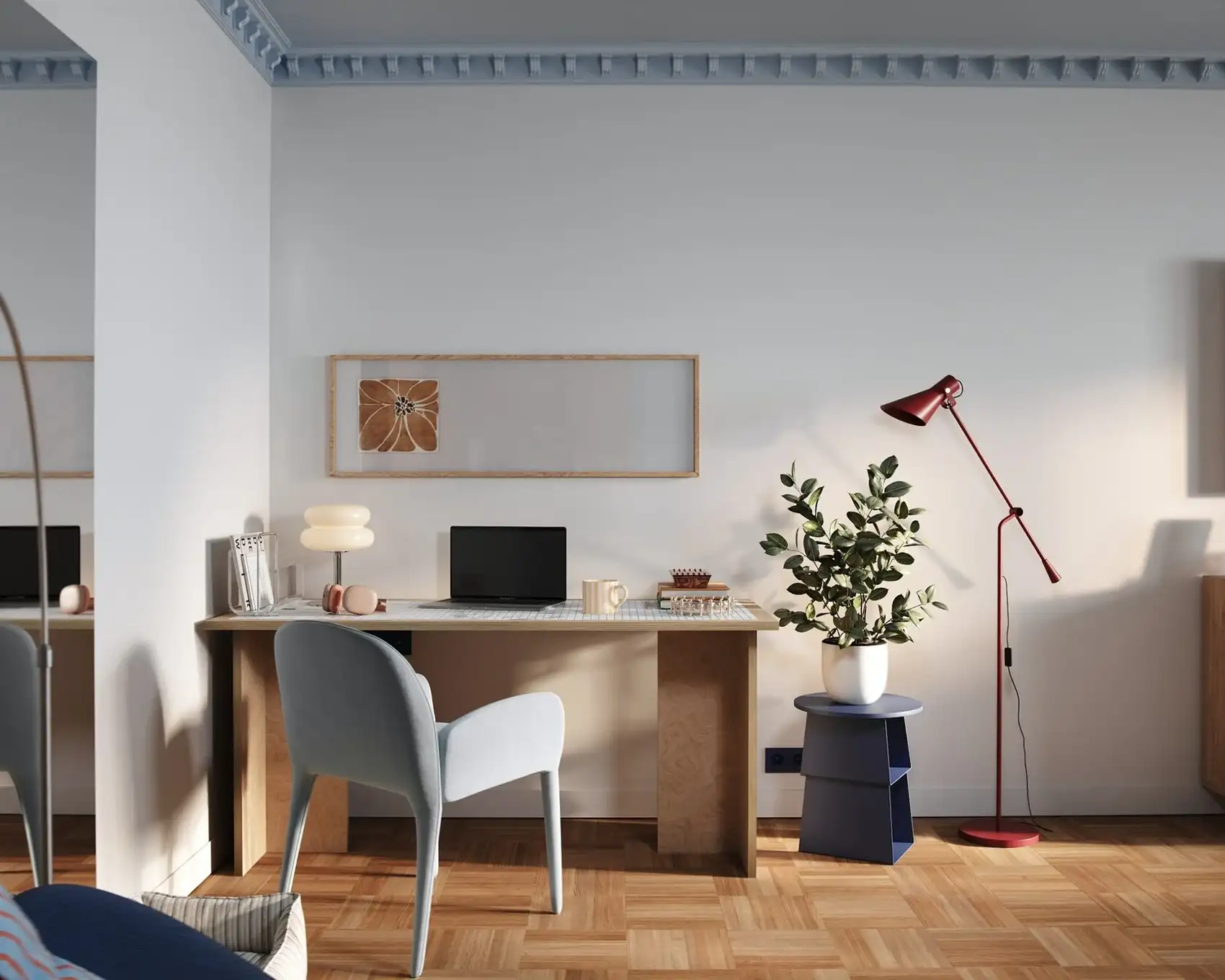
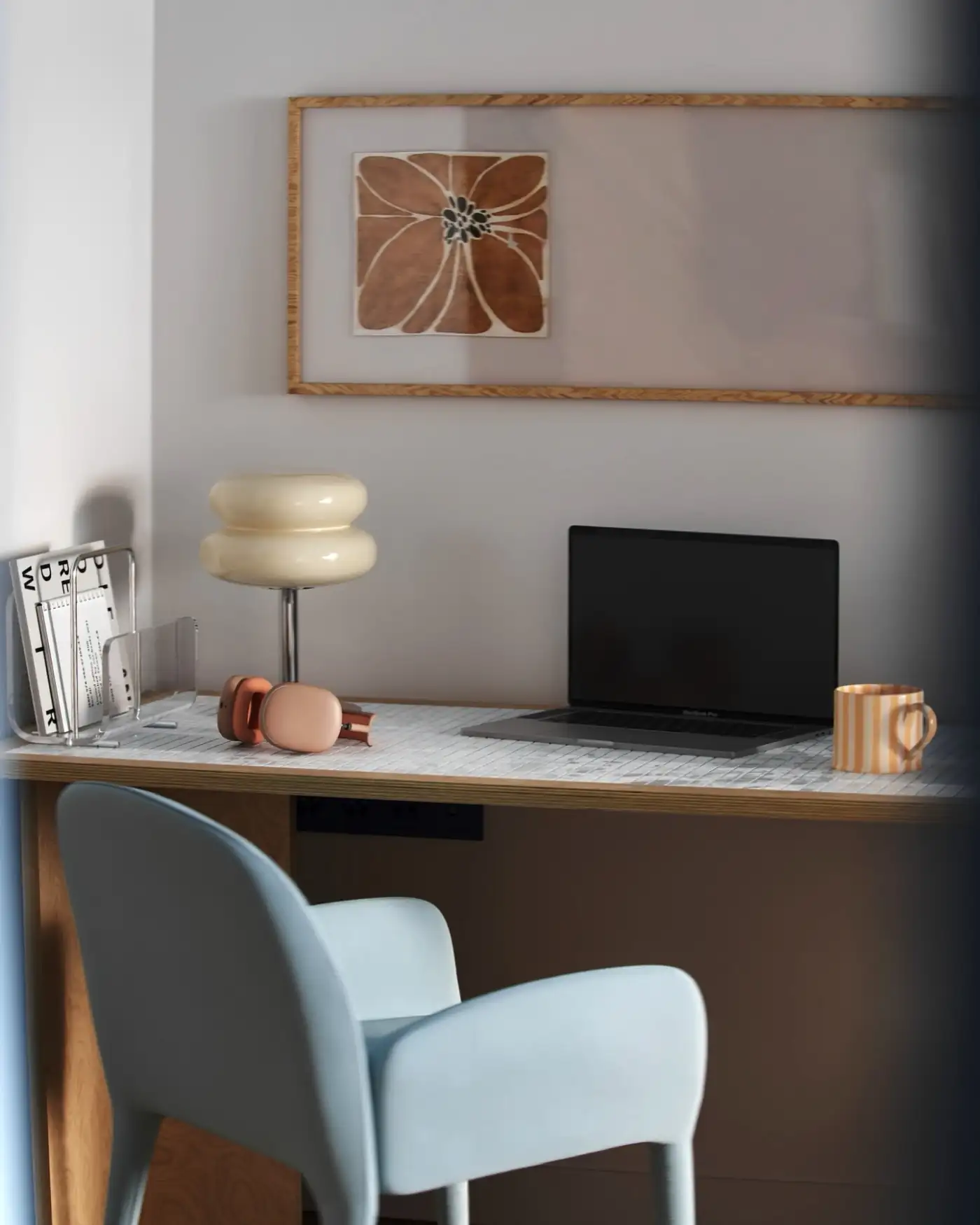
An office occupies a discreet corner. A long, simple desk, a light blue chair, a red floor lamp. No superfluous decor around it to preserve this space’s identity. You sit here to think and work, not to get distracted (not all the time, anyway!). The large wall sections are intentionally left empty, as there are enough elements in the room to avoid overcrowding this space.
This is where Nastya Pastarnak’s approach to this optimized 38sqm studio proves most interesting: she doesn’t decorate just for the sake of decorating. She places colorful accents where they play an interesting role in the room.
In this apartment, the light fixtures aren’t chosen at random. They’re an integral part of the design. The articulated-arm wall sconce in the dining area, the red floor lamps in the office and living room, the large Japanese paper pendant in the bedroom, every light source is carefully selected.
It’s the kind of detail you barely notice in photos but which is nonetheless essential to the decor. The articulated-arm wall sconces serve a dual purpose. They free up bedside tables and desks from table lamps, which can sometimes be cumbersome on limited surfaces. In an apartment where the wall decor is deliberately understated, they are what bring the surfaces to life.
We often underestimate the impact of a floor in a small space. Here, the old hardwood floor was preserved and restored rather than replaced. It’s not just a matter of budget, it’s an aesthetic choice and a desire to preserve a beautiful, historic element. The wide, honey-toned planks bring a warmth that tile or laminate simply couldn’t provide.
Against such a warm backdrop, the white walls appear even brighter, and the colorful furniture stands out. This is a decision that is sometimes harder to make than opting for a completely new floor. Because renovating an old hardwood floor takes time and money. But this project shows that in this studio, it was worth it.
This apartment proves that you don’t need to live in a large space to have an interior that stands out. The burgundy-blue-wood color palette works because it’s applied harmoniously, not because it’s original. The real stroke of genius was concentrating all the storage outside the living area to enhance the sense of space. An idea worth remembering that will inspire the many people who live in very small apartments.

A deliberately neutral base
The walls are white, the old hardwood floors have been renovated and preserved, and the finishes are light. This strategic decision allows all the colorful elements to take center stage. Burgundy, blue, and natural wood stand out all the more because nothing competes with them.
This is an approach rarely seen in small spaces. Often, people use multiple accent colors against a neutral background without really coordinating them. Here, the palette is consistent throughout all the rooms, with the same three shades appearing each time in a different form.
The entryway with storage as decoration
The entryway houses all the apartment’s storage. A block of floor-to-ceiling built-in cabinets runs between the hallway and the kitchen. The smooth, pale blue-gray cabinet fronts unify the space.
The detail that catches the eye is undoubtedly an open niche lined with light wood, illuminated to reveal the grain of the material. A mirror with burgundy trim completes the decor. It introduces the main color right at the entrance, even before you step into the living area.
The kitchen with its unique tile grout
The kitchen is compact, with white lower cabinets and blue upper ones. So far, nothing out of the ordinary. What makes all the difference is the color chosen for the grout between the white tiles. This small detail creates a strong visual impact with minimal effort. The red cabinet knobs, the two-tone burgundy and white light fixtures, everything follows the same color scheme.
Next to it, the dining area takes a different approach. It features a round table, two red chairs, and a wall sconce with an articulated arm. The atmosphere is inspired by a Parisian neighborhood bistro, even though we’re far from Paris.
In the main room, there’s little furniture, but plenty of decor
The main room serves multiple functions, as is often the case in studio apartments. It combines the bedroom, living room, and office. No storage furniture is visible because all storage is in the entryway. The room contains only the essentials: a bed, a dresser, open shelves, an armchair, and a desk.
The wavy headboard adds a soft touch to an interior that primarily features straight lines. Above it, a burgundy wall shelf and sconces highlight this focal point. The ceiling has retained its original medallion and cornice, as we are in an older building.
The simply furnished office corner
An office occupies a discreet corner. A long, simple desk, a light blue chair, a red floor lamp. No superfluous decor around it to preserve this space’s identity. You sit here to think and work, not to get distracted (not all the time, anyway!). The large wall sections are intentionally left empty, as there are enough elements in the room to avoid overcrowding this space.
This is where Nastya Pastarnak’s approach to this optimized 38sqm studio proves most interesting: she doesn’t decorate just for the sake of decorating. She places colorful accents where they play an interesting role in the room.
Lighting as a decorative signature
In this apartment, the light fixtures aren’t chosen at random. They’re an integral part of the design. The articulated-arm wall sconce in the dining area, the red floor lamps in the office and living room, the large Japanese paper pendant in the bedroom, every light source is carefully selected.
It’s the kind of detail you barely notice in photos but which is nonetheless essential to the decor. The articulated-arm wall sconces serve a dual purpose. They free up bedside tables and desks from table lamps, which can sometimes be cumbersome on limited surfaces. In an apartment where the wall decor is deliberately understated, they are what bring the surfaces to life.
Renovating the hardwood floor for more style
We often underestimate the impact of a floor in a small space. Here, the old hardwood floor was preserved and restored rather than replaced. It’s not just a matter of budget, it’s an aesthetic choice and a desire to preserve a beautiful, historic element. The wide, honey-toned planks bring a warmth that tile or laminate simply couldn’t provide.
Against such a warm backdrop, the white walls appear even brighter, and the colorful furniture stands out. This is a decision that is sometimes harder to make than opting for a completely new floor. Because renovating an old hardwood floor takes time and money. But this project shows that in this studio, it was worth it.
What Planète déco thinks of this optimized 38sqm studio
This apartment proves that you don’t need to live in a large space to have an interior that stands out. The burgundy-blue-wood color palette works because it’s applied harmoniously, not because it’s original. The real stroke of genius was concentrating all the storage outside the living area to enhance the sense of space. An idea worth remembering that will inspire the many people who live in very small apartments.



Comments