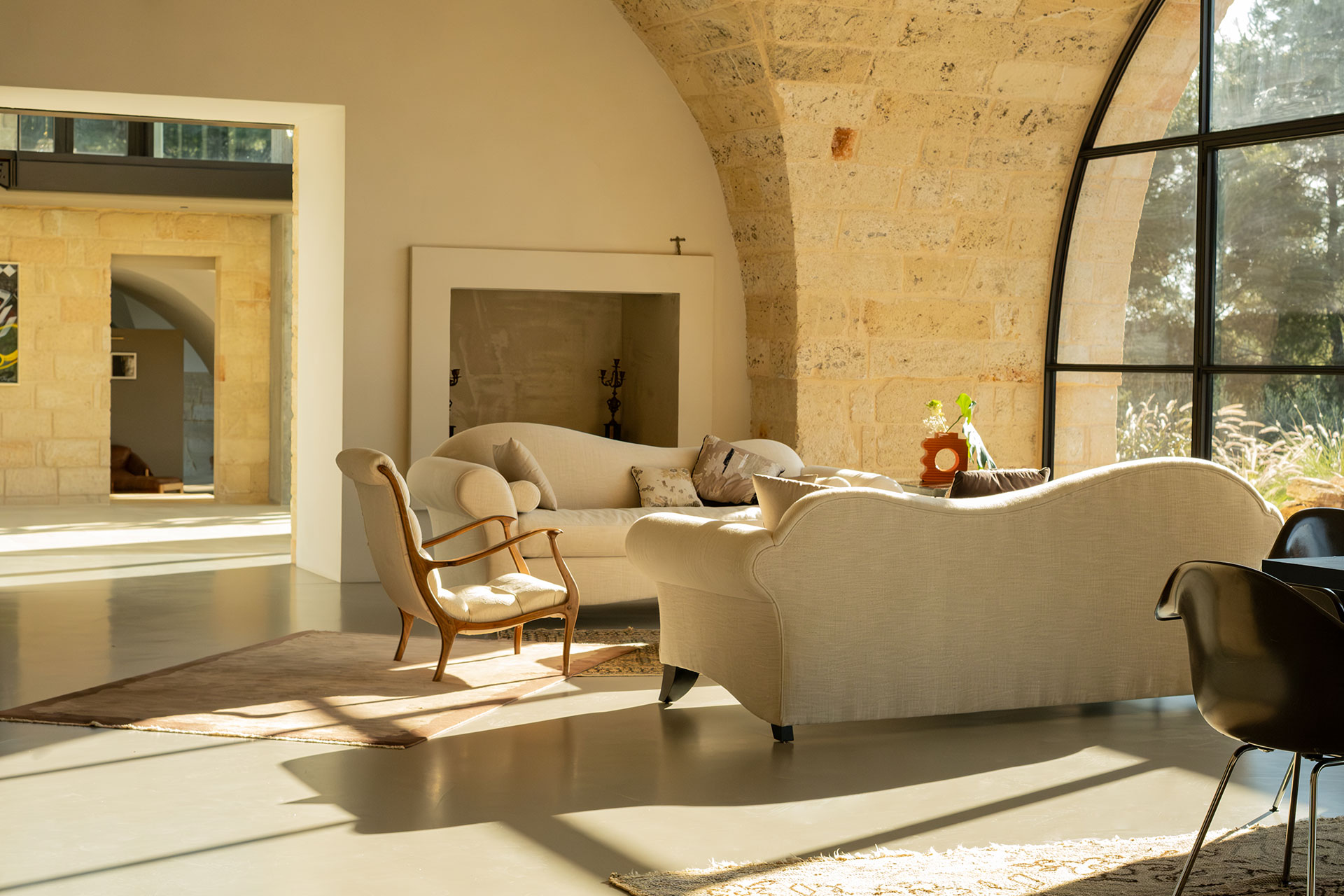
Contemporary interior design in a 16th-century home in Apulia
Follow Planète Déco on Google — add us to your favourites to keep our decor articles in your news feedMasseria Li Cafari: 7-meter glass atrium, Eames and Saarinen furniture in a 16th-century building. Contemporary interior design in Puglia
Salento is the somewhat overlooked part of Italy’s Apulia region, in a province that is nevertheless famous. The trulli of Alberobello, the masserie of Ostuni, the crowds in July at Polignano a Mare, can attest to that. But Salento, the tip of the heel of the Italian boot, still escapes this social media-driven frenzy. Nardò, a Baroque town ten minutes from the coast, has not yet been overrun by international tourism. It is here that you’ll find a carefully renovated 16th-century house in Puglia with its designer decor: the Masseria Li Cafari.
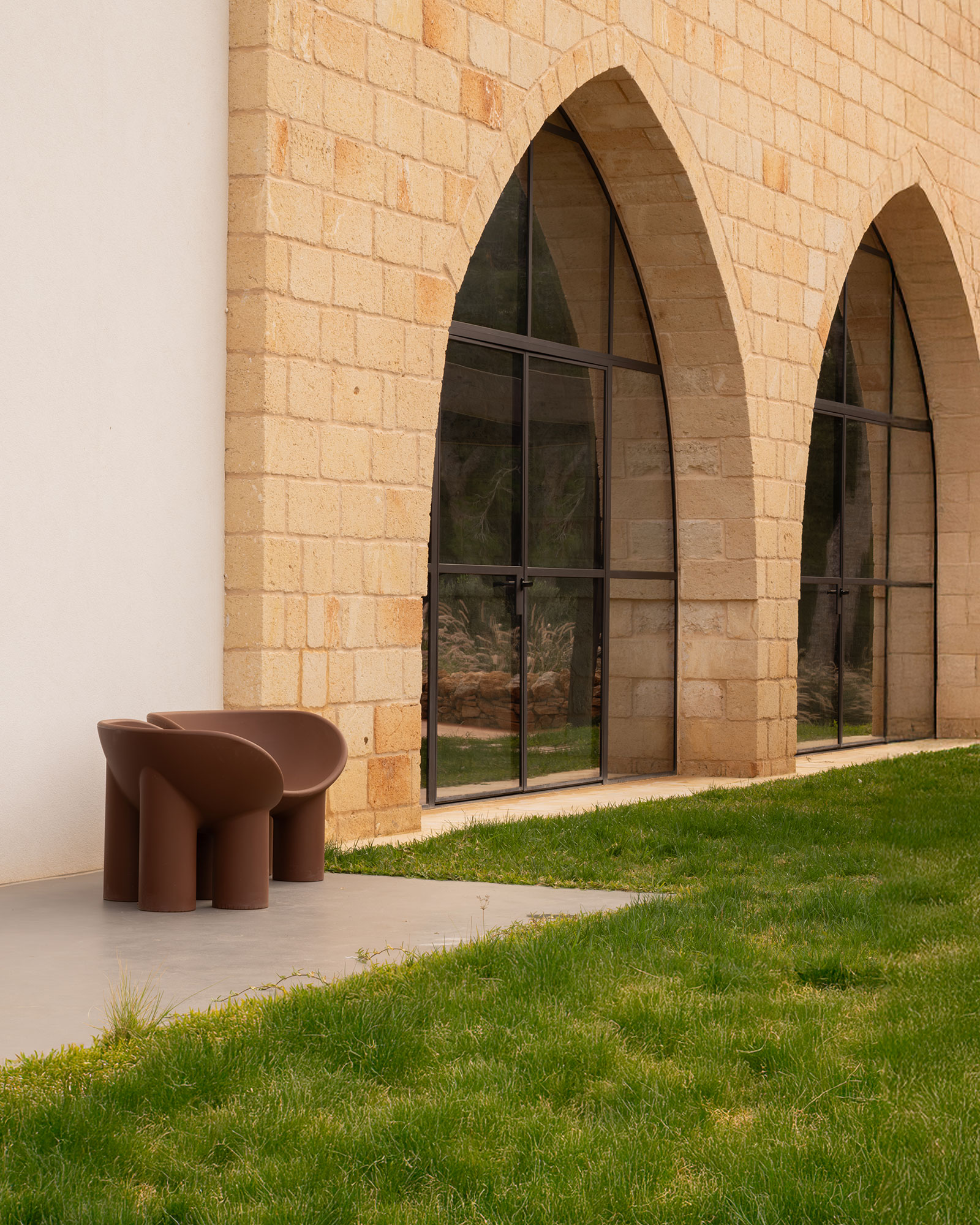
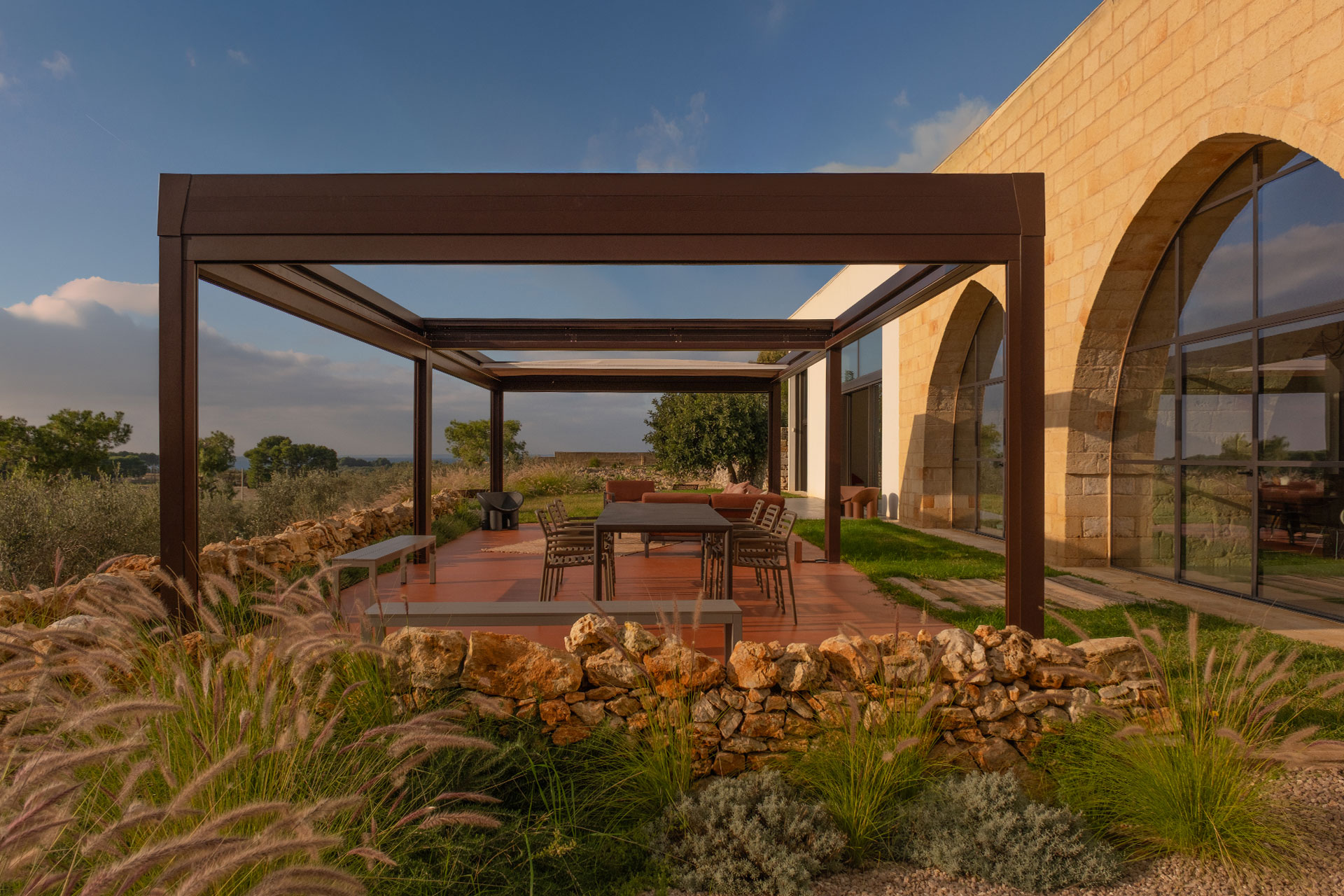
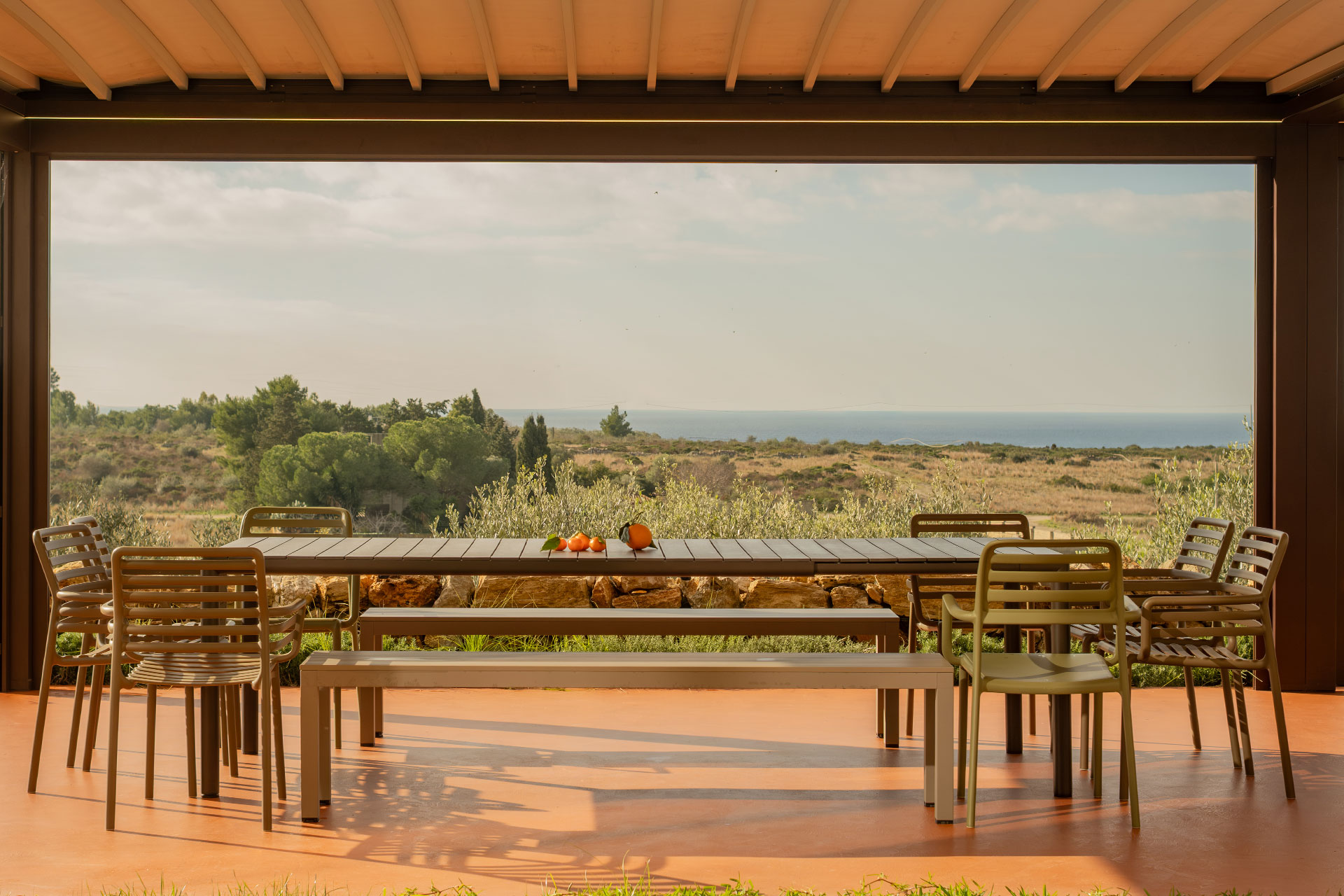
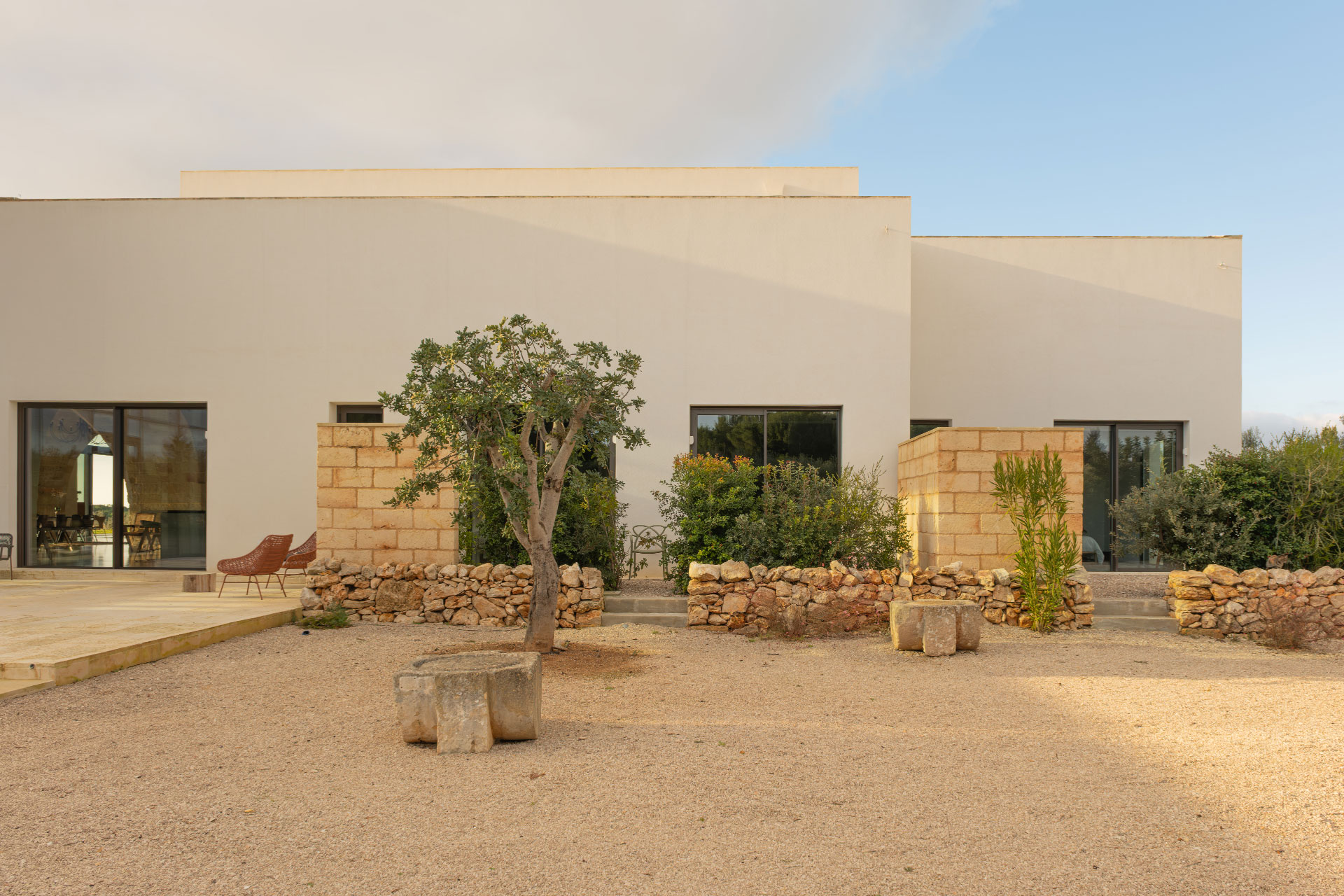
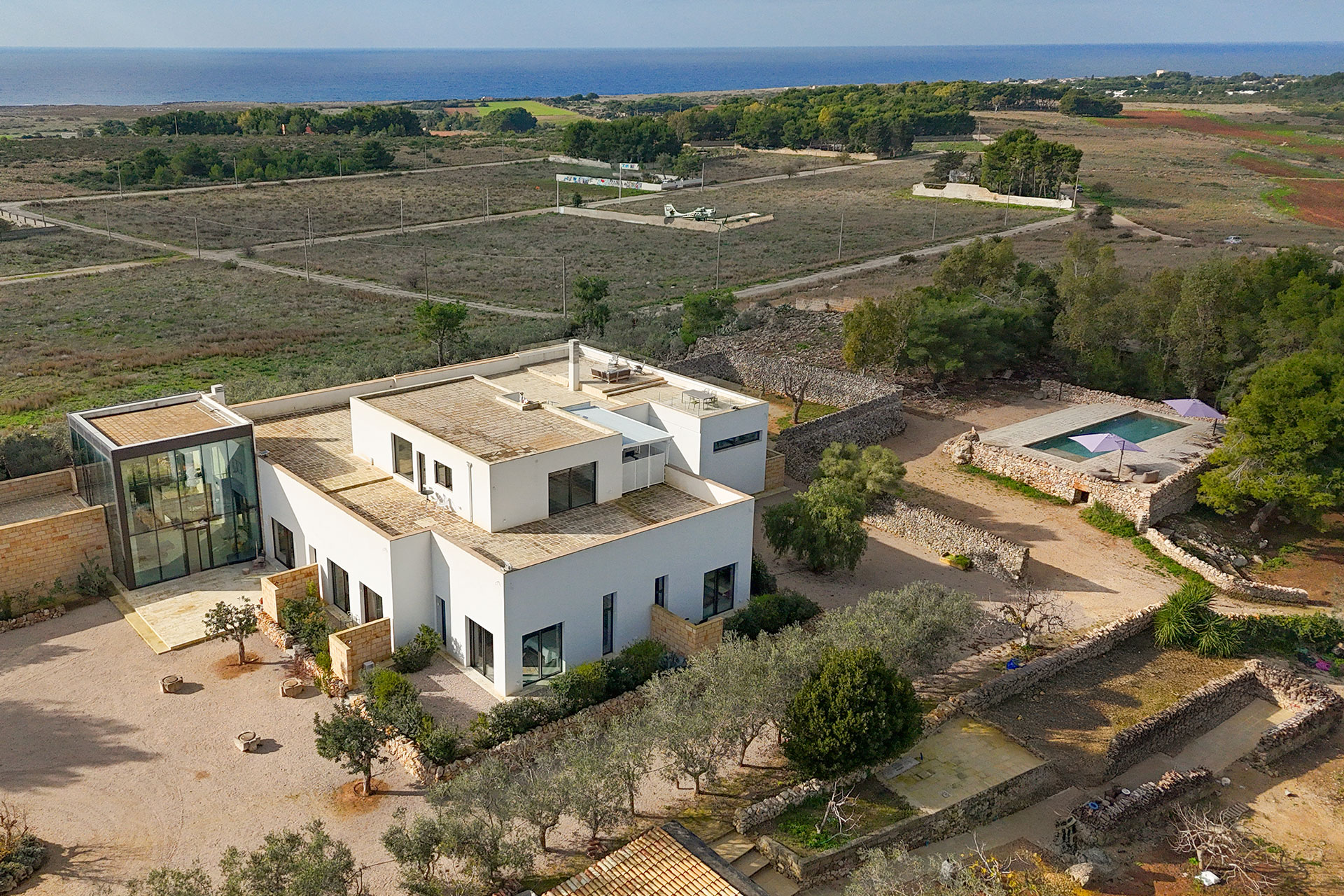
It is located just 1,500 meters from the sea, on the edge of the Porto Selvaggio Nature Reserve, set within three hectares of olive groves and pine forests. Its hewn stone and austere volumes form the perfect framework for a contemporary interior design approach that might seem surprising in such an historic setting. But it works perfectly.
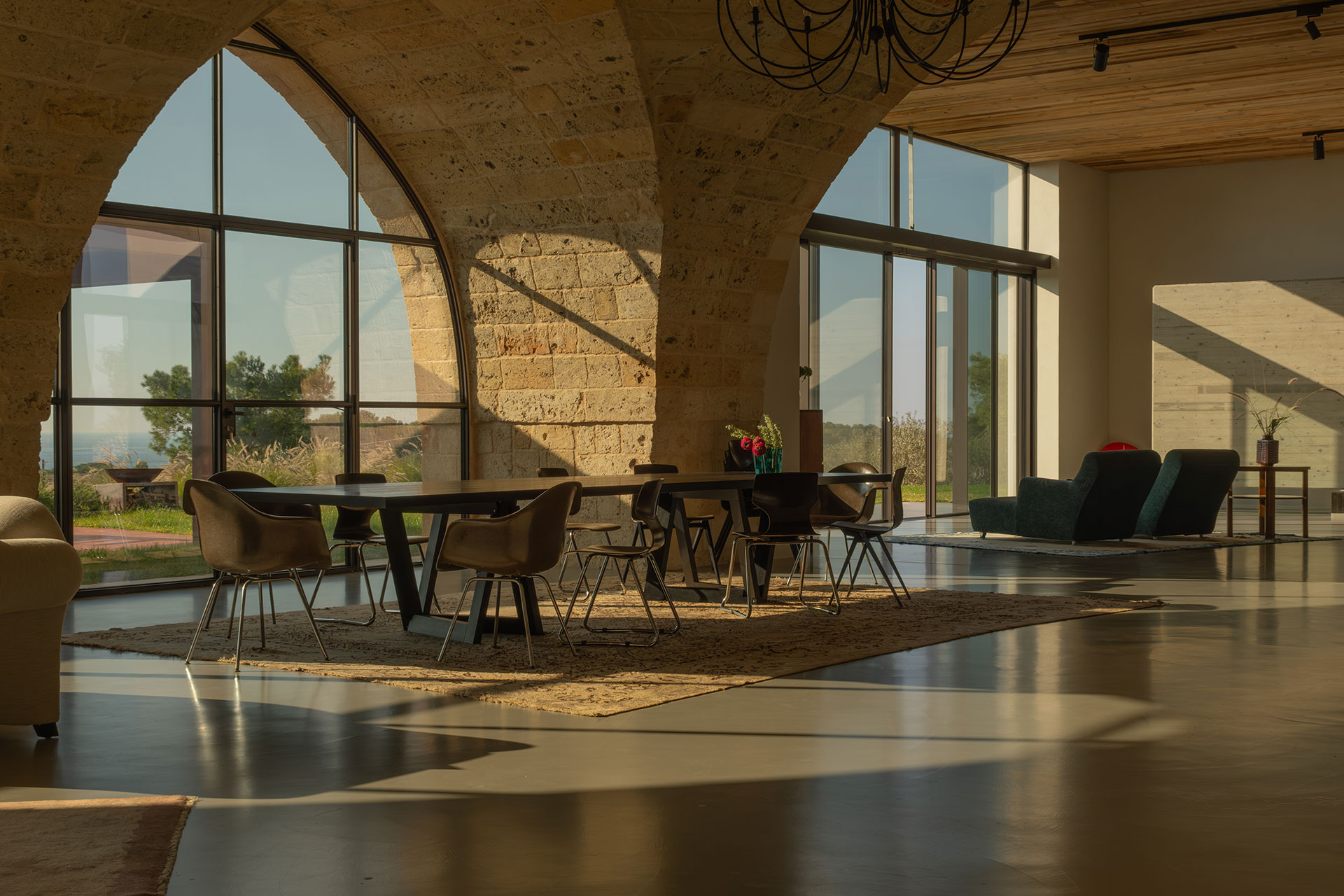
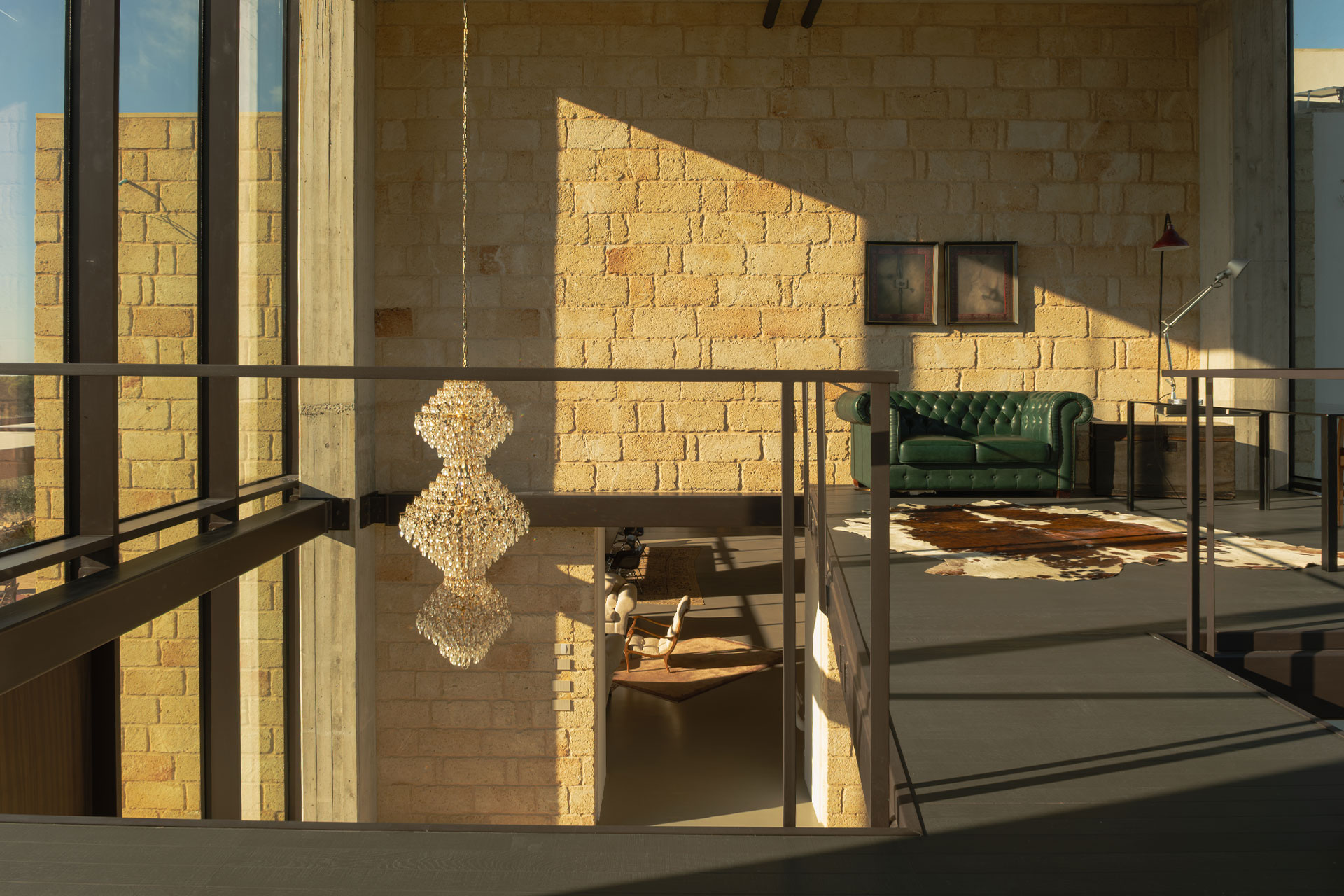
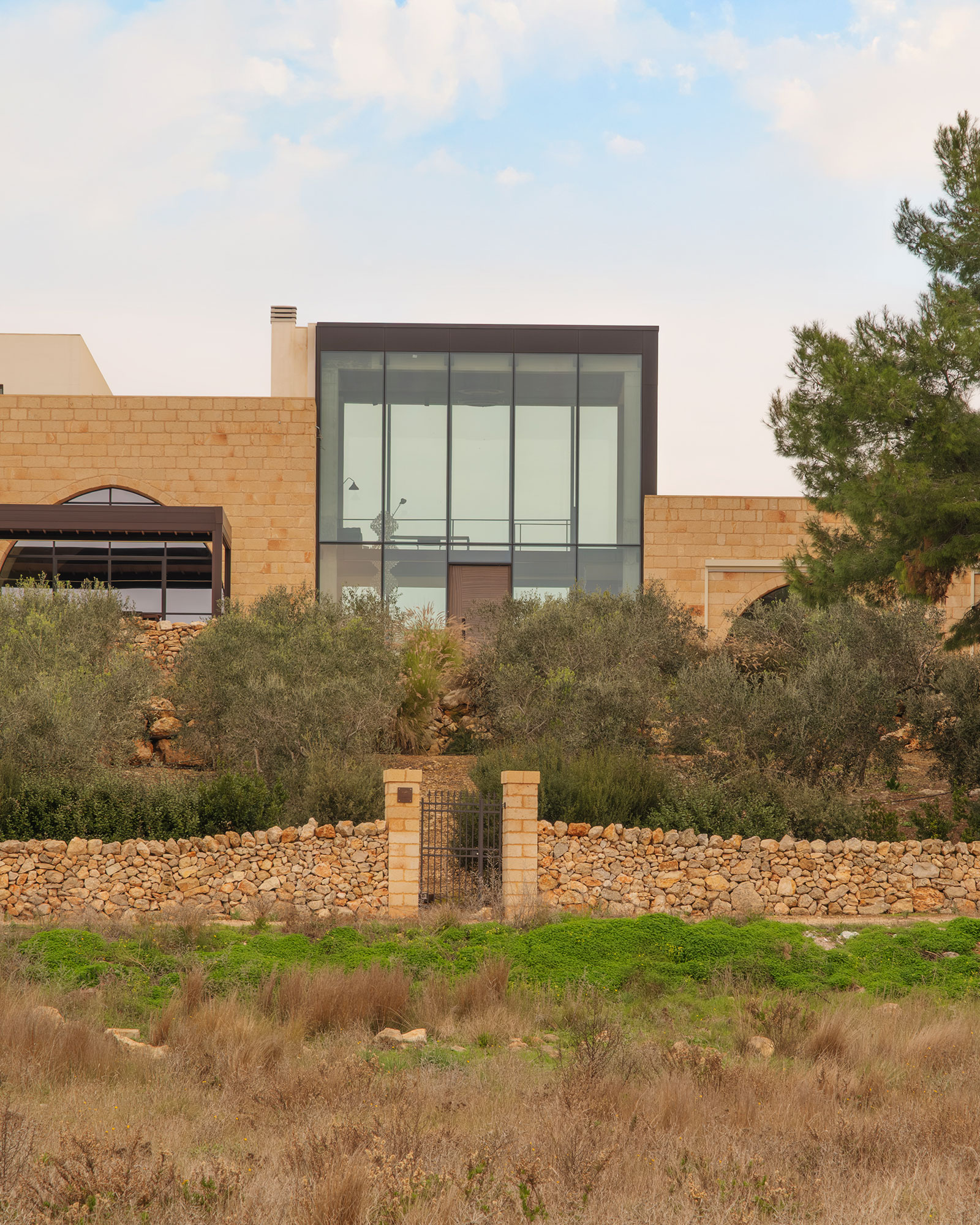
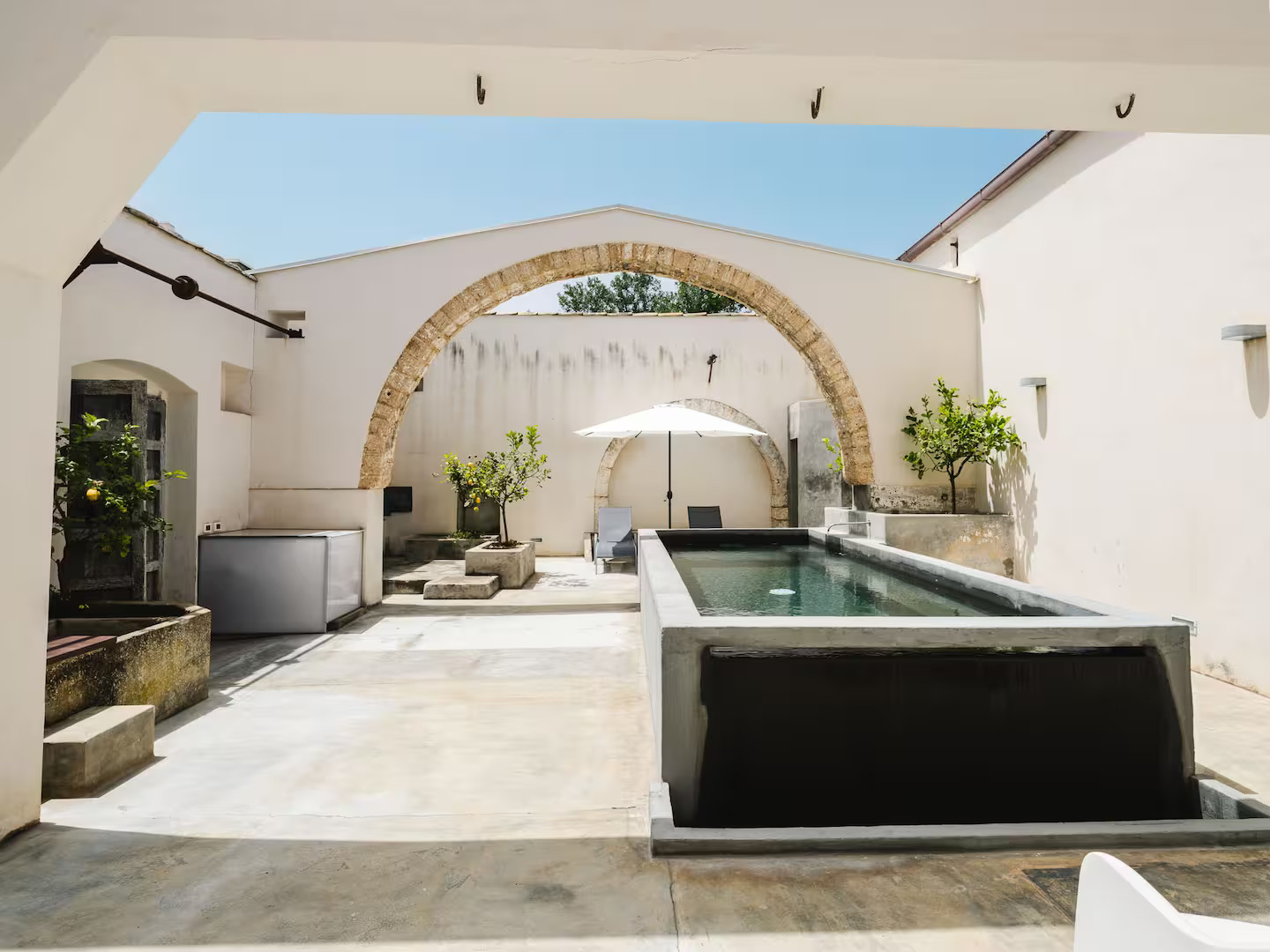
The first decision made by the owners who renovated the house was architectural, and it shaped everything else. These two historic wings of the masseria were arranged around an inner courtyard. Rather than leaving it open to the sky or covering it simply, the architects chose a seven-meter glazed atrium. This created a 320sqm double-height living space, bathed in overhead light, where the original stone runs along all the walls. This atrium becomes the heart of the house, a filter between the outside and the inside, between the old and the contemporary.
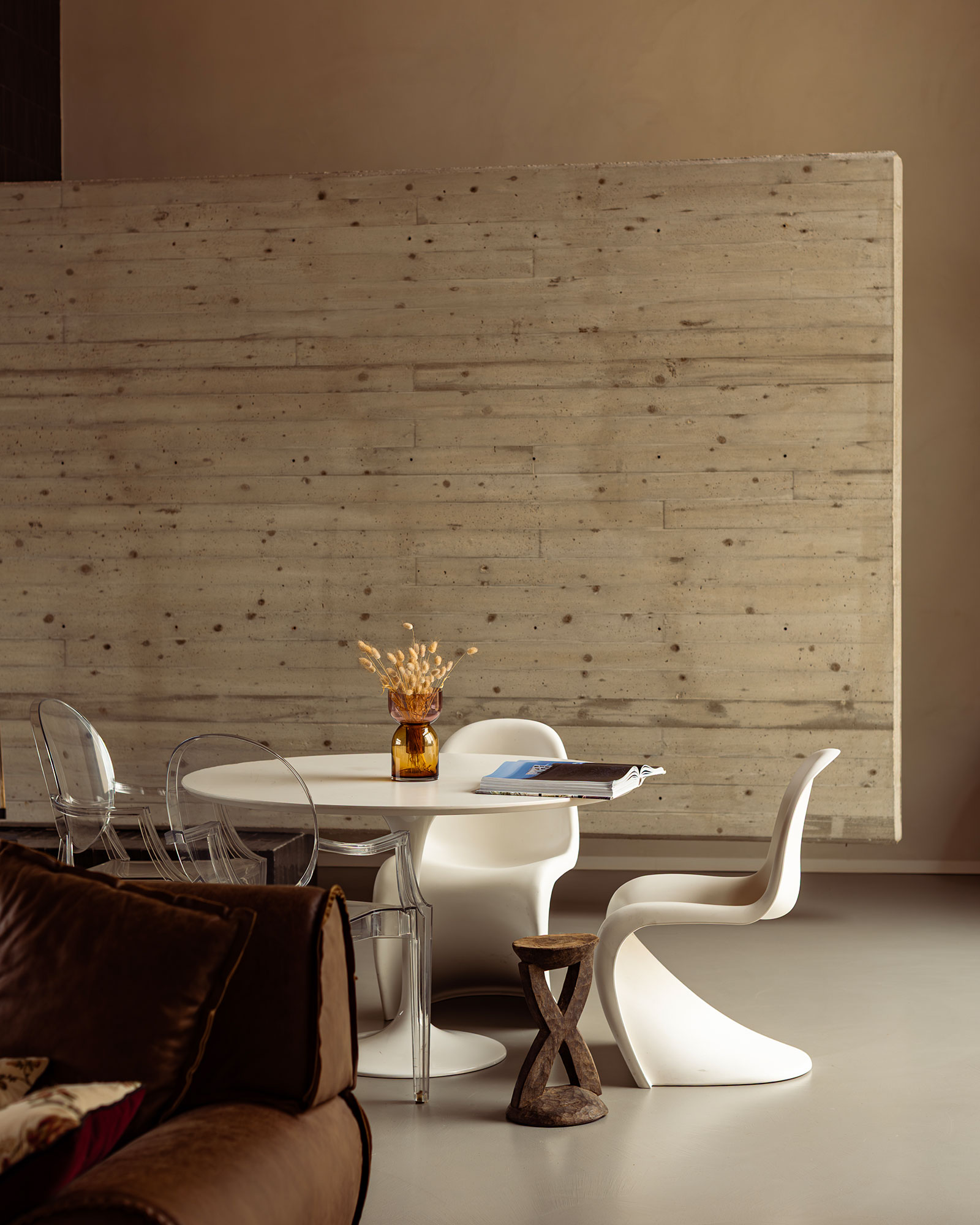
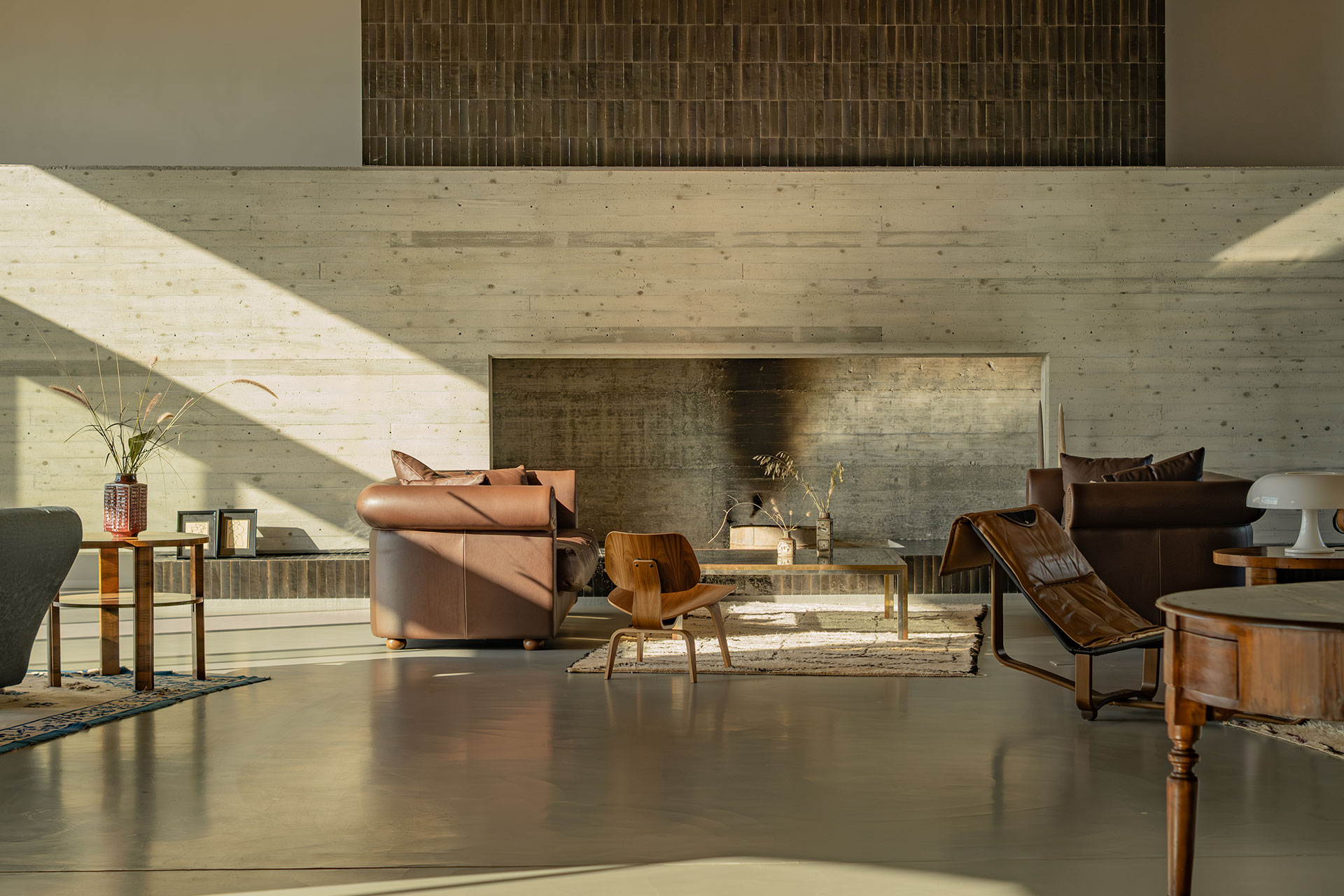
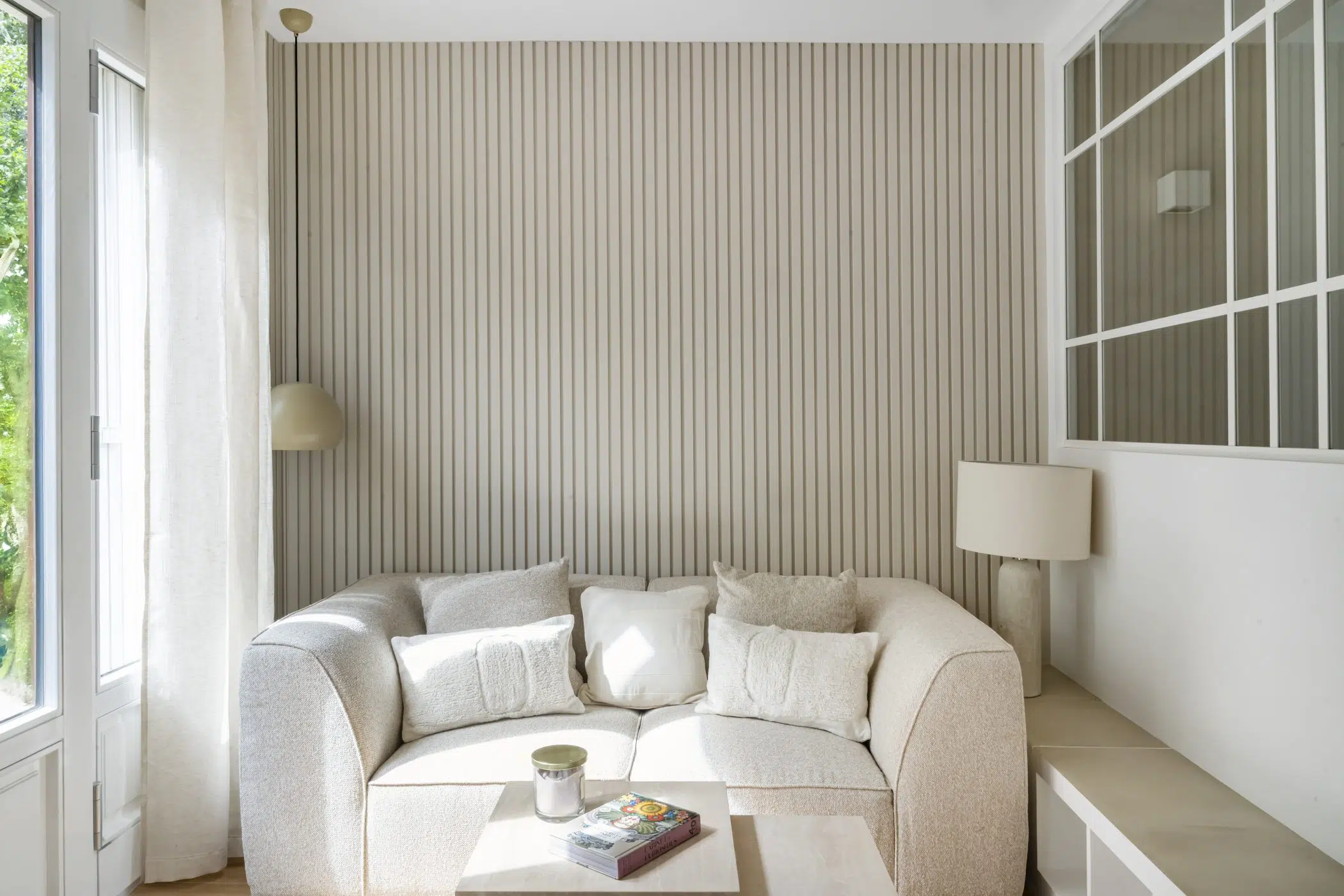
Eames armchairs, Saarinen silhouettes, Panton chairs, and Castiglioni light fixtures have been installed in the rooms. These are classics of 20th-century modernist design, primarily from the Nordic and American spheres of the 1950s–70s.
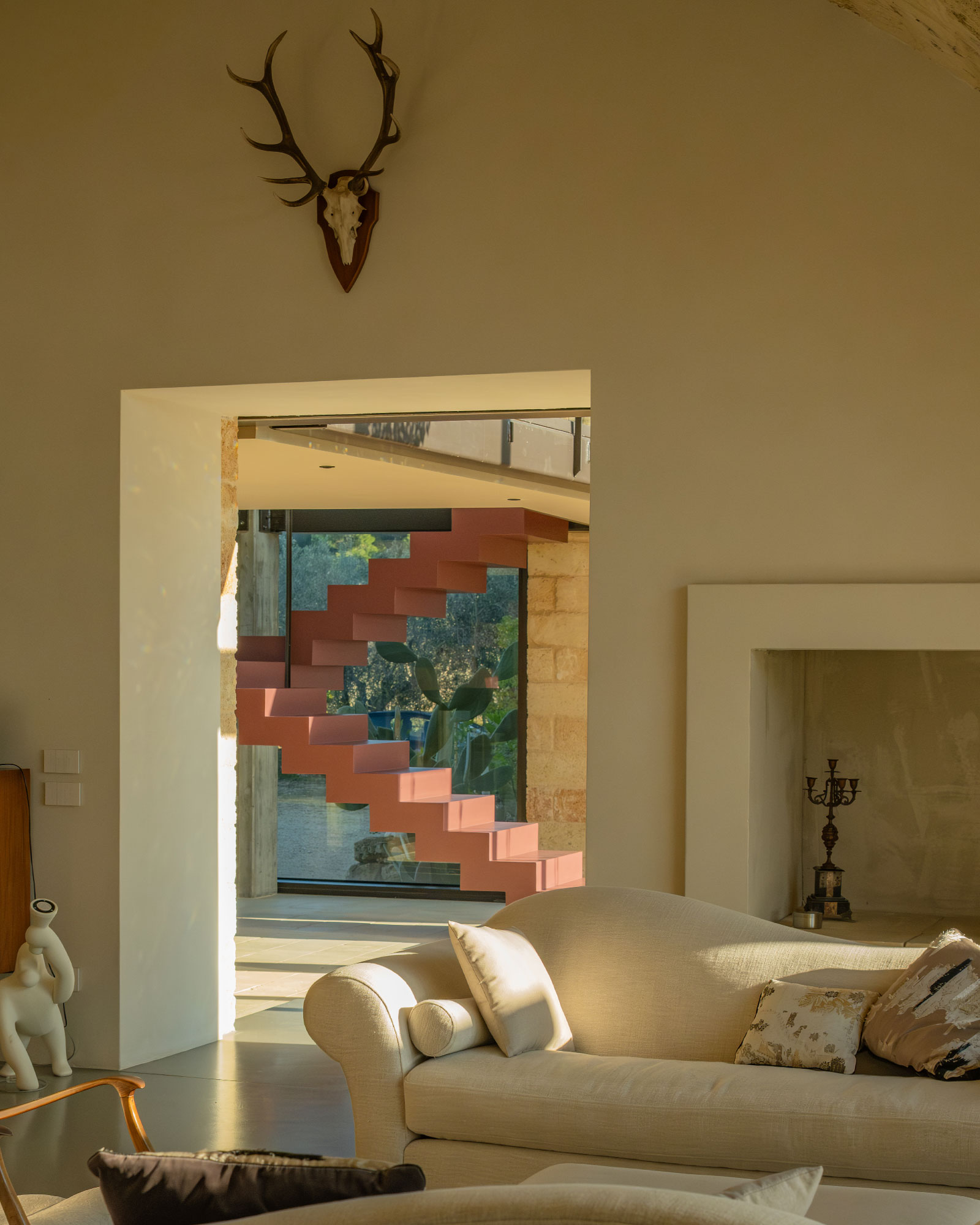
Against the thick walls, barrel vaults, and floors of local calcarenite, the contrast is a success. The color palette is deliberately understated to tie the stone’s hue to the contemporary furniture. The result is a dialogue between two eras that harmonize beautifully, contrary to what one might have expected.
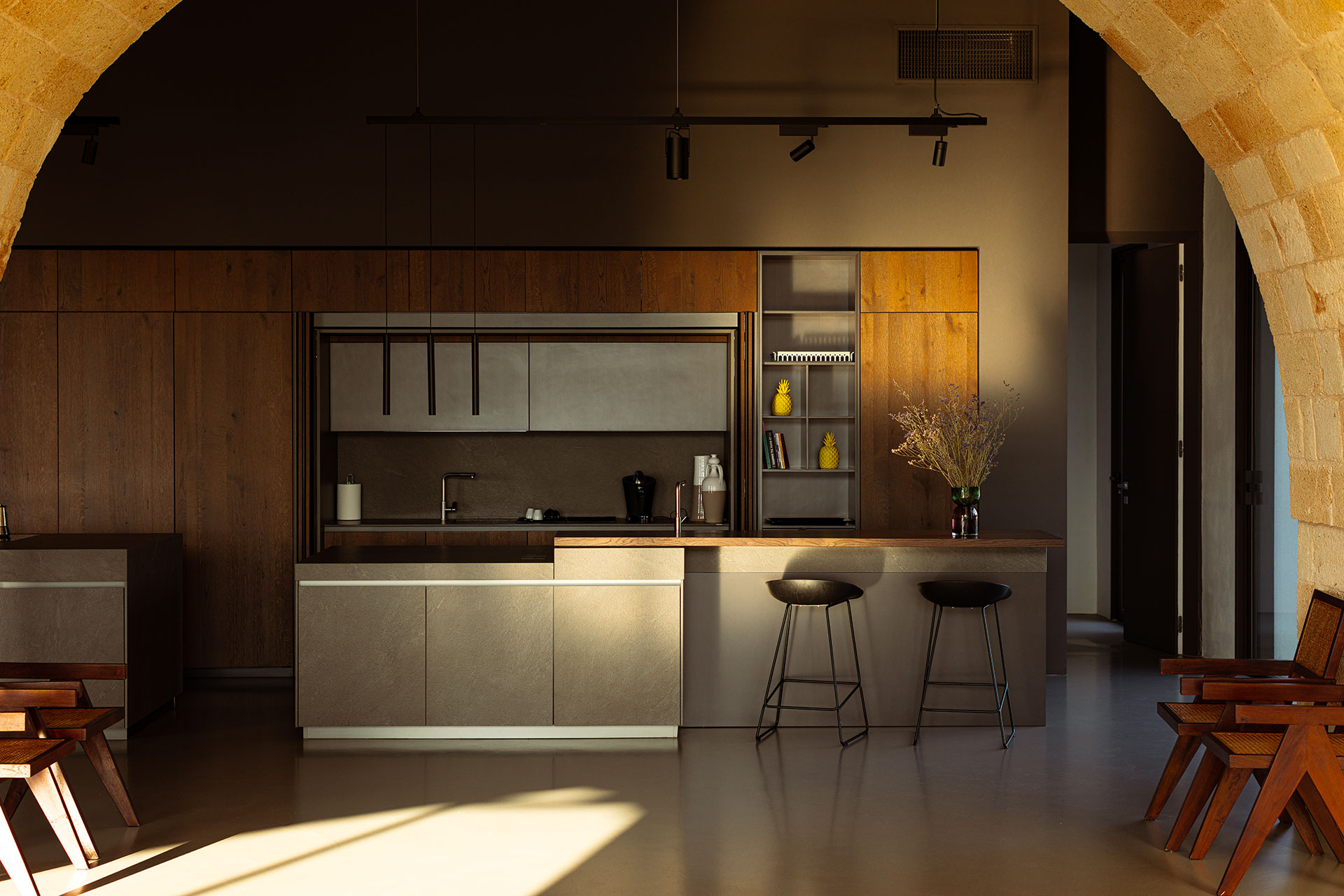
Designed by Ernesto Meda, the Italian kitchen stretches seven meters and features two stone islands. It is the perfect kitchen for this 16th-century masseria, simple yet undeniably striking. The twelve-meter concrete fireplace running along the main wall in the living room follows the same design philosophy. It is simple yet imposing, monolithic, raw, and proportionate to the space. It fits perfectly into this design aesthetic.
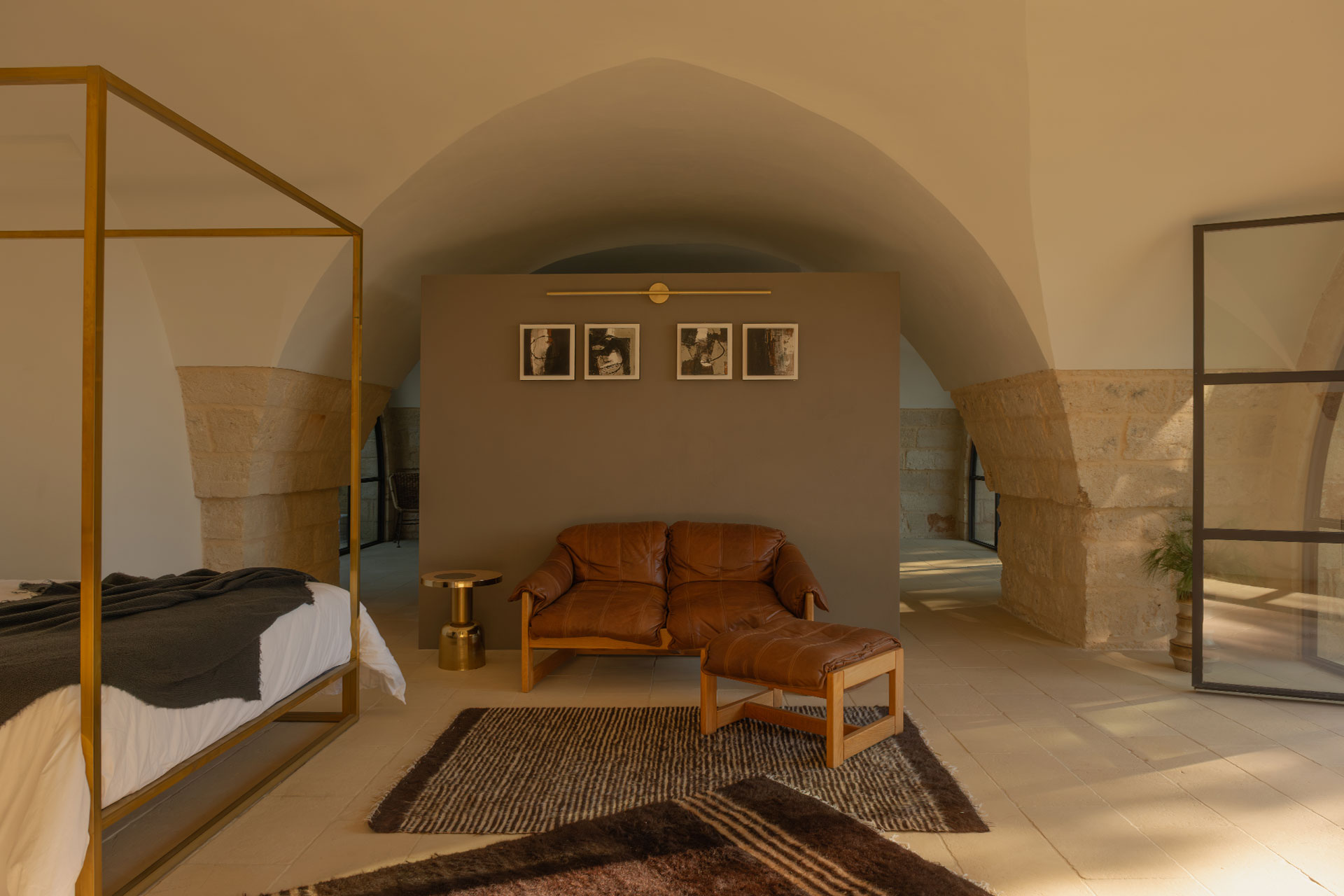
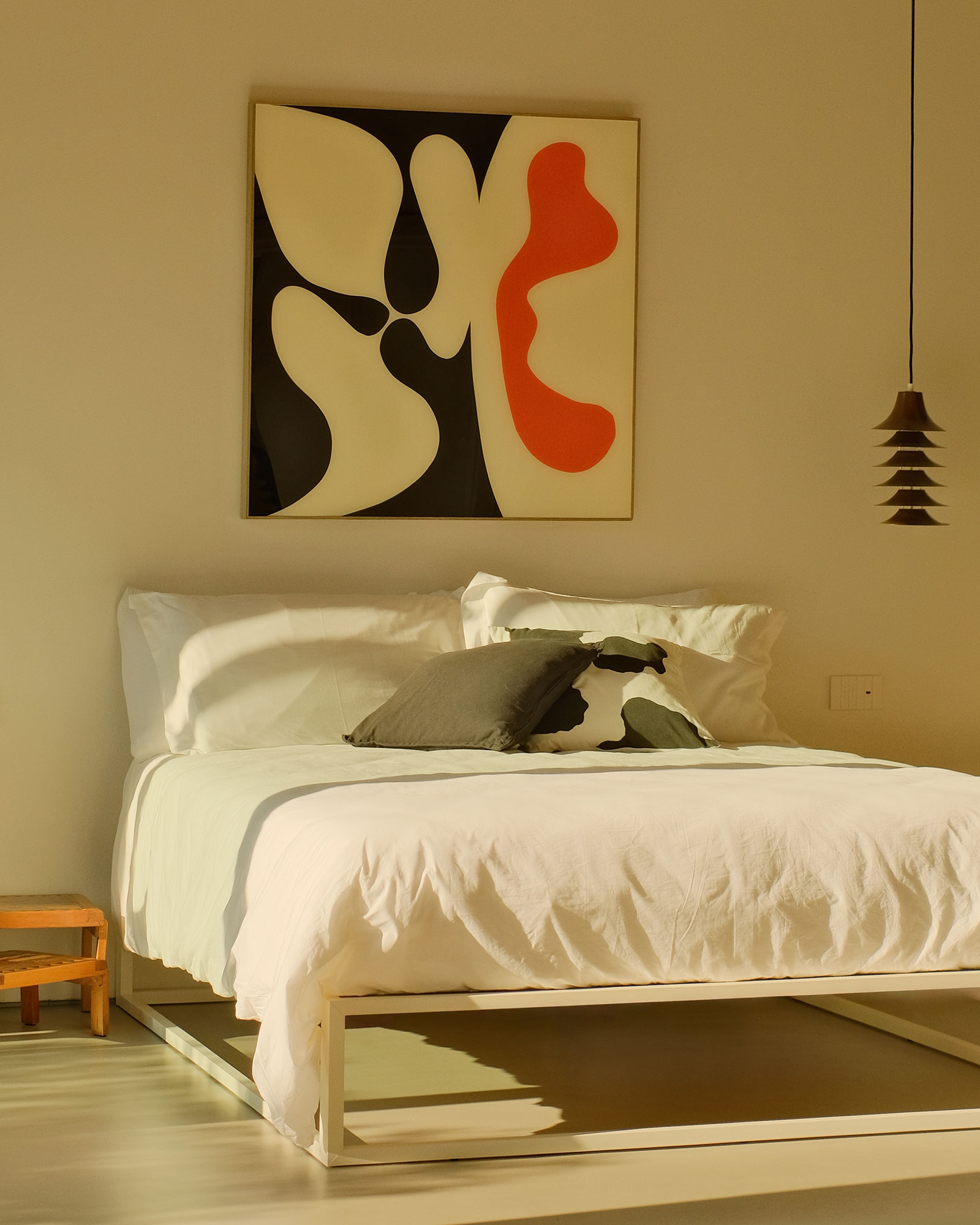
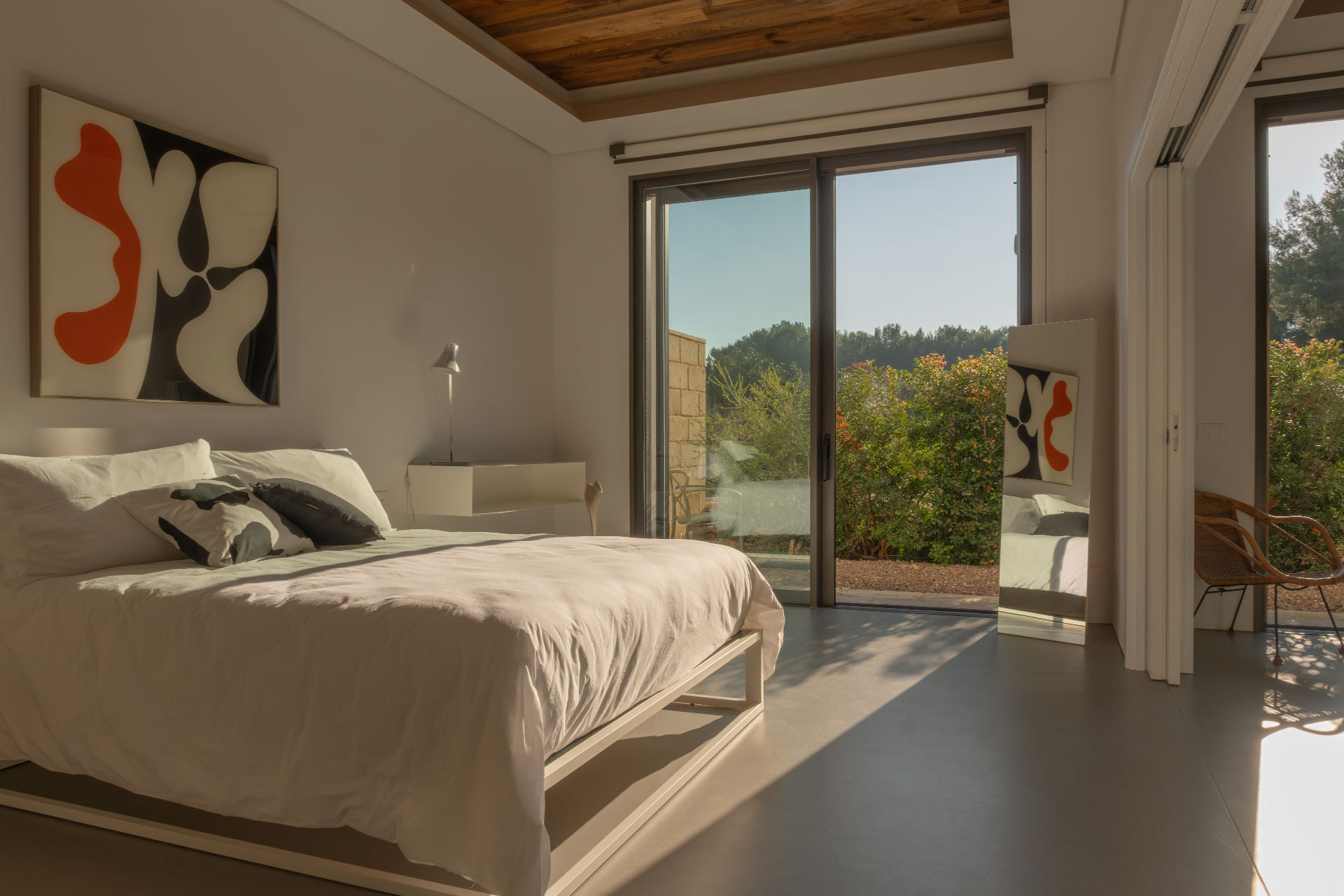
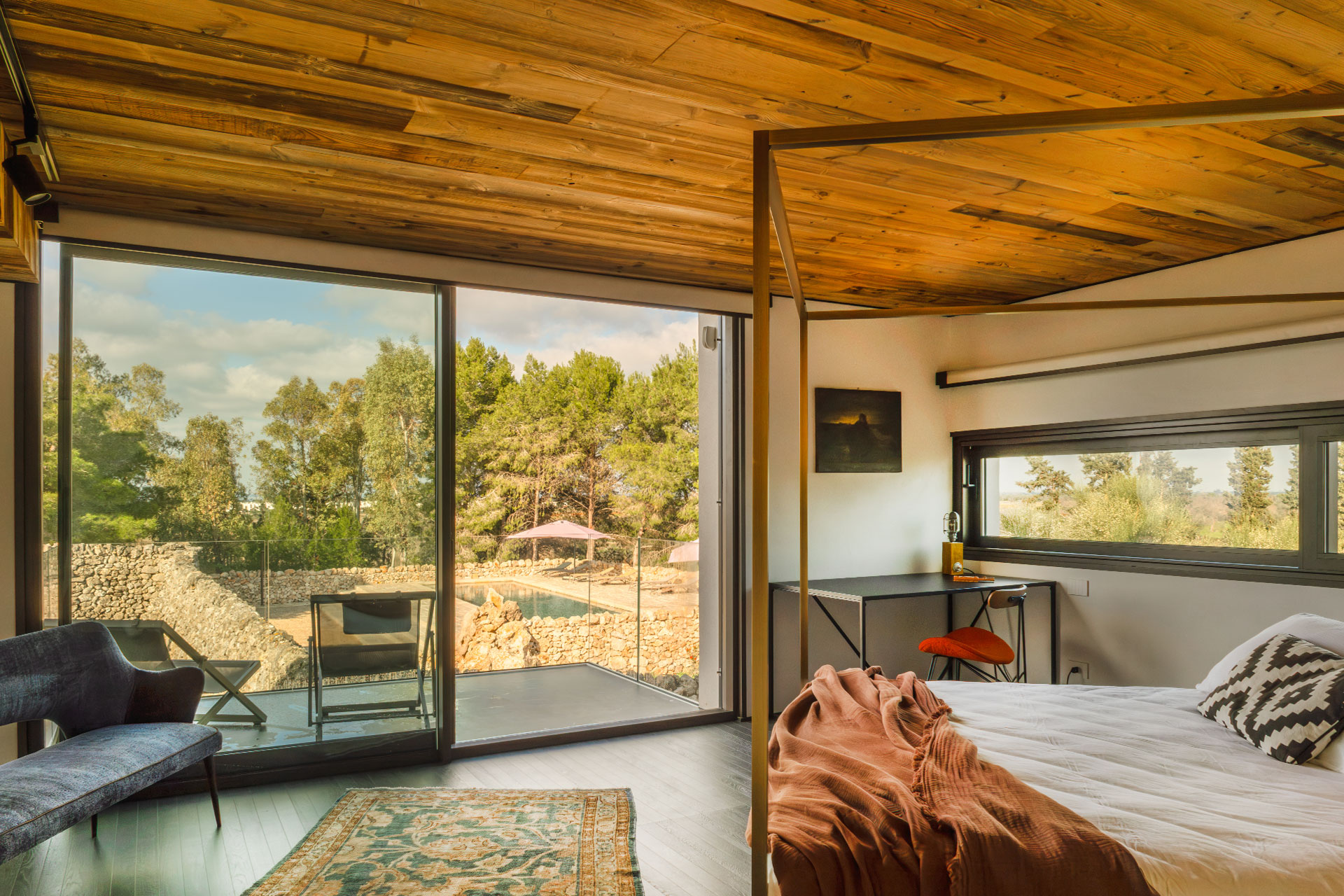
Each of the eight bedrooms, suites, strictly speaking, opens onto a private garden with an outdoor shower. The interiors of the bedrooms are in keeping with the rest of the house. White linens, low headboards, beauty in simplicity.
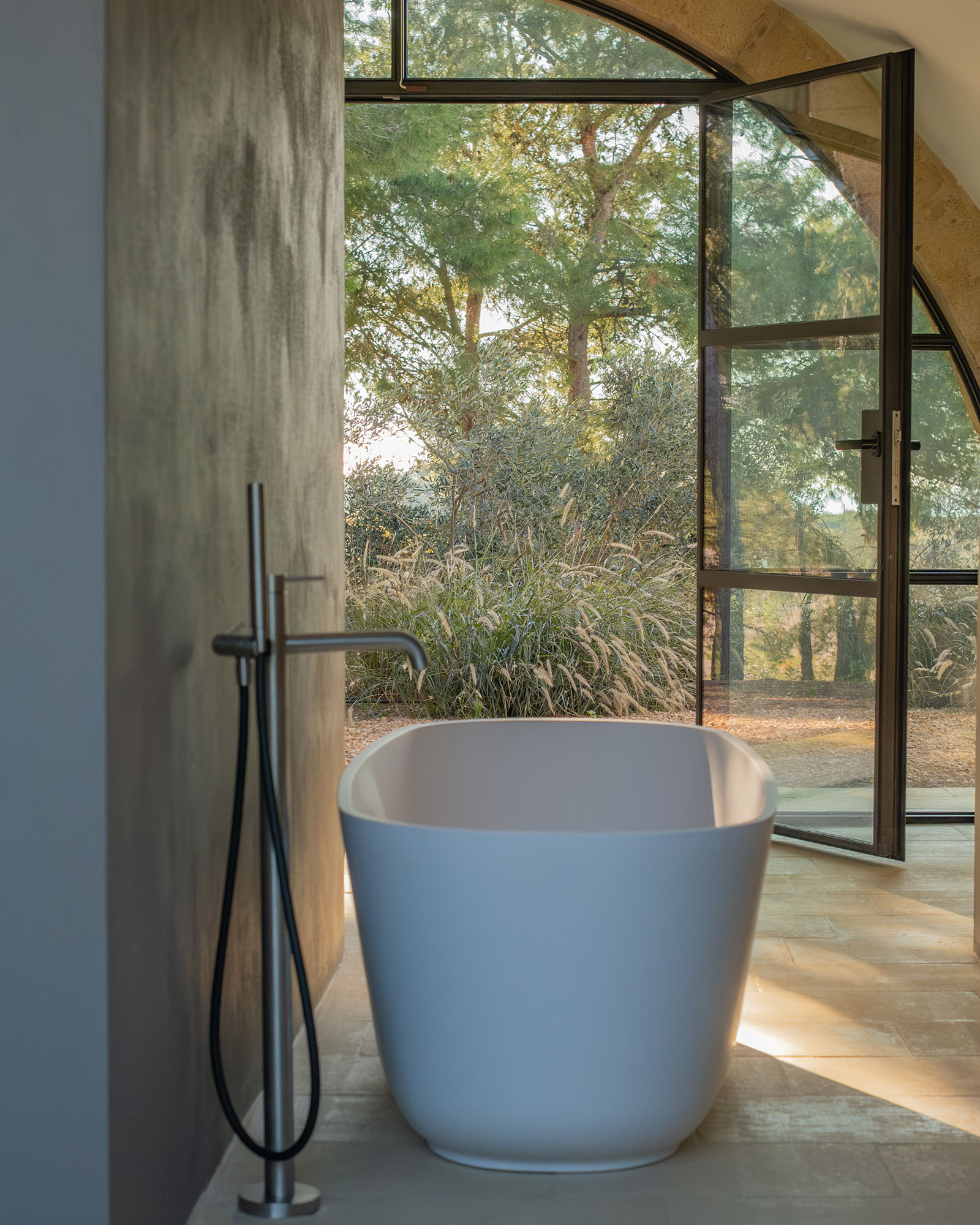
The bathrooms are remarkable. Freestanding bathtubs on stone floors, double sinks, walk-in showers, the materials are consistent with the stone of the masseria. Limestone, polished concrete, and lime plaster are all featured.
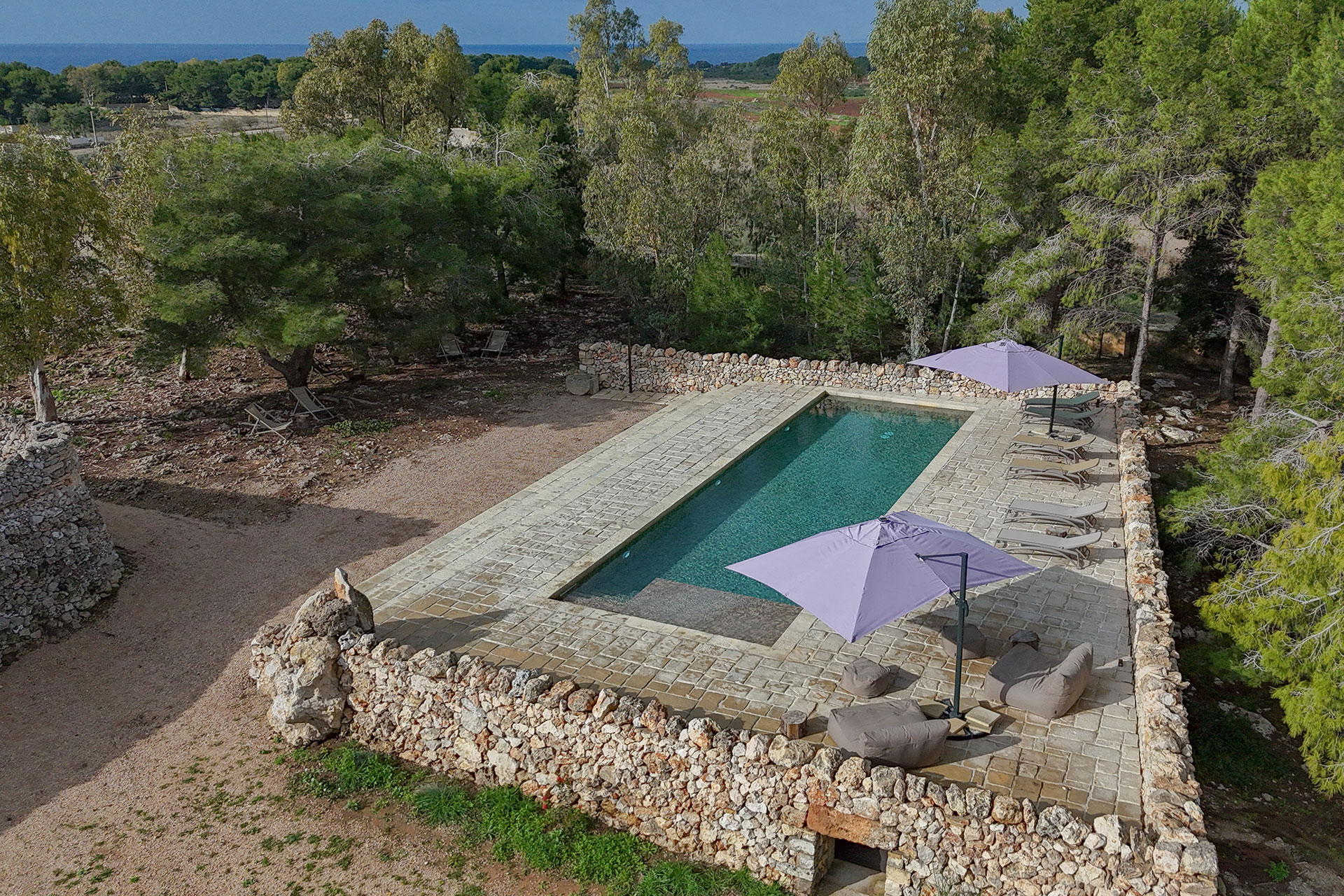
One final feature that extends the pleasure of living in such a home: the fifteen-meter pool, set amidst six hundred century-old olive trees. No white-tiled coping, no above-ground structure, the pool sinks into the ground, and century-old pine trees shade the lounge chairs. It follows the same logic as the interior: simplicity to let the beauty of the landscape take center stage.
What works without reservation: the simplicity in the home’s design. No accumulation of local “handcrafted” objects. No imposing rugs, since stone is already omnipresent in the rooms, there’s no need to add elements that might “smother” the atmosphere.
What might raise questions: the disconnect between the designer furniture and the local context. An Eames chair in Nardò is an international choice, not a local one. It can be appreciated if you’re a fan of mixing eras. But it’s not for everyone. One could also criticize it for facing north rather than the Ionian Sea, just two kilometers away. Nevertheless, it remains a wonderful home, perfectly renovated by its owners.

This house in Puglia with contemporary interior design in Salento is available for rent through Airbnb
It is located just 1,500 meters from the sea, on the edge of the Porto Selvaggio Nature Reserve, set within three hectares of olive groves and pine forests. Its hewn stone and austere volumes form the perfect framework for a contemporary interior design approach that might seem surprising in such an historic setting. But it works perfectly.
The glass atrium, an architectural touch that changes everything
The first decision made by the owners who renovated the house was architectural, and it shaped everything else. These two historic wings of the masseria were arranged around an inner courtyard. Rather than leaving it open to the sky or covering it simply, the architects chose a seven-meter glazed atrium. This created a 320sqm double-height living space, bathed in overhead light, where the original stone runs along all the walls. This atrium becomes the heart of the house, a filter between the outside and the inside, between the old and the contemporary.
Designer furniture set against 16th-century walls
Eames armchairs, Saarinen silhouettes, Panton chairs, and Castiglioni light fixtures have been installed in the rooms. These are classics of 20th-century modernist design, primarily from the Nordic and American spheres of the 1950s–70s.
Against the thick walls, barrel vaults, and floors of local calcarenite, the contrast is a success. The color palette is deliberately understated to tie the stone’s hue to the contemporary furniture. The result is a dialogue between two eras that harmonize beautifully, contrary to what one might have expected.
An Ernesto Meda Italian kitchen
Designed by Ernesto Meda, the Italian kitchen stretches seven meters and features two stone islands. It is the perfect kitchen for this 16th-century masseria, simple yet undeniably striking. The twelve-meter concrete fireplace running along the main wall in the living room follows the same design philosophy. It is simple yet imposing, monolithic, raw, and proportionate to the space. It fits perfectly into this design aesthetic.
The bedrooms with private gardens
Each of the eight bedrooms, suites, strictly speaking, opens onto a private garden with an outdoor shower. The interiors of the bedrooms are in keeping with the rest of the house. White linens, low headboards, beauty in simplicity.
The bathrooms are remarkable. Freestanding bathtubs on stone floors, double sinks, walk-in showers, the materials are consistent with the stone of the masseria. Limestone, polished concrete, and lime plaster are all featured.
The pool in the olive grove
One final feature that extends the pleasure of living in such a home: the fifteen-meter pool, set amidst six hundred century-old olive trees. No white-tiled coping, no above-ground structure, the pool sinks into the ground, and century-old pine trees shade the lounge chairs. It follows the same logic as the interior: simplicity to let the beauty of the landscape take center stage.
Our design take: what works, what raises questions
What works without reservation: the simplicity in the home’s design. No accumulation of local “handcrafted” objects. No imposing rugs, since stone is already omnipresent in the rooms, there’s no need to add elements that might “smother” the atmosphere.
What might raise questions: the disconnect between the designer furniture and the local context. An Eames chair in Nardò is an international choice, not a local one. It can be appreciated if you’re a fan of mixing eras. But it’s not for everyone. One could also criticize it for facing north rather than the Ionian Sea, just two kilometers away. Nevertheless, it remains a wonderful home, perfectly renovated by its owners.


This house in Puglia with contemporary interior design in Salento is available for rent through Airbnb


Comments