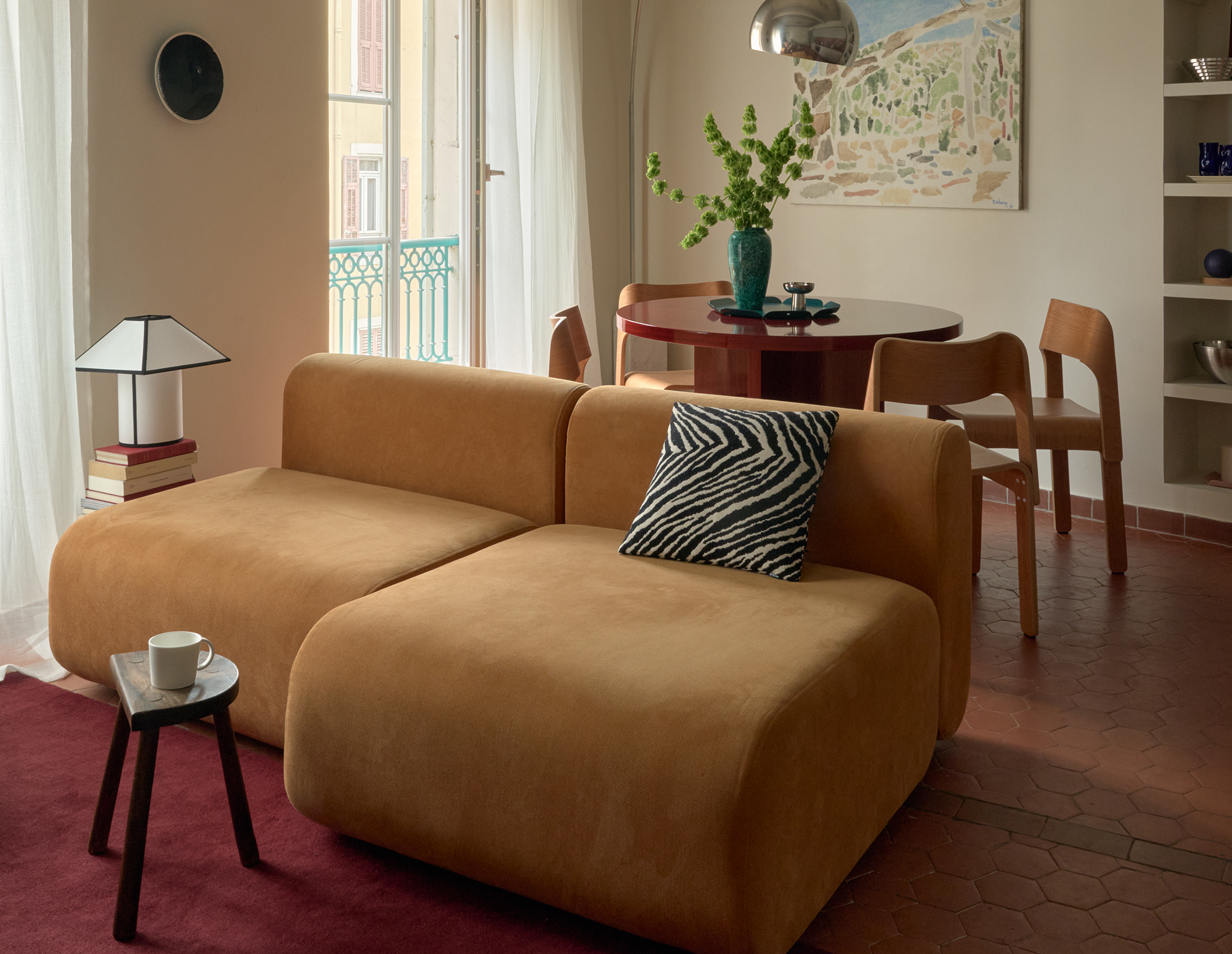
A 45sqm vintage apartment in Nice, featuring murals and terracotta tiles
In Nice, a 45sqm vintage apartment blends original frescoes, antique terracotta tiles, designer furniture, and vintage finds
In the Port district of Nice, this 45sqm vintage apartment reimagines the local way of life. Architects Arseny Brodach and Kate Rostova have designed their own family home here. With original murals, hexagonal terracotta tiles, and vintage furniture, they’ve created the apartment of their dreams.
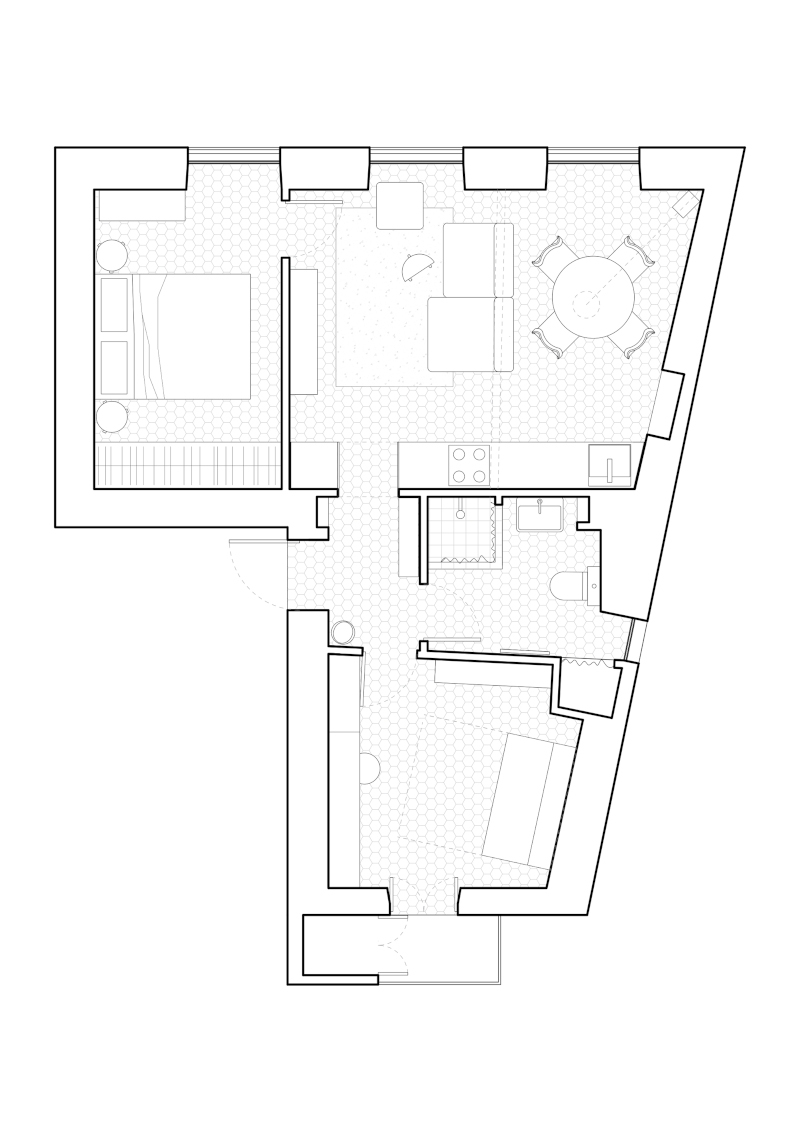
The Port district is one of the most vibrant areas in Nice. This early 20th-century building houses the renovated space. This project took two months to complete. The team had to work with a compact yet charming space. The master bedroom, children’s room, open kitchen, bathroom, and entryway all had to find their place. Each piece of furniture was custom-designed to make the most of every nook and cranny.
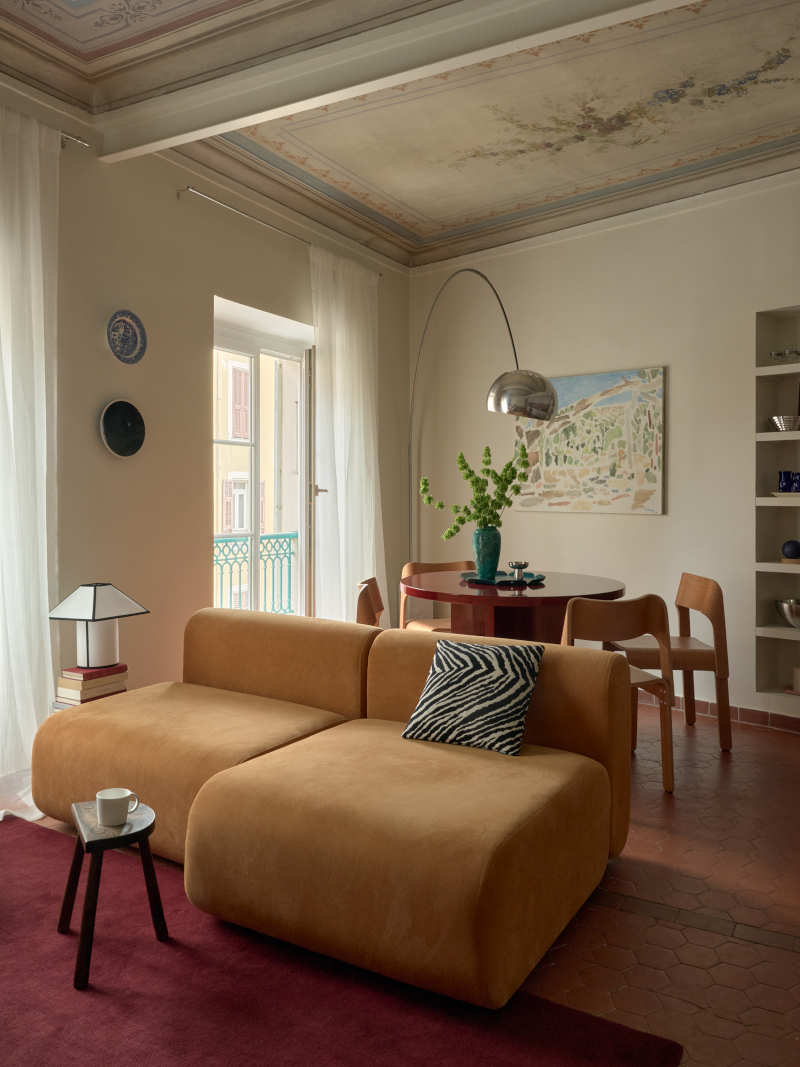
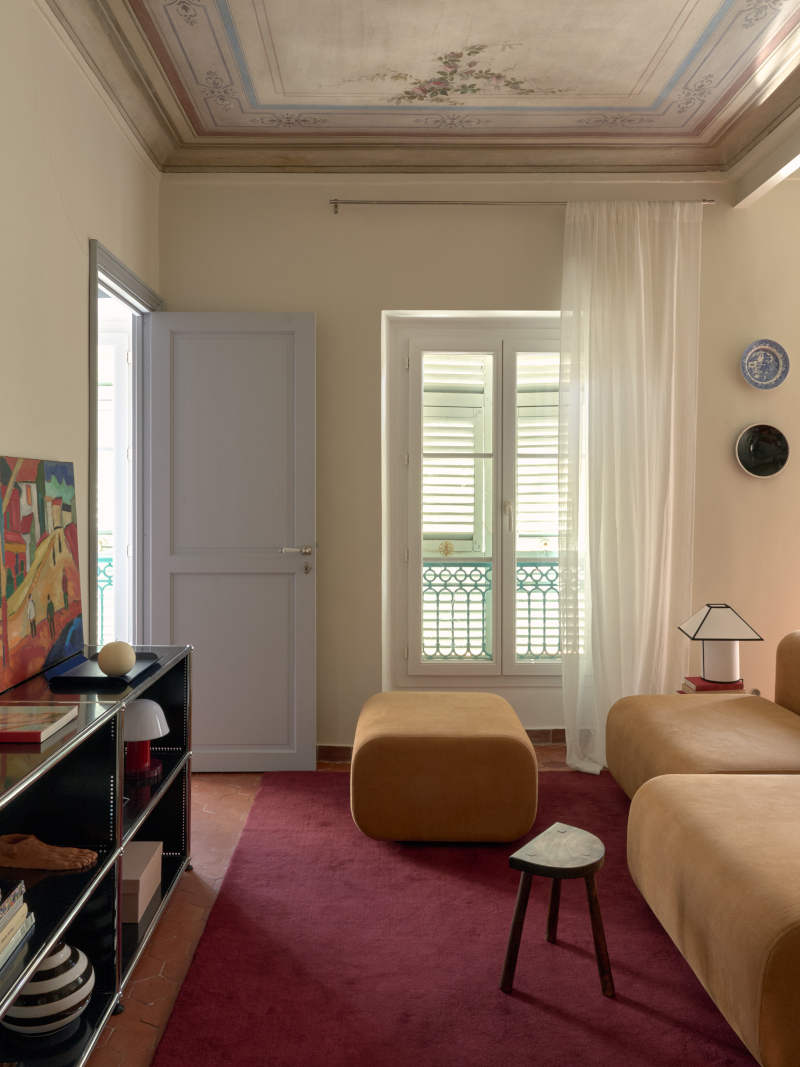
The architects preserved two essential heritage elements. The painted ceiling frescoes run throughout the apartment. Hexagonal terracotta tiles cover much of the floor. These historic elements interact with resolutely contemporary furniture.
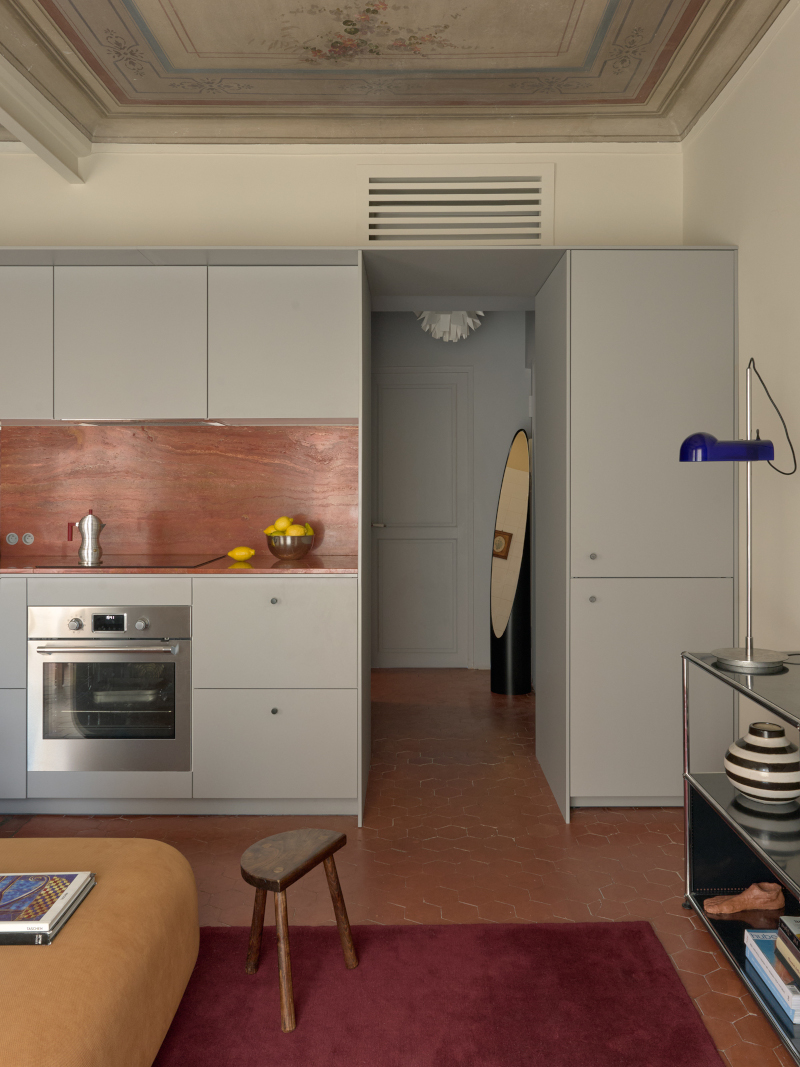
The kitchen is the centerpiece of the renovation. The architects knocked down a partition wall to merge two separate spaces. This created the necessary room for a spacious kitchen.
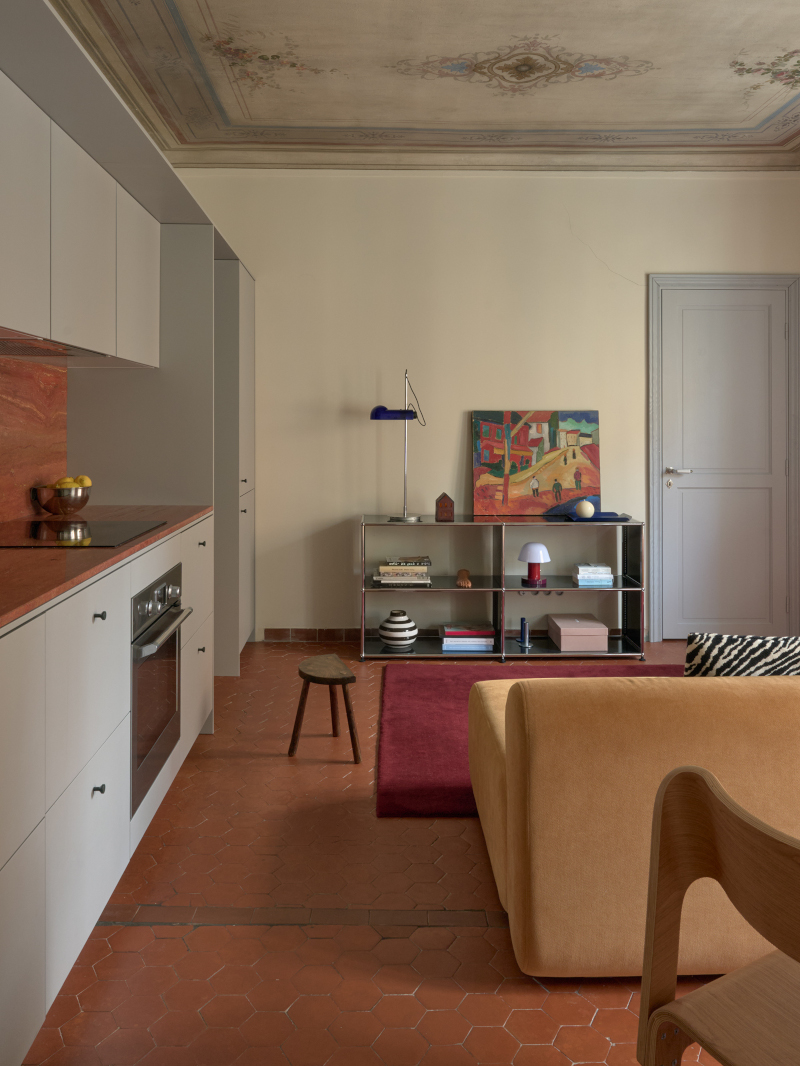
The structure is based on standard IKEA modules, which have been extensively modified. The kitchen stretches from one wall to the other in the living room. One section aligns with a slanted wall, typical of older buildings in Nice.
The vertical panels are also made from IKEA laminated MDF panels. This approach allows for the customization of affordable furniture. The result, however, resembles a fully custom-built kitchen. The architects are well aware of the constraints of a small family budget. Transforming affordable furniture into a custom-built piece requires true expertise.
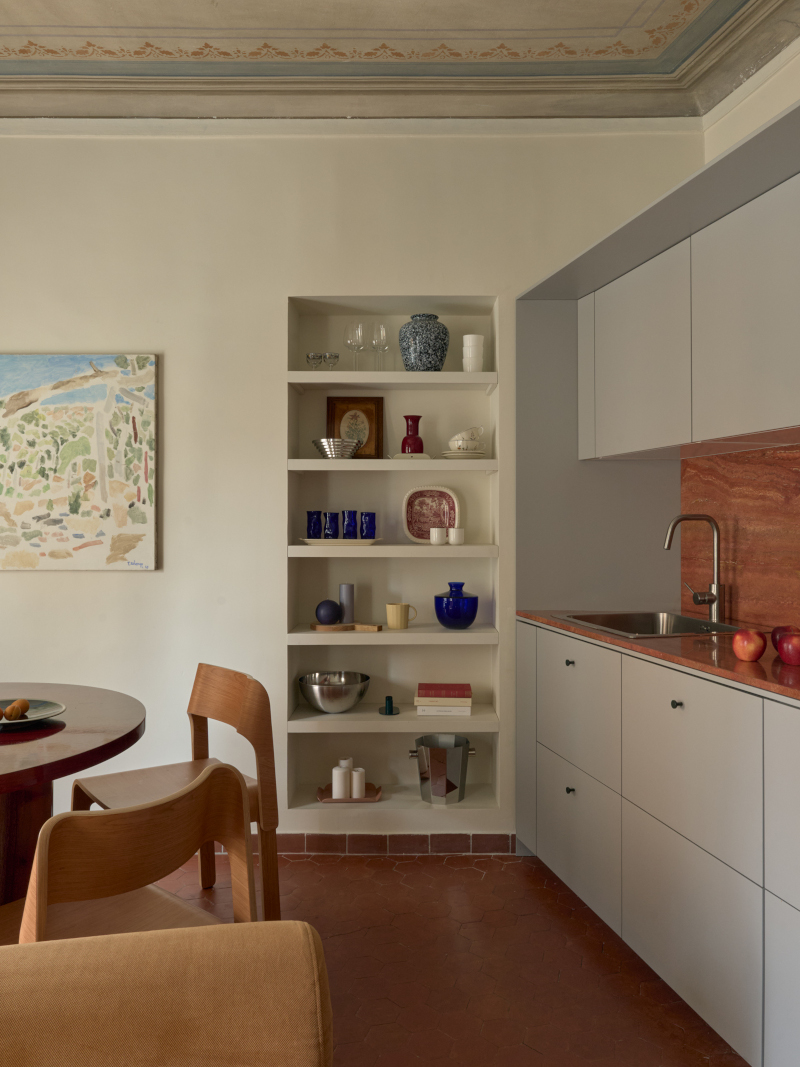
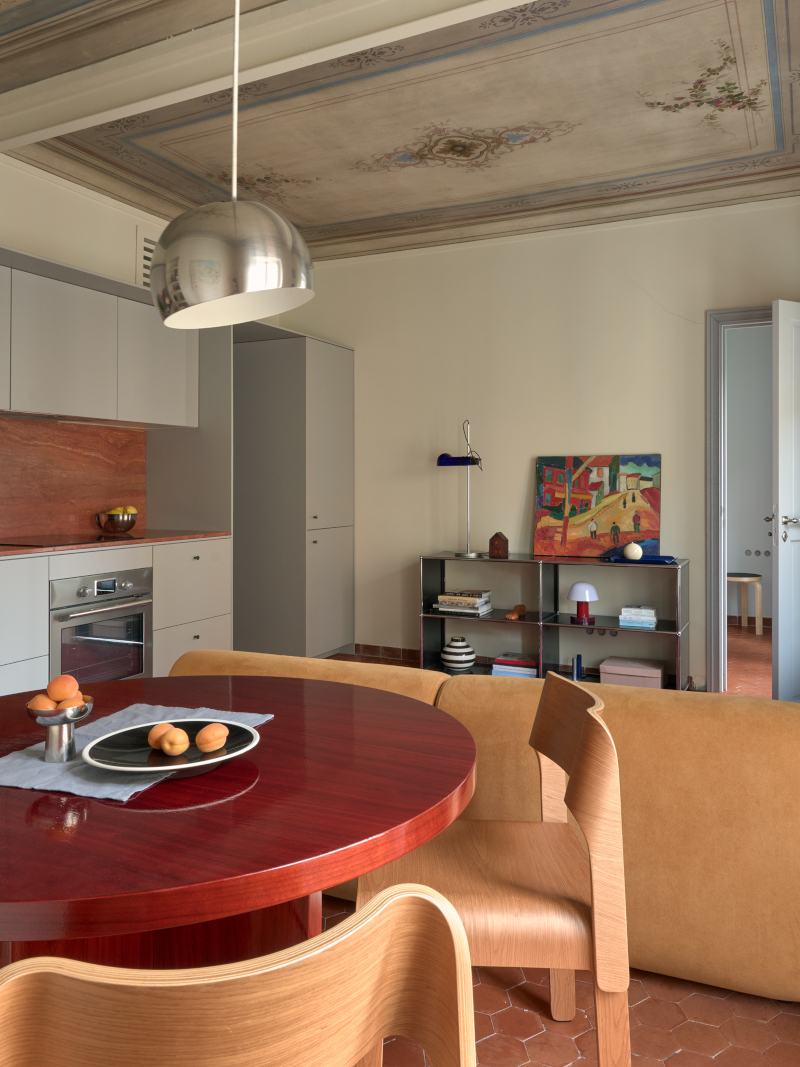
The countertop and backsplash are made of spectacular red travertine. This stone comes directly from an Italian quarry near the French border. Its warm hue complements the terracotta floor tiles and the ochre tones of Nice’s facades.
The space between the kitchen and living room remains completely open. No partition separates these two everyday spaces. This visual continuity significantly expands the perception of volume.
The living room features entirely decentralized lighting. No ceiling light illuminates this room. The light comes from lamps carefully placed throughout the space.
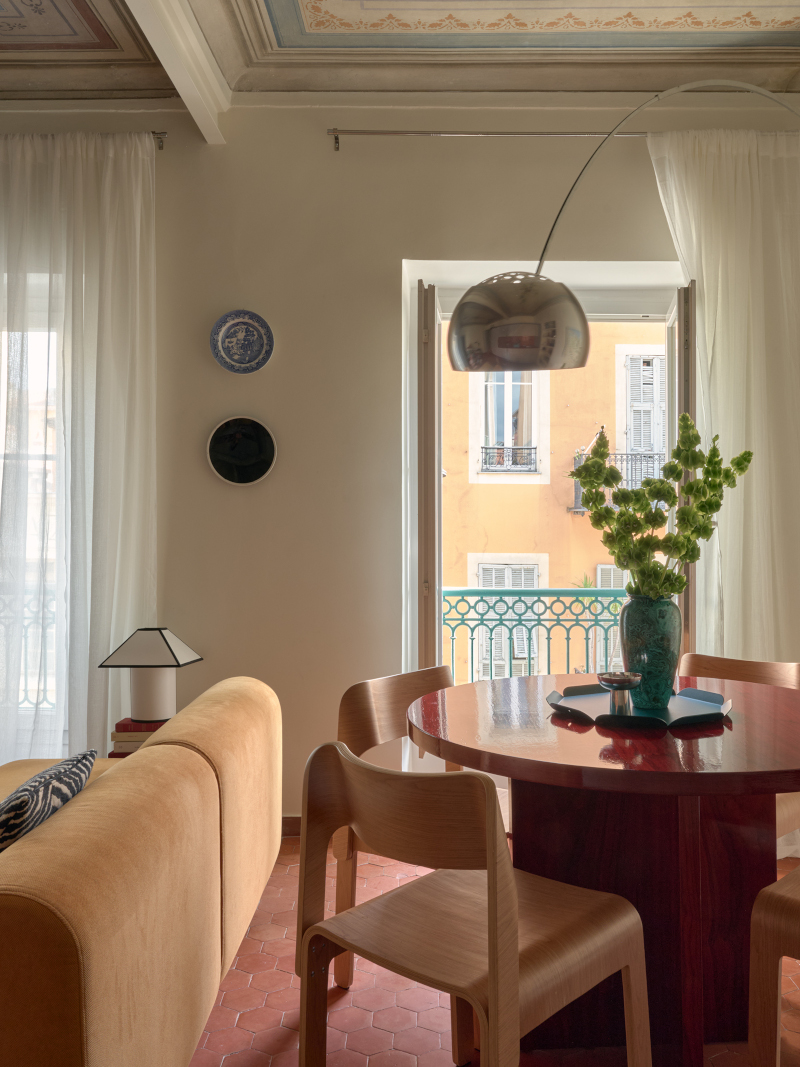
Above the dining table, the Arco floor lamp by Flos dominates the composition. This iconic piece of Italian design brings a sculptural presence. Table lamps by Hay and &Tradition complement this adjustable lighting. A vintage Italian lamp, featuring blue Murano glass, adds a unique vintage touch.
The “Shik” sofa by Delo is upholstered in deep amber velvet. Delo armchairs, finished in Italian Alpi veneer, elegantly complement this sofa. The dining table, made of burgundy-stained walnut with a glossy lacquer finish, was crafted by the Vibe workshop. The architects designed the plans themselves.
An USM Haller shelf unit serves as storage. This piece was found on Le Bon Coin, proof that a design classic can be acquired secondhand. The kitchen’s built-in lighting highlights the texture of the travertine in the evening.
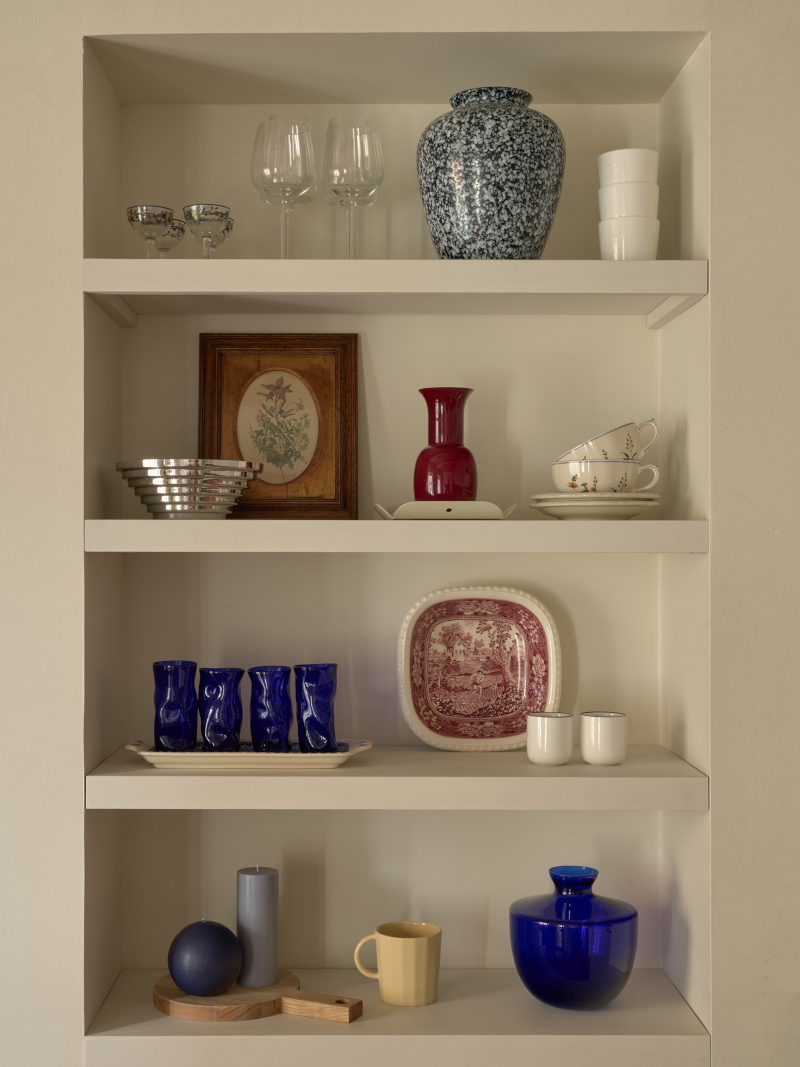
The shelves showcase a selection of pieces by Delo, Alessi, and Artek. Finds unearthed at vintage markets in Nice and Milan complete this collection.
The house-shaped Fuoco lamp is particularly eye-catching. Gaetano Pesce designed it for Meritalia. Only 1,000 of these collector’s items were produced. A hand-knotted wool rug, with a dense, velvety texture, covers the living room floor. It was woven on a traditional loom.
Two paintings come from a local antique dealer. The first bears the signature of Theodore Schempp. This American, better known as an art dealer, introduced Picasso and Matisse to the American market. Influenced by his artist friends, he also painted landscapes of the south of France. The second painting depicts a landscape of Saint-Tropez by Jean Pons.
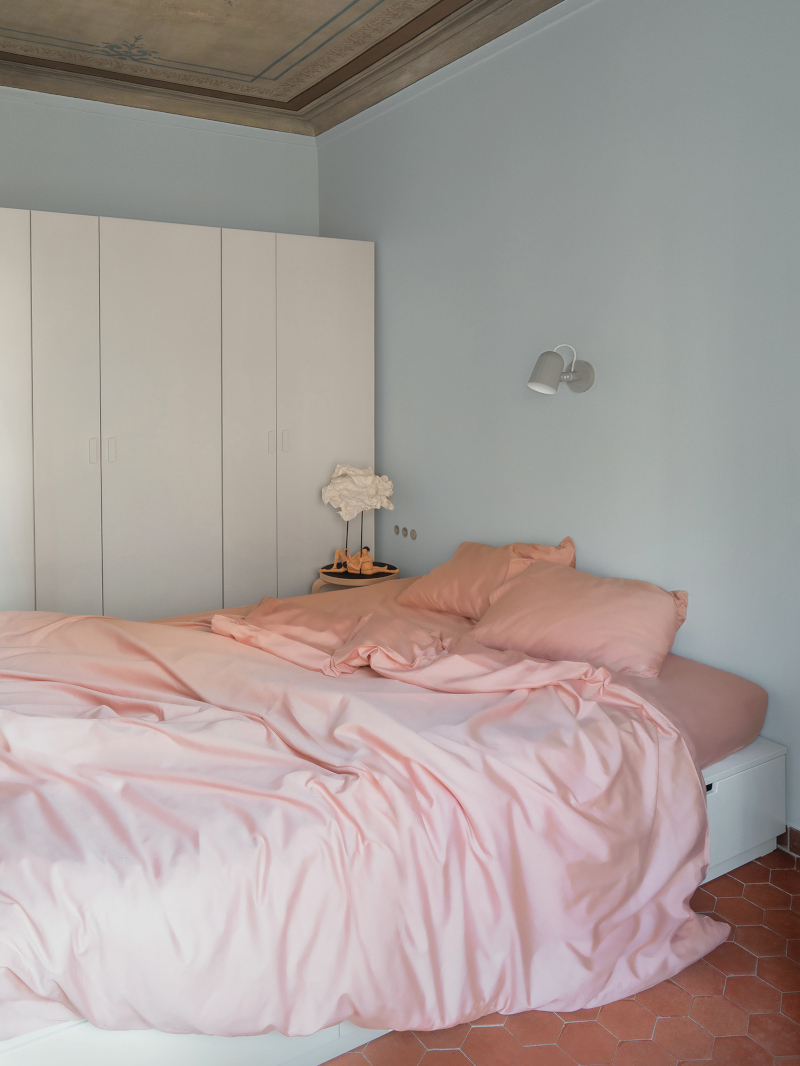
The master bedroom features a soft blue. This color echoes the shades found in the ceiling frescoes. The furniture is simple, consisting of an IKEA bed and wardrobe.
Artek stools serve as nightstands. This clever solution frees up space in this compact room. As in the living room, there is no central lighting in the bedroom. A Hay wall sconce casts a soft, focused light.
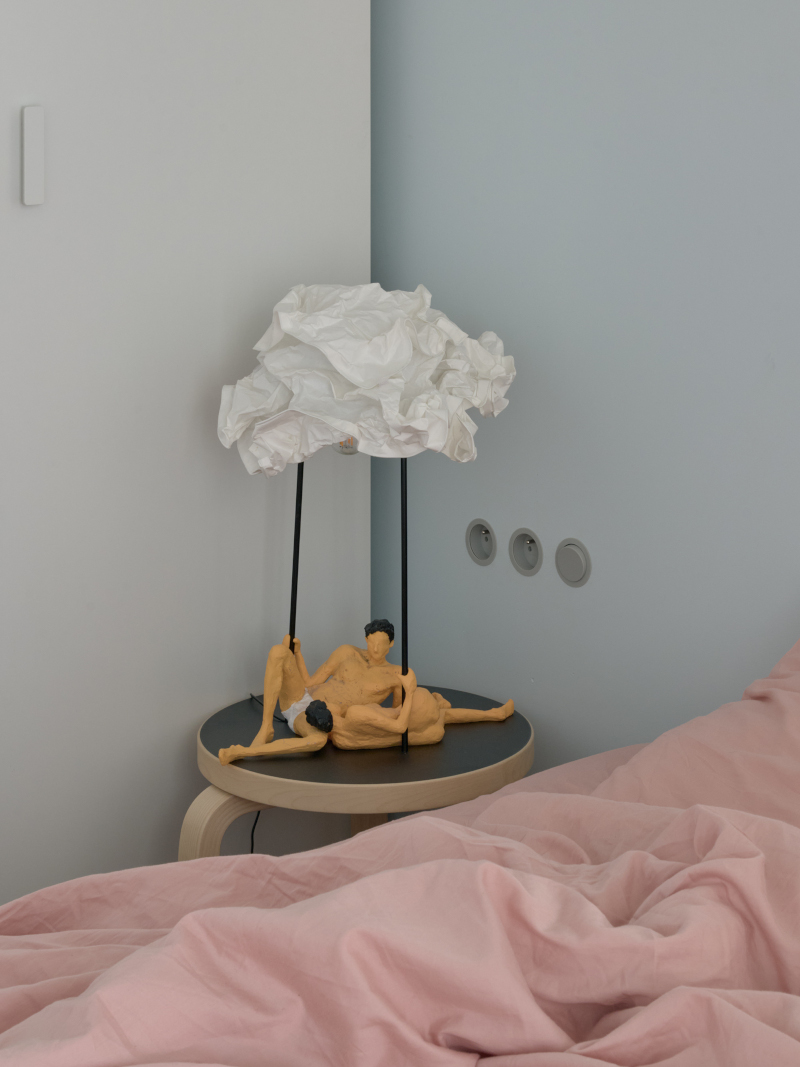
The “Love is a Verb” lamp adds a personal and artistic touch. Seletti produced it based on a design by Tatiana Brodatch, the owner’s sister. The second bedroom is for the family’s child.
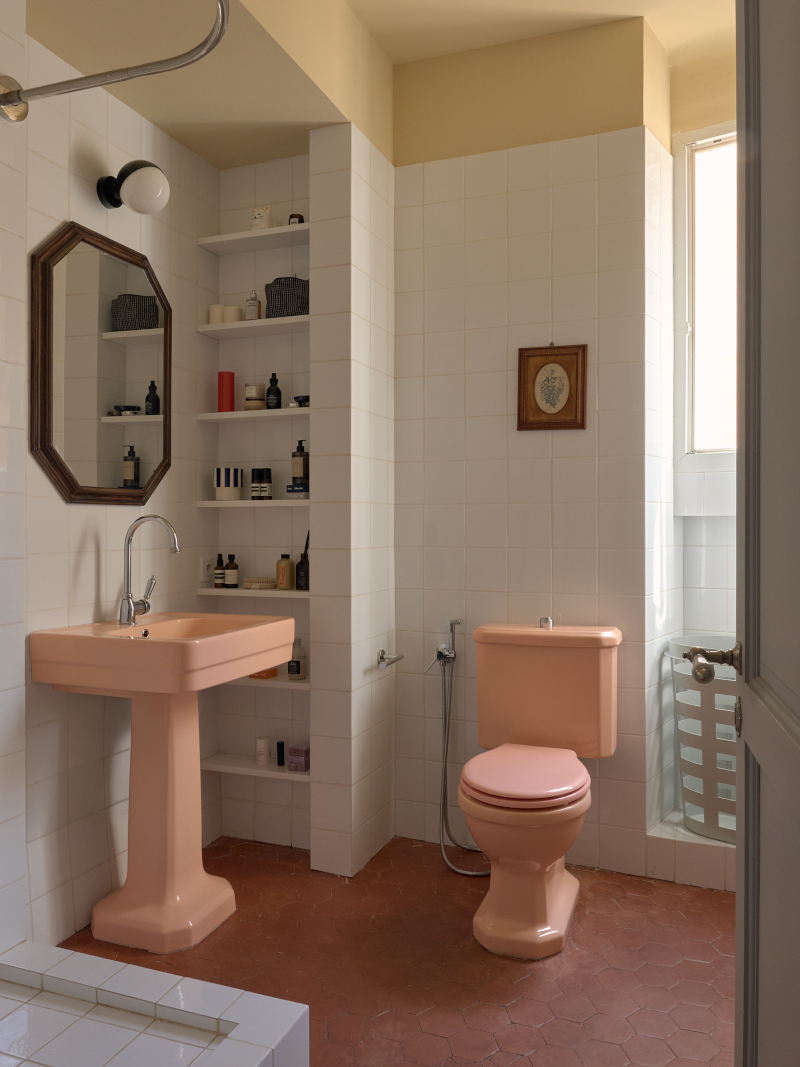
The bathroom retains its original tilework. Glossy white 15x15 cm tiles cover the walls. The ceiling, painted yellow, adds an unexpected touch of cheerfulness.
The fixtures seem to have been there forever with their powder-pink hue. Yet they are new and were ordered in Rome from Bleu Provence. The Jacob Delafon shower fixtures complete the look. And a mirror found at a flea market adorns the wall. A Louis Poulsen wall sconce elegantly complements it. A Hay laundry basket rounds out the composition in a corner of the room.
The “Rond” switches and outlets, designed by the Belgian brand Prado, are installed throughout the apartment. Their minimalist design blends discreetly into every room. The interior doors feature classic German handles, adorned with porcelain inserts.
The entryway features a gray that echoes the tones of the kitchen and doors. An Artichoke lamp by Normann Copenhagen takes pride of place there. A vintage Unghia mirror, designed by Rodolfo Bonetto, completes this first impression.
This project illustrates a strong trend in the renovation of older apartments. Heritage elements do not disappear under layers of neutral paint. On the contrary, they become the starting point for the entire decor.
The ceiling frescoes dictate part of the color palette. The blue of the bedroom, the red of the travertine, and the yellow of the bathroom stem directly from them. This approach avoids the common pitfall of a jarring contrast between old and new.
Vintage furniture also plays a key role in this harmony. A piece from the 1960s or 1970s often features generous proportions. It naturally complements the high ceilings of Nice’s Haussmann-style buildings. Contemporary designers, such as Hay or &Tradition, balance this foundation perfectly.
This method requires thorough research beforehand. The vintage markets in Nice and Milan become regular hunting grounds. Each find must then find its exact place within the overall composition. The final result gives an impression of naturalness, almost of inevitability.
Owners of older properties in Nice or elsewhere can draw plenty of inspiration from this approach. Preserving original features doesn’t mean sacrificing a contemporary interior. The two styles complement each other when the choices are well-considered.
The entire apartment tells a cohesive story. Materials, colors, and furnishings echo the typical tones used in Nice. The colorful facades and landscapes of the French Riviera inspire every choice.
This project proves that a small apartment can combine history and modernity. Heritage elements, frescoes and terracotta tiles, interact with designer and vintage furniture. This family home illustrates a personal and sensitive approach to interior design.

A family apartment in the Port district of Nice
The Port district is one of the most vibrant areas in Nice. This early 20th-century building houses the renovated space. This project took two months to complete. The team had to work with a compact yet charming space. The master bedroom, children’s room, open kitchen, bathroom, and entryway all had to find their place. Each piece of furniture was custom-designed to make the most of every nook and cranny.
The architects preserved two essential heritage elements. The painted ceiling frescoes run throughout the apartment. Hexagonal terracotta tiles cover much of the floor. These historic elements interact with resolutely contemporary furniture.
A custom kitchen built from IKEA modules
The kitchen is the centerpiece of the renovation. The architects knocked down a partition wall to merge two separate spaces. This created the necessary room for a spacious kitchen.
The structure is based on standard IKEA modules, which have been extensively modified. The kitchen stretches from one wall to the other in the living room. One section aligns with a slanted wall, typical of older buildings in Nice.
The vertical panels are also made from IKEA laminated MDF panels. This approach allows for the customization of affordable furniture. The result, however, resembles a fully custom-built kitchen. The architects are well aware of the constraints of a small family budget. Transforming affordable furniture into a custom-built piece requires true expertise.
The countertop and backsplash are made of spectacular red travertine. This stone comes directly from an Italian quarry near the French border. Its warm hue complements the terracotta floor tiles and the ochre tones of Nice’s facades.
The space between the kitchen and living room remains completely open. No partition separates these two everyday spaces. This visual continuity significantly expands the perception of volume.
A living room furnished with designer pieces and vintage finds
The living room features entirely decentralized lighting. No ceiling light illuminates this room. The light comes from lamps carefully placed throughout the space.
Above the dining table, the Arco floor lamp by Flos dominates the composition. This iconic piece of Italian design brings a sculptural presence. Table lamps by Hay and &Tradition complement this adjustable lighting. A vintage Italian lamp, featuring blue Murano glass, adds a unique vintage touch.
The “Shik” sofa by Delo is upholstered in deep amber velvet. Delo armchairs, finished in Italian Alpi veneer, elegantly complement this sofa. The dining table, made of burgundy-stained walnut with a glossy lacquer finish, was crafted by the Vibe workshop. The architects designed the plans themselves.
An USM Haller shelf unit serves as storage. This piece was found on Le Bon Coin, proof that a design classic can be acquired secondhand. The kitchen’s built-in lighting highlights the texture of the travertine in the evening.
Vintage finds and local artwork
The shelves showcase a selection of pieces by Delo, Alessi, and Artek. Finds unearthed at vintage markets in Nice and Milan complete this collection.
The house-shaped Fuoco lamp is particularly eye-catching. Gaetano Pesce designed it for Meritalia. Only 1,000 of these collector’s items were produced. A hand-knotted wool rug, with a dense, velvety texture, covers the living room floor. It was woven on a traditional loom.
Two paintings come from a local antique dealer. The first bears the signature of Theodore Schempp. This American, better known as an art dealer, introduced Picasso and Matisse to the American market. Influenced by his artist friends, he also painted landscapes of the south of France. The second painting depicts a landscape of Saint-Tropez by Jean Pons.
A soothing bedroom in shades of blue
The master bedroom features a soft blue. This color echoes the shades found in the ceiling frescoes. The furniture is simple, consisting of an IKEA bed and wardrobe.
Artek stools serve as nightstands. This clever solution frees up space in this compact room. As in the living room, there is no central lighting in the bedroom. A Hay wall sconce casts a soft, focused light.
The “Love is a Verb” lamp adds a personal and artistic touch. Seletti produced it based on a design by Tatiana Brodatch, the owner’s sister. The second bedroom is for the family’s child.
A colorful bathroom with retro accents
The bathroom retains its original tilework. Glossy white 15x15 cm tiles cover the walls. The ceiling, painted yellow, adds an unexpected touch of cheerfulness.
The fixtures seem to have been there forever with their powder-pink hue. Yet they are new and were ordered in Rome from Bleu Provence. The Jacob Delafon shower fixtures complete the look. And a mirror found at a flea market adorns the wall. A Louis Poulsen wall sconce elegantly complements it. A Hay laundry basket rounds out the composition in a corner of the room.
Meticulous finishes down to the last detail
The “Rond” switches and outlets, designed by the Belgian brand Prado, are installed throughout the apartment. Their minimalist design blends discreetly into every room. The interior doors feature classic German handles, adorned with porcelain inserts.
The entryway features a gray that echoes the tones of the kitchen and doors. An Artichoke lamp by Normann Copenhagen takes pride of place there. A vintage Unghia mirror, designed by Rodolfo Bonetto, completes this first impression.
A successful dialogue between history and contemporary design
This project illustrates a strong trend in the renovation of older apartments. Heritage elements do not disappear under layers of neutral paint. On the contrary, they become the starting point for the entire decor.
The ceiling frescoes dictate part of the color palette. The blue of the bedroom, the red of the travertine, and the yellow of the bathroom stem directly from them. This approach avoids the common pitfall of a jarring contrast between old and new.
Vintage furniture also plays a key role in this harmony. A piece from the 1960s or 1970s often features generous proportions. It naturally complements the high ceilings of Nice’s Haussmann-style buildings. Contemporary designers, such as Hay or &Tradition, balance this foundation perfectly.
This method requires thorough research beforehand. The vintage markets in Nice and Milan become regular hunting grounds. Each find must then find its exact place within the overall composition. The final result gives an impression of naturalness, almost of inevitability.
Owners of older properties in Nice or elsewhere can draw plenty of inspiration from this approach. Preserving original features doesn’t mean sacrificing a contemporary interior. The two styles complement each other when the choices are well-considered.
A tribute to the colors of the French Riviera
The entire apartment tells a cohesive story. Materials, colors, and furnishings echo the typical tones used in Nice. The colorful facades and landscapes of the French Riviera inspire every choice.
This project proves that a small apartment can combine history and modernity. Heritage elements, frescoes and terracotta tiles, interact with designer and vintage furniture. This family home illustrates a personal and sensitive approach to interior design.



Comments