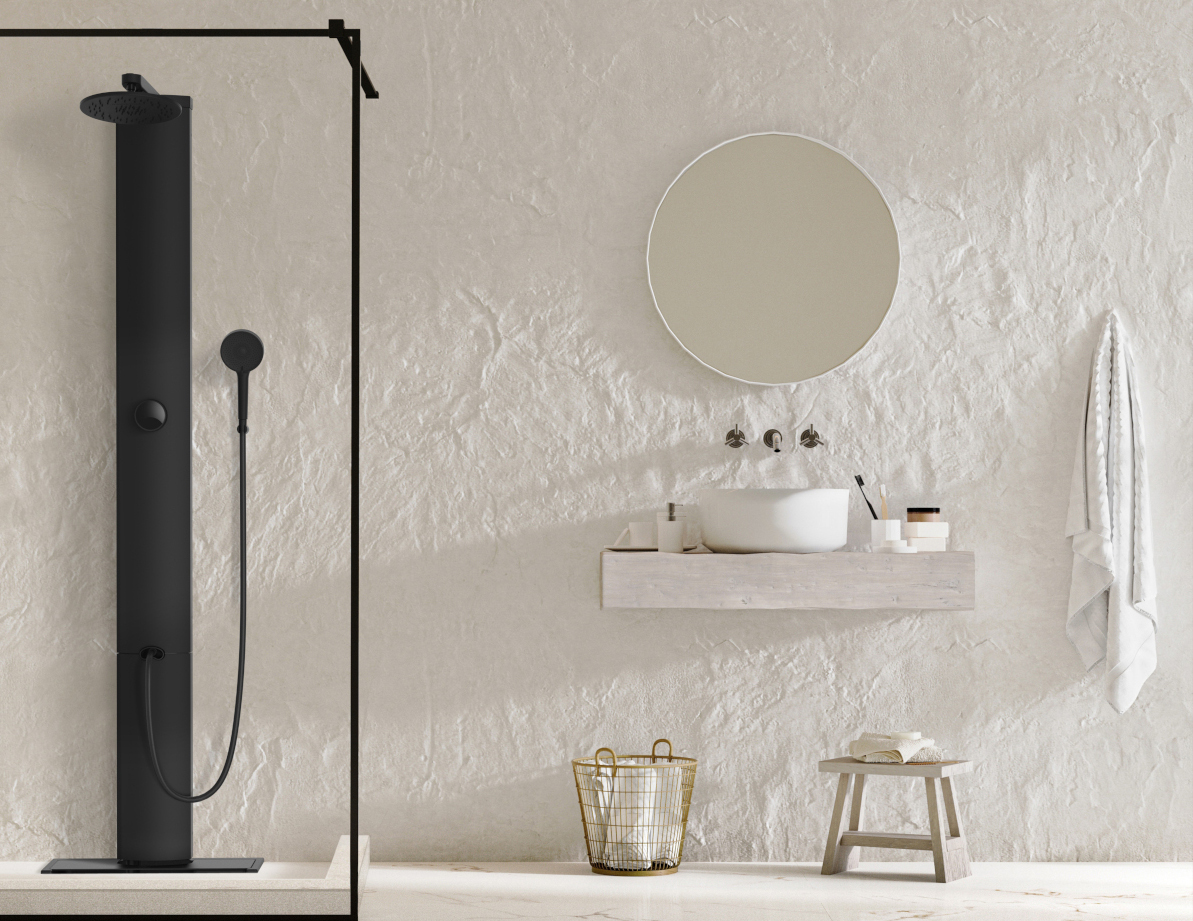
Water-recycling Shower, the Quiet Revolution in the Modern Bathroom
Follow Planète Déco on Google — add us to your favourites to keep our decor articles in your news feed2 gallons per shower, 90% heat recovery, sleek design: the water-recycling shower redefines the modern bathroom
A shower that goes in circles, in the best possible way. Hot water runs. It goes down the drain. Repeat. The average American does this about 365 times a year, sending thousands of gallons disappearing into the pipes, straight onto the water bill and onto the planet's tab. Why not install a water-recycling shower to save water and money?
It breaks that cycle. It filters water in real time, reheats it, and sends it back through the system. A standard shower uses between 15 and 20 gallons. With a recycling system, you're down to about 2 gallons. Barely enough to fill a bucket, and a pretty big deal.
This isn't startup hype. It's technology already installed in thousands of homes across Northern Europe, in luxury hotels, in sustainable architecture projects, and now making its way into the US market.
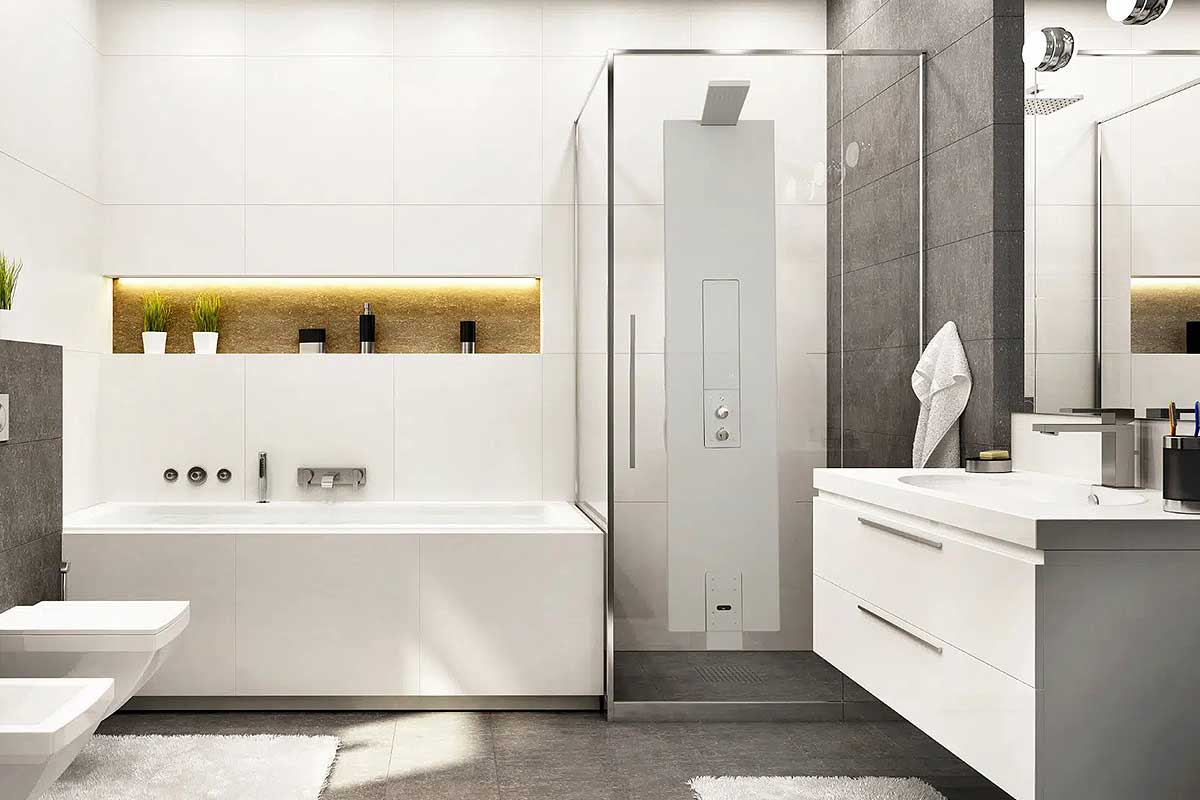

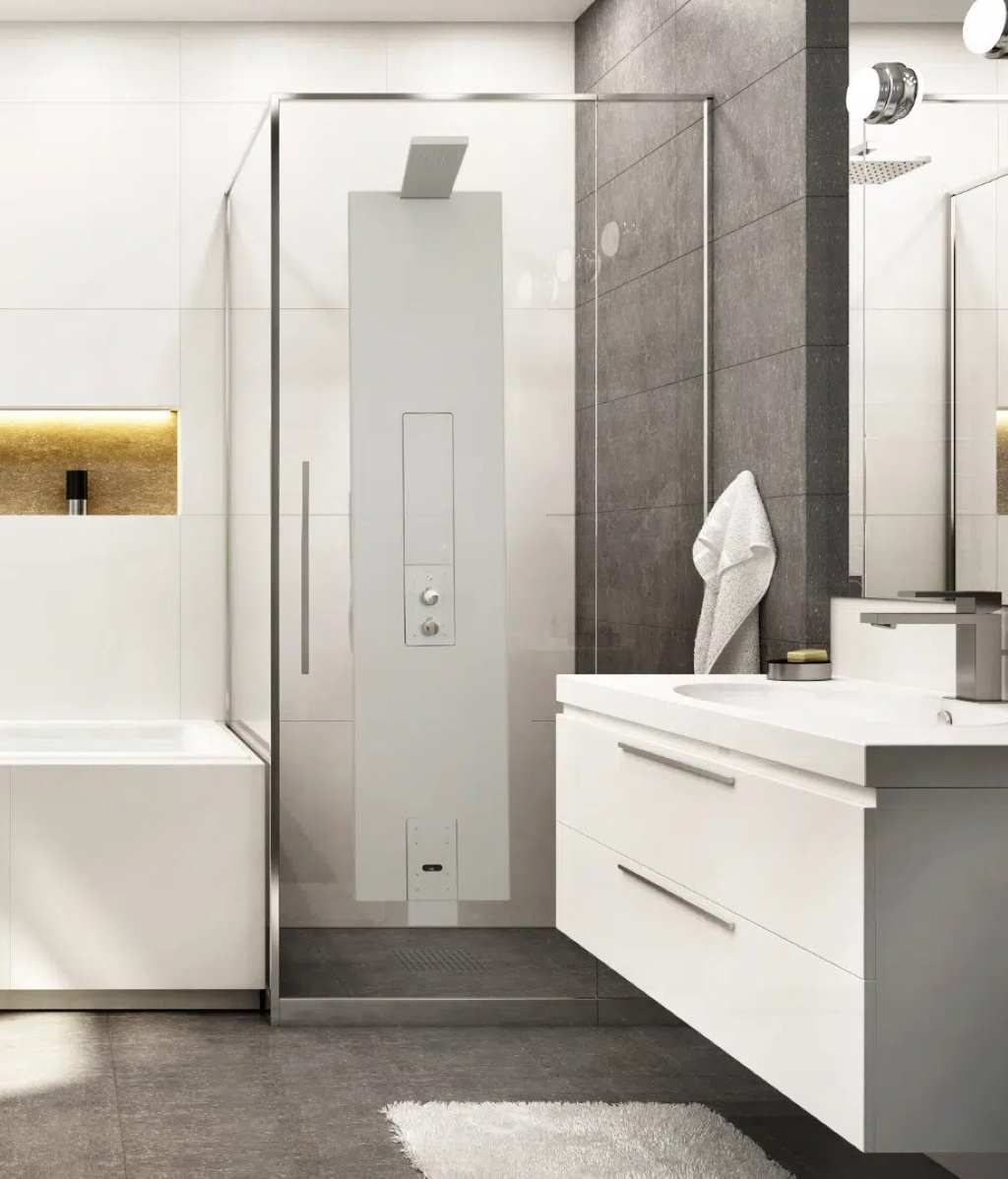
Source : IKEA
Everything happens under the floor. A collector captures water the moment it hits the shower floor. It immediately passes through a multi-stage filter that removes organic residue, soap, and dead skin cells. Clean water comes out. At the same time, a heat exchanger recovers the warmth before it disappears down the drain.
The filtered water returns to temperature in seconds. The loop starts again, continuously, with no interruption the user would ever notice.
Some models hit 90% heat recovery. Others feature a real-time consumption display, gallons used, temperature, session length, built into the wall panel or accessible through an app.
The most advanced systems run multiple filtration stages: mechanical, activated carbon, and sometimes UV to eliminate bacteria. Recycled water isn't drinking water, but it's clean, skin-safe, and perfectly suited for showering.
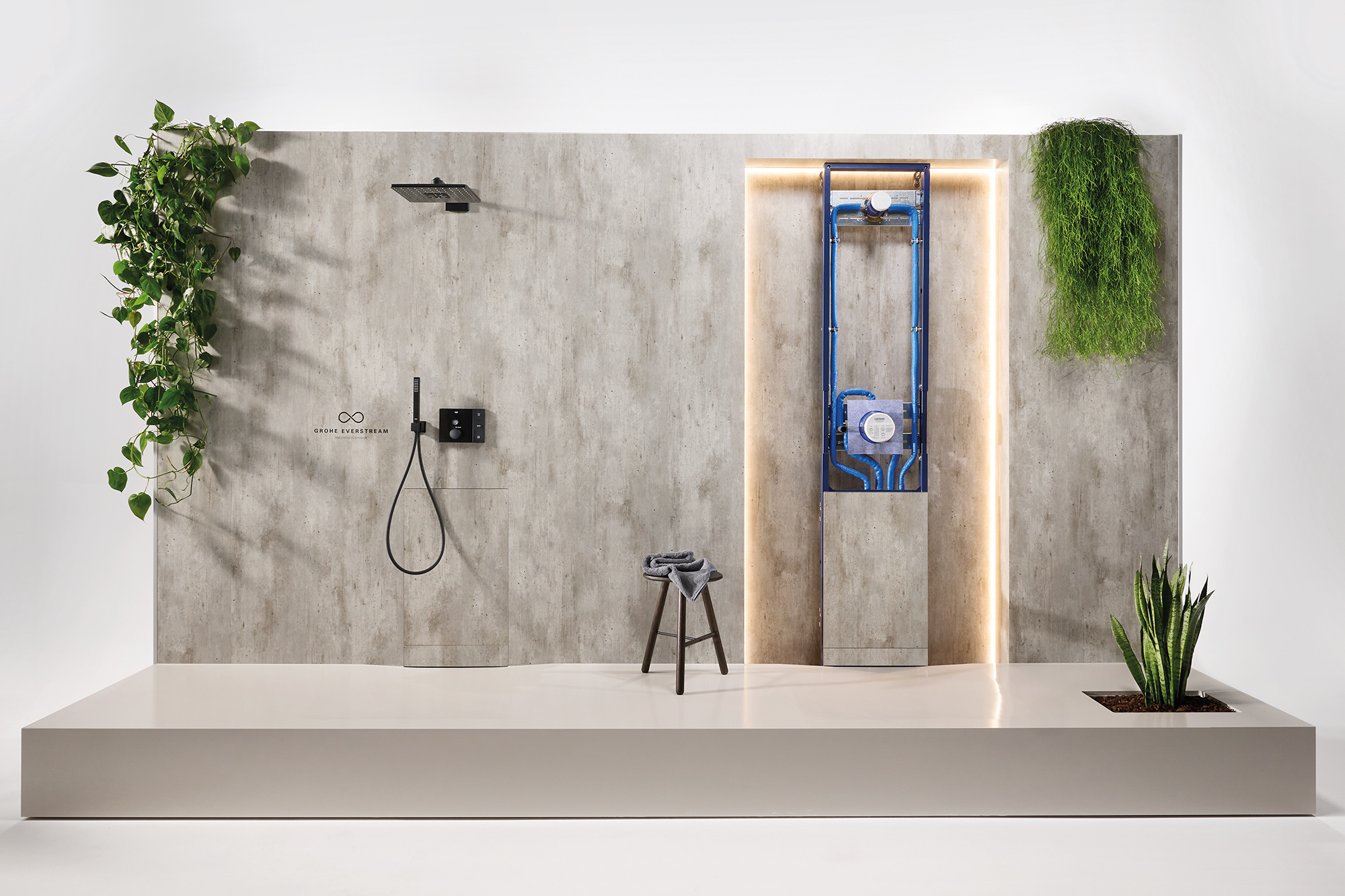
Source : Grohe
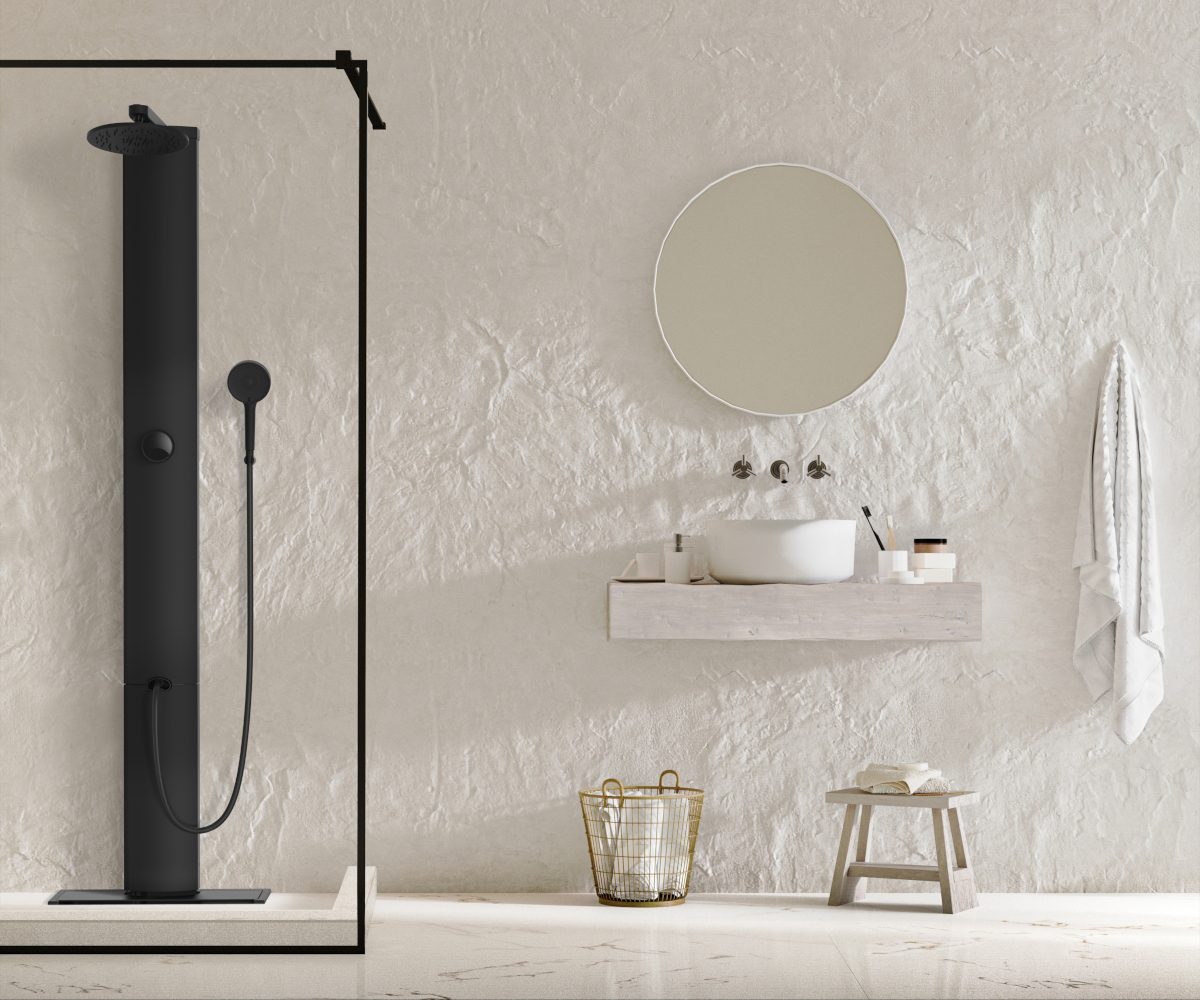
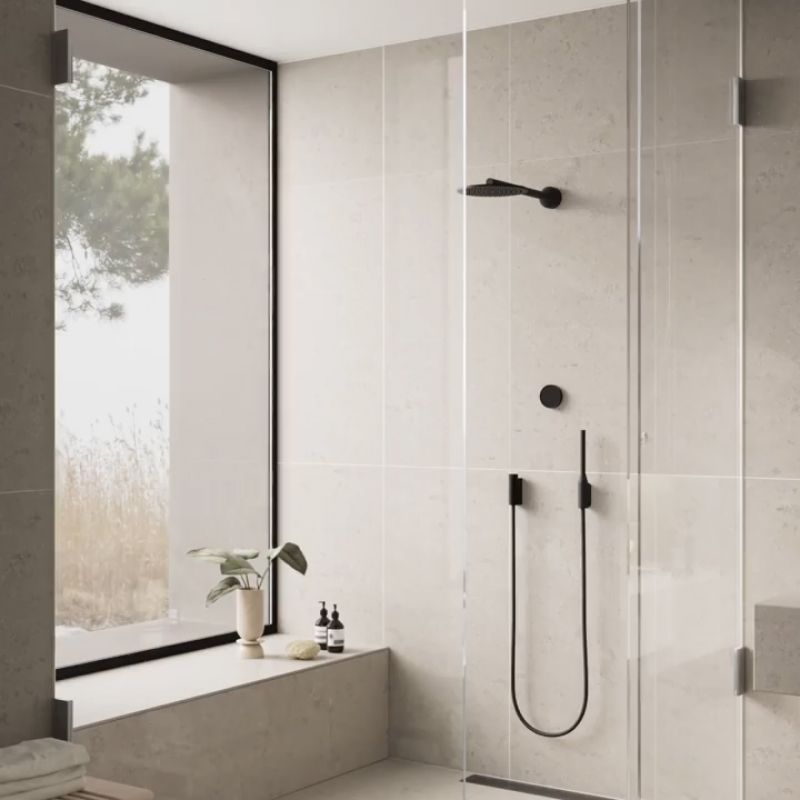
That's usually the first question, and can it actually work in a well-designed space? The answer is yes. The manufacturers who built this market made design a priority from day one. Orbital Systems, founded in Sweden with early backing from NASA, offers cabins with clean lines, tempered glass finishes, and touch controls. Hamwells, a Dutch brand, developed flat bases that fit into any existing bathroom, with a compact technical unit hidden behind the wall or under the floor.
These don't look like prototype lab equipment. They look like high-end showers. The technology is invisible. The only reminder is the number on the app telling you that you just showered with two gallons of water.
This type of fixture works across all bathroom styles, from a rustic farmhouse bath to a sleek minimalist space. The cabin can stay open if the layout allows, or get dressed in smoked glass, resin panels, or brushed steel. The recycling system is completely independent of the surround.
Source : RainStick Shower
Water stress is no longer a distant problem. The Western US, the Southwest, Florida, drought conditions and rising water costs are pushing homeowners and developers to rethink consumption. A water-recycling shower addresses that directly.
A family of four that showers daily can save up to 25,000 gallons of water a year. The impact on the annual water bill is real. Over ten years, the system pays for itself, and the peace of mind is a bonus.
High-performance building programs like LEED and WELL are increasingly specifying this type of equipment. Architects working on premium residential projects recommend it to clients as a dual investment: lower utility costs, higher property value.
Source : Orbital Systems
This is not a straight swap for your existing shower pan. Installing a water-recycling shower requires real preparation: access under the floor for the filtration unit, a technical cavity in an adjacent wall or closet, and in most models, a dedicated electrical connection.
Floor-to-ceiling height can also be a limiting factor in older homes and apartment renovations. Some systems are more compact than others, worth flagging early with your architect or contractor.
Best-case scenario: plan the install during a full bathroom remodel or new construction. Retrofitting onto an existing shower without any prep work rarely works without compromises. A plumber trained on these systems is non-negotiable. Manufacturers provide certified installer networks with technical training included.
The main filter gets replaced one to two times a year depending on use. The swap takes a few minutes and doesn't require a service call on most models. Heat exchanger needs no regular maintenance. The rest of the system runs in a closed loop with no exposed wear parts. Compared to maintaining a water softener or an HRV system, the upkeep is minimal.
Prices have dropped significantly over the past few years. Entry-level models start around $3,000 installed. Premium cabins, oversized, custom finishes, connected interfaces, run past $10,000. They pay off over time, especially in water-stressed states like California, Arizona, or Texas where rates keep climbing.
The water-recycling shower is no longer a niche product for off-grid enthusiasts. It's showing up in high-end renovations, boutique-hotels that want to pair sustainability with style, and homes where ecological standards and design standards are the same standard. Water deserves better than a one-way ticket to the sewer.
The market is concentrated around a handful of serious players. For the US market, RainStick Shower (Canada, widely available in the US, available at thecabindepot.com (Canadian/North American retailer) or at offgriddistribution.com (North American B2B distributor) is the North American benchmark, around $5,000, Wi-Fi enabled, self-cleaning after every use. GROHE Everstream is rolling out through its North American distribution network via LIXIL, which also includes American Standard. Orbital Systems (Sweden) offers the highest-performing cabins on the market. Flow Loop (Denmark), strategic partner of IKEA, is working toward a mass-market version at an accessible price point (You can find a blog post dedicated to this IKEA recyclable shower collaboration by clicking this link!).
It breaks that cycle. It filters water in real time, reheats it, and sends it back through the system. A standard shower uses between 15 and 20 gallons. With a recycling system, you're down to about 2 gallons. Barely enough to fill a bucket, and a pretty big deal.
This isn't startup hype. It's technology already installed in thousands of homes across Northern Europe, in luxury hotels, in sustainable architecture projects, and now making its way into the US market.


Source : IKEA
How Does the System Work?
Everything happens under the floor. A collector captures water the moment it hits the shower floor. It immediately passes through a multi-stage filter that removes organic residue, soap, and dead skin cells. Clean water comes out. At the same time, a heat exchanger recovers the warmth before it disappears down the drain.
The filtered water returns to temperature in seconds. The loop starts again, continuously, with no interruption the user would ever notice.
Some models hit 90% heat recovery. Others feature a real-time consumption display, gallons used, temperature, session length, built into the wall panel or accessible through an app.
The most advanced systems run multiple filtration stages: mechanical, activated carbon, and sometimes UV to eliminate bacteria. Recycled water isn't drinking water, but it's clean, skin-safe, and perfectly suited for showering.

Source : Grohe
What Does It Look Like in a Bathroom?
That's usually the first question, and can it actually work in a well-designed space? The answer is yes. The manufacturers who built this market made design a priority from day one. Orbital Systems, founded in Sweden with early backing from NASA, offers cabins with clean lines, tempered glass finishes, and touch controls. Hamwells, a Dutch brand, developed flat bases that fit into any existing bathroom, with a compact technical unit hidden behind the wall or under the floor.
These don't look like prototype lab equipment. They look like high-end showers. The technology is invisible. The only reminder is the number on the app telling you that you just showered with two gallons of water.
This type of fixture works across all bathroom styles, from a rustic farmhouse bath to a sleek minimalist space. The cabin can stay open if the layout allows, or get dressed in smoked glass, resin panels, or brushed steel. The recycling system is completely independent of the surround.

Source : RainStick Shower
A Real Answer to Water Scarcity in the US
Water stress is no longer a distant problem. The Western US, the Southwest, Florida, drought conditions and rising water costs are pushing homeowners and developers to rethink consumption. A water-recycling shower addresses that directly.
A family of four that showers daily can save up to 25,000 gallons of water a year. The impact on the annual water bill is real. Over ten years, the system pays for itself, and the peace of mind is a bonus.
High-performance building programs like LEED and WELL are increasingly specifying this type of equipment. Architects working on premium residential projects recommend it to clients as a dual investment: lower utility costs, higher property value.

Source : Orbital Systems
What to Plan for Before Installing
This is not a straight swap for your existing shower pan. Installing a water-recycling shower requires real preparation: access under the floor for the filtration unit, a technical cavity in an adjacent wall or closet, and in most models, a dedicated electrical connection.
Floor-to-ceiling height can also be a limiting factor in older homes and apartment renovations. Some systems are more compact than others, worth flagging early with your architect or contractor.
Best-case scenario: plan the install during a full bathroom remodel or new construction. Retrofitting onto an existing shower without any prep work rarely works without compromises. A plumber trained on these systems is non-negotiable. Manufacturers provide certified installer networks with technical training included.
Maintenance: Less of a Hassle Than You'd Think
The main filter gets replaced one to two times a year depending on use. The swap takes a few minutes and doesn't require a service call on most models. Heat exchanger needs no regular maintenance. The rest of the system runs in a closed loop with no exposed wear parts. Compared to maintaining a water softener or an HRV system, the upkeep is minimal.
What are the Key Takeaways, and is this the Right Time to Take the Plunge?
Prices have dropped significantly over the past few years. Entry-level models start around $3,000 installed. Premium cabins, oversized, custom finishes, connected interfaces, run past $10,000. They pay off over time, especially in water-stressed states like California, Arizona, or Texas where rates keep climbing.
The water-recycling shower is no longer a niche product for off-grid enthusiasts. It's showing up in high-end renovations, boutique-hotels that want to pair sustainability with style, and homes where ecological standards and design standards are the same standard. Water deserves better than a one-way ticket to the sewer.
Where to Buy: Brands Worth Knowing
The market is concentrated around a handful of serious players. For the US market, RainStick Shower (Canada, widely available in the US, available at thecabindepot.com (Canadian/North American retailer) or at offgriddistribution.com (North American B2B distributor) is the North American benchmark, around $5,000, Wi-Fi enabled, self-cleaning after every use. GROHE Everstream is rolling out through its North American distribution network via LIXIL, which also includes American Standard. Orbital Systems (Sweden) offers the highest-performing cabins on the market. Flow Loop (Denmark), strategic partner of IKEA, is working toward a mass-market version at an accessible price point (You can find a blog post dedicated to this IKEA recyclable shower collaboration by clicking this link!).







Comments